
EARTH

© Disney Enterprises, Inc. and BBC Worldwide Ltd. All Rights Reserved. disney.com/nature
DISNEYNATURE FILMS
Presents
EARTH

A
BBC, GREENLIGHT MEDIA,
DISCOVERY CHANNEL
Co-Production

A
BBC NATURAL HISTORY UNIT
Film

Directors . . . . . . . . . ALASTAIR FOTHERGILL
MARK LINFIELD
Producers. . . . . . . . . SOPHOKLES TASIOULIS
ALIX TIDMARSH
Narrated by. . . . . . . . . . . JAMES EARL JONES
Executive Producers . . . . . . . . MIKE PHILLIPS
ANDRÉ SIKOJEV
STEFAN BEITEN
WAYNE GARVIE
MARTYN FREEMAN
NIKOLAUS WEIL
Original Music Composed
and Conducted by. . . . . . . . GEORGE FENTON
Original Music Performed
by . . . . . . . . BERLINER PHILHARMONIKER
Film Editor . . . . . . . . . . . . MARTIN ELSBURY
Associate Producers . . . . . . MELISSA CARON
AMANDA HILL
MICHAEL HENRICHS
WITH THANKS TO
DISCOVERY COMMUNICATIONS INC

Photography . . . . . . . . ANDREW ANDERSON
DAVID BAILLIE
DOUG ANDERSON
DOUG ALLAN
PAUL ATKINS
BARRIE BRITTON
RICHARD BURTON
SIMON CARROLL
ROD CLARKE
MARTYN COLBECK
JUSTINE EVANS
WADE FAIRLEY
TED GIFFORDS

MIKE HOLDING
MICHAEL KELEM
SIMON KING
TOSHIHIRO MUTA
JUSTIN MAGUIRE
DIDIER NOIRET
ANDREW PENNIKET
RICK ROSENTHAL

ADAM RAVETCH
TIM SHEPHERD
ANDREW SHILLABEER
PETER SCOONES
WARWICK SLOSS
PAUL STEWART
GAVIN THURSTON
JEFF TURNER
NICK TURNER
JOHN WATERS
Field Assistants. . . . . . . . . . . . . . . . GIL ARBEL
TOM CLARKE
SUE FLOOD
TIM FOGG
TJ JENKINS
IAN KELLET
FREDERIQUE OLIVIER
JASON ROBERTS
GRAHAM SPRINGER
MARGUERITE SMITS VAN OYEN
Script Narration . . . . . . . . LESLIE MEGAHEY
Production
Managers . . . . . . . . AMANDA HUTCHINSON
MANDY KNIGHT
CREDITS
1
CREDITS
Production
Coordinators. . . . . . . . . . . SAMANTHA DAVIS
JUSTINE HARDMAN
NICOLE SKORKE
Re-Recording Mixers . . . . ANDREW WILSON
MATTHEW GOUGH
Sound Editors. . . . . . . . . . . . . KATE HOPKINS
TIM OWENS

Foley Artist . . . . . . . . . . . . . BRIAN MOSELEY
Executive Music Producer . . . . JANE CARTER
Orchestrations . . . . GEOFFREY ALEXANDER
Music Preparation . . . . . . . . . . BILL SILCOCK
Assistant to George Fenton . . . NICOLE JACOB
Music Recorded
at . . . . . JESUS-CHRISTUS-KIRCHE, BERLIN

Music Recorded and
Mixed by. . . . . . . . . . . . . . JONATHAN ALLEN
Recorded by . . . . . . ABBEY ROAD MOBILES
Assistant Engineer . . RICHARD LANCASTER
Technical Engineer . . . . . . . . RICHARD HALE
Digital Music Editing . . . . . . . . . SIMON KILN
Music Editors. . . . . . . . . . . JAMES BELLAMY
STEVEN PRICE
Additional Recording . . . . . . . . . STEVE PRICE
Original Score Published
by. . . . . . . . . BBC MUSIC PUBLISHING LTD/
SHOGUN MUSIC LTD
Audio Post Production . . . . . . . . . . . FILMS@59
and WOUNDED BUFFALO
Digital Audio Post Production. . . GOLDCREST
ADR Mixer. . . . . . . . . . . . . . . . JAMIE RODEN
ADR Recordist. . . . . . . . . . . MARK APPLEBY
Mix Technician. . . . . . . . . . . MARK PARESON

Digital Post Production
Produced by. . . . . . . . . . . . . . JON THOMPSON
Data Manager. . . . . . . . . . . . . . . . JACK JAMES
Chief Conform Editor . . . . . . . . . ROSS BAKER
Conform Editor. . . . . . . . . . . . . JATEEN PATEL
Digital Conform Assistant. . . . GARY ZWEERS
HD Supervisor. . . . . . . . . JONATHAN SMILES

Post Production
DI Coordinator . . . . . . . . ILARIA BUCCHIERI
DI Color Consultant . . . . . . . . IAN CHISHOLM
Colorist. . . . . . . . . . . . . . . . . . . LUKE RAINEY
Rocket LTD
Supervisor . . . . . . . . . . . . . . . . . . . TOM JONES
Coordinator . . . . . . . . . . . LAURA METCALFE
Financial Coordinator . . . . . . . . JOHN TADROS
DI Render Farm . . . . . . . . . . . . . . . UNIT POST
Scanning and
Recording. . . . . . . . CINESITE (EUROPE) LTD
Head of Imaging . . . . . . . . MITCH MITCHELL
Scanning Supervisor . . LORRAINE JOHNSON
THE FARM GROUP LTD
DAVID KLAFKOUSKI
IAN DODD
MOLINAIRE
MARK FOLIGNO
NINA KHAN
Color by. . . . . . . . . . . . . . . . . . . . . . . . DELUXE
Graphic
Design. . . . . . . . BURRELL DURRANT HIFLE
TIM BRADE
NICK BROOKS
STEVE BURRELL
CARYS HULL
Additional VFX . . . . . . . . . . . . . BASE BLACK
HOWARD JONES
LIME
LIPSYNC POST
RPS FILM IMAGING LIMITED
2
International Marketing. . . . . FARHANA GANI SARAH WADE
JOANNA FOY MARTIN WHATLEY
MARCUS FREEMAN JEFF WILSON
B7 INNOVATION
The Directors Would Also Like to Thank
International Press. . . . . . . CHRIS CHARLTON RUTH BERRINGTON
CHARLES MACDONALD MELINDA FOTHERGILL
MELANIE GENTZIK DAVE COX
GINA FUCCI
Stills Coordinator . . . . . . . . LAURA BARWICK MILES HALL
HIROMICHI IWASAKI
Online . . . . . . . . . . . . . . . REBECCA CONROY MASARU IKEO
DUNCAN SWAIN MASAMI MIZUNUMA
MICHAEL HARVEY MAUREEN LEMIRE
PETER HARVEY NEIL NIGHTINGALE
CRAIG MUSKER KEITH SCHOLEY
MARK MCCABE JENNIFER SILVERMAN
SIMON MACKIE
FRITH TWEEDIE The Producers Would Like to Thank
GABY LEE PAUL TIDMARSH
POKE NY DIANA PRETE
SOPHIA ELECTRA TASIOULIS
Story Consultant . . . . . . . . . . . . . JOHN TRUBY ADAM STANHOPE
SARAH SCOTT
Legal and Commercial JOHN DURIE
Support . . . . . . . . . . . TANYA SCHIPELBAUM START CREATIVE
CARRIE GALVAU CREATIVE PARTNERSHIP
KOFI QUASHIE-WILLIAMS LIZ PEARSON
Licensing and With Thanks to
Deliverables . . . . . . . . . . . . . . KATJA WAGNER NHK (JAPAN BROADCASTING
CORPORATION)
The Directors Would Like to NHK ENTERPRISES, INC.
Thank the Production Team of the
Planet Earth Television Series Very Special Thanks to
SUE AARTSE-TUYN YVES CHEVALIER
PENNY ALLEN RICHARD LLOYD
JUSTIN ANDERSON
VANESSA BERLOWITZ The BBC Natural History Unit
LESLEY BISHOP Would Like to Thank
MARK BROWNLOW HECTOR CASIN
ANDY BYATT BRADY DOAK
HUW CORDEY CHRIS AND MONIQUE FALLOWS
TOM HUGH-JONES GUILLAUME MAZILLE
KATHRYN JEFFS DOUG CASTLEMAN
JONNY KEELING PAUL BREHEM
CONRAD MAUFE PAUL LICKTE
EMMA PEACE MINISTRY OF ENVIRONMENT AND
LISA SIBBALD TOURISM, NAMIBIA
JOANNA VERITY ROWEN MILES
CREDITS
3
CREDITS
MOHAMED IXA
JUDITH STUHRENBERG
DANUM VALLEY FIELD CENTRE
JANE GOODALL INSTITUTE
DAVID WATTS
JOHN MUTANI
MAKERE FIELD STATION
SAMUEL KEPUKNAI
JOSEPH TANU
TRANS NIUGINI TOURS
TOSHIHIRO MUTA
MASAHIRO HAYAKAWA
DEPARTMENT OF WILDLIFE AND
NATIONAL PARKS, BOTSWANA
THE GOVERNMENT AND PEOPLE OF
BOTSWANA
AFRISCREEN FILMS
CAPTAIN ANTHONY MENDILLO JR.
SAMUEL MUNENE
MASAI MARA NATIONAL RESERVE
EVERETT AVIATION
VIEWFINDERS
NEPALNATURE.COM
NATIONAL TRUST FOR
NATURE CONSERVATION
ANNAPURNA CONSERVATION
AREA PROJECT
INTERNATIONAL CRANE FOUNDATION
NEPAL ARMY
NEPALESE AIR WING
BRIG GEN. GUNJ MAN LAMA
COL. SATISH SHAH
COL. SUDHIR SHRESTHA
HELINET AVIATION SERVICES
CINEFLEX SYSTEMS
ALAN PURWIN
JOHN COYLE
DAVID CALVERT-JONES
JOHN BURTON
THE AUSTRALIAN ANTARCTIC DIVISION
THE CAPTAIN AND SHIP’S COMPANY OF
HMS ENDURANCE
THE ROYAL NAVY
212 FLIGHT OF 815 NAVAL
AIR SQUADRON
MASU - RNAS YEOVILTON
BRITISH ANTARCTIC SURVEY
NORWEGIAN POLAR INSTITUTE
NATIONAL SCIENCE FOUNDATION
POLAR REGIONS UNIT, FOREIGN AND
COMMONWEALTH OFFICE
LAVAL UNIVERSITY, CENTRE D’ETUDES
NORDIQUES
NATIONAL WILDLIFE RESEARCH
CENTRE, ENVIRONMENT CANADA
CANADIAN WILDLIFE SERVICE,
YELLOWKNIFE
SIRMILIK NATIONAL PARK
GILLES GAUTHIER
NOAH KADLAK
MICHAEL BROOKE
JEROME PONCET
DAVID REID
DANY CLEYET-MARREL
RANDALL JAY MOORE
NIAL MOORES
THE NATIONAL TRUST, TYNTESFIELD
PETER PERLSTEIN
ANATOLY PETROV
STEVE SCAMMEL
ROBERT AND DOROTHY SEYFARTH
THE GOVERNOR OF SVALBARD
TRANS NIUGINI TOURS
WILDERNESS SAFARIS
KEDROVAYA PAD ZAPOVEDNIK
ZYGMUNT GIZEJEWSKI
PETER ROSÉN
BIALOWIEZA NATIONAL PARK
BRIAN STONE
JARI PELTOMAKI
ANATOLY PETROV
KEN ROBERTSON
RICK BEAMAN
SAUL GUTIERREZ
FLAVIO SOMOGYI
YOSEMITE NATIONAL PARK
GRACIE ATKINS
DISNEYNATURE CREW
ExecutiveProducer . . . . . . . . . . . . DON HAHN
Film Editor. . . . . . . . . . . VARTAN NAZARIAN
Associate
Producer . . CONNIE NARTONIS THOMPSON
Narration Directed by . . . . . . RICK DEMPSEY
Re-Recording Mixer. . . . . . . . . KEVIN BURNS
Additional Sound Editing . . . . . . . . . RON ENG
Dialog Editing . . . . . . . . RANDY COPPINGER
4
Assistant Editor. . . . . . . . . ANDREW SORCINI
Additional Music by . . . . . . . . . CHRIS BACON
Additional Music Editors . . . EARL GHAFFARI
and BRYAN LAWSON
Additional Score Recorded
and Mixed by . . . . . . . . . . . SHAWN MURPHY
Additional
Orchestrations by . . . . . . . . . PETE ANTHONY
and JON KULL
Additional Orchestra
Contractors. . . . . . . . . SANDY DE CRESCENT
and PETER ROTTER
Music Preparation . . . . . . . . MARK GRAHAM,
JOANN KANE MUSIC
Additional Score
Recorded at . . . . . . . . . . . CAPITOL STUDIOS,
Hollywood, CA
and SONY SCORING STAGE,
Culver City, CA
“Birds of Paradise” and “Baboons” Music
Written by. . . . . . . . . . . . . . . . PATRICK KIRST
Produced by. . . . . . . . . . . NOAH GLADSTONE
Additional Music
Production. . . . . . . . . . . . . . . . . GREG CURTIS
MILTON GUTIERREZ
GLENN MORRISSETTE
Vocal Contractor . . . . . . . . JASPER RANDALL
Vocalists. . . . . . . . . . . . . STEPHEN AMERSON
TYLER AZELTON
JENNIFER BARNES
VATSCHE BARSOUMIAN
RICHARD BOLKS
JOANNA BUSHNELL
STEVE DUNHAM
HARRY J. CAMPBELL
BILL CANTOS
ELIN CARLSON
WALT HARRAH
WILL COLLYER
DONNA DAVIDSON
SCOTT DICKEN
MONIQUE DONNELLY
AMBER ERWIN
DIANE FREIMAN REYNOLDS
CHRIS GAMBOL
MICHAEL GEIGER
ABDIEL GONZALEZ
JULES GREEN
MICHELE HEMMINGS
LUANA JACKMAN
CLYDENE JACKSON
ELISSA JOHNSTON
TERRI KUIDE
EDIE BODDICKER
EDWARD LEVY
LEBERTA LORAL
JONATHAN MACK
SUSAN BOYD JOYCE
LIKA MIYAKE
DREA PRESSLEY
JASPER RANDALL
DOUGLAS SHABE
NIKAR SIMOR ST. CLAIRE
MARK EDWARD SMITH
KAREN WHIPPLE-SCHNURR
GERALD WHITE
ED ZAJAC
Narration Recorded at . . . . . . . . . . . . . NOMAD
Re-Recorded at . . . . . . . TODD AO BURBANK
Post Production
Supervisors . . . . . . . . . . . . . . DAVID CANDIFF
SARA DURAN SINGER
Colorist . . . . . . . . . . . . . . . . . . . . . MIKE SOWA
Digital Intermediate Services
LASERPACIFIC MEDIA CORPORATION
-A KODAK COMPANY
Production
Coordinator. . . . . . . . . CHRISTOPHER GAIDA
Production Assistant . . . . . . CHARLES HAYES
Production
Intern . . . . . . . . . . STEPHANIE VAN BOXTEL
EARTH IS A
BBC WORLDWIDE AND GREENLIGHT
MEDIA AG CO-PRODUCTION
This motion picture is protected under the laws
of the United States, Canada and other
countries. Any unauthorized exhibition,
distribution or reproduction of this motion
picture or any part thereof including the
soundtrack may result in severe civil and
criminal penalties.
This film is supported by the
Federal German Film Board
CREDITS
5
CREDITS
©BBC WORLDWIDE MMVII
MPAA #44899
disneynature.com
www.loveearth.com
EARTH
Production Information
The first in the Disneynature line-up of films, “EARTH,” narrated by JAMES EARL
JONES, tells the remarkable story of three animal families and their amazing journeys across
the planet we all call home. “EARTH” combines rare action, unimaginable scale and
impossible locations while capturing the most intimate moments of our planet’s wildest and
most elusive creatures. Directors Alastair Fothergill and Mark Linfield, the acclaimed creative
team behind the Emmy Award®-winning “Planet Earth,” combine forces again to bring this epic
adventure to the big screen, beginning Earth Day, April 22, 2009. Behind-the-scenes talent
includes producers Alix Tidmarsh and Sophokles Tasioulis, award-winning composer George
Fenton directing the Berlin Philharmonic Orchestra, and editor Martin Elsbury (“Deep Blue”).
DISNEYNATURE: ALL NEW, ALL NATURE
Disneynature is the first new Disney-branded label in 60 years. Jean-François Camilleri
serves as executive vice president and general manager of the company. With plans to release
one feature-length nature film a year, Disneynature was formed in the proud tradition
established by Walt Disney with the classic True-Life Adventures series from 1948 to 1960,
which won eight Academy Awards®.
Camilleri says: “I think the public
worldwide is really looking for films
which are entertaining, which are
educational, which show beautiful
things about nature and are basically
environmentally conscious. And I
think that Disney is the best studio to
do this because that’s what Walt
Disney created 60 years ago.
“Nature invents the most beautiful
stories,” he continues. “If you’re
looking for the best scripts, they are actually in nature. So in a place like the Disney Studios,
where storytelling is key, we are going to go and look for the stories in nature and bring them
to the big screen. This was a vision of Walt Disney back in 1948, and this is the vision of
Disneynature today.”
Dick Cook, chairman of The Walt Disney Studios, says, “Disney has been a pioneer in
creating landmark nature films for more than six decades, and we’re thrilled to be expanding
upon that legacy with some extraordinary new films from Disneynature. We believe that
DISNEYNATURE
7
moviegoers of all ages and all over the world want to know more about the planet in which
they live. Working with the world’s top nature filmmakers, it is our goal to create exciting new
motion pictures on a variety of subjects that are timely, entertaining and informative.
‘EARTH’ is a great example of the kind of film we want to make, and we know audiences
POLAR BEARS STRUGGLE
everywhere are going to be blown
away by this magnificent production.”
“I think ‘EARTH’ is a perfect film
to start the Disneynature series in the
States because it is a portrait of the
whole planet,” director Alastair
Fothergill says. “We literally filmed
from pole to pole. It’s a celebration of
the beauty of the entire planet. In a
sense, ‘EARTH’ is like the overture in
an opera. It’s the very, very best
together in a wonderful epic
celebration, so it’s a wonderful opener for the whole of the Disneynature series of movies.”
Starting in the arctic winter just 700 miles from the North Pole, “EARTH” follows the sun’s
warming influence as it travels south right down to the Antarctic. This epic global journey is
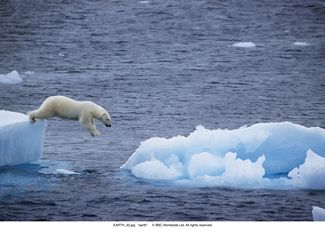
told through the eyes of three key animal families. We watch as a polar bear mother struggles
to feed her newborn cubs as the sun melts the ice beneath their feet. We marvel at the
determination of an elephant mother as she guides her tiny calf on an endless trek across the
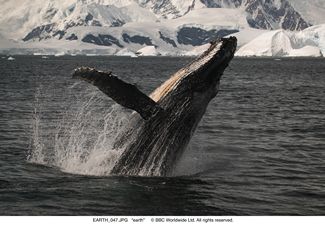
Kalahari Desert in search of fresh water. We follow a humpbacked whale mother and her calf
as they undertake the longest migration of any marine mammal—4,000 miles from the tropics
to the Antarctic in search of food.
POLAR BEARS STRUGGLE FOR SURVIVAL
The first family to appear on screen is the polar bears. Some 700 miles south of the North
Pole, a male adult bear hunts far out on the pack ice, which, as spring arrives, is melting
around him earlier than in past years.
And a mother bear emerges from her
den with her two cubs after a long
winter in their snow den. She too
faces the challenge of feeding her
family and herself because her
hunting platform, the sea ice, is
melting earlier and earlier each year.
Her survival and that of her cubs are
in serious question.
Director Mark Linfield says: “I
think the polar bear has become an
emblem for all the animals that are struggling on planet Earth because its plight is so visual,
it’s so graphic. When the polar bear falls through the ice, you almost need no commentary, the
images just tell the story and it’s heart rending. Of course global warming hits the poles first,
8
that’s where we first see it and that’s where it hits hardest, so the polar bear in a very real sense
is a barometer for what’s happening and a warning for
what’s ahead.”
The filmmakers were the first to be allowed access
to the polar bear denning site in Kong Karls Land,
Norway, where they captured the emergence of a
mother polar bear with her two cubs from their snow
den. They also provided a first-time perspective, using
aerial photography, of polar bears negotiating the sea
ice, which cannot be filmed from the land. For the
aerial shots, they used helicopters equipped with gyro-
stabilized Cineflex aerial camera systems with more
powerful lenses than had been possible to use before.
This allowed the filmmakers to track their animal
characters from great distances and heights and place
them into the context of their environment without
disturbing them.
Fothergill says: “For me, probably the ultimate
moment filming for ‘EARTH’ was in the helicopter
getting those wonderfully special images of the polar bear swimming in the ice. It was a very
beautiful image, but also it seemed to me it was a fantastic symbol: the world has disappeared
beneath the feet of this large carnivore, and in a sense it was emblematic of the fragility of our
planet.”
The bitter cold posed a challenge to
both the crew and the camera
equipment. To keep the camera kit
warm, they developed a special jacket
they called a “polar bear jacket” made
of quilted down with a heating circuit
in it. “However, keeping the crew
warm was just as important,” says
Jason C. Roberts, polar logistics
expert. “The biggest problem they
face is frostbite. You have to keep
moving to keep warm. But camera people are very focused, and when they are filming they will
keep still, which can be dangerous.”
ELEPHANTS OF THE KALAHARI DESERT
To visit the next family, filmmakers travelled far to the south, the journey continuing across
the world’s harshest deserts. We are battered by sandstorms in the Sahara, we fly over the
world’s largest sand dunes in Namibia, and in the Kalahari Desert we meet the second of the
animal stars: an elephant mother and her tiny newborn calf.
It is the dry season and thousands of elephants are struggling across the Kalahari in search
of fresh water. Thick clouds of dust blow across the desert, and there is a real risk that the
9
ELEPHANTS OF THE KALAHARI
ELEPHANTS OF THE KALAHARI
mother and calf will get separated in the sandstorm, and after days of trekking, the matriarch
finally leads the herd to an isolated water hole in the
desert. At last the elephant calf and mother can
quench their thirst, but they do not drink alone. The
elephants are forced to share the precious water with
hungry lions.
During the day the elephants dominate the water
hole, but at night the balance of power shifts. Lions can
see far better in the darkness, and the lions try to steal
the calf away from its mother. The elephants gather
around their calves to form a defensive wall of hide.
Frustrated by this defense, the lions have to change
their tactics. This is the largest pride of lions in Africa,
and 30 of them join forces to attack a young adult
elephant. Will the calf and its mother survive the night
and continue their trek for fresh water, which must
continue to ensure they survive? The elephants are
striving for the Okavango Delta, an inland delta still
hundreds of miles away. At the moment the delta is dry,
but the flood will come.
Fothergill says: “Filming the extraordinary sequence of the lions and the elephants at night
from open vehicles was a great challenge. In the first place, that is a very, very unique story.
I think, as far as we know, only that one pride in Botswana, 30 strong, has learned to bring a
massive elephant down in the way
they do.
“For us filming it, there were a
number of challenges. In the first
place we knew we had to film it in
infrared; any normal light would have
disturbed the natural behavior of the
lions and the elephants. What was
absolutely terrifying was that in
complete darkness, blind, very upset,
very large female elephants were
running all around the place, and I
have to say that a big female elephant or a bull elephant, upset, thinking it’s about to be eaten
up by lions, will not stop if they run into a vehicle, and that was what was quite frightening: it
wasn’t the lions, it was the elephants.”
Linfield says: “For me, the scene of elephants battling a sandstorm in the Okavango delta
is one of the most powerful in the whole movie. From our chopper above the storm, we could
see everything. It was elephants versus the elements. It was just raw, natural drama. The
lengths that one mother went to in order to save her calf was so uplifting and yet, moments
later, the dust cleared and it became apparent that another calf was lost. And from high
overhead, we could see what that little calf could not—it was walking in the wrong direction
into the middle of the desert. There was nothing we could do to help it. In one sequence we
10
had drama that touched so many different emotions, and it came out of the blue with no script.
Nature did it all for us.”
SUN’S ANNUAL RHYTHM DRIVES CYCLE OF WET AND DRY
The lives of the elephant stars are just as dominated by the sun as those of the polar bears.
The sun’s annual rhythm drives the cycle of wet and dry which forces the elephants to be
constantly on the move in search of fresh water. “EARTH” sets the elephants’ intimate
struggles against the epic global story of the freshwater supply across the planet. With
spectacular time-lapse photography from the air, we watch as massive storms form over the
tropical seas before blowing inland to meet the great mountain ranges of the planet.
The clouds forced up by the mountains cool and drop their moisture as snow. When the
sun’s warmth melts that snow, we follow as this fresh water starts its long journey back to the
ocean. The cameras take viewers right over the world’s highest and largest waterfalls and on
towards the sea. As this fresh water sweeps across desert lands, the Okavango Delta is
transformed into a fertile paradise. After weeks of marching, the elephant mother and calf
have finally arrived and play together in the crystal clear waters.
“This was a very special shoot,” says field assistant Chadden Hunter. “We lived with the
elephants for nearly two months observing them as they traveled across near barren desert,
surviving on such a meager diet. They are remarkably tough animals and incongruous in such
an extraordinary setting!”
HUMPBACK WHALES MIGRATE 4,000 MILES
Just as it does on the land, the sun fuels life in the oceans, and it is there that filmmakers
go for the final stage of the journey. The third stars are a humpback whale mother and her
newborn calf, and we meet them first in tropical waters near the equator. These warm, calm
waters make good nurseries. The calf is just a few weeks old and the mother delicately
supports him near the surface so he
can breathe. The calf receives over
600 quarts of milk a day from its
mother, but the mother is starving.
There is nothing for her in these clear
waters.
Eventually, when the calf is five
months old, mother and calf set out
on the longest journey undertaken by
any marine mammal—4,000 miles
from the tropics all the way to the
southern extremes of the planet in
Antarctica. From a unique aerial perspective, flying just above the whales, cameras follow
them as they journey all the way.
As they travel south, the whales encounter some of the ocean’s greatest spectacles. A
hundred sailfish, with javelin-like bills, chase through the ocean at nearly 70 miles an hour in
search of prey. A great white shark, filmed in ultra-slow motion, explodes out of the ocean to
SUN’S ANNUAL RHYTHM
11
GIANTS OF THE OCEAN
grab its fur seal prey.
Eventually the humpback whale
and her calf reach Antarctica just in
time for the summer. The sun has
melted the ice and life has returned.
Now the humpback mother can
replenish her reserves. She and other
whales cooperate to create a
spiralling net of bubbles with which
they harvest shrimp-like krill. But
the whales must work fast because
soon the sun’s warming influence
will return to the north and the sea will freeze again—forcing the whales to journey all the
way back to the tropics.
GETTING CLOSE TO THE GIANTS OF THE OCEAN
“Filming underwater means getting up close, which is why it’s so special,” cinematographer
Doug Allan says as he describes filming the giant whales. “When you are on the land, you
quite often rely on being a long way away and you’ll be hidden in a blind or in a vehicle. In
the water, you have to work much closer to the subject. It will be aware of you, so its
confidence is essential. My goal is always for the animal to accept me.
“I’m not surprised when people say having a whale encounter changes their lives,” he
continues, “and I had a far more intimate, personal experience with a whale than most people.
There is no equivalent experience
with a live animal. You can make
friends with an elephant but whales
are so much bigger, and in the
weightless medium of water, they
have this intangible mystery about
them.”
Speaking of the three animal
families featured in the film,
producer Sophokles Tasioulis says:
“They are heroes in a very traditional
way. They have their battles, they
have their defeats, they have their victories, so you sympathize with them, you feel with them,
and that’s what you want to have in a big-screen drama.”
Producer Alix Tidmarsh adds: “I really felt that we needed the intimate stories of the
animals combined with the epic scope of the film to make it work well on the big screen.”
CARIBOU MIGRATE ACROSS ARCTIC TUNDRA
While focusing on the three animal families, “EARTH” also explores the lives of other
members of the animal kingdom and the geography of the planet. Traveling south from the
12
arctic home of the polar bears, the film reveals the first vegetation after the snows—the
endless grasslands of the arctic tundra. This expanse of grassland is practically lifeless in the
winter, but every summer thousands of visitors arrive from the south to take advantage of the
brief flush of food in the summer. In Canada, 3 million caribou trek 2,000 miles north
following the thaw. It is one of the longest overland migrations on Earth and one of nature’s
greatest spectacles. The vast herds do not travel alone. Hungry wolves shadow them all along
the way. We watch a complete wolf hunt from the air as the wolves cooperate to separate a calf
from its mother.
To reach the first trees on the planet, the film travels some 1,200 miles from the North Pole,
where stunted shrubs mark the
“tree line” of the planet. This is the
start of the taiga—the greatest
coniferous forest in the world which
stretches unbroken all around the
northern hemisphere—containing
one-third of all the trees on Earth.
For much of the year the taiga is a
snow-covered wonderland, a silent
world where the snow is rarely
marked by footprints. Among the few that live there is the lynx, which is captured on film.
Approximately 1,500 miles south of the North Pole are broad-leafed woodlands. Summer
is long enough here for deciduous woodlands to take over from conifers. These are the
woodlands of bluebells and nightingales, foxes and deer. In spring, mandarin duck chicks take
their first brave and comic leaps from their nest hole high in the treetops.
Eventually the epic journey reaches the equator. This is the only part of the planet that has
no seasons, for here in the tropics the sun shines reliably for 12 hours every day of the year.
With so much available energy, the jungle grows unchecked and supports a variety of life.
Although it covers just three percent of the planet, the rain forest is home to more than half of
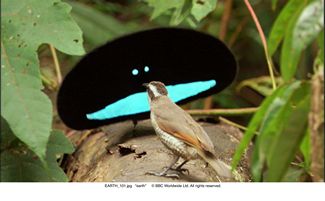
all its plants and animals. In Papua New Guinea alone, there are 42 different species of Birds
of Paradise, an extraordinary variety
with amusing mating displays. The
jungle depends not just on reliable
sunshine all year round but also on
receiving more rainfall than
anywhere else on Earth. Without
rainfall there would be no
rainforest—just desert.
Among other animals featured in
the film are flocks of demoiselle
cranes that undertake an incredible
migration over the planet’s highest
peaks—the Himalayas—from Mongolia to India. Able to climb to altitudes of up to 25,000 feet,
they must reach their breeding grounds on the other side to winter in warmer climes, but there
are times when winds over the mountains force them to turn back and try again another day.
ACROSS ARCTIC TUNDRA
13
CAPTURING PREDATION IN SLOW MOTION
CAPTURING PREDATION
To capture predation in super-slow motion—including a scene in which a cheetah brings
down a gazelle—the filmmakers used a camera originally developed for crash testing cars. It
records straight onto a hard drive—
there’s no film or tape—creating
digital files that are stored straight
onto a laptop computer. It can film
at 1,000 frames per second at full
1024x1024 pixel resolution. This
means that the filmmakers can slow
an event down by up to 40 times but
maintain the clarity and detail of the
image.
“We use this camera to give a unique perspective on wildlife events that happen in a very
short period of time,” says cinematographer Simon King. “Only by filming this way can we
truly appreciate the beauty and mastery of such magnificent creatures as the cheetah or evoke
the poignancy of the life-and-death struggle between prey and predator. Shooting at its highest
speed, this camera would take an event that occurs over four seconds and make it into a shot
that takes more than five minutes to lay out!”
Although animals in nature must
struggle for survival, there are lighter,
even humorous moments in their
lives. In the Okavango Delta a troop
of baboons gingerly wade through the
water, clearly hating to get wet. Also
in the delta, elephants joyously swim
in the crystal-clear waters after their
long trek through the desert.
Elsewhere in the film, chimpanzees
stuff their mouths full of fruit, a male
bird of paradise dances and struts to
attract a mate, and baby mandarin ducks launch themselves from their nests high in the trees,
making hard, bouncing landings on the ground that leave them unharmed.
“EARTH”—A MASSIVE PROJECT
Never in the history of cinema have so many resources and so much time been invested in
a true-life feature film. “EARTH” is the ultimate portrait of the planet, revealing its natural
splendors as they have never been seen before. At a time when we are all becoming
increasingly aware of global warming and the fragile state of the planet we call home,
“EARTH” is a movie of the moment.
“I’ve worked on some pretty massive projects in my time,” Fothergill says, “but they’re
completely dwarfed by the scale of ‘EARTH.’ In over five years‚ we filmed at more than 200
locations in 64 countries worldwide and employed 60 cameramen‚ all of whom are complete
14
experts in their own field. Nobody in the history of cinema has ever had so much time,
resources and talent brought together for one true-life feature.”
In addition, the production included 250 days of aerial photography, and the final movie
features 42 animal species.
As the years pass, more and more of the natural world is dwindling or disappearing. “If we
were to make this film in 10 or
certainly 20 years’ time, we would
not be able to bring the extraordinary
images we are bringing to the big
screen,” Fothergill says. “So there’s a
subtle, yet powerful message behind
the film, which aims to encourage
those who see ‘EARTH’ to feel
compelled to do something to
preserve our beautiful but fragile
planet.”
“Five years is a long time,”
director Mark Linfield says, “and in a production of that length you have ups and downs and
some shoots fail and some shoots are successful; you have to constantly rethink the story. I
think it’s fair to say that all of the teams at times thought, ‘Can we really pull this off?’ It’s such
a massive undertaking in terms of the sheer scale and the vision, but looking back at it after
five years I think it worked out really well.”
As narrator James Earl Jones says: “The people who put the footage together for ‘EARTH’
are artists. Not just artisans, as every photographer has to be, but artists. To have the patience
to find the subject, to know what angle they want to shoot that subject in, the light they want
to shoot the subject in and then the patience to wait for it to behave in a way that’s interesting,
A MASSIVE PROJECT
that they’ve never seen before—that’s artistry.”
In conclusion, producer Tidmarsh
says: “We as humans are all part of one
big system—a complex system of
relationships called Earth. We affect this
system more than most, therefore I
believe we have a responsibility to respect
it. By showing and reminding people of
the beauty and wonder of our planet, we
hope that it will remind us all to just take
a little more care and action towards
preserving our precious resources and the
living things that share our planet with us. Without them, our lives could change radically in
a way we might not like, and given it’s impossible to tell which direction things may definitely
change I hope that people watching this movie will just take a little more care to protect our
planet.”
15
“EARTH” FUN FACTS
Humpback Whales
“EARTH” FUN FACTS
•
The humpback whales in the film migrate 4,000 miles from the warm waters of the
tropics to the waters off Antarctica where they feed on krill and small fish.
•
To avoid getting separated and losing track of each other, mother whale and calf keep in
contact by slapping their fins on the surface of the water.
•
Humpbacks sometimes feed on krill cooperatively using a method call “bubble netting.”
A group of whales emit bubbles in a circle, which herds the krill together and forces
them towards the surface at the center of the circle, making it easy for the whales to feed.
•
Humpback whales’ very small eyes help them withstand the pressure of a deep-sea dive.
•
Instead of teeth, a humpback whale has approximately 330 pairs of baleen plates, or fine
brush-like structures, which strain krill from the water.
•
Humpback whale calves are able to swim within 30 minutes of being born. Calves drink
about 160 gallons of milk a day.
•
Humpback whales are singers: their songs can last up to 10 minutes. Why or how
humpbacks sing is unknown, though it is possible it is related to communication and, in
breeding season, to mating.
Polar Bears
•
The polar bear gets all the
liquid it needs from its food
its main source being the ringed
seal—so it has no need to
drink water.
•
Polar bears will travel hundreds
of miles in search of food and
can swim 12 miles a day.
•
The polar bear is so well adapted to retaining heat that they can’t run long distances
because it would be in danger of overheating.
•
Polar bears are the largest land predator in the world. Males can grow up to about eight
feet and weigh up to 1,800 pounds.
16
•
Even with their mother’s care, only 50 percent of the polar bear cubs survive their first
year, and more are lost when they first leave their mother to make their way alone.
•
The polar bears were filmed on Kong Karls Land, a group of islands between the
Barents Sea and the Arctic Ocean. Part of Norway, it is a land where the midnight sun
lasts from April 20 to August 23, and the polar night lasts from October 26 to February 15.
Elephants
•
An adult elephant can eat more than 300 pounds of food and drink 50 gallons of water
a day.
•
Elephants’ ears act as a cooling system. By holding them out in the wind or flapping
them, the elephant can increase the movement of air over its ears and cool the blood
running through them, thereby regulating its body heat.
•
It can take up to six months for an elephant calf to learn how to use its trunk to bring
water up to its mouth.
•
In times of danger the adult elephants in a herd will form a ring around the young, facing
out to protect them.
•
In the film the elephants spend weeks traveling across the Kalahari Desert to reach the
abundant waters of the Okavango Delta, the world’s largest inland delta, where the
Okavango River empties into the desert.
Other Cast Members
•
Millions of caribou undertake one of the world’s longest land migrations at
2,000 miles.
•
Grey wolves travel greater distances than any other land mammal in North America
except for the caribou.
•
Thousands of demoiselle cranes migrate from Mongolia to the warmer climates of India,
over the highest mountain range on Earth: the Himalayas. They can fly at altitudes up to
25,000 feet.
•
Lions are the only cats to live socially in prides, and it is the lionesses in a pride that do
most of the hunting.
•
The cheetah is the world’s fastest land animal. It can accelerate from 0 to 40 miles
per hour in three strides and to its full speed of 70 miles per hour in seconds.
“EARTH” FUN FACTS
17
ABOUT THE NARRATOR
•
A great white shark is the world’s largest predatory fish, with about 3,000 teeth
at any one time. It is one of the few sharks that can jump fully out of the water.
•
In the film, a troop of Chacma baboons can be seen delicately wading through the
flooded Okavango Delta, where the Okavango River empties into the Kalahari Desert,
as though they can’t stand getting wet. They do, however, enjoy eating the tubers of
aquatic plants. An average troop of baboons consists of 20 to 80 individuals.
•
Mandarin ducks build their nests in a hole in a tree up to 30 feet from the ground. When
the eggs hatch, the mother calls the chicks from the ground. Each chick crawls out of
the hole and launches itself into a free fall. Astonishingly all the chicks land—and
sometimes bounce—unhurt and head for the nearest feeding ground.
•
There are approximately 40 different bird of paradise species in Papua New Guinea,
each with a different mating display. For his mating display, the male six-plumed bird
of paradise builds his dance floor, clearing a small patch of forest floor of leaves and
twigs and pruning the surrounding branches of leaves. He wants all the visiting females
to get a good look at his performance.
•
During the approximately five years of filming “EARTH,” the production captured
42 animal species on film.
•
The Earth is tilted at an angle of exactly 23.5 degrees to the sun. Without this tilt, the
Earth would be a very different planet. While there would still be climatic variations
north to south caused by the varying concentration of solar energy reaching the planet’s
surface, there would be no seasons and no variation in the hours of daylight and darkness
during the year.
•
Tropical rainforests cover less than 3 percent of the planet’s surface but are home to
more than 50 percent of the world’s species.
ABOUT THE NARRATOR
JAMES EARL JONES’ voice is known by people of all ages
and walks of life—the “Star Wars” fans who know him as the voice
of Darth Vader, children who know him as Mufasa from Disney’s
“The Lion King,” those who hear him intone “This is CNN” while
watching the news, and the countless people who use Verizon phone
services, for which he was the exclusive spokesperson for many
years.
Born in Mississippi and raised in Michigan, Jones moved to New
York City after graduating from the University of Michigan and
serving in the military. Renowned Broadway producer Joseph Papp
gave Jones one of his first major breakthroughs, casting him as Michael Williams in
Shakespeare’s “Henry V.” This marked the beginning of Jones’ long affiliation with the New
18
York Shakespeare Festival, which eventually included the title roles of “Othello,” “Macbeth”
and “King Lear” among his many distinguished performances for the company.
Based on his success in the theater, he began to be cast in television roles. In the 1960s,
Jones was one of the first African-American actors to appear regularly in daytime soap operas
(playing a doctor in both “The Guiding Light” and “As the World Turns”), and he made his
film debut in 1964 in Stanley Kubrick’s “Dr. Strangelove.”
In 1969, Jones won a Tony Award® for his breakthrough role as boxer Jack Johnson in the
Broadway hit “The Great White Hope” (which also garnered him an Oscar® nomination for
the 1970 film adaptation). He won a second Tony Award in 1987 for August Wilson’s
“Fences.”
Although he was cast in numerous leading roles in films in the 1970s, including “The
Man,” “Claudine,” “The River Niger” and “The Bingo Long Traveling All-Stars and Motor
Kings,” Jones continued to make his biggest impression on stage. In addition to his
Shakespearean work, he began a long-standing collaboration with South African playwright
Athol Fugard, acting in “The Blood Knot,” “Boseman and Lena” and the critically acclaimed
“Master Harold…and the Boys,” among others.
His films of the 1980s included John Sayles’ “Matewan” and “Field of Dreams,” while the
‘90s found him in the thick of the Tom Clancy blockbuster trilogy—“The Hunt for Red
October,” “Patriot Games” and “Clear and Present Danger”—as well as in the film version of
the Alan Paton classic “Cry, the Beloved Country.”
His career also includes a wide range of television work, including “Roots: The Next
Generation”; “Heat Wave,” for which he won an Emmy®; and a great number of guest roles in
series ranging from “The Defenders” and “Dr. Kildare” to “Touched by an Angel” and
“Homicide: Life on the Streets.” He also earned an Emmy as the title character in the series
“Gabriel’s Fire.”
In addition to the many awards he has received as an actor—two Tonys®, three Emmys®, a
Golden Globe®, two CableACEs, two OBIEs, five Drama Desks, and a Grammy®—Jones was
honored with the National Medal of Arts in 1992 and the John F. Kennedy Center Honor in
December 2002. He also was honored by the Screen Actors Guild with the Lifetime
Achievement Award in January of 2009.
In the spring of 2005, Jones starred on Broadway in a critically acclaimed revival of “On
Golden Pond,” for which he was nominated for a Tony Award®. In 2006, he also starred as
Supreme Court Justice Thurgood Marshall in the production of “Thurgood” at the Westport
County Playhouse, and in spring of 2008 portrayed Big Daddy in “Cat on a Hot Tin Roof ” on
Broadway with cast members Terrence Howard, Anika Noni Rose and Phylicia Rashad.
ABOUT THE FILMMAKERS
ALASTAIR FOTHERGILL (Director) was educated at Harrow School and the
Universities of St. Andrew’s and Durham. He joined the BBC Natural History Unit (NHU) in
1983. He has worked on a wide range of the department’s programs, including the BAFTA
award-winning “The Really Wild Show,” “Wildlife on One” and the innovative “Reefwatch,”
where he was one of the team that developed live broadcasting from beneath the sea.
Fothergill went on to work on the BBC ONE series “The Trials of Life,” with David
Attenborough. In 1993 he directed “Life in the Freezer,” a six-part series for BBC ONE
19
ABOUT THE FILMMAKERS
ABOUT THE FILMMAKERS
celebrating the wildlife of the Antarctic. While still working on the series he was appointed
head of the NHU in November 1992.
In June 1998, Fothergill stepped down from his role as head of the NHU to concentrate on
directing the TV series “The Blue Planet,” the ground-breaking TV series on the Earth’s oceans,
and “Deep Blue,” the feature-length version which achieved both critical and box-office
success for its outstanding cinematography. “Deep Blue” went on to rejuvenate worldwide
interest in the documentary film genre. He is also the creative visionary behind the Emmy®and
Peabody Award-winning 11-part series “Planet Earth,” which he executive produced.
MARK LINFIELD (Director) was educated at the University of Oxford. He had a
childhood passion for nature and started his filmmaking career at the age of 21, on a BBC
documentary about gorillas in the Congo, West Africa. He then joined Green Umbrella
Productions from where he traveled the world producing and directing many award-winning
documentaries including “The Triumph of Life,” “The Battles of Braveheart,” “Orangutans:
The High Society” and “The Temple Troop.” In 2000 Mark returned to the BBC to direct on
the BAFTA-nominated “Life of Mammals” with Sir David Attenborough. In the last four years
Mark has produced and directed the award-winning “Capuchins: The Monkey Puzzle” and
two episodes of “Planet Earth,” including the opening show: “Pole to Pole.”
SOPHOKLES TASIOULIS (Producer) studied aerospace engineering at Berlin’s
Technical University (TU Berlin) as well as media design and media art at the BILDO
Academy Berlin. After completing his studies, he worked for various broadcasters and film
production companies (including Arte, BBC, CanalPlus, ZDF) and founded THESA Film und
Fernsehproduktion in 1991. In 1998 he founded Hope & Glory Film Productions. Since 2002
he has been in charge of developing, financing and producing projects with German and
international co-production partners.
He produced and co-produced a number of noted documentaries, including “Cheerleader
Stories” and “Deep Blue” as well as features such as “Shoes of America,” “The Great Match”
and the animation feature “Quest for a Heart.”
ALIX TIDMARSH (Producer) gained a degree in zoology from Bristol University. In
1998 she joined BBC Worldwide for seven years, as Director of Marketing where she headed
an integrated, full-service marketing operation that included strategic market planning and the
creative execution of campaigns.
She facilitated company-wide marketing projects and helped shape the company’s
investment strategy. She was responsible for providing consumer insights, marketing and
funding support to the production process and directed the account management of the BBC
specialist factual departments, working with producers and BBC Marketing to develop
programming with a global multi-media potential. Her team also coordinated and managed
the global exploitation of those brands across media. She was instrumental in managing the
global marketing of hugely successful, award-winning brands such as “The Human Body,”
“Walking With Dinosaurs,” “The Blue Planet” and David Attenborough’s “Life of Mammals,”
and is responsible for providing consumer insights, marketing and funding support to the
production process. A highlight was the funding and marketing of the successful IMAX film
version of “The Human Body” as well as conceiving and producing the box-office smash hit
20
“Deep Blue.” Prior to joining the BBC, Tidmarsh gained 14 years’ experience in classic
strategic marketing roles from two major international companies, Unilever and L’Oreal,
before running her own successful restaurant and bar.
As managing director of international television and film, MIKE PHILLIPS (Executive
Producer) managed BBC Worldwide’s television and feature film business. Responsible for
the investment in BBC programming and selected BBC theatrical films, he has served as
executive producer on “Deep Blue”; Julian Temple’s “Pandemonium,” starring John Hannah
and Linus Roache; the Roddy Doyle comedy, “When Brendan Met Trudy”; and the
supernatural thriller “Dr. Sleep,” starring “ER’s” Goran Visnjic.
Before joining BBC Worldwide, Phillips was managing director of Thames Television—
then the U.K.’s largest independent production company—a director of two U.K. production
subsidiaries, Euston Films and Cosgrove Hall productions, and president of the Los Angeles-
based production company Reeves Entertainment. He was responsible for single films for the
BBC such as John Schlesinger’s “Cold Comfort Farm.”
ANDRÉ SIKOJEV (Executive Producer) studied philology, Slavic literature and
orthodox theology in Munich and Berlin. He began working as a freelance journalist (Der
Spiegel) during his studies and later became an author (“Die Narten—Kinder Der Sonne”),
publisher and literary translator.
Sikojev is one of the co-founders of Greenlight Media AG and, since 2006, chairman of the
supervisory board. Furthermore, he is the author of the successful 26-part animation series
“SimsalaGrimm” and, together with Stefan Beiten and Nikolaus Weil, the producer of the
series. As the co-producer and producer, he has developed and implemented further animation
films, including “Funky Cops” and “Quest for a Heart,” the TV documentaries “Sandstones,”
“Giorgio Armani—A Man for All Seasons” and “Iceland—Realm of the Gods,” as well as the
motion picture “The Great Match.” He is also executive producer of “Deep Blue.”
STEFAN BEITEN (Executive Producer) began his international career in 1993 in the
film and media law firm Chrystie & Berle in Los Angeles. He continued his career as a lawyer
for Beiten Burkhardt in Berlin and as an investment banker for film and media finance with
ABN AMRO in London.
In 1998 Stefan Beiten co-founded Greenlight Media AG and became chairman of the board
of the media company. He is co-creator and producer of the successful animated series
“SimsalaGrimm” and executive producer of the productions “Giorgio Armani—A Man for All
Seasons,” “Iceland—Realm of the Gods,” “Sandstones,” “Funky Cops,” “Deep Blue,” “The
Great Match” and “Quest for a Heart.”
WAYNE GARVIE (Executive Producer) is BBC Worldwide’s managing director of
content and production. He joined BBC Worldwide in January 2006 to develop ways to secure
and produce content for the company, and to manage vital investment relationships with BBC
Production and with the independent production community.
Over the last two years, Garvie has led Worldwide’s production strategy both in the U.K.
and around the world. Under his direction, the company helped set up new U.K. producers
such as Left Bank Pictures and Cliffhanger, as well as investing in existing companies such as
21
ABOUT THE FILMMAKERS
ABOUT THE FILMMAKERS
Baby Cow, Big Talk, Clerkenwell and Hardy Pictures. Internationally, Garvie established
Worldwide’s first production center in Los Angeles, producers of the hugely successful
“Dancing with the Stars,” as well as conceiving wholly owned production companies in New
York, Mumbai and Paris. During his tenure, Worldwide has also taken shares in companies in
Sydney, Toronto, Moscow and Buenos Aires as it builds an international network of
production companies.
Before joining BBC Worldwide, Garvie was the BBC’s head of Entertainment Group. He
is credited with having transformed the department during his four years in the position. He
employed a new generation of creative leaders and a host of innovative new shows such as
“Strictly Come Dancing,” “Dragons’ Den,” “Honey, We’re Killing the Kids,” “Hardspell” and
“The House of Tiny Tearaways.”
Garvie is the current chair of the Royal Television Society, a trustee of the National
Museum of Labour History, and holds a Ph.D. in economic and social history. He is also
visiting professor of media at the University of Chester.
NIKOLAUS WEIL (Executive Producer) studied law in Freiburg, Munich and New York.
As an attorney he specialized in film financing, entertainment and publishing law. He
represented several clients from the film and music industry. He was also involved in
numerous structured finance as well as M&A transactions in the media area.
In 1998 he co-founded Greenlight Media AG and was appointed chief operating officer of
Greenlight Media, responsible for international co-productions, project financing and
business affairs. He is executive producer of internationally successful animated series
“SimsalaGrimm,” “Happily N’Ever After,” “Funky Cops,” “Quest for a Heart” as well as
“Giorgio Armani—A Man For All Seasons,” “Iceland—Realm of the Gods,” “Sandstones,”
“Deep Blue” and “The Great Match.”
Nikolaus Weil is also a co-founder and managing partner of the Berlin Atlantic Group, an
international investment house specializing in alternative assets, to which Greenlight Media
also belongs.
Born in 1964, JEAN-FRANÇOIS CAMILLERI (Executive Vice President and
General Manager of Disneynature), a graduate of ESCEM Management School in France,
began his career in 1988 at Grey in Paris, the advertising agency which handled the budgets
of Warner Bros. films in France, which, at the time, also distributed the Walt Disney films. He
worked on “Batman,” “Who Framed Roger Rabbit?,” “Dangerous Liaisons,” and “Dead Poet’s
Society.”
He moved to Los Angeles in 1990 to become media manager at Buena Vista International
until 1991. During this period he worked on such films as “Pretty Woman” and “Honey, I
Shrunk the Kids.” He then participated in the creation of the Buena Vista European office in
Paris as advertising manager (1991-1992) and helped in the development of the Buena Vista
International offices in Europe.
In 1992, he joined the newly formed Gaumont Buena Vista International joint venture as
marketing director (1992-1997), then as general manager (1997-2004). During these years, he
worked on, among others, “The Lion King,” “Aladdin,” “Tarzan,” “Armageddon,” “The Sixth
Sense,” “Sister Act,” “Cool Runnings,” “Face/Off,” “Pirates of the Caribbean,” “Toy Story” 1
& 2 and “Monsters, Inc.”
22
In 2000, he started the distribution in France of the Japanese animation films from director
Hayao Miyazaki (“Princess Mononoke,” “Spirited Away,” “The Castle in the Sky,” “Howl’s
Moving Castle”).
Under his leadership, Buena Vista International opened its own French office in 2004 and
Camilleri became its senior vice president and general manager, releasing such films as
“Pirates of the Caribbean” 2 and 3, “Ratatouille,” “The Chronicles of Narnia,” “The
Incredibles,” “Cars,” “The Village” and “Enchanted.” As head of BVI France, Camilleri also
developed local co-production and acquisition including, among others, “The Fox and the
Child” (2007) which did $21 million at the box office in France; “The First Cry” (2007),
nominated for Best Documentary at the French Academy Award; and “The March of the
Penguins” (2005), the most successful French film ever in the USA, earning $77 million at the
box office and $130 million at the global box office. The film won the Academy Award® for
Best Documentary (2006).
In 2008, Camilleri created Disneynature, the first new Disney-branded label in 60 years,
dedicated to producing wildlife films for the big screen. Currently executive vice president
and general manager for Disneynature Productions, Camilleri is working on such upcoming
films as “Oceans,” “The Crimson Wing,” “African Cats,” “Chimpanzee” and “Naked Beauty.”
MARTIN ELSBURY (Editor) is an award-winning BAFTA- and Emmy®-nominated
editor with over 25 years’ experience of film editing.
He joined the BBC in 1978 as an assistant film editor and in 1983 became a film editor,
quickly gaining a reputation for his work with the BBC Natural History Unit. Since becoming
a freelance editor in 1989, he has continued to maintain close links with the BBC.
His work for the BBC has included many major series such as “Kingdom of the Ice Bear,”
“Trials of Life,” “Life in the Freezer,” “Alien Empire,” “The Private Life of Plants,” “Life of
Mammals,” “Life of Birds” and “Blue Planet.” He has also edited many films for BBC’s
“Natural World,” the “Wildlife Specials” and “Wildlife on One.”
He has been nominated for five BAFTA awards and an Emmy® and has received several
awards for editing. He twice won the best editing category at the Missoula Film Festival. In
2001 he won a Royal Television Society Award for his part in the editing of “Blue Planet.”
Following the TV series “Blue Planet” he edited the associated theatrical release “Deep Blue.”
Besides BBC, Elsbury has worked with many other production companies for U.K., European
and American broadcast channels. These include “Forces of the Wild,” “The Future Is Wild,”
“A Company of Ravens,” “Limits of Perception,” “Appalachia—The Endless Forest,” “Animal
Devil,” “First Flight,” “Vergiftet” and “Time Limits.” The series “Nature Tech,” commissioned
by ORF, won the best limited series award at the Jackson Hole Film Festival in 2007 and an
Emmy® in 2008.
Elsbury edited the first program in the major BBC series “Planet Earth” and went on to edit
the theatrical release “EARTH” for Disneynature. He is now editing for a major new BBC
series, “Life,” and has just started to work on another Disneynature film for completion in
2011.
GEORGE FENTON (Composer) began writing scores in 1974 after a brief career
performing and songwriting. Theater work includes scores for The Royal Shakespeare
Company, The National Theatre, the Royal Exchange Theatre, the Royal Court and Peter Gill’s
23
ABOUT THE FILMMAKERS
ABOUT THE FILMMAKERS
productions at Riverside Studios.
His film career began with films on television for Jim Goddard, including “Out” and
“Fox”; and for Stephen Frears, including “Bloody Kids,” “Going Gently” and “Saigon: Year
of the Cat.” His series credits include “The Jewel in the Crown,” “The Monocled Mutineer”
and “The History Man.” In addition he has written music for many of Alan Bennett’s plays,
films and monologues as well as popular theme tunes, including “Shoestring” and “Bergerac”
and the major documentary series “The Trials of Life,” “Life in the Freezer,” “Beyond the
Clouds,” “Shanghai Vice” and “The Blue Planet.”
He has composed for a wide variety of feature films, receiving Academy Award®
nominations for his work on “The Fisher King,” “Dangerous Liaisons,” “Cry Freedom” and
“Gandhi.” Other scores include “The Madness of King George,” “Groundhog Day,”
“Shadowlands,” “Ever After,” “Sweet Home Alabama,” “Stage Beauty” and “Hitch,” as well
as many of Ken Loach’s films such as “Land and Freedom,” “My Name Is Joe” and “A Fond
Kiss.”
Following the broadcast of “The Blue Planet” in 2001, for which he won Ivor Novello,
BAFTA and Emmy® awards for best television score, he has taken the show “Blue Planet
Live!” on tour performing in London at the Royal Festival Hall and Proms in the Park as well
as overseas in Hong Kong, Copenhagen, Montreal and the Hollywood Bowl in Los Angeles.
In May 2003 for the film version of “The Blue Planet,” “Deep Blue,” he recorded the score
with the Berlin Philharmonic at the Philharmonie, Berlin, the first time the orchestra had
recorded a film score. His most recent film scores are “Fool’s Gold,” “The History Boys” and
“The Wind That Shakes the Barley.”
Recently the Royal Television Society awarded Fenton a Lifetime Achievement Award for
his contribution to music for television. He also won the Soundtrack Composer of the Year
Award for “Planet Earth” at the Classical Brit awards.
Information contained within as of April 7, 2009.
OSCAR® and ACADEMY AWARD® are the registered trademarks and service marks of the Academy of Motion Picture Arts and
Sciences.
SCREEN ACTORS GUILD AWARD® and SAG AWARD® are the registered trademarks and service marks of Screen Actors
Guild.
24
We, Walt Disney Studios Motion Pictures, grant you, the intended recipient of this press kit, a nonexclusive,
non-transferable license to use the enclosed photos under the terms and conditions
below. If you don’t agree, don’t use the photos. You may use the photos only to publicize the motion
picture entitled “Earth.” All other use requires our written permission. We reserve the right to
terminate this license at any time, in our sole discretion, upon notice to you. Upon termination, you
must cease using the photos and dispose of them as we instruct. You are solely responsible for any
and all liabilities arising from unauthorized use or disposition of the photos. This press kit is the
property of Walt Disney Studios Motion Pictures and must not be sold or transferred. ©Disney
Enterprises, Inc. and BBC Worldwide Ltd. All rights reserved.
(C) MBN 2009