
Michael Clayton
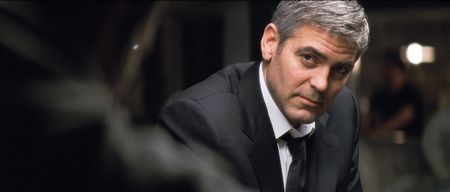
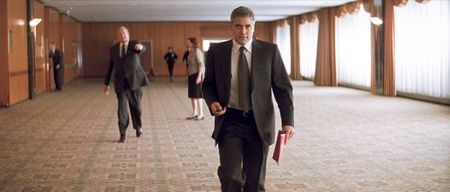
Michael Clayton (George Clooney) is an in-house “fixer” at one of the
largest corporate law firms in New York. At the behest of the firm’s co-founder
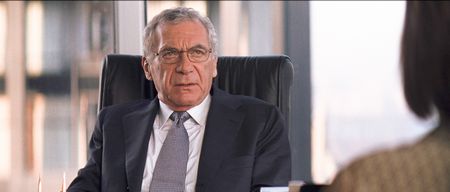
Marty Bach (Sydney Pollack), Clayton, a former prosecutor from a family of cops,
takes care of Kenner, Bach & Ledeen’s dirtiest work. Clayton cleans up clients’
messes, handling anything from hit-and-runs and damaging stories in the press
to shoplifting wives and crooked politicians. Though burned out and discontented
in his job, Clayton is inextricably tied to the firm.
At the agrochemical company U/North, the career of in-house chief
counsel Karen Crowder (Tilda Swinton) rests on the settlement of the suit that
Kenner, Bach & Ledeen is leading to a seemingly successful conclusion. When
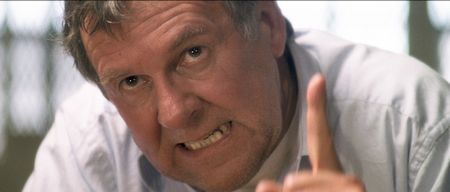
the firm’s top litigator, the brilliant Arthur Edens (Tom Wilkinson), has an
apparent breakdown and tries to sabotage the entire case, Marty Bach sends
Michael Clayton to tackle this unprecedented disaster and, in doing so, Clayton
comes face to face with the reality of who he has become.
Warner Bros. Pictures presents, in association with Samuels Media and
Castle Rock Entertainment, a Mirage Enterprises/Section Eight Production,
“Michael Clayton,” starring Academy Award winner George Clooney (“Syriana”),
Oscar nominee Tom Wilkinson (“In the Bedroom”), Tilda Swinton (“The
Chronicles of Narnia: The Lion, The Witch and the Wardrobe”) and Sydney
Pollack (“The Interpreter”).
The film was written and directed by Tony Gilroy (screenwriter, “The
Bourne Identity,” “The Bourne Supremacy”). Sydney Pollack, Jennifer Fox,
Steven Samuels and Kerry Orent served as producers, with Steven Soderbergh,
George Clooney, James Holt and Anthony Minghella serving as executive
producers.
Joining the director behind the scenes were director of photography
Robert Elswit, production designer Kevin Thompson, editor John Gilroy and
1

costume designer Sarah Edwards. The music is by James Newton Howard.
“Michael Clayton” will be released domestically by Warner Bros. Pictures,
a Warner Bros. Entertainment Company, with international territories handled by
Summit Entertainment.
“Michael Clayton” has been rated “R” by the MPAA for “language including
some sexual dialogue.”
www.michaelclayton.com
ABOUT THE PRODUCTION
George Clooney stars in the title role of Michael Clayton, a “fixer” at
Kenner, Bach & Ledeen, a top Manhattan law firm. A former criminal prosecutor
from a working-class neighborhood, Clayton is an anomaly at the white-shoe
firm; in spite of his 15-year tenure, he has not been promoted to partner and
probably never will be. His boss, Marty Bach, sees Clayton as an invaluable
asset to the firm, but only in his “niche,” one that is relegated to cleaning up the
firm’s sticky situations quickly and quietly.
“While Michael is great at solving other people’s problems, the film
catches him at the apex of dissatisfaction with his career,” says Clooney, who
also serves as an executive producer on the film. “He started out with ambitions
of becoming a trial lawyer, but along the way what he really becomes is a bag
man.”
“Michael Clayton is a 45-year-old attorney who feels that he hasn’t done
everything that he could have done with his life; he’s starting to think he should
have done something else, or could have done better,” says writer-director Tony
Gilroy. “He’s made some bad choices and a lot of compromises. He has come
to the point in life where his next few decisions will determine everything about
him.
2
“How we make those choices—how fear, comfort, inertia and self-
preservation bend us to the wheel—that’s the fuel for the story,” offers Gilroy.
In the midst of his discontentment, Michael Clayton is sent to defuse
Arthur Edens, Kenner, Bach & Ledeen’s chief litigator. The defense architect for
the U/North case, Arthur suddenly suffers a crisis of conscience after finding a
“smoking gun” memo that exposes the client’s moral turpitude. The character is
played by Oscar nominee Tom Wilkinson, who notes, “It is very much a ‘road to
Damascus’ moment. Arthur’s an expert lawyer who has been at the top of his
game for years, but comes to a realization that he’s been defending a cancer.”
“Given the infinity of destructive moral choices that are made every day by
people who know what they're doing is wrong, it's always amazed me that there
aren't more whistleblowers. When you consider how much is wrong, how deep
that wrong is, and how much of it’s done by people who go home and pay their
taxes and love their children, isn’t it astonishing how few actually go off the deep
end?” says Gilroy. “Tom’s character is one of those magnificently intelligent
madmen who can convince any judge, jury or plaintiff to drop or settle a case.
It’s why he’s so good at what he does and makes the kind of money he makes.
But at the end of the day, what’s the real cost?”
GENESIS OF THE SCRIPT
The original inspiration for “Michael Clayton” came to Gilroy during visits to
New York law firms when he was doing research to write the screenplay of “The
Devil’s Advocate.” Gilroy recalls, “Wandering through these giant New York law
offices, I was struck by how much goes on behind the scenes. Every firm had
vast, back-of-the-house departments running twenty-four hours a day to keep
them afloat.”
In developing the script, Gilroy spent time talking to a gamut of law office
personnel, including attorneys, paralegals and partners. Gilroy notes, “I heard a
story about a firm involved in a huge corporate litigation that had gone on for
almost a decade. The case had been essentially settled, and the firm had
prevailed. The settlement was over a billion dollars. Things were so far down
3
the line that the firm had begun clearing out the document rooms that had
housed all the filings and paperwork. Two days before the final signing, at four
o’clock in the morning, a third-year associate found a document that had never
been placed in discovery. It was a very bad document, which would’ve meant a
complete reversal of the case. The document never saw the light of day, and
that associate had the fastest partner promotion in the history of the firm.”
“I wanted to know what kind of person is up at four o’clock in the morning
protecting the firm,” continues Gilroy. “Who fills those gaps and makes those
calls? What else do they have to do? How far could that go? What would it do
to you to have that job? The answer to those questions turned into ‘Michael
Clayton.’”
“Tony’s script was interesting to me right off the bat,” says producer
Sydney Pollack, who was one of the early producers attracted to the project and
also stars in the film as Marty Bach. “It is relevant and gets to the heart of the
matter without lecturing, and it tells a story which has genuine suspense
independent of moral issues.”
Gilroy emphasizes, “‘Michael Clayton’ isn’t an issue film. There’s no
ideological debate. There’s no dark overlord arguing for some greater good.
You’ve got a choir of fear and self-preservation on one side and the lone voice of
a manic, un-medicated virtuoso on the other. Michael Clayton represents the
rest of us in the middle. What will he do?”
Producer Steven Samuels remarks, “I enjoyed Tony’s realistic approach to
telling the story. It’s a reflection of our world today. The main characters in
‘Michael Clayton’ have chosen career paths that come with certain rewards and
compromises. It takes tremendous courage for someone to risk losing
everything in order to do the right thing.”
CAST AND CHARACTERS
The Fixer
“Michael Clayton is a complicated character; he’s not a hero who always
does the right thing,” says Gilroy. “All the traits that have served him so well
4

before—his charm, his ease, his authority—none of those things are of much use
to him as the story progresses. All the charisma in the world isn’t going to help
you find your way home when you’re lost. Lots of actors say they want to play
parts like that, but it takes a certain kind of bravery and ambition to hang your
neck out there and really do it.”
“One of the things that interested me about this project was that Tony had
been saving this script for himself to direct,” states George Clooney. “Tony has
had much success as a screenwriter, and has been around the block enough to
know what he wants. He was clearly driven to make the film, and his confidence
was inspiring.”
Producer Jennifer Fox offers, “George is very believable in the part, and
has that unique spark that gives Michael Clayton the ability to charm people into
believing that he’ll make their problems go away.”
Gilroy remarks, “George obviously has all the chops, and he’s intelligent
and charming. He can be very convincing as someone’s who’s conflicted, which
made him perfect for the role.”
“My first meeting with George lasted eleven hours,” the director recalls.
The two found much common ground in their affinity for 1970s cinema and spent
much of their marathon meeting discussing their various influences and
inspirations, overlapping decisively on such directors as Alan J. Pakula, Sydney
Pollack and Sidney Lumet. “There was a certain electricity about the way films
were made in the ‘70s. The characters were complex. The films were beautiful,
yet they weren’t pretty. They didn’t always wrap up neatly in the end,” says
Gilroy.
“It was a time of groundbreaking social progress, and filmmakers were
really into reflecting that,” adds Clooney. “This movie deals with social
conscience in an entertaining way. Tony’s script was written with the passion of
a filmmaker, and scripts like this don’t come around very often.”
Drawing inspiration for the back story of Michael Clayton from his own
personal experiences, Gilroy says, “I grew up in Washingtonville, a real cops-
and-firemen town on the outskirts of New York City. Every kid on my school bus
5
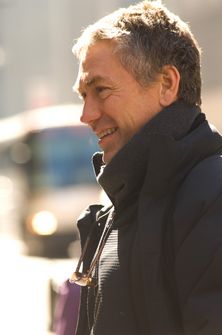
had a father who was either a cop or a fireman. Michael Clayton is from a proud,
working-class neighborhood where his father was a cop and his brother, Gene, is
now on the force. Michael is the first male in his family who’s not a cop.”
Michael’s career choice has created distance between himself and his
family. His decision to commit the last 15 years of his life to Kenner, Bach &
Ledeen has begun to take its toll. He barely has time to see his 10-year-old son,
of whom he shares custody with his ex-wife, and even less time to see his ailing
father. Worse, Michael has a younger, alcoholic brother, Timmy, who drove their
once-promising business venture into the ground and stuck Michael with an
$80,000 debt, a sum he must pay in less than a week to avoid unstated
consequences.
Clooney notes, “Michael’s one hope for escaping the fixer business was
his walk-away money, but that’s been blown on the business with Timmy, leaving
Michael with very few options.”
The Defense Architect
For the role of Arthur Edens, senior litigating partner of Kenner, Bach &
Ledeen and lead defense architect for the U/North case, Clooney suggested
Oscar-nominated actor Tom Wilkinson. “Tom was the first person I thought of,”
says Clooney. “He has been so strong in his previous roles and was just perfect
for this pivotal character.”
“Tom is an immaculate film actor,” Gilroy comments. “You need to feel
Arthur’s intelligence; you need to see a momentary glimpse of his brilliance as an
attorney. At the same time, I wanted the audience to approach the character
with affection. Tom draws you in. Your heart goes out to Arthur.”
“Tom brought so much life to the role,” adds Pollack. “It’s not easy to tell a
story about morals without coming off as self-righteous or didactic. Tom’s
performance pulls you into the strangeness and the excitement of what Arthur’s
experiencing, so watching his crisis of conscience is both compelling and
entertaining.”
6
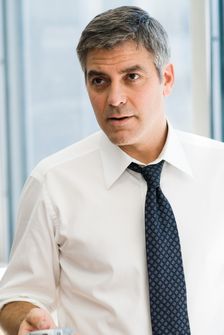
Wilkinson was attracted to the project by the subject matter and Gilroy’s
writing style. “There was no question this is one of the best scripts I’d ever read,”
he offers. “It’s very smartly written. What’s also interesting to me is that, like so
many people, Arthur started off in the law profession fresh out of school with
strong ideals and noble intentions, but years down the road he finds himself
defending the indefensible and completely skewed from who he once was—all
for money and preserving a way of life. He’s allowed his soul to be sullied and
corrupted beyond recognition.”
Gilroy notes, “There are a lot of really decent people who do a lot of really
unpleasant things every day. While it’s not difficult to empathize with people who
have their entire careers invested, it is still astonishing to me the level of evil
things that decent people let themselves do without saying, ‘I’ve had enough.’
On the other hand, Arthur’s had enough, and he says it in a way that no one
could have anticipated.”
With a recently deceased wife and an estranged daughter, Arthur has no
family and is a diagnosed manic-depressive. But as one of the firm’s best
litigators, he has been ceaselessly devoted to protecting U/North for the last six
years. The unintended by-product of Arthur’s life choices manifests itself in ways
beyond anyone’s control, even Michael Clayton’s. The film opens with a
confessional monologue from Arthur. “It’s a classic stream of consciousness
speech,” states Wilkinson. “Arthur has this frenzied desire to communicate his
epiphany to Michael, whom he trusts and respects.”
Arthur and Michael share a distinct bond solidified through years of
working together at Kenner, Bach & Ledeen. Michael’s ability to handle crises
delicately and effectively had saved Arthur from a prior breakdown eight years
ago. Since then, Arthur had agreed to take prescribed medication and to go to
Michael if he felt a relapse surfacing. However, this time around, Arthur skips his
meds without talking to Michael and “has a total and complete breakdown, and,
in effect, begins to construct a case for the other side,” says Pollack. “So the
questions become: will Arthur be defused in time to save the case or will he
7
successfully construct a case for the plaintiffs...and how will Michael Clayton fix
this one?”
The Client
On the client side of the U/North case is Karen Crowder, played by award-
winning actress Tilda Swinton. Karen is an aggressively ambitious litigator who
has just been promoted to the seat of U/North’s in-house chief counsel, and
assumes the duty of guaranteeing a successful outcome in the class action suit.
Gilroy remarks that his goal with Karen’s character was not to make the
faceless corporation the obvious villain. “I have great affection for Karen,” offers
Gilroy. “Odd as it may sound, I find a way to root for her in every scene. She’s
got this intense job that means everything to her. She’s barely up to speed when
she’s hit with Arthur’s meltdown. And she breaks. She breaks because she’s
lost. She breaks because it’s coming too fast. She breaks because she’s
swamped with ambition and fear. And she breaks, ultimately, because she’s in
the thrall of an illusory corporate mirage. You take that variety of poisons and lay
it on someone just crippled enough emotionally to misinterpret the boundaries,
and you almost have a victim.”
In casting the role, Gilroy states, “There are so many great actresses out
there, but Tilda stood out in my mind. She is somebody who is strong enough to
carry the extra burden of Karen’s solitary scenes. She is also very convincing in
portraying someone who’s deeply flawed.”
Swinton observes, “Karen is a high-powered executive who’s
overwhelmed by ambition and seduced by money and power. I think there are a
lot of people in all sorts of high-level business situations who will sympathize with
the kind of panic attack she has. There are three billion dollars at stake, and
those sums of money can do really bad things to people’s judgment.”
Gilroy emphasizes that he specifically wrote the role for a woman to
explore the role of gender in the corporate world. “For Karen, I wanted to show
her desperately trying to fill the shoes of her mentor and predecessor at U/North
8
who is older and male,” says Gilroy. “While she’s intelligent and successful,
Karen wrongly approximates what she thinks male behavior is in this job.”
To prepare for the role, Swinton recalls, “I spoke to several female lawyers
in very high places, and they found it very easy to understand the kind of
pressure for a woman in Karen’s position. It’s a very tough line to walk, and it
feels like everyone’s watching your every move, hoping you’ll falter. Karen is
completely overtaken by the desire to show everyone that she can handle it.
She’s so afraid of messing up and so obsessed with proving herself that she
doesn’t ask for help because she fears even more the perception of being weak
because she’s a woman.”
“I don’t believe that Karen is evil, per se,” says Fox. “She’s incredibly loyal
to U/North, and what makes her character really interesting is that she’s just so
desperate to succeed. When push comes to shove, desperate people make
desperate decisions.”
The Partner
Apart from Karen Crowder, the person with perhaps the most at stake is
Marty Bach, a founding partner of Kenner, Bach & Ledeen, played by Sydney
Pollack.
“The character I play depends heavily on Michael Clayton to get Arthur
under control,” says Pollack. “It’s Marty’s name on the door, and this incident
comes at a critical time when his firm is in the midst of a merger with a company
in London, which would be a lucrative buyout for him—a way to retire with a big
chunk of change. So when things start going south with Arthur, Marty puts an
awful lot of pressure on Michael to rein him in.”
Pollack, an Oscar-winning director and producer, had initially been
developing “Michael Clayton” with Gilroy as a producer through his production
company, Mirage Enterprises. Even with Pollack’s involvement as a filmmaker,
Gilroy still had to do some convincing to get Pollack to agree to play the role of
Marty. “I needed someone with real authority, someone who could intimidate
Michael Clayton. Who better to play the head of a top New York law firm than a
9
well-respected, award-winning director? After a lot of begging, bribing and
whining, he finally said ‘yes,’” Gilroy laughs.
“When I got the call from Tony about acting in the film, I really didn’t think I
had the time,” Pollack recalls. “It’s not because I don’t enjoy acting, but because
it was a really busy time for us at Mirage. Still, Tony’s energy and determination
was infectious so I couldn’t turn him down.”
REALM AND CONQUEST
In contrast to the high-stakes drama among the main characters, Michael
Clayton’s son, Henry, is played by 10-year-old Austin Williams. A bright and
imaginative boy, Henry is an avid reader of a fictional fantasy novel called
“Realm and Conquest,” which influences both Arthur and Michael in unexpected
ways.
Time spent with his own son inspired Gilroy to incorporate this story
element. “My son spent a great deal of his childhood obsessed with fantasy
fiction. Books, cards, graphic novels, multi-player computer games—I’ve been
surrounded by this stuff for years,” says the writer-director. “Some of it is brilliant.
A lot of it’s repetitive. But there’s a draw to the genre that has a lot to do with the
needs of the reader. There’s escapism, there are epic journeys and, more
subliminally, there’s an unexpressed yearning for virtue. The fact that Henry
connects over ‘Realm and Conquest’ with a bipolar attorney in the midst of a
manic breakdown hopefully speaks for itself.”
As for Michael Clayton, Gilroy notes, “it’s not much of a surprise that as
one’s innocence fades, the attraction to this kind of storytelling goes with it.
‘Realm and Conquest’ means a lot to Henry Clayton. Michael can’t hear it.”
Committed to a fully developed back story, Gilroy spent a good deal of
time establishing the details of “Realm and Conquest” with production designer
Kevin Thompson. “Right from the beginning, when I first read the script, I could
tell that ‘Realm and Conquest’ was going to be a key prop. In the movie it’s a
metaphor for truth and justice,” explains the production designer.
10
In creating the details of the fictional novel, Thompson generated original
visuals inspired by German Expressionistic images cut from wood blocks, and
Gilroy wrote the first two pages for three chapters of the book. They even went
as far as designing a “Realm and Conquest” card game for a scene between
Henry and Michael. Thompson offers, “This detail was important to Tony
because, in his own life, novels and games similar to ‘Realm and Conquest’ allow
him to connect with his son in a meaningful way.”
WRITER AND DIRECTOR
Having enjoyed success as a screenwriter, Gilroy stepped up to the
challenges of directing his first feature film, including the formidable task of
working with a main cast of seasoned actors, two of whom are acclaimed
directors.
Clooney, who made his feature directorial debut in 2002 with “Confessions
of a Dangerous Mind,” knows what it takes to successfully cross over from
another focus into directing. He says, “As a director, you’re the general. You’ve
got to be smart enough and convincing enough to make everyone believe in you.
The very first minute Tony walked in the office, I thought, ‘I like this guy and I
think he’s smart. Most important, he knows what he wants.’ Tony was not afraid
to make decisions on his own.”
Pollack notes, “Sometimes it’s better to work with a director who’s not the
writer and other times it’s better to work with a director who is the writer. It’s
difficult when writers don’t have the objectivity about their own work. With Tony,
he’s very comfortable and confident and has none of the timidity and confusion
that first time directors often have. There’s something quite seasoned about
Tony’s approach.”
Samuels adds, “Tony just exudes confidence. He really does. You can
see it in his eyes. But he’s honest about where he is, what he knows and what
he doesn’t know. Above all, he is not afraid to push new boundaries for himself.”
Behind the positive first impressions, Gilroy admits, “The thought of
directing my first feature with such a high-caliber team was intimidating.
11
Fortunately, I’ve had great support from a group I really trusted and relied on.
Everyone from George and Tom to Sydney and Tilda; from Jennifer, Steven and
Kerry to Robert Elswit, Kevin Thompson and my brother, John Gilroy; there was
so much brain power and talent on this project that there wasn’t much room for
fear.”
TOWN AND COUNTRY
Principal photography on “Michael Clayton” began in January 2006 in New
York City. “It’s very, very ambitious to make a movie in the middle of winter in
New York. We had 71 locations, and had to be very lucky with the weather.
Fortunately, we were. We had an extremely detailed prep complemented with a
very nimble crew,” says Gilroy. As many of the world’s top law firms have
offices in New York City, Gilroy envisioned shooting the film amidst the boxy
skyscrapers that line a main artery in midtown Manhattan: Avenue of the
Americas, otherwise known as Sixth Avenue. “A building boom in the 1960s and
1970s gave birth to an environment of 50-story international-style glass boxes
lined up one after another,” notes Gilroy. “The buildings are stacked in such a
beautiful, horrifying kind of way.”
“When you start doing research into the big law firms, it’s amazing to
discover how massive they are, how they’re complete worlds unto themselves,”
states production designer Kevin Thompson. “People go into the office and
rarely leave during the course of the day and into the night. All their meals are
catered, and they only go home to sleep and shower. We wanted to show how
law firm life can become a parallel universe, and how that disconnect could foster
insular thinking and corrupt ideals.”
The filmmakers agreed early on to shoot most of the film on location.
After scouting the offices of several law firms, the filmmakers ended up
combining shots from three different offices.
For the conference room scenes in the beginning and the end of the film,
Gilroy chose the offices of Dewey Ballantine, one of the oldest and most
respected practices headquartered in New York City. Located in midtown
12
Manhattan’s Corporate Row, the office houses 300 attorneys and has a grand
conference room that spans the entire Sixth Avenue side of the building’s 22nd
floor, with views in three directions.
Marty Bach’s office was filmed in the same building as Dewey Ballantine
but on a different floor, in an office of financial company Oaktree Capital
Management. “We specifically chose an office on a higher floor with a dramatic
view of Central Park to convey the power of Marty Bach’s position,” explains
Jennifer Fox.
The exterior scenes for Arthur’s loft were shot in Tribeca, while the interior
scenes were shot in a raw space in Little Italy. “It was always Tony’s idea to
imply that Arthur used to live on the Upper East Side, but that his life fell apart
after his wife died,” says Thompson. “He tried to start anew by moving and
changing neighborhoods, so he bought this huge, palatial raw space loft, but
hasn’t ever really settled in. He probably intended to renovate the space at some
point but became so involved in the U/North case that he never really got it
together, so the loft looks almost decayed. We tried to connect the dilapidated,
castle-like look of the loft with the visual imagery in the ‘Realm and Conquest’
book.”
For scenes that contrasted with Manhattan’s urban setting, the production
moved from New York City to upstate New York. “We looked for landscapes that
were wild and bucolic,” notes Thompson.
“There’s a scene in a field that plays twice in the film. It’s a big moment in
the story, so it was important to find the perfect location,” Gilroy recalls. “At the
height of the search, my brother was upstate visiting our parents and, on
impulse, I had him take his cell phone and grab a couple shots of a place up the
road from where we grew up. It’s this gorgeous valley, bisected with a very
dramatic, hundred-year-old cast iron train trestle. It was a mythic high school
hangout and it was still there.
“Twenty-four hours later we were up there with a dozen people trying to
figure out how we could afford to shoot that far from the city for five days,”
continues Gilroy. “The answer was to move the company upstate for a week and
13
bundle a couple other locations into the trip. The punch line is we ended up
shooting the house where Michael Clayton grew up in the house where I
envisioned Michael Clayton growing up, which is where I grew up. And believe
me, you haven’t experienced surreal until you’ve brought George Clooney and a
movie crew back to your childhood neighborhood.”
ABOUT THE CAST
GEORGE CLOONEY (Michael Clayton / Executive Producer) is an
Academy Award-winning actor, who has also been honored for his work as a
writer, director and producer.
He recently wrapped production on “Leatherheads,” a romantic comedy
set against the beginnings of American pro football, which he directed, produced
and co-wrote. Clooney is also starring in the film opposite Renée Zellweger and
John Krasinski. “Leatherheads” is the first film to be produced by Smoke House,
the production company Clooney launched with Grant Heslov last year. Clooney
will soon begin production on the Coen brothers’ dark comedy “Burn After
Reading,” in which he stars with Brad Pitt and Frances McDormand. The film
marks his third collaboration with the Coens.
In 2006, Clooney earned three Academy Award nominations: Best
Director and Best Original Screenplay for “Good Night, and Good Luck.”; and
Best Supporting Actor for his role in “Syriana.” It marked the first time in
Academy history that an individual received acting and directing nominations for
two different films. Clooney won the Best Supporting Actor Oscar that year for
his performance in “Syriana,” on which he also served as executive producer.
Clooney’s work on “Good Night, and Good Luck.” and “Syriana” also
brought him numerous other accolades. For the first, he garnered dual Golden
Globe, BAFTA, and Critics’ Choice Award nominations for Best Director and Best
Screenplay; nominations for both a Directors Guild of America Award and a
Writers Guild of America Award; an Independent Spirit Award nomination for
14
Best Director; and a Screen Actors Guild (SAG) Award nomination for Best
Ensemble, shared with the cast. The Broadcast Film Critics Association also
presented Clooney with its Freedom Award for “Good Night, and Good Luck.” In
addition, he won a Golden Globe Award and earned BAFTA, SAG and Critics’
Choice Award nominations for Best Supporting Actor for his role in “Syriana.”
Both films were produced under the banner of Section Eight, the
production company in which Clooney was partnered with Steven Soderbergh.
Section Eight also produced 2002’s “Confessions of a Dangerous Mind,” which
marked Clooney’s directorial debut. For his directing work on that film, he won a
Special Achievement in Film Award from the National Board of Review. Other
Section Eight films included “Insomnia” and “Far From Heaven,” which Clooney
executive produced; “Ocean’s Eleven,” “Ocean’s Twelve” and, most recently,
“Ocean’s Thirteen”; “The Jacket”; “Full Frontal”; and “Welcome to Collinwood.”
For Section Eight’s television division, Clooney executive produced and directed
five episodes of “Unscripted,” a reality-based show that debuted on HBO in 2005.
He was also an executive producer and cameraman for HBO’s “K Street.”
Clooney previously won a Golden Globe Award for Best Actor in a Motion
Picture Musical or Comedy for his work in the Coen brothers’ acclaimed 2000
comedy “O Brother, Where Art Thou?” He also earned critical acclaim for his
work in the award-winning drama “Three Kings” and the Oscar-nominated “Out of
Sight,” which was his first collaboration with Soderbergh. Clooney’s other film
credits include the Coen brothers’ “Intolerable Cruelty,” “Solaris,” “The
Peacemaker,” “Batman & Robin,” “One Fine Day” and “From Dusk Till Dawn.”
Clooney has starred in several television series but is best known for his
five years on the hit NBC drama “ER.” His portrayal of Dr. Douglas Ross earned
him Emmy Award, Golden Globe and SAG Award nominations. Additionally, he
was an executive producer and co-star of the live television broadcast of “Fail
Safe,” a 2000 telefilm based on the early 1960s novel of the same name. “Fail
Safe” was nominated for both Golden Globe and Emmy Awards for Best
Miniseries or Motion Picture Made for Television.
15
TOM WILKINSON (Arthur Edens) is an award-winning actor of stage and
screen. Wilkinson received an Academy Award nomination for Best Actor for his
unforgettable performance in Todd Field’s acclaimed drama “In the Bedroom,”
opposite Sissy Spacek. Wilkinson also received a BAFTA nomination, and won
an Independent Spirit Award, a Sundance Film Festival Special Jury Prize and a
New York Film Critics Circle Award for the role. Prior to that, Wilkinson won a
BAFTA for his role in the 1997 British and international box office sensation “The
Full Monty,” and garnered another BAFTA nomination the following year for his
performance in the Oscar-winning Best Picture “Shakespeare in Love.” He more
recently received Emmy and Golden Globe Award nominations for his
courageous performance in HBO’s 2003 film “Normal,” opposite Jessica Lange.
Upcoming, Wilkinson will star in the indie romantic comedy “Dedication,”
with Billy Crudup and Mandy Moore; Woody Allen’s “Cassandra’s Dream,” with
Colin Farrell and Ewan McGregor; and the HBO miniseries “John Adams,” in
which he will portray Benjamin Franklin. Wilkinson is currently filming Guy
Ritchie’s London-set crime caper “RocknRolla,” with Gerard Butler, and Bryan
Singer’s World War II-set drama “Valkyrie,” with Tom Cruise.
His previous film credits include Christopher Nolan’s “Batman Begins”;
“Eternal Sunshine of the Spotless Mind,” with Kate Winslet and Jim Carrey; “The
Last Kiss,” starring Zach Braff; “Stage Beauty,” with Billy Crudup; “Wilde”; “The
Governess,” opposite Minnie Driver; Ang Lee’s “Sense and Sensibility”; “Smilla’s
Sense of Snow”; Gillian Armstrong’s “Oscar and Lucinda”; “Ride with the Devil”;
“The Importance of Being Earnest”; “Girl with a Pearl Earring,” starring Scarlett
Johansson and Colin Firth; Roland Emmerich’s “The Patriot”; “A Good Woman”;
“Ripley Under Ground”; “The Exorcism of Emily Rose”; and “Separate Lies,” with
Emily Watson and Rupert Everett.
An accomplished stage actor, Wilkinson has played the role of John
Proctor in “The Crucible” at the Royal National Theatre; the title role in “King
Lear” at the Royal Court; the role of Dr. Stockmann in the award-winning West
End production of “Enemy of the People,” with Vanessa Redgrave; a London
16
Critics Circle Award-winning performance in “Ghosts”; and David Hare’s
production of “My Zinc Bed,” with Julia Ormond.
On the small screen, Wilkinson received BAFTA TV Award nominations
for his roles in the British telefilm “Cold Enough for Snow” and the award-winning
BBC miniseries “Martin Chuzzlewit.” His other notable television credits include
such long form projects as the HBO movie “The Gathering Storm” and the BBC
telefilm “Measure for Measure,” to name only a few.
TILDA SWINTON (Karen Crowder) started making films with the English
director Derek Jarman in 1985 with “Caravaggio.” The two worked together for
eight years and made seven films, including “The Last of England,” “The
Garden,” “War Requiem” and “Wittgenstein,” before Jarman’s death in 1994. In
1990, Swinton won the Coppa Volpe at the Venice Film Festival for her
performance in Jarman’s “Edward II.”
Swinton gained wider international recognition in 1992 with her
extraordinary portrayal of “Orlando” under the direction of Sally Potter. Since
then, her work has included Lynn Hershman-Leeson’s “Conceiving Ada” and
“Teknolust”; Susan Streitfeld’s “Female Perversions”; Tim Roth’s “The War
Zone”; and Robert Lepage’s “Possible Worlds.” In 2000, Swinton made “The
Deep End” with David Siegel and Scott McGehee, and was honored with
numerous international awards for her role, including a Golden Globe nomination
for Best Actress.
Swinton’s more recent credits include Spike Jonze’s “Adaptation,” David
Mackenzie’s acclaimed 2003 Cannes entry “Young Adam,” Mike Mills’
“Thumbsucker,” Francis Lawrence’s “Constantine” and Jim Jarmusch’s “Broken
Flowers.” In 2005, she starred in the role of the White Witch in Andrew
Adamson’s worldwide box office smash “The Chronicles of Narnia: The Lion, the
Witch and the Wardrobe.” Swinton also worked with the acclaimed Hungarian
director Béla Tarr in “The Man From London,” which premiered in competition at
the 2007 Cannes Film Festival.
17
Swinton most recently finished shooting the eponymous lead in the thriller
“Julia” for maverick French director Erick Zonca, and David Fincher’s “The
Curious Case of Benjamin Button,” opposite Brad Pitt. She is currently in
production on Joel and Ethan Coen’s “Burn After Reading,” with Pitt, George
Clooney and Frances McDormand.
SYDNEY POLLACK (Marty Bach / Producer) is an award-winning director
and producer. He won Oscars for Best Director and Best Picture for the 1985
romantic drama “Out of Africa,” which collected a total of seven Academy
Awards. The film also received three Golden Globes Awards, including Best
Picture - Drama, and three additional nominations, including Best Director.
Pollack received his first Academy Award nomination for Best Director for
his Depression-era drama “They Shoot Horses, Don’t They?,” starring Jane
Fonda. In 1982, Pollack directed, produced and co-starred in “Tootsie,” which
garnered 10 Oscar nominations, including Best Director and Best Picture, won a
Golden Globe for Best Picture - Musical/Comedy and a National Society of Film
Critics Award for Best Film. Pollack was also honored with Best Directing
nominations for a Golden Globe and a BAFTA, and won a New York Film Critics
Award.
Pollack’s other directing accolades include an Emmy Award and prizes at
Cannes, Berlin, Brussels, Belgrade, San Sebastian, Moscow and Taormina Film
Festivals. In 2000, Pollack was presented with the Directors Guild of America
John Huston Award by the Artists Rights’ Foundation. His other directing credits
include “The Interpreter,” “Sabrina,” “The Firm,” “Absence of Malice,” “The
Electric Horseman,” “Three Days of the Condor,” “The Way We Were” and
“Jeremiah Johnson.”
In 1985, Pollack formed Mirage Enterprises. Under this banner he has
produced such films as “Presumed Innocent,” “The Fabulous Baker Boys,”
“White Palace,” “Major League,” “Dead Again,” “Searching for Bobby Fischer,”
“Sense and Sensibility” and “The Talented Mr. Ripley.” In 2000, director-writerproducer
Anthony Minghella became a partner at Mirage Enterprises. Since
18
then, Pollack and Minghella have collaborated on such films as “Iris,” “The Quiet
American,” “Cold Mountain” and “Breaking and Entering,” with Minghella writing
and directing the last two. They are currently in production on a mysterycomedy-
drama entitled “The No. 1 Ladies Detective Agency,” also under the
direction of Minghella.
An accomplished actor, Pollack has appeared in Woody Allen’s
“Husbands and Wives,” Robert Altman’s “The Player,” Robert Zemeckis’ “Death
Becomes Her,” Steven Zaillian’s “A Civil Action,” Stanley Kubrick’s “Eyes Wide
Shut” and Roger Michell’s “Changing Lanes.”
Pollack is a founding member of the Sundance Institute, the Chairman
Emeritus of the American Cinematheque and a sustaining founder of the Artists’
Rights Board of the Directors Guild. He also sits on the Board of Directors for the
Film Preservation Board and the Motion Picture & Television Fund Foundation.
ABOUT THE FILMMAKERS
TONY GILROY (Writer / Director) makes his feature film directorial debut
with “Michael Clayton.” An acclaimed screenwriter, Gilroy spent seven years
working on the trilogy of Bourne films: “The Bourne Identity,” “The Bourne
Supremacy” and the recently released hit “The Bourne Ultimatum.”
Gilroy has also written three screenplays for director Taylor Hackford:
“Dolores Claiborne,” based on the novel by Stephen King and starring Kathy
Bates and Jennifer Jason Leigh; “The Devil’s Advocate,” starring Keanu Reeves,
Al Pacino and Charlize Theron; and “Proof of Life,” starring Russell Crowe and
Meg Ryan, which Gilroy also executive produced.
Gilroy’s additional writing credits include Michael Bay’s blockbuster
“Armageddon,” starring Bruce Willis, Ben Affleck, Liv Tyler and Billy Bob
Thornton; Michael Apted’s “Extreme Measures,” starring Gene Hackman, Hugh
Grant and Sarah Jessica Parker; “The Cutting Edge,” starring D.B. Sweeney and
19
Moira Kelly; and the TV movie “For Better and for Worse,” starring Patrick
Dempsey and Kelly Lynch.
Raised in upstate New York, Gilroy is the son of Pulitzer Prize-winning
playwright and filmmaker Frank D. Gilroy. His brother Dan Gilroy is a
screenwriter, and his brother John Gilroy is a film editor who also worked on
“Michael Clayton.”
SYDNEY POLLACK (Producer)
Please see biography in “About the Cast” section above.
JENNIFER FOX (Producer) served as President of Steven Soderbergh
and George Clooney’s production company Section Eight from 2001 to 2007.
She ran the day-to-day operations of Section Eight and produced such acclaimed
films as Stephen Gaghan’s “Syriana,” for which George Clooney won the
Academy Award for Best Supporting Actor, and executive produced the Clooneydirected
political drama “Good Night, and Good Luck.,” which received six
Academy Award nominations, including Best Picture.
Fox’s other executive producing credits include Richard Linklater’s “A
Scanner Darkly,” starring Keanu Reeves, Robert Downey Jr., Woody Harrelson
and Winona Ryder; “PU-239,” which premiered at the 2006 Toronto International
Film Festival; Rob Reiner’s “Rumor Has It...,” starring Jennifer Aniston, Kevin
Costner, Shirley MacLaine and Mark Ruffalo; “The Jacket,” directed by John
Maybury, starring Adrien Brody and Keira Knightley; and “Criminal,” directed by
Gregory Jacobs, starring John C. Reilly, Diego Luna, and Maggie Gyllenhaal.
During Fox’s tenure, Section Eight also produced “Ocean’s Eleven,”
“Welcome to Collinwood,” “Full Frontal,” “Far From Heaven,” “Insomnia,”
“Confessions of a Dangerous Mind,” “Ocean’s Twelve,” “The Good German,”
and, most recently, “Ocean’s Thirteen.”
Prior to Section Eight, Fox was Vice President of Production at Universal
Pictures, where she worked on several films, including Steven Soderbergh’s
“Erin Brockovich.”
20
STEVEN SAMUELS (Producer) heads Samuels Media, an entertainment
company that finances, develops and produces feature films. In addition to
“Michael Clayton,” Samuels recently produced the upcoming dramatic thriller “In
the Valley of Elah,” starring Tommy Lee Jones, Charlize Theron, Susan
Sarandon and Jason Patric, under the direction of Oscar-winner Paul Haggis.
The film is set for release on September 21, 2007.
Previously, Samuels executive produced the comedy drama “Running with
Scissors,” writer-director Ryan Murphy’s film adaptation of the book by Augusten
Burroughs. Samuels also produced and financed writer-director Craig
Rosenberg’s 2006 supernatural thriller “Half Light.”
Beyond his work in film, Samuels has been a real estate developer since
1984, during which time he has built or redeveloped more than 50 retail projects
in seven states. He founded Samuels & Associates nearly 20 years ago and
helped pioneer Boston’s retail renaissance with two successful projects in the
city’s underserved, underprivileged neighborhoods: Dorchester’s massive South
Bay Center and Roxbury’s Grove Hall Mecca. The South Bay Center, built in
1991, was hailed as one of Boston’s first urban retail developments in over 20
years and inspired a flurry of other retail developments in the city. The Grove
Hall Mecca Project, undertaken in 1997 at the request of Mayor Thomas Menino,
was a pro bono project motivated by the desire to resuscitate a stagnant retail
area that had been neglected for decades. The development is currently one of
the most vibrant retail centers in Boston.
Samuels also serves on the Boards of both the Boston Police Athletic
League (P.A.L.), an independent non-profit organization dedicated to the positive
development of Boston’s youth, and Mayor Menino’s Boston Main Streets
Foundation, a program focused on the aesthetic and commercial revitalization of
the city’s historic neighborhoods.
KERRY ORENT (Producer) has served since 2002 as producer on FX’s
hit firefighter drama “Rescue Me,” starring Denis Leary. In 2005, the show was
21
honored by the Producers Guild of America with a Visionary Award, which
acknowledges producers whose work demonstrates a unique or uplifting quality.
Upcoming, Orent will serve as executive producer on the romantic comedy
“Definitely, Maybe,” starring Ryan Reynolds, Rachel Weisz, Abigail Breslin and
Kevin Kline. The film is scheduled for release on February 14, 2008.
Orent’s film credits as executive producer also include “Kate & Leopold,”
starring Meg Ryan and Hugh Jackman, under the direction of James Mangold;
“Rounders,” starring Matt Damon and Edward Norton; Jonathan Glazer’s “Birth,”
starring Nicole Kidman; and Fred Schepisi’s “It Runs in the Family,” starring
Michael Douglas and Kirk Douglas. Additionally, Orent was a producer on
James Gray’s crime thriller “The Yards,” starring Mark Wahlberg, Joaquin
Phoenix and Charlize Theron.
Orent has also co-produced James Mangold’s “Cop Land,” with Sylvester
Stallone, Robert De Niro, Harvey Keitel and Ray Liotta; David O. Russell’s
hilarious comedy “Flirting with Disaster,” starring Ben Stiller, Patricia Arquette,
Alan Alda and Lily Tomlin; James Gray’s feature directorial debut “Little Odessa,”
starring Tim Roth and Edward Furlong; John Duigan’s “The Journey of August
King”; and Phillip Haas’ “The Music of Chance.” He was also a producer of an
indie feature entitled “Dead Dog,” directed by “Michael Clayton” co-producer,
Christopher Goode.
Orent’s other television producing credits include the 2001-2002 ABC
series “The Job,” starring Denis Leary. Starting his filmmaking career in postproduction,
Orent counts among his post-production supervising credits “The
Pelican Brief,” “Reversal of Fortune,” “Peggy Sue Got Married” and “The Cotton
Club.”
STEVEN SODERBERGH (Executive Producer) won an Academy Award
for Best Director for his 2000 ensemble drama “Traffic.” He had earned dual
Best Director Oscar nominations that year, also receiving one for “Erin
Brockovich,” starring Julia Roberts in her Oscar-winning performance.
Soderbergh had earlier gained an Academy Award nomination for Best Original
22
Screenplay for “sex, lies, and videotape,” which marked his feature film directorial
debut. The film also won the Palme d’Or at the 1989 Cannes Film Festival.
Soderbergh’s film credits include “Ocean’s Thirteen,” “The Good German,”
“Bubble,” “Ocean’s Twelve,” “Solaris,” “Full Frontal,” “Ocean’s Eleven,” “The
Limey,” “Out of Sight,” “Gray’s Anatomy,” “Schizopolis,” “The Underneath,” “King
of the Hill” and “Kafka.”
He also wrote, directed, photographed and edited “Equilibrium,” starring
Alan Arkin, Robert Downey Jr. and Ele Keats, which was one of a trio of short
eroticism-themed films released as “Eros.” Michelangelo Antonioni and Wong
Kar-wai directed the other two segments. The film had its premiere at the 2004
Venice Film Festival.
In addition, Soderbergh has produced or executive produced a wide range
of features. His credits as a producer include John Maybury’s “The Jacket,”
starring Adrien Brody and Keira Knightley; Lodge Kerrigan’s “Keane,” which
played at the Telluride, Toronto and New York Film Festivals; Gregory Jacobs’
directorial debut, “Criminal,” with John C. Reilly and Maggie Gyllenhaal; Anthony
and Joseph Russo’s “Welcome to Collinwood,” starring William H. Macy; Gary
Ross’ “Pleasantville,” with an ensemble cast led by Tobey Maguire; and Greg
Mottola’s “The Daytrippers.”
GEORGE CLOONEY (Executive Producer)
Please see biography in “About the Cast” section above.
JAMES HOLT (Executive Producer) is head of finance and production at
Samuels Media. In addition to “Michael Clayton,” he also serves as executive
producer on the upcoming Iraq-themed drama “In the Valley of Elah,” written and
directed by Paul Haggis, starring Tommy Lee Jones, Charlize Theron and James
Franco.
Holt’s film credits as a co-producer include “The Whole Ten Yards,” “Alex
& Emma,” “The Heist,” “Get Carter” and “The Whole Nine Yards.”
23
ANTHONY MINGHELLA (Executive Producer) is an acclaimed film
director, producer and writer. He is best-known for his Oscar-winning film “The
English Patient,” which he adapted and directed from Michael Ondaatje’s novel
of the same name. “The English Patient” won more than 30 international awards,
among them nine Academy Awards, including Best Picture and Best Director; six
BAFTA Awards, including Best Picture and Best Screenplay; the Writers Guild of
Great Britain Award for Best Screenplay; and the Directors Guild of America
Award for Best Director.
Minghella made his feature film debut directing and writing the critically
acclaimed “Truly Madly Deeply,” which won several awards, including a BAFTA
for Best Original Screenplay. His other film work includes “The Talented Mr.
Ripley,” which he adapted from the Patricia Highsmith novel. It was nominated
for five Academy Awards, including Best Adapted Screenplay, and seven BAFTA
Awards, including Best Film, Best Director and Best Adapted Screenplay.
Since 2000, Minghella has been joint owner with Sydney Pollack of Mirage
Enterprises. The company has been involved in projects such as “Iris,”
“The Quiet American,” “Cold Mountain,” “The Interpreter” and “Breaking and
Entering.” He is currently in production on “The No. 1 Ladies Detective Agency.”
For the stage, Minghella directed “Madama Butterfly” with his wife,
Carolyn Choa. “Madama Butterfly” was a co-production of The English National
Opera House, The Lithuanian Opera House and The Metropolitan Opera House
in New York, and won a Laurence Olivier Award for Best New Opera Production.
Since December 2002, Minghella has been Chairman of the British Film
Institute. He holds Honorary Doctorates from the University of Hull, the
University of Southampton and the University of Bournemouth. He has long
affiliations with the Arvon Foundation, which offers creative writing courses; the
Script Factory; and the Canadian Screenwriters Workshop.
ROBERT ELSWIT (Director of Photography) was honored in 2006 with
an Academy Award nomination for his work on George Clooney’s “Good Night,
and Good Luck.” For the film, he won an Independent Spirit Award, a Boston
24
Society of Film Critics Award and a Los Angeles Film Critics Association Award
for Best Cinematography. He also received a nomination for Best Achievement
in Cinematography from the American Society of Cinematographers.
Elswit has worked with numerous acclaimed directors, including Stephen
Gaghan on “Syriana”; Paul Thomas Anderson on “Punch-Drunk Love,”
“Magnolia,” “Boogie Nights” and “Hard Eight”; David Mamet on “Heist”; Don Roos
on “Bounce”; Curtis Hanson on “The River Wild,” “The Hand That Rocks the
Cradle” and “Bad Influence”; and Stephen Gyllenhaal on “A Dangerous Woman,”
“Waterland,” “Paris Trout” and “A Killing in a Small Town.”
His other film credits include Paul Weitz’s “American Dreamz,” Gary
Fleder’s “Runaway Jury” and “Imposter,” Roger Spottiswoode’s “Tomorrow Never
Dies,” “Boys,” “The Pallbearer,” Mike Newell’s “Amazing Grace and Chuck,”
“Desert Hearts,” and Rob Reiner’s “The Sure Thing.”
Following “Michael Clayton,” Elswit’s work can be seen in Paul Thomas
Anderson’s “There Will Be Blood,” a film adaptation of Upton Sinclair’s novel Oil!,
starring Daniel Day-Lewis. The film is set for release this November.
KEVIN THOMPSON (Production Designer) served as production designer
on Marc Forster’s acclaimed fantasy drama “Stranger Than Fiction,” starring Will
Ferrell, Emma Thompson, Maggie Gyllenhaal, Queen Latifah and Dustin
Hoffman. Thompson had previously collaborated with Forster on the 2005 thriller
“Stay,” starring Ewan McGregor and Naomi Watts.
Thompson’s other film credits include the sleeper hit “Igby Goes Down,”
starring Kieran Culkin, Claire Danes and Jeff Goldblum; Bart Freundlich’s “Trust
the Man” and “World Traveler”; “Birth,” starring Nicole Kidman; “The Yards,”
starring Mark Wahlberg and Joaquin Phoenix; “54,” starring Ryan Phillippe and
Salma Hayek; “Down to You,” starring Julia Stiles and Freddie Prinze, Jr.;
“Kicked in the Head,” with Kevin Corrigan and Linda Fiorentino; James Toback’s
“Two Girls and a Guy,” with Heather Graham and Robert Downey Jr.; Cindy
Sherman’s “Office Killer”; Ismail Merchant’s “The Proprietor”; Larry Clark’s
25
controversial film “Kids”; “Little Odessa,” with Tim Roth and Vanessa Redgrave;
“Party Girl,” starring Parker Posey; and David O. Russell’s “Flirting with Disaster.”
Prior to his work in feature films, Thompson began his career as an
architect and went on to design sets for short films, commercials, theater and
music videos. His short film credits include Spike Jonze’s “Dog Boy,” Tom
Kalin’s “Urban Legends” and Tamara Jenkins’ “Family Remains.”
JOHN GILROY (Editor) has edited many features over the past
decade and a half. He recently completed Gavin O’Connor’s film “Pride and
Glory,” starring Edward Norton, Colin Farrell and Jon Voight. Also with
O’Connor, Gilroy edited “Miracle,” starring Kurt Russell, and “Tumbleweeds,”
for which Janet McTeer won a Golden Globe and was nominated for an
Academy Award for Best Actress.
Gilroy has also worked several times with director Joe Carnahan,
editing “Narc,” starring Ray Liotta and Jason Patric, and “Ticker,” a short film
starring Clive Owen and Don Cheadle in BMW Films’ “The Hire” short film
series. Gilroy won a Cleo Award for his work on the latter.
His other editing credits include “Trust the Man,” starring Julianne
Moore, David Duchovny, Maggie Gyllenhaal and Billy Crudup; “First Born,”
starring Elisabeth Shue; “Suspect Zero,” starring Aaron Eckhart, Carrie-Anne
Moss and Ben Kingsley; “Shadow Magic,” starring Jared Harris and Yu Xia;
and “Billy Madison,” starring Adam Sandler.
After graduating from Dartmouth College, Gilroy came up through the
editing ranks in the ‘80s working as an assistant editor on numerous features,
including two by Francis Ford Coppola, “Peggy Sue Got Married” and
“Gardens of Stone.” His first editing credit was “The Luckiest Man in the
World,” written and directed by his father, Frank D. Gilroy. “Michael Clayton”
marks Gilroy’s first collaboration with his brother Tony Gilroy.
JAMES NEWTON HOWARD (Composer) is a six-time Academy Award
nominee and one of the industry’s most prolific composers, with more than 100
26
motion picture and television scores to his credit. His latest Oscar nomination
came for his score for M. Night Shyamalan’s “The Village.” Howard has scored
all of Shyamalan’s films, beginning with the director’s hit debut, “The Sixth
Sense,” and subsequently including “Unbreakable,” “Signs” and “Lady in the
Water.”
Howard also received Oscar nominations for his work on “My Best
Friend’s Wedding,” “The Fugitive” and “The Prince of Tides.” He gained two
more Oscar nods for Best Original Song for “Look What Love Has Done” from
the movie “Junior” and “For the First Time” in “One Fine Day.” He also garnered
Golden Globe Award nominations for both songs. Howard received his third
Golden Globe nomination for his score for Peter Jackson’s hit remake of “King
Kong.”
Howard’s long list of film credits also includes “Blood Diamond,” “RV,”
“Freedomland,” “Batman Begins,” “The Interpreter,” “Collateral,” “Hidalgo,”
“America’s Sweethearts,” “Runaway Bride,” “Romy and Michele’s High School
Reunion,” “Primal Fear,” “Outbreak,” “Wyatt Earp,” “Dave,” “Falling Down,”
“Grand Canyon,” “My Girl,” “Pretty Woman” and “Major League,” to name only a
portion.
Also honored for his work in television, Howard won an Emmy Award for
Outstanding Main Title Theme for the series “Gideon’s Crossing” and earned an
Emmy nomination in the same category for “ER.”
SARAH EDWARDS (Costume Designer) designed the costumes for
Sydney Pollack’s political thriller “The Interpreter,” starring Nicole Kidman and
Sean Penn.
Based in New York, Edwards has designed the costumes for Boaz Yakin’s
“Uptown Girls,” starring Brittany Murphy and Dakota Fanning, and Burr Steers’
“Igby Goes Down,” for which she was nominated for a Costume Designers Guild
Award. She counts among her other film credits “The Perfect You,” starring
Jenny McCarthy, “Jack Frost,” starring Michael Keaton and Kelly Preston, and
Whit Stillman’s “The Last Days of Disco,” starring Chloë Sevigny and Kate
27
Beckinsale. As assistant costume designer, Edwards worked on “Six Degrees of
Separation,” “The Quick and the Dead,” “Great Expectations,” “Lolita” and “The
Pallbearer.” In 1997, she co-designed “The Devil’s Advocate” with Judianna
Makovsky.
Edwards’ work in the theatre includes the Broadway production of “Tru,”
the 2005 production of David Mamet’s “Romance” at the Mark Taper Forum and
numerous productions at the Atlantic Theatre Company in New York.
Edwards is the daughter of two distinguished theatrical designers: set
designer Ben Edwards and costume designer Jane Greenwood.
# # #
28
”” (George Clooney) es quien se encarga de “arreglar
problemas” para una de las firmas de abogados corporativos más grandes de
Nueva York. A pedido del co-fundador de la firma, Marty Bach (Sydney Pollack),
Clayton – un ex - fiscal proveniente de una familia de policías- se encarga de la
parte no tan limpia de la firma Kenner, Bach & Ledeen. Clayton soluciona los
problemas difíciles en que se meten los clientes: los de los automovilistas que
atropellaron a alguien y huyeron, los de la gente perjudicada por rumores
negativos de la prensa, los de las damas que fueron encontradas robando en las
tiendas, o los de los políticos no demasiado correctos. Sin embargo Clayton no
está muy feliz con su trabajo, y ya está cansado de todo ello. Pese a todo, en su
situación no tiene muchas otras opciones y debe quedarse en la firma.
En la compañía de químicos agropecuarios U/North, la carrera de la jefa
de asesores de la compañía, Karen Crowder (Tilda Swinton), depende del
resultado del juicio que lleva a cabo la firma Kenner, Bach & Ledeen. Todo
indica que van a ganar, pero de pronto, el abogado litigante más importante del
bufete, Arthur Edens (Tom Wilkinson), tiene una intensa crisis nerviosa y trata de
sabotear su propia defensa. Un desastre sin precedentes. Entonces Marty Bach
envía a Michael Clayton para solucionarlo todo. Clayton se pone a trabajar en
ello, y en medio de todo, de repente, comienza a verse a sí mismo, y a la
persona en que él se transformó en realidad.
Warner Bros. Pictures, en asociación con Samuels Media y Castle Rock
Entertainment, presenta una producción de Mirage Enterprises/Section Eight:
””, protagonizada por George Clooney (“Syriana”) ganador del
Premio de la Academia, Tom Wilkinson (“In the Bedroom”) nominado al Oscar,
Tilda Swinton (“The Chronicles of Narnia: The Lion, The Witch and the
Wardrobe”) y Sydney Pollack (“The Interpreter”).
La película fue escrita y dirigida por Tony Gilroy (guionista, “The Bourne
Identity”, “The Bourne Supremacy”). Sydney Pollack, Jennifer Fox, Steven
Samuels y Kerry Orent fueron los productores. Steven Soderbergh, George
Clooney, James Holt y Anthony Minghella fueron los productores ejecutivos.
Junto al director, tras las cámaras, estuvieron: el director de fotografía
Robert Elswit, el diseñador de producción Kevin Thompson, John Gilroy en el
montaje y la diseñadora de vestuario Sarah Edwards. Música de James Newton
Howard.
”” será distribuida nacionalmente por Warner Bros.
Pictures, una compañía de Warner Bros. Entertainment, y en territorios
internacionales por Summit Entertainment.
”” ha sido clasificada “R” (Restricted = Restringida -
menores de 17 años deben estar acompañados por un adulto) por la asociación
MPAA por su “lenguaje que incluye algunos diálogos de tema sexual.”
www.michaelclayton.com
SOBRE LA PRODUCCIÓN
George Clooney es Michael Clayton, la persona que soluciona los
problemas engorrosos de los clientes de la firma legal Kenner, Bach & Ledeen,
una de las más prestigiosas de Manhattan. En otros tiempos, él había sido fiscal
criminal en un barrio de clase trabajadora. Ahora, en la prominente y prestigiosa
firma de abogados de Nueva York, Clayton es un sapo de otro pozo pese a que
lleva allí trabajando 15 años. Nunca lo hicieron socio y seguramente nunca lo
harán. Para su jefe, Marty Bach, Clayton no es más que un recurso con el que
cuenta la empresa, pero sólo para “limpiar” situaciones engorrosas, rápida y
sigilosamente.
-“Michael es muy bueno para resolver los problemas de los otros, pero la
película lo muestra en un momento de completa insatisfacción con su carrera”-
explica Clooney. El actor, además de ser el protagonista de la película, también
fue uno de sus productores ejecutivos - “Clayton había comenzado a trabajar allí
con la esperanza de llegar a ser uno de los abogados litigantes de la firma, pero
de alguna forma terminó siendo el hombre para los trabajos sucios”.
-“Michael Clayton es un abogado de unos 45 años de edad, que de pronto
siente que no hizo todo lo que hubiese podido hacer en su vida. Entonces
comienza a pensar que él debería haber hecho algo completamente distinto, o al
menos haber hecho lo suyo pero mejor”- dice el director y guionista Tony Gilroy “
El eligió muchas cosas mal, y se comprometió demasiado. Ahora, llegó a un
punto, en el cual unas pocas próximas decisiones que tome, podrían definir
muchas cosas sobre él y su vida”.
-“El tema de esta historia, es la manera en que uno elije cosas en la vida,
y cómo esas cosas determinan lo que uno teme, las cosa que lo hacen sentir
cómodo, la inercia y el sentido de conservación”- explica Gilroy.
En medio de su descontento, le encargan a Michael Clayton calmar a
Arthur Edens, el abogado litigante principal de Kenner, Bach & Ledeen. El es el
arquitecto de la defensa del caso U/North, pero repentinamente Arthur descubre
un memo que expone la bajeza de su cliente, que resulta tener muy poca moral,
y sufre una crisis de consciencia. Tom Wilkinson, actor postulado para el premio
de la Academia, hace el papel del personaje Arthur Edens, y dice: -“Es un
momento crucial de arrepentimiento. Arthur es un abogado experto, el mejor que
uno pudiera pedir, y eso, por muchos, muchos años. Pero de repente se da
cuenta que todo el tiempo había estado defendiendo un cáncer”.
-“Cada día, gran cantidad de gente, sabiendo que lo que hace está
profundamente mal, igual se inclina por la opción que moralmente sabe que es
destructiva, y esto sucede infinitas veces diariamente. Por eso, siempre me
asombra que no haya más delatores. Si uno piensa en toda la corrupción que
nos rodea y hasta qué nivel llega y que gran parte de los responsables son
gente que paga sus impuestos y vuelve a su casa y adora a sus hijos, lo
sorprendente es que no haya más gente que una día explota y se vuelve loca”comenta
Gilroy – “El personaje de Tom, es uno de esos hombres fabulosamente
inteligentes, loquísimos, capaces de convencer a cualquier juez o demandante
de abandonar o resolver un caso. Por eso mismo es que es tan bueno en su
profesión y puede cobrar cantidades impresionantes de dinero. Pero en realidad
¿cuánto cuesta lo que hace?”
GÉNESIS DEL GUIÓN
Cuando Gilroy investigaba el tema para escribir el guión de “The Devil’s
Advocate”, sus constantes visitas a firmas de abogados de Nueva York lo
inspiraron para escribir “
””. El escritor recuerda: -“Al comenzar a
empaparme sobre el tema de las grandes firmas de abogados, comencé a
imaginarme todas las cosas que deben suceder a puertas cerradas. Cada firma
tiene múltiples departamentos, o recursos “en la manga”, trabajando 24 horas
por día para ellos, tratando de conseguir “las cartas” para jugadas magistrales”.
Para desarrollar el guión, Gilroy pasó mucho tiempo conversando con
todo tipo de profesionales del campo legal: abogados, asistentes y asociados.
Gilroy comenta: -“Una vez, escuché una historia sobre una firma que había
estado en juicio contra una enorme corporación, durante más de diez años. Se
llegó a un arreglo y la defensa de esa forma ganó. El arreglo fue por más de mil
millones de dólares. Las cosas habían llegado a tal punto, que los demandantes,
ya considerándose perdedores, habían comenzado a limpiar y a deshacerse de
millones de papeles que ocupaban oficinas enteras con archivos de todos los
documentos del caso. Dos días antes de firmar el arreglo, a las cuatro de la
mañana, uno de los abogados demandantes, que ya llevaba tres años en la
firma de abogados, encontró un documento que nunca antes se había
presentado en la revelación de pruebas. Era un documento muy comprometedor
que lograría que el caso se diera vuelta. El documento nunca se presentó en la
corte, y el abogado fue promovido a socio a velocidad luz, algo que nunca antes
había sucedido”.
-“¿Qué tipo de persona se queda hasta las cuatro de la mañana en su
trabajo protegiendo los intereses de la empresa?” – pregunta Gilroy - “¿Quién
consigue esas cosas necesarias y hace las llamada claves? ¿y qué otras cosas
hace ese tipo de gente? ¿hasta dónde es capaz de llegar esa gente por su
trabajo? ¿y qué pasaría si uno tuviera un trabajo así? La respuesta a todas esas
preguntas las da “M
-“El guión de Tony me pareció muy interesante desde el principio”-dice el
productor Sydney Pollack, quien fue uno de los primeros productores
interesados en el proyecto. En la película, Pollack actúa como Marty Bach –“Me
gustó porque muestra una faceta relevante de nuestra sociedad y la muestra
abiertamente, sin dar enseñanzas ni sermones. Cuenta una historia genuina, de
suspenso, que está libre de cuestiones morales”.
”” no es una película que muestra un tema en especial
o una ideología a debatir” – dice Gilroy enfáticamente - “No hay un malo de la
película con argumentos que quieren mostrar que lo suyo es mejor. Hay un coro
de miedos e instinto de auto-conservación por un lado, y la voz solitaria de un
maníaco virtuoso no-medicado por el otro lado. Michael Clayton representa a
todos nosotros entre medio de los dos. ¿Qué va a hacer él?”.
El productor Steven Samuels dice: -“Me gustó el estilo realista de Tony’
para contar la historia. Es el reflejo de nuestro mundo de hoy en día. Los
personajes principales de “M
”” eligieron un camino en sus
carreras que tiene ventajas y compromisos. Hay que tener muchísimo coraje
para arriesgar perder todo por hacer lo correcto”.
LOS ACTORES Y LOS PERSON AJES
El arreglador de problemas
”” es un personaje complicado. No es el héroe que
siempre hace las cosas bien”-comenta Gilroy –“Según la historia va
progresando, todas las características personales de Clayton –su encanto, su
manera afable, su presencia de autoridad- que antes le habían servido tan bien,
ya no las puede usar más. Todo el carisma que uno puede tener no ayuda a
encontrar la salida cuando uno se siente perdido. Muchos actores dicen que les
encantaría poder interpretar un papel así, pero hay que tener cierta valentía y
ambición para hacerlo de verdad”.
Clooney, por su lado comenta: -“Una de las cosas que más me atrajo
para hacer esta película, es que Tony había estado conservando este guión para
dirigirlo él mismo. Tony es un guionista de mucho éxito, y tiene suficiente
experiencia en el campo como para saber exactamente qué quiere. Su deseo
era hacer esta película, y su confianza en sí mismo era inspiradora”.
La productora Jennifer Fox dice: -“George hace su papel de manera muy
creíble, y tiene la chispa especial que hace que Michael Clayton sea encantador
para la gente, y que la gente crea que él va a resolver sus problemas”.
Gilroy dice: -“George sin duda tiene lo que hace falta. Es inteligente y
encantador. Puede ser muy convincente para interpretar a alguien conflictuado,
lo cual lo hacía perfecto para el papel”.
El director recuerda: -“Mi primer encuentro con George duró once horas” Los
dos encontraron que tenían mucho en común, ya que a ambos les gustaban
las películas de la década de 1970. Se pasaron la mayor parte de la reunión
discutiendo influencias e inspiraciones, y se dieron cuenta que coincidían en su
gusto por los directores Alan J. Pakula, Sydney Pollack y Sidney Lumet - “Las
películas de los años ’70, tenían cierta electricidad en la manera en que estaban
hechas. Los personajes eran complejos. Las películas eran hermosas, aunque
no siempre tenían un buen final”- comenta Gilroy.
-“Era una época de gran progreso social, y los cineastas querían reflejar
eso en sus películas”- agrega Clooney –“Esta película trata sobre la consciencia
social de una manera entretenida. El guión de Tony fue escrito con la pasión de
un cineasta, y guiones como este no abundan”.
Gilroy se inspiró en sus propias experiencias para escribir la historia de
Clayton, y al respecto dice: -“Me crié en Washingtonville, una ciudad de policías
y bomberos en los suburbios de Nueva York. El padre de cada chico en el
autobús de la escuela era policía o bombero. El personaje Michael Clayton,
proviene de un barrio de clase trabajadora. Su padre había sido policía y ahora
su hermano Gene, se unía al a fuerza. Michael es el primer varón de su familia
que no es policía”.
La carrera que Michael eligió puso distancia entre él y su familia. Su
decisión de dedicarle los últimos15 años de su vida a Kenner, Bach & Ledeen ha
comenzado a dejarse sentir. Apenas tiene tiempo para ver a su hijo de 10 años.
El comparte su tenencia con su ex esposa. Todavía tiene menos tiempo para ver
a su padre, que está enfermo. Además, Michael tiene un hermano menor que es
alcohólico, Timmy, que llevó su negocio – alguna vez floreciente- a la
bancarrota, y lo clavó a Michael con una deuda de $80,000 dólares. Michael
debe pagar ese monto en menos de una semana, para evitar nefastas
consecuencias.
Clooney aclara: -“Una de las buenas razones de Michael para dejar un
día su trabajo de arregla-problemas, era el dinero que recibiría al irse. Pero
ahora debe olvidarse de eso si es que quiere ayudar a su hermano Timmy, o sea
que Michael no tiene demasiadas opciones”.
El Arquitecto de la Defensa
Para el papel de Arthur Edens, el experimentado abogado litigante
asociado de Kenner, Bach & Ledeen, quien era el arquitecto de la defensa para
el caso de la firma U/North, Clooney sugirió al actor Tom Wilkinson, que había
sido candidato al Oscar. -“Tom fue la primera persona que se me ocurrió” -
confiesa Clooney - “Sus papeles anteriores habían sido impresionantes. Era
perfecto para este personaje tan especial e importante”.
-“Tom es un actor de cine inmaculado” – dice Gilroy-“Era necesario que
transmitiera la inteligencia de Arthur, que dejara ver ese asomo de brillante
inteligencia como abogado. Al mismo tiempo, debía lograr que los espectadores
sintieran cierto afecto por el personaje. Tom logró todo eso, logró que la gente
sintiera simpatía por él”.
-“Tom le dio mucha vida al papel de Arthur” – agrega Pollack -“No es fácil
contar una historia sobre la moral sin parecer que uno se cree libre de falta, o
que tiene algo que enseñar. A través de su actuación, Tom logra que uno pueda
ponerse en su lugar, sentir lo extraño y excitante de su situación. Ver la crisis de
consciencia de Arthur es conmovedor y también muy entretenido”.
A Wilkinson le atrajo el tema de la película y el estilo para escribir de
Gilroy. -“Sin ninguna duda este es un excelente guión, uno de los mejores que
jamás leí”.- comenta el actor -“Está escrito de manera inteligente. En cuanto a mi
personaje, es muy interesante que, al igual que mucha gente, Arthur comience
haciendo abogacía ni bien que sale de la universidad, y empiece con grandes
ideales e intenciones nobles. Pero según van pasando los años, Arthur se
encuentra defendiendo lo indefendible, completamente desviado de lo que
alguna vez había querido ser, todo por dinero, y por conservar su estilo de vida.
El permitió que su alma se ensucie y se corrompa, más allá del límite de todo lo
que uno pueda imaginar. Eso es algo que toma mucho tiempo de lograr, desde
mi punto de vista”.
Gilroy dice: -“Hay un montón de gente decente que todos los días hace
cosas que le disgustan. Yo puedo entender a la gente que vive para su carrera,
pero me sorprende el nivel de maldad de las cosas que esa gente se permite
hacer sin detenerse, pensar y decir ¡Basta! Opuestamente a ello, Arthur ya se
cansó, y lo deja saber de una manera que nadie podía haber anticipado”.
La esposa de Arthur murió recientemente y su hija no vive con él. El no
tiene familia que pueda detectar que se ha vuelto un maníaco depresivo. Sin
embargo, como uno de los mejores abogados litigantes de la firma, nunca cesó
de defender los intereses de U/North por los últimos seis años.
La consecuencia inesperada de las opciones de vida que hizo Arthur, se
manifiestan más allá de todo control, y ni siquiera Michael Clayton puede
detenerlo. La película comienza con un monólogo con el que Arthur se confiesa.
–“Es el clásico discurso del llamado de consciencia”- dice Wilkinson - “Arthur
tiene el deseo frenético de comunicarle su epifanía a Michael, en quien confía y
a quien respeta”.
Existe una gran unión entre Arthur y Michael después de tantos años de
trabajar juntos en Kenner, Bach & Ledeen. La habilidad de Michael para manejar
crisis de forma delicada y efectiva, ya había salvado a Arthur de un ataque de
nervios en el pasado, unos ocho años atrás. Desde entonces, Arthur aceptó
tomar remedios para los nervios y recurrir a Michael si sentía que iba a recaer en
lo mismo. Sin embargo, esta vez Arthur no tomó sus medicamentos, y no le dice
nada a Michael. Entonces -“hace una crisis total y como consecuencia,
comienza a levantar un caso legal a favor de los contrincantes” – dice Pollack “
La pregunta es: ¿podrán calmar a Arthur a tiempo para salvar el juicio o él va a
lograr terminar de armar su caso a favor de los denunciantes? Y ¿cómo piensa
arreglar esto Michael Clayton?”
El Cliente
Karen Crowder, representa a U/North, el cliente de la firma de abogados
de Kenner, Bach & Ledeen. Tilda Swinton es la actriz es este papel. Karen es
una abogada litigante agresiva y ambiciosa que recientemente fue promovida a
jefa de asesores de la firma U/North. Su deber es asegurar el resultado exitoso
en el juicio de demanda colectiva.
Sobre el personaje de Karen, Gilroy aclara que su intención a través de
ella, era no hacer de la corporación un villano sin rostro. -“Tengo un gran aprecio
por Karen” – comenta Gilroy -“aunque parezca raro, siempre encuentro una
razón a su favor en cada escena. Ella tiene un trabajo intenso, muy duro y difícil,
que es su mundo entero. Apenas ella comienza a tomar envión en su nuevo
puesto cuando Arthur entra en crisis. Entonces Karen se quiebra. Se quiebra
porque se siente perdida. Se quiebra porque todo sucede demasiado rápido. Se
quiebra porque ya no cabe en sí misma de ambición y de miedo. Ella se quiebra
en última instancia, porque está pérdida en medio de un espejismo corporativo,
que en realidad no es otra cosa que una ilusión. Si uno toma una variedad de
venenos y se los da a alguien lo suficientemente confundido emocionalmente
como para que no entienda claramente los limitaciones, uno casi tiene una
víctima”.
Sobre su búsqueda de la actriz para el papel de Karen, Gilroy cuenta: “
Hay muchas buenas actrices, pero Tilda me venía a la mente. Ella es lo
suficientemente fuerte como para poder llevar a cabo las escenas intensas de
soledad de Karen. También es muy convincente al interpretar a alguien con
problemas profundos”.
Swinton comenta: -“Karen es una ejecutiva poderosa, enceguecida de
ambición y fascinada con el dinero y el poder. Creo que hay un montón de
personas en altos niveles empresarios de todo tipo, que van a poder entender eI
ataque de pánico que le agarra a Karen. Hay tres mil millones de dólares en
juego, y ese monto puede hacer cosas muy malas con el razonamiento de la
gente”.
Gilroy aclara que específicamente él creó el personaje para que fuera
mujer, para explorar el papel de dicho sexo dentro del mundo corporativo. -“Yo
quería que Karen mostrara abiertamente su desesperación por estar a la altura
de su mentor, un hombre ya mayor, que le había pasado el puesto a ella en
U/North”- detalla Gilroy –“Karen es inteligente y exitosa, pero muy
equivocadamente, toma una actitud que ella piensa es la que un hombre tomaría
en su lugar”.
Swinton recuerda qué hizo para prepararse para su papel: -“Hablé con
varias mujeres abogadas que tenían puestos muy altos. Para ellas era muy fácil
entender la presión bajo la que se encontraba Karen. Era una situación muy
delicada, y la sensación era que todo el mundo estaba allí para observarla,
esperando a que se equivoque. La reacción de Karen es una desesperación por
demostrarles a todos ellos que ella puede manejar perfectamente la situación.
Tiene terror de equivocarse, y está obsesionada por demostrar que ella no
necesita ayuda. Creo que ella tiene pavor de que la gente crea que ella es débil
simplemente porque es una mujer”.
-“Pienso que Karen no es mala en sí misma” - comenta Fox -“Ella es
extremadamente leal a U/North, y lo que hace a su personaje realmente
interesante es que ella tiene desesperación por tener éxito. Sin embargo,
cuando lo peor comienza a empeorar, la gente toma decisiones desesperadas”.
El Socio
Además de Karen Crowder, la persona que más está arriesgando en el
caso tal vez sea Marty Bach, uno de los socios fundadores de Kenner, Bach &
Ledeen. Sydney Pollack interpreta ese papel.
-“El prestigio de mi personaje depende en mucho de que Michael Clayton
logre calmar a Arthur”- dice Pollack - “Es el nombre de Marty el que está en la
puerta de la empresa. Este incidente sucede justo en un momento muy crítico de
su empresa, cuando se está fusionando con una compañía londinense, lo cual
para Marty podría ser muy ventajoso: una manera excelente y lucrativa de
retirarse. Por eso, cuando las cosas comienzan a ir mal con Arthur, Marty pone
mucha presión en Michael para que lo controle”.
Pollack es un director y productor premiado con el Oscar. El comenzó a
desarrollar “
”” con Gilroy a través de su compañía productora,
Mirage Enterprises. Aunque Pollack ya estaba trabajando en la película como
cineasta, Gilroy tuvo que convencerlo para que aceptara ser actor, e interpretara
el papel de Marty. -“Necesitaba a alguien que transmitiera autoridad, alguien que
pudiera intimidar a Michael Clayton. ¿Quién podía ser mejor para el papel del
abogado, cabeza de un bufete de abogacía líder de Nueva York, más que un
muy respetado y premiado director de cine? Tras mucho rogar, prometer y llorar,
finalmente Sydney dijo sí”-dice riendo Gilroy.
-“Cuando Tony me llamó para proponerme actuar en el film, yo pensé que
no podría hacerlo porque no tenía tiempo”- recuerda Pollack –“No es que a mí
no me guste actuar, sino que nosotros en Mirage estamos muy ocupados. Pero
la energía de Tony y su determinación de tenerme allí, me ganaron. Yo no podía
defraudarlo”.
EL REINO Y LA CONQUISTA
Austin Williams actúa como el hijo de 10 años de Michael Clayton, Henry.
Su personaje es un niño brillante con mucha imaginación, además de ser un
ávido lector. Henry está leyendo una novela llamada “El Reino y la Conquista”, la
cual influencia a Arthur y a Michael de formas inesperadas.
Gilroy se inspiró en su propio hijo al incorporar este tramo en el guión. –
“Mi hijo pasó gran parte de su niñez obsesionado con novelas de ficción y
fantasía. A través de él, por muchos años estuve rodeado de libros, cartas,
novelas y juegos para ordenadores de ese estilo” - comenta el escritor –“Algunas
de esas cosas eran brillantes, otras eran repetitivas. Pero existe una atracción
por el género que tiene mucho que ver con las necesidades del lector. Hay
escapismo, grandes viajes y más subliminalmente, un tácito deseo de virtud. El
hecho de que Henry hace una conexión entre “El Reino y la Conquista” y un
abogado bipolar que está pasando por una crisis maníaco- depresiva, habla por
sí mismo”.
En cuanto a Michael Clayton, Gilroy dice: -“Cuando uno va perdiendo la
inocencia, la atracción por este tipo de historias también se pierde, eso no es
sorprendente. “El Reino y la Conquista” significa mucho para Henry Clayton pero
absolutamente nada para Michael”.
Gilroy dedicó mucho tiempo para crear los detalles de “El Reino y la
Conquista”, pues quería desarrollar una verdadera historia de fondo. Para ello
contó con la ayuda del diseñador de producción Kevin Thompson. -“Desde el
principio, cuando leí el guión, me di cuenta que los escenarios para las partes de
“El Reino y la Conquista”, iban a ser claves. En la película es una metáfora para
verdad y justicia”- explica Thompson.
Para crear los detalles para la novela ficticia, Thompson utilizó imágenes
inspiradas en trabajos de los expresionistas alemanes labradas en madera. Por
su lado, Gilroy escribió las primeras dos páginas de tres capítulos del libro “El
Reino y la Conquista”. Hasta diseñaron un juego de cartas llamado “El Reino y la
Conquista”, para una escena en la que Henry y Michael lo juegan. Thompson
comenta: - “Ese detalle era importante para Tony, porque en su vida real, las
novelas y los juegos parecidos a “El Reino y la Conquista”, le permiten
conectarse con su hijo”.
EL ESCRITOR Y DIRECTOR
Gilroy ya tiene éxito como guionista. Ahora quiso enfrentar el desafío de
dirigir su propia película, por primera vez. Se animó incluso a trabajar con un
reparto de grandes y experimentados artistas, dos de los cuales son además
célebres directores de cine.
Clooney debutó como director en el año 2002 con “Confessions of a
Dangerous Mind”. El sabe qué se necesita para pasar a ser director a partir de
otra profesión, y comenta: -“Cuando uno es el director, es el General. Uno debe
ser lo suficientemente inteligente y convincente como para que los demás crean
en uno. En el primer minuto en que Tony entró en la oficina, yo pensé: ‘Me gusta
este tío y pienso que es inteligente. Mucho más importante aún, sabe lo que
quiere’. Tony no tenía miedo de tomar sus propias decisiones”.
Pollack agrega: -“A veces es mejor trabajar con un director que no es el
escritor, pero otras veces es mejor que sea las dos cosas. Las cosas son
difíciles cuando un escritor no tiene objetividad para su propio trabajo. Tony se
siente cómodo y tiene confianza en sí mismo, lo cual no es lo común en
directores que recién empiezan. Tony actúa como una persona experimentada”.
Samuels por su lado dice: -“Tony desborda confianza en sí mismo, en
verdad. Uno puede verla en sus ojos. Así y todo, él es honesto en cuanto a lo
que sabe y a lo que no sabe. Sobre todas las cosas, no tiene miedo de cruzar
nuevas fronteras”.
Tras los buenos comentarios y las opiniones sobre él que tienen los otros,
Gilroy dice: -“El pensamiento mismo de dirigir mi primer película con un reparto
de tal calibre, era intimidante. Por suerte tuve gran apoyo de un grupo en el que
yo confiaba y dependía además. Entre todos, desde George a Tom y a Sydney,
Tilda; Jennifer, Steven, Kerry Robert Elswit, Kevin Thompson y mi hermano,
John Gilroy; había tanta inteligencia y talento en este film, que no había
demasiadas cosas que temer”.
EL CAMPO Y LA CIUDAD
El rodaje principal de “Michael Clayton” comenzó en Enero del 2006, en la
ciudad de Nueva York. -“Hay que tener muy buena suerte para hacer una
película en la mitad del invierno en Nueva York. Teníamos que filmar en 71
lugares y en todo dependíamos del tiempo. Pero tuvimos suerte. Tuvimos todo
muy bien preparado y un equipo de gente muy diestra”- comenta Gilroy. Como
muchas de las firmas de abogados más importantes del mundo tienen oficinas
en Nueva York, Gilroy quería filmar los altos edificios agrupados que rodean a la
calle principal del corazón de Manhattan: La Avenida de las Americas, también
conocida como Sixth Avenue. -“Una explosión de construcciones que se llevaron
a cabo entre 1960 y 1970, tuvo como resultado el florecimiento de un paisaje de
edificios con formas cuadradas y frentes de vidrio, de unos 50 pisos de altura,
casi en línea, uno detrás del otro”- detalla Gilroy - “El grupo de edificios se ve un
tanto encimado, horrible y bello al mismo tiempo”.
-“Cuando uno comienza a buscar entre las grandes firmas de abogados,
se impresiona con lo enormes que son. Cada una es un mundo entero”- dice el
diseñador de producción Kevin Thompson - “La gente va a la oficina por la
mañana y raramente se va durante el día, sino tarde por la noche. Tienen un
restaurante especial para ellos, y sólo van a sus casas a dormir y a bañarse.
Nosotros queríamos mostrar, cómo la vida en un bufete de abogados puede
llegar a ser un universo paralelo, y como esa desconexión puede convertirse en
un caldo de ideas particulares e ideales corruptos”.
Los cineastas habían acordado desde el principio en filmar la película en
oficinas verdaderas, y no en escenarios fabricados. Tras visitar varias firmas de
abogados, finalmente los cineastas decidieron filmar en tres lugares distintos.
Para las escenas en la sala de conferencias al principio y al final de la
película, Gilroy eligió las oficinas de Dewey Ballantine, una de las más antiguas
y más respetadas de la ciudad de Nueva York. Las oficinas están ubicadas en el
centro de edificios corporativos de Manhattan. El lugar tiene 300 abogados con
sus respectivas oficinas, más la sala de conferencias que ocupa todo el piso 22
del ala del edificio que da a la Sexta Avenida. Sus ventanales tienen vista en tres
direcciones.
La oficina de Marty Bach estaba en el mismo edificio de Dewey Ballantine
pero en otro piso. El lugar, era en realidad la compañía de administración
financiera Oaktree Capital Management. -“Especialmente elegimos oficinas en
pisos altos, con vista hacia Central Park, para darle importancia a la posición de
Marty Bach dentro de su empresa”- explica Jennifer Fox.
Las escenas de exteriores del departamento de Arthur, se filmaron en
Tribeca, y las escenas de interiores se filmaron en un departamento vacío de
Little Italy. - “La idea de Tony era que Arthur había vivido en el lado noreste de
Nueva York, pero que su vida se fue degradando a partir de que su esposa
murió”- cuenta Thompson -“ Arthur trató de volver a levantarse mudándose,
cambiando de barrio. Entonces compró este enorme departamento de súper
lujo, tipo castillo, pero nunca vivió allí realmente. Probablemente pensaba
renovarlo en algún momento, pero entonces salió el caso U/North, y Arthur se
metió a trabajar en él con tal intensidad, que dejo el departamento bastante
descuidado, al punto casi del abandono. Tratamos de igualar la imagen del
departamento tipo castillo dilapidado, con las ilustraciones del libro “El Reino y la
Conquista””.
Para las escenas en que aparecía el fondo urbano de Manhattan, el
equipo de producción viajó a la cuidad de Nueva York, y también a los suburbios
y otros pueblitos del estado de Nueva York. -“Buscamos terrenos que se vieran
descuidados y bucólicos”- detalla Thompson.
-“Hay un escena en el campo que aparece dos veces en la película. Es un
momento clave de la historia, por eso era importante dar con el lugar perfecto
para rodar”- recuerda Gilroy -“Cuando estábamos buscando por todos lados, mi
hermano estaba en el estado de Nueva York visitando a nuestros padres.
Impulsivamente le dije que tomara su teléfono y sacara fotos de un sitio en
especial en la ruta, cerca del lugar en donde habíamos crecido. Es un hermoso
valle, cortado por el medio dramáticamente por un enorme puente de hierro
antiguo para el ferrocarril. Durante la época en que íbamos a la escuela, era el
lugar en el que nos reuníamos, y allí estaba todavía.
-“Veinticuatro horas más tarde, estábamos allí con docenas de personas,
tratando de imaginarnos cómo íbamos a hacer para financiar el filmar tan lejos
de la ciudad durante cinco días” - continúa Gilroy -“La respuesta fue mudar la
compañía fuera de la ciudad por una semana, y aprovechar y filmar en algunos
otros exteriores en el mismo viaje. Al final terminamos filmando la casa en la que
supuestamente Michael Clayton creció, en la casa en donde yo me imaginé a
Michael Clayton creciendo, es decir, en donde yo mismo crecí. Y si uno quiere
experimentar algo sorprendentemente surrealista, no tiene más que llevar a
George Clooney y a todo un equipo de filmación al barrio en donde se crió”.
# # #
SOBRE LOS ACTORES
GEORGE CLOONEY (Michael Clayton / Productor Ejecutivo) es un actor
que ganó el Premio de la Academia, que también ha sido premiado por su
trabajo como escritor, director y productor.
Hace poco terminó de filmar “Leatherheads”, una comedia romántica que
sucede al principio del campeonato de fútbol americano profesional El dirigió,
produjo y co-escribió la película. Clooney actuará en la película junto a Renée
Zellweger y a John Krasinski. “Leatherheads” es el primer film producido por
Smoke House, la compañía productora que Clooney y Grant Heslov abrieron el
año pasado.
Clooney pronto comenzará a rodar la comedia de humor negro de los
hermanos Coen, “Burn After Reading” en la cual también actúan Brad Pitt y
Frances McDormand. Esta es la tercera vez que Clooney trabaja con los
hermanos Coen.
En el año 2006, Clooney fue tres veces postulado al premio de la
Academia: al Mejor Director y al Mejor Guión Original por “Good Night, and Good
Luck”, y al Mejor Actor Secundario por su actuación en “Syriana”. En la historia
de los Premios de la Academia, esa fue la primera vez que una persona fue
listada para los premios tanto de dirección como de actuación, por dos películas
distintas al mismo tiempo. Clooney ganó el Premio al Mejor Actor Secundario
ese año, por su interpretación en “Syriana”, en la cual fue también productor
ejecutivo.
El trabajo de Clooney en “Good Night, and Good Luck” y en “Syriana” le
valió aún más premios. Ganó el Globo de Oro y el Premio de la Academia
Británica de Artes de Cine y Televisión (BAFTA) por “Good Night, and Good
Luck”, más la candidatura a los premios Critic’s Choice al Mejor Director y Mejor
Guión, más la postulación a los premios del Gremio de Directores de América y
del Gremio de Escritores de América, además fue presentado para los premios
Independent Spirit al Mejor Director, y fue nominado para el premio compartido
del Gremio de Actores de Cine (SAG) como parte del Grupo de Actores del
reparto. La Asociación de Críticos de Películas (Broadcast Film Critics Ass.). le
otorgó a Clooney su premio Freedom por “Good Night, and Good Luck”. Por
“Syriana”, ganó el Globo de Oro y fue nominado a los premios de la BAFTA, del
SAG y al Critic’s Choice en la categoría Mejor Actor Secundario.
Ambas películas fueron producidas por la casa productora Section Eight,
compañía de la cual era dueño junto con su socio Steven Soderbergh. En el año
2002, Section Eight produjo el filme “Confessions of a Dangerous Mind”, la cual
fue el debut de Clooney como director. Por su trabajo en ella, Clooney ganó un
Premio a Logros Especiales en Películas, de la Junta Nacional de Críticos. Otras
de las películas producidas por la casa productora Section Eight fueron:
“Insomnia” y “Far From Heaven”, en las cuales Clooney también fue productor
ejecutivo; “Ocean’s Eleven”; “Ocean’s Twelve” y más recientemente “Ocean’s
Thirteen”; “The Jacket”; “Full Frontal”; y “Welcome to Collinwood”. Para el
departamento de televisión de Section Eight, Clooney fue productor ejecutivo y
director de cinco episodios de “Unscripted”, un show basado en la realidad que
debutó en el canal HBO en el año 2005. Clooney fue también productor ejecutivo
y cameraman de “K Street”, también para HBO.
Anteriormente, en el año 2000, Clooney había ganado un Globo de Oro al
Mejor Actor en una Película Musical o Comedia, por su trabajo en la aclamada
película de los hermanos Cohen “O Brother, Where Art Thou?”. También tuvo el
sí de los críticos por su trabajo en al premiado drama “Three Kings”, y por “Out
of Sight”, su primera película en conjunto con Soderbergh, la cual fue postulada
a los Oscar.
Otros trabajos en cine de Clooney fueron las películas “Intolerable
Cruelty”; “Solaris”; “The Peacemaker”; “Batman & Robin”; “One Fine Day” y
“From Dusk Till Dawn”.
Fuera del cine, la audiencia televisiva está familiarizada con el actor por
su trabajo en la exitosa serie ER del canal NBC, la cual duró cinco años. En ella
hacía el papel del doctor Douglas Ross. El personaje le hizo merecedor de
nominaciones al Emmy, al Globo de Oro; al premio del Gremio de Actores de
Cine. Además, Clooney fue productor ejecutivo y co-protagonista del programa
de televisión en directo “Fail Safe”, telefilm basado en una novela de comienzos
de la década del ‘.60, del mismo título. “Fail Safe” fue nominada al Globo de Oro
y al Emmy a la Mejor Mini Serie o Película hecha para Televisión.
TOM WILKINSON (Arthur Edens) es un actor premiado por su trabajo
tanto en teatro como en cine. Fue candidato al premio de la Academia por su
actuación en “In the Bedroom”, donde actuó junto a Sissy Spacek. Wilkinson fue
nominado al premio de la Academia Británica de Artes de Cine y Televisión
(BAFTA) y ganó el Premio Independent Spirit, el Premio Especial del Jurado en
el Festival de Cine de Sundance, y el Premio de los Críticos de Cine de Nueva
York por su actuación en esa película. En 1997, el actor ganó el premio de la
BAFTA, por su actuación en “The Full Monty”, película rompetaquillas tanto en
Gran Bretaña como internacionalmente. Al año siguiente fue nominado al premio
de la BAFTA, por su papel en “Shakespeare in Love” ganadora del Premio de la
Academia a la Mejor Película.
Más recientemente, en el año 2003, fue nominado para el Premio Emmy y
también para el Premio Globo de Oro, por su trabajo en “Normal”, película en
donde actuó junto a Jessica Lange, y que se pasó por la cadena televisiva HBO.
Próximamente se lo podrá ver a Wilkinson en la comedia romántica
independiente “Dedication”, junto a Billy Crudup y a Mandy Moore; en la película
de Woody Allen “Cassandra’s Dream”, con Colin Farrell y Ewan McGregor; y en
la mini serie del canal HBO “John Adams”, en donde hace las veces de
Benjamin Franklin. En este momento, Wilkinson está filmando la película policial
de Guy Ritchie, “RocknRolla”, que sucede en Londres, en donde también actúa
Gerard Butler. También podrá vérselo en el filme de Bryan Singer con tema de la
Segunda Guerra Mundial, “Valkyrie”, junto a Tom Cruise.
Entre las muchas películas en las que trabajó anteriormente, se
encuentran: “Batman Begins” de Christopher Nolan; “Eternal Sunshine of the
Spotless Mind”, con Kate Winslet y Jim Carrey; “The Last Kiss”, protagonizada
por Zach Braff; “Stage Beauty”, con Billy Crudup; “Wilde”; “The Governess” con
Minnie Driver; “Sense and Sensibility” del director Ang Lee; “Smilla’s Sense of
Snow”; “Oscar and Lucinda” de Gillian Armstrong; “Ride with the Devil”; “The
Importance of Being Earnest”; “Girl with a Pearl Earring”, con Scarlett Johansson
y Colin Firth como estrellas; “The Patriot” de Roland Emmerich; “A Good
Woman”; “Ripley Under Ground”; “The Exorcism of Emily Rose”; y “Separate
Lies”, en donde actuó junto a Emily Watson y a Rupert Everett.
Wilkinson es un logrado actor de teatro. Interpretó el papel de John
Proctor en “The Crucible”, obra que se mostró en el teatro Royal National;
también hizo el papel protagónico del mismo nombre en “King Lear” en el teatro
Royal Court. A eso siguió el papel del Dr. Stockman en la producción premiada
“Enemy of the People”, donde actuó junto a Vanessa Redgrave en teatros del
West End. Por su trabajo en “Ghosts”, el actor recibió el Premio del Círculo de
Críticos de Londres. Luego interpretó un papel en la producción de David Hare
de “My Zinc Bed”, obra en la que también fue estrella Julia Ormond.
En la pantalla chica, Wilkinson fue candidato a los premios BAFTA de
Televisión, por sus papeles en “Cold Enough for Snow”, y la premiada mini serie
de la cadena BBC “Martin Chuzzlewit”. Otros papeles notables que realizó para
televisión pudieron verse en las películas “The Gathering Store” del canal HBO;
y en el telefilm de la cadena BBC, “Measure for Measure”, por nombrar algunas.
TILDA SWINTON (Karen Crowder) comenzó a hacer cine con el director
inglés Derek Jarman en 1985, con la película “Caravaggio”. Trabajaron juntos
durante ocho años, durante los cuales rodaron “The Last of England”, “The
Garden”, “War Requiem” y “Wittgenstein”, entre otros filmes. En 1994 Jarman
falleció. En 1990, Swinton ganó la Copa Volpe en el Festival de Cine de
Venecia, por su papel en la película de Jarman “Edward II”. En 1992, Swinton se
granjeó el reconocimiento internacional interpretando extraordinariamente a la
protagonista de “Orlando”, bajo las directivas de Sally Potter. Desde entonces,
se pudo ver a Swinton en: “Conceiving Ada” y en “Teknolust”; ambas de Lynn
Hershman-Leeson; “Female Perversions” de Susan Streitfeld; “The War Zone”
de Tim Roth; y en “Possible Worlds” de Robert Lepage. En el año 2000, Swinton
actuó en “The Deep End” junto a David Siegel y a Scott McGehee. Recibió
varios galardones internacionales por su papel, entre ellos la postulación al
Globo de Oro a la Mejor Actriz.
Entre sus más recientes trabajos cinematográficos hay que mencionar:
“Adaptation” de Spike Jonze; la aclamada película de David Mackenzie, “Young
Adam” que se pasó en el Festival de Cine de Cannes en el año 2003;
“Thumbsucker”, de Mike Mills; “Constantine” de Francis Lawrence; y “Broken
Flowers” de Jim Jarmusch.
En el año 2005, Swinton actuó como La Bruja Blanca en la película
dirigida por Andrew Adamson “The Chronicles of Narnia: The Lion, the Witch and
the Wardrobe”, que resultó ser un éxito taquillero internacional. También trabajó
con el gran director húngaro Bela Tarr, en “The Man From London”, que tuvo su
première en el Festival de Cine de Cannes 2007.
Ella acaba de concluir el rodaje de la película “Julia”, en donde realiza el
papel principal bajo las directivas del audaz director francés Erick Zonca. Se la
verá también próximamente junto a Brad Pitt en la película de David Fincher,
“The Curious Case of Benjamin Button”. En este momento, la actriz está rodando
la película de los hermanos Joel y Ethan Coen, “Burn After Reading”, donde
también son protagonistas Pitt, George Clooney y Frances McDormand.
SYDNEY POLLACK (Marty Bach / Productor) es director y productor
premiado por su trabajo. Ganó el Oscar al Mejor Director y a la Mejor Película en
1985, por el drama romántico “Out of Africa”, filme que recibió un total de siete
Premios de la Academia. La cinta también recibió tres Globos de Oro, entre ellos
a la Mejor Película Dramática, más tres postulaciones al mismo premio, entre
ellas al Mejor Director.
Pollack fue propuesto por primera vez al premio de la Academia al Mejor
Director, por el drama de la época de la depresión “They Shoot Horses, Don’t
They?”, donde Jane Fonda era protagonista. En 1982, Pollack dirigió, produjo y
co-protagonizó “Tootsie”, película que fue candidata a 10 Oscar, entre ellos al
Mejor Director y a la Mejor Película; ganó un Globo de Oro a la Mejor Película –
Musical o Comedia; y el Premio de la Sociedad Nacional de Críticos de Cine a la
Mejor Película. Pollack fue honrado con una postulación al Mejor Director tanto a
los Globos de Oro como al premio de la Academia Británica de Artes de Cine y
Televisión (BAFTA), y ganó el Premio de los Críticos de Cine de Nueva York.
Entre otros de los premios que Pollack recibió por su trabajo como
director, cabe mencionar: el Emmy y premios en los festivales de cine de
Cannes, de Berlín, de Bruselas, de Belgrado, de San Sebastián, de Moscú y de
Taormina. En el año 2000, Pollack recibió el Premio John Huston del Gremio de
Directores de Cine otorgado por la fundación Artists Rights.
Otras de las películas en las que fue director, fueron: “The Interpreter”,
“Sabrina”, “The Firm”, “Absence of Malice”, “The Electric Horseman”, “Three
Days of the Condor”, “The Way We Were” y “Jeremiah Johnson”.
En 1985, Pollack fundó Mirage Enterprises. Con su compañía produjo
muchas películas, y entre ellas: “Presumed Innocent”, “The Fabulous Baker
Boys”, “White Palace”, “Major League”, “Dead Again”, “Searching for Bobby
Fischer”, “Sense and Sensibility” y “The Talented Mr. Ripley”. En el año 2000, el
director-escritor-productor Anthony Minghella, se asoció a Pollack en la casa
productora Mirage Enterprises. A partir de entonces, Pollack y Minghella
trabajaron juntos en los filmes “Iris”, “The Quiet American”, “Cold Mountain” y
“Breaking and Entering”, estas dos últimas escritas y dirigidas por Minghella. En
este momento, ambos están ocupados en la producción de la comedia de
misterio “The No. 1 Ladies Detective Agency”, dirigida por Minghella.
Pollack es un actor logrado, y se lo pudo ver actuando para otros
directores en las películas: “Husbands and Wives” de Woody Allen, “The Player”
de Robert Altman, “Death Becomes Her” de Robert Zemeckis, “A Civil Action” de
Steven Zaillian, “Eyes Wide Shut” de Stanley Kubrick y “Changing Lanes” de
Roger Michell.
Pollack es miembro fundador del Instituto Sundance, es Director Emérito
de American Cinematheque, y fundador de la Junta de Directores de Artists del
Gremio de Directores de Cine. El también es miembro de la Junta de Directores
de la Junta de Conservación de Películas y de la Fundación del Fondo para
Películas & Televisión.
SOBRE LOS REALIZADORES
TONY GILROY (Escritor/ Director) “M
”” es su primera
película como director. Gilroy ya es un aclamado guionista. Tardó siete años en
escribir la trilogía de las películas Bourne “The Bourne Identity”, “The Bourne
Supremacy” y la muy recientemente estrenada “The Bourne Ultimátum”. Gilroy
también escribió tres guiones para las películas del director Taylor Hackford:
“Dolores Claiborne”, basada en la novela de Stephen King, y protagonizada por
Kathy Bates y Jennifer Jason Leigh; “The Devil’s Advocate”, con los primeros
actores Keanu Reeves, Al Pacino y Charlize Theron; y “Proof of Life”, con
Russell Crowe y Meg Ryan, película en la cual Gilroy fue también productor
ejecutivo.
Otros guiones que Gilroy escribió, fueron: el exitazo “Armageddon”,
película dirigida por Michael Bay, y protagonizada por Bruce Willis, Ben Affleck,
Liv Tyler y Billy Bob Thornton; “Extreme Measures” de Michael Apted,
interpretada por Gene Hackman, Hugh Grant y Sarah Jessica Parker; “The
Cutting Edge”, con los actores D.B. Sweeney y Moira Kelly; y la película para
televisión “For Better and for Worse”, con Patrick Dempsey y Kelly Lynch.
Gilroy nació y se crió en el estado de Nueva York, y es el hijo del escritor
teatral y cineasta ganador del Premio Pulitzer Frank D. Gilroy. Su hermano, dan
Gilroy, es guionista, y su otro hermano John Gilroy, hace montaje de películas.
Este último también trabajó en “M
SYDNEY POLLACK (Productor) por favor, vea su biografía en la sección
previa, “Sobre los Actores”.
JENNIFER FOX (Productora) era la presidenta de la compañía
productora de Steven Soderbergh y George Clooney, Section Eight, entre los
años 2001 y 2007. Ella manejaba las operaciones diarias de la compañía, y
durante su tenencia produjo los famosos títulos “Syriana” de Stephen Gaghan –
por la cual Clooney ganó el Premio de la Academia al Mejor Actor Secundario - y
fue productora ejecutiva de “Good Night, and Good Luck”, película que fue
postulada a seis premios de la Academia, entre ellos a la Mejor Película.
Entre los muchos otros filmes en que trabajó Fox, cabe mencionar: “A
Scanner Darkly” de Richard Linklater, protagonizada por Keanu Reaves, Robert
Downey Jr., Woody Harrelson y Winona Ryder; “PU-239”, la cual se pasó por
primera vez en el Festival de Cine de Toronto 2006; “Rumor Has It...”, dirigida
por Rob Reiner y protagonizada por Jennifer Aniston, Kevin Costner, Shirley
MacLaine y Mark Ruffalo; “The Jacket”, dirigida por John Maybury, con los
actores Adrien Brody y Keira Knightley; y “Criminal”, dirigida por Gregory Jacobs
y protagonizada por John C. Reilly, Diego Luna y Maggie Gyllenhaal.
Mientras que Fox trabajó en Section Eight, también produjo “Ocean’s
Eleven”, “Welcome to Collinwood”, “Full Frontal”, “Far From Heaven”, “Insomnia”,
“Confessions of a Dangerous Mind”, “Ocean’s Twelve”, “The Good German”, y
más recientemente “Ocean’s Thirteen”.
Anteriormente a su trabajo en Section Eight, Fox había sido
Vicepresidente de Producción en Universal Pictures, en donde trabajó en varias
películas, entre ellas “Erin Brockovich.” de Steven Soderbergh’”.
STEVEN SAMUELS (Productor) es la cabeza principal de Samuels
Media, una compañía de entretenimiento que financia, desarrolla y produce
películas para cine. Además de “M
””, Samuels recientemente
produjo la película dramática de suspenso “In the Valley of Elah”, protagonizada
por Tommy Lee Jones, Charlize Theron, Susan Sarandon y Jason Patric, bajo la
batuta del director ganador del Oscar, Paul Hagáis. La película se estrenará el
21 de Septiembre del 2007.
Anteriormente, Samuels había sido productor ejecutivo de la comedia/
drama “Running with Scissors”, adaptación para el cine del guionista/director
Ryan Murphy’, del libro del mismo título de Augusten Burroughs. Samuels
también produjo y financió “Half Light”, el film de suspenso sobrenatural del
director/ escritor Craig Rosenberg, en el año 2006.
Además de su trabajo en el mundo de cine, Samuels tiene una compañía
constructora desde 1984. El ha construido y renovado más de 50 edificios en
siete estados. El fundó Samuels & Associates hace unos 20 años atrás. Fue
pionero para el renacimiento de centros comerciales en Boston, levantando dos
edificios en barrios indigentes de la ciudad: el masivo centro comercial de
Dorchester, South Bay Center y Roxbury’s Grove Hall Mecca. El South Bay
Center, se construyó en 1991, y fue uno de los primeros centros comerciales
urbanos de Boston en más de 20 años. El centro inspiró la construcción de
muchos otros en la ciudad. El centro Grove Hall Mecca se inició a pedido del
Alcalde Thomas Menino, en 1997, y fue un proyecto pro bono motivado por el
deseo de resucitar un área comercial estancada, que había sido abandonada
durante muchas décadas. Hoy en día, el centro es una de las zonas comerciales
más activas de Boston.
Asimismo, Samuels es miembro de la Liga Atlética de la Policía de Boston
(P.A.L) – una organización independiente sin fines de lucro, dedicada al
desarrollo positivo de la juventud de Boston; y también es miembro de la
Fundación Boston Main Streets, del Alcalde Menino – un programa que se
enfoca en la renovación estética y comercial de los barrios históricos de Boston.
KERRY ORENT (Productor) desde el año 2002 es productor de la serie
dramática sobre bomberos, del canal FX “Rescue Me”, protagonizado por Denis
Leary. En el año 2005, el show fue galardonado con el Premio Visionary del
Gremio de Productores de América, que reconoce a los productores cuyo trabajo
demuestra una calidad única y positiva.
Próximamente, Orent será productor ejecutivo de la comedia romántica
“Definitely, Maybe”, con los primeros actores Ryan Reynolds, Rachel Weisz,
Abigail Breslin y Kevin Kline. La película está programada para estrenarse el 14
de Febrero del 2008.
Otros trabajos de Orent como productor ejecutivo, fueron las películas:
“Kate & Leopold”, con Meg Ryan y Hugh Jackman, dirigidos por James Mangold;
“Rounders”, protagonizada por Matt Damon y Edward Norton; “Birth” del director
Jonathan Glazer, con Nicole Kidman como estrella; e “It Runs in the Family” de
Fred Schepisi, protagonizada por Michael Douglas y Kirk Douglas. Además,
Orent fue productor de la película de suspenso de James Gray, “The Yards”, con
los actores Mark Wahlberg, Joaquin Phoenix y Charlize Theron.
Orent co-produjo el film de James Mangold, “Cop Land”, con Sylvester
Stallone, Robert De Niro, Harvey Keitel y Ray Liotta; la hilarante comedia de
David O. Russell “Flirting with Disaster”, con los primeros actores Ben Stiller,
Patricia Arquette, Alan Alda y Lily Tomlin; la primer película como director de
James Gray, “Little Odessa”, con Tim Roth y Edward Furlong; “The Journey of
August King” d
STEVEN SODERBERGH (Productor Ejecutivo) ganó el Premio de la
Academia al Mejor Director por la película dramática “Traffic”. Anteriormente, ese
mismo año había sido postulado dos veces al Oscar al Mejor Director, y “Erin
Brockovich”, protagonizada por Julia Roberts, ganó el Oscar por su actuación.
Previamente Soderbergh había sido candidato al Premio de la Academia en la
categoría Mejor Guión Original por “Sex, Lies, and Videotape”, película que fue
su debut como director. Con ella ganó las Palmas de Oro del Festival de Cine de
Cannes 1989.
Otras de las películas de Soderbergh fueron: “Ocean’s Thirteen”, “The
Good German”, “Bubble”, “Ocean’s Twelve”, “Solaris”, “Full Frontal”, “Ocean’s
Eleven”, “The Limey”, “Out of Sight”, “Gray’s Anatomy”, “Schizopolis”, “The
Underneath”, “King of the Hill” y “Kafka”.
El también escribió, dirigió, filmó y editó “Equilibrium”, interpretada por
Alan Arkin, Robert Downey, Jr. y Ele Kyats. Se trata de una de las historias
cortas, que forman parte de un trío, sobre el tema del erotismo, que junto a las
rodadas por Michelangelo Antonioni y Wong Kar-wai fueron presentadas en un
largometraje bajo el título “Eros”. La película se presentó en el Festival de Cine
de Venecia en 2004.
Además, Soderbergh ha producido o ha sido productor ejecutivo de una
gran variedad de películas. Entre sus trabajos como productor cabe incluir a
“The Jacket”, de John Maybury, protagonizada por Adrien Brody y Keira
Knightley; “Keane” de Lodge Kerrigan, que se pasó en los Festivales de Cine de
Telluride, Toronto y Nueva York; “Criminal”, el debut como director de Gregory
Jacob, protagonizada por John C. Reilly y Maggie Gyllenhaal; “Welcome to
Collinwood” de Anthony and Joseph Russo, con William H. Macy; “Pleasantville”
de Gary Ross, con un reparto encabezado por Tobey Maguire; y “The
Daytrippers” de Greg Mottola.
GEORGE CLOONEY (Productor Ejecutivo) por favor, vea su biografía en
la sección previa, “Sobre los Actores”.
JAMES HOLT (Productor Ejecutivo) es la cabeza de los departamentos
de finanzas y producción de Samuels Media. Además de en “
en este momento es productor ejecutivo para la película dramática aún por
estrenarse “In the Valley of Elah”, con tema sobre Irak, escrita y dirigida por Paul
Haggis, y protagonizada por Tommy Lee Jones, Charlize Theron y James
Franco.
Otros películas en que Holt fue co-productor, fueron: “The Whole Ten
Yards”, “Alex & Emma”, “The Heist”, “Get Carter” y “The Whole Nine Yards”.
ANTHONY MINGHELLA (Productor Ejecutivo) es un aclamado director,
productor y escritor. “The English Patient” es una de sus películas más
conocidas, cuyo guión adaptó de la novela de Michael Ondaatje del mismo
nombre, y con la cual ganó premios Oscar. “The English Patient” ganó más de
30 premios internacionales, entre ellos 9 Premios de la Academia (incluyendo el
de a la Mejor Película y al Mejor Director), seis premios de la Academia Británica
de Artes de Cine y Televisión (BAFTA), incluyendo el de a la Mejor Película y al
Mejor Guión, el Premio del Gremio de Escritores de Gran Bretaña al Mejor Guión
y el Premio del Gremio de Directores de América al Mejor Director.
Minghella debutó en el cine como director y escritor con la muy aclamada
“Truly Madly Deeply”, película que ganó varios premios, entre ellos el de la
BAFTA al Mejor guión Original. Otra de sus películas, fue “The Talented Mr.
Ripley”, guión que él adaptó de la novela del mismo título de Patricia Highsmith.
El film fue postulado para cinco premios de la Academia, entre ellos el de a la
Mejor Adaptación para Cine; también fue candidato a siete premios de la
BAFTA, incluyendo el de a la Mejor Película, el Mejor Director, y la Mejor
Adaptación para Cine.
Desde el año 2000, Minghella es socio-dueño de Mirage Enterprises junto
con Sydney Pollack. Con dicha compañía produjeron los filmes “Iris”, “The Quiet
American”, “Cold Mountain”, “The Interpreter” y “Breaking and Entering”. En este
momento tienen en producción la película “The No. 1 Ladies Detective Agency”.
En teatro, Minghella dirigió “Madama Butterfly” con su esposa Carolyn
Choa. “Madama Butterfly” fue una co-producción de The English National Opera
House, The Lithuanian Opera House y The Metropolitan Opera House en Nueva
York, y ganó el Premio Lawrence Olivier a la Mejor Producción de Opera.
Desde Diciembre del 2002, Minghella ha sido el director del Instituto
Británico de Cine. Las Universidades de Hull, de Southampton y de
Bournemouth le otorgaron Doctorados Honorarios. Minghella ha estado afiliado
por largo tiempo ya a la Fundación Arvon, la cual ofrece cursos de escritura
creativa, y también es miembro de Script Factory; y de Canadian Screenwriters
Workshop.
ROBERT ELSWIT (Director de Fotografía) en el año 2006 tuvo el honor
de ser postulado al premio de la Academia, por su trabajo en la película de
George Clooney “Good Night, and Good Luck”. Por la misma ganó los Premios
Independent Spirit, el de la Sociedad de Críticos de Cine de Boston y también el
de la Asociación de Críticos de Cine de Los Angeles, en la categoría Mejor
Fotografía. También fue postulado al premio Mejor Logro Cinematográfico de la
Sociedad Americana de Cinematógrafos.
Elswit ha trabajado con numerosos directores de renombre como Stephen
Gaghan en “Syriana”; Paul Thomas Anderson en “Punch-Drunk Love”,
“Magnolia”, “Boogie Nights” y “Hard Eight”; David Mamet en “Heist”; Don Roos
en “Bounce”; Curtis Hanson en “The River Wild”, “The Hand That Rocks the
Cradle” y “Bad Influence”; y Stephen Gyllenhaal en “A Dangerous Woman”,
“Waterland”, “Paris Trout” y “A Killing in a Small Town”.
Otros de sus trabajos cinematográficos fueron las películas: “American
Dreamz de Paul Weitz, “Runaway Jury” e “Imposter” de Gary Fleder, “Tomorrow
Never Dies” de Roger Spottiswoode, “Boys”, “The Pallbearer”, “Amazing Grace
and Chuck” de Mike Newell, “Desert Hearts”, y “The Sure Thing” de Rob Reiner.
””, lo próximo de Elswit se podrá ver en los cines a
partir de Noviembre del corriente año. Es la película de Paul Thomas Anderson,
“There Will Be Blood”, una adaptación para cine de la novela de Upton Sinclair,
“Oil!,” que está protagonizada por Daniel Day-Lewis.
KEVIN THOMPSON (Diseñador de Producción) fue diseñador de
producción para la película dramática de Marc Forster, “Stranger Than Fiction”,
protagonizada por Will Ferrell, Emma Thompson, Maggie Gyllenhaal, Queen
Latifah y Dustin Hoffman. Thompson ya había trabajado anteriormente con
Forster en el 2005, en la película policial “Stay”, con Ewan McGregor y Naomi
Watts.
Otras películas en las que trabajó Thompson son: la sorprendentemente
exitosa “Igby Goes Down”, con los primeros actores Kieran Culkin, Claire Danes
y Jeff Goldblum; “Trust the Man” y “World Traveler” de Bart Freundlich; “Birth”,
protagonizada por Nicole Kidman; “The Yards”, con Mark Wahlberg y Joaquin
Phoenix en los papeles principales; “54”, con Ryan Phillippe y Salma Hayek;
“Down to You”, protagonizada por Julia Stiles y Freddie Prinze, Jr.; “Kicked in the
Head”, con Kevin Corrigan y Linda Fiorentino; “Two Girls and A Guy” de James
Toback, con Heather Graham y Robert Downey, Jr.; “Office Killer” con Cindy
Sherman; “The Proprietor” del director Ismail Merchant; la muy controvertida
película de Larry Clark, “Kids”; “Little Odessa”, con Tim Roth y Vanessa
Redgrave; “Party Girl”, protagonizada por Parker Posey; y “Flirting with Disaster”
dirigida por David O. Russell.
Anteriormente a su trabajo en cine, Thompson comenzó una carrera
como arquitecto. Luego comenzó a construir escenarios para cortometrajes,
comerciales, teatro y videos musicales. Entre los cortometrajes en que trabajó,
cabe mencionar el de Spike Jonze “Dog Boy”, “Urban Legends” de Tom Kalin y
“Family Remains” de Tamara Jenkins.
JOHN GILROY (Montaje) realizó el montaje de muchas películas en la
pasada década y media. Recientemente editó el filme de Gavin O’Connor, “Pride
and Glory”, protagonizado por Edward Norton, Colin Farrell y Jon Voight.
También para O’Connor, Gilroy editó “Miracle”, actuada por Kurt Russell y
“Tumbleweeds”, película con la cual Janet McTeer ganó un Globo de Oro, y fue
postulada al premio de la Academia de la Mejor Actriz.
Gilroy trabajó varias veces con el director Joe Carnahan, y editó para él
“Narc”, protagonizada por Ray Liotta y Jason Patric; y “Ticker”, un cortometraje
interpretado por Clive Owen y Don Cheadle, de la serie “The Hire”. Gilroy ganó
un Premio Cleo por su trabajo en este último.
Entre sus muchos otros trabajos, cabe mencionar las películas: “Trust the
Man”, interpretada por Julianne Moore, David Duchovny, Maggie Gyllenhaal y
Billy Crudup; “First Born”, con Elisabeth Shue; “Suspect Zero”, protagonizada por
Aaron Eckhart, Carrie-A
..
JAMES NEWTON HOWARD (Compositor) Ha recibido seis nominaciones
a los Premios de la Academia, y es uno de los compositores más prolíficos y
versátiles de Hollywood. El ha realizado la música para más de 100 películas
para cine y televisión. Por la película de M
”. Más tarde volvieron
a formar equipo para “
“Six Degrees of Separation”, “The Quick and the Dead”, “Great
Expectations”, “Lolita” y “The Pallbearer”. En 1997, fue co-diseñadora de “The
Devil’s Advocate” interpretada por Judianna Makovsky.
En teatro, Edwards trabajó en las obras de Broadway “Tru”, en la
producción del año 2005 de “Romance” de David Mamet, la cual se ofreció en el
teatro Mark Taper Forum; y muchas otras producciones de la compañía teatral
del teatro Atlantic de New York.
Edwards es la hija de dos distinguidos diseñadores: el diseñador de
escenarios Ben Edwards y la diseñadora de vestuario Jane Greenwood.
WARNER BROS. PICTURES Presents
In Association with SAMUELS MEDIA and CASTLE ROCK ENTERTAINMENT
A MIRAGE ENTERPRISES/SECTION EIGHT Production
CAST
(in order of appearance)
Arthur Edens............................................................................... TOM WILKINSON
Barry Grissom..........................................................................MICHAEL O’KEEFE
Marty Bach...............................................................................SYDNEY POLLACK
Voice of Bridget Klein ...................................................... DANIELLE SKRAASTAD
Karen Crowder ............................................................................ TILDA SWINTON
Michael Clayton.....................................................................GEORGE CLOONEY
Chinese Dealer...................................................................................... WAI CHAN
Player # 1...............................................................................ALBERTO VAZQUEZ
Player # 2...............................................................................BRIAN KOPPELMAN
Voice of Walter ............................................................................TOM McCARTHY
Mr. Greer ........................................................................................DENIS O’HARE
Mrs. Greer.......................................................................................... JULIE WHITE
Henry Clayton...........................................................................AUSTIN WILLIAMS
Ivy ....................................................................................... JENNIFER VAN DYCK
Gerald..............................................................................................FRANK WOOD
Auctioneer...................................................................................RICHARD HECHT
Gabe Zabel....................................................................................BILL RAYMOND
Voice of Del ..........................................................................JONATHAN WALKER
Pam ................................................................................ SHARON WASHINGTON
Voice of Wendy ............................................................................ CYNTHIA MACE
Voice of Evan ............................................................... MICHAEL COUNTRYMAN
Don Jeffries......................................................................................KEN HOWARD
Interviewer ..............................................................................AMY HARGREAVES
Secretary .............................................................................SUSAN PELLEGRINO
Maude...........................................................................................RACHEL BLACK
Todd.......................................................................................MATTHEW DETMER
Jail Guard .............................................................. JOHN DOUGLAS THOMPSON
Anna .............................................................................................MERITT WEVER
Deposition Lawyer ......................................................................... BRIAN POTEAT
Lieutenant Elston................................................................CHRISTOPHER MANN
Milwaukee Captain ........................................................................EDWARD FURS
Third Year....................................................................KATHERINE WATERSTON
Correction Officer ....................................................... JOHN GERARD FRANKLIN
Fifth Year ............................................................................ REMY AUBERJONOIS
Fourth Year.......................................................................................PUN BANDHU
First Year.....................................................................................JASON STRONG
Mr. Verne..............................................................................ROBERT PRESCOTT
Caddy .............................................................................................. PAUL OQUIST
Mr. Iker........................................................................................TERRY SERPICO
Anna’s Sister.........................................................................HEIDI ARMBRUSTER
Cindy Bach .....................................................................................PAMELA GRAY
Voice of U/North ................................................................... ANDREW SHERMAN
Raymond Clayton............................................................................KEVIN HAGAN
Stephanie Clayton ...........................................................................JULIA GIBSON
Gene Clayton.................................................................................. SEAN CULLEN
Michelle........................................................................................ SUSAN EGBERT
Timmy Clayton..........................................................................DAVID LANSBURY
Detective Dalberto ............................................................................DAVID ZAYAS
Jeff Gaffney ................................................................................ DOUG McGRATH
Cop.............................................................................................GREGORY DANN
Cop # 2 ..............................................................................CATHY DIANE TOMLIN
Copy Kid ............................................................................................ SAM GILROY
Attorney # 1 ...................................................................................... MAGGIE SIFF
Barry’s Assistant.........................................................................SARAH NICHOLS
Jean............................................................................................SUSAN McBRIEN
Partner............................................................................................JORDAN LAGE
First Associate ..................................................................................... NEAL HUFF
Second Associate................................................................................ PAUL JUHN
Poker Consultant ..............................................................................MIKE SCELZA
Stunt Coordinator ............................................................................ JERY HEWITT
Stunts..................................................... CHRIS BARNES, NORMAN DOUGLASS
GENE HARRISON, DON HEWITT
JOANNE LAMSTEIN, JOHN E.MACK
FILMMAKERS
Written and Directed by...................................................................TONY GILROY
Produced by.................................... SYDNEY POLLACK and STEVEN SAMUELS
Produced by................................................. JENNIFER FOX and KERRY ORENT
Executive Producers....................................................... STEVEN SODERBERGH
GEORGE CLOONEY
JAMES HOLT
and ANTHONY MINGHELLA
Director of Photography.....................................................ROBERT ELSWIT A.S.C.
Production Designer................................................................KEVIN THOMPSON
Edited by.................................................................................JOHN GILROY A.C.E.
Music by.....................................................................JAMES NEWTON HOWARD
Costume Designer....................................................................SARAH EDWARDS
Casting by............................................................................ ELLEN CHENOWETH
Unit Production Manager/Co-Producer ...........................CHRISTOPHER GOODE
First Assistant Director .............................................................. STEVE APICELLA
Second Assistant Director ...............................................................MICHAEL PITT
Music Supervisor ............................................................................... BRIAN ROSS
Art Director....................................................................................... CLAY BROWN
Art Department Coordinator ........................................ ALYSON WELLINS LEWIN
Property Master.........................................................................PETER GELFMAN
Assistant Property Master ....................................................................... JIM KENT
Assistant Props.................................................................................. ROBIN VOTH
Set Decorators.................GEORGE DeTITTA, JR., SDSA, CHARLES M. POTTER
PAUL CHEPONIS, CHRISTINE MAYER
Leadperson....................................................................................CHRIS DeTITTA
Foreman ....................................................................................JOHN OATES, JR.
On Set Dresser................................................................................... TOM JOLIAT
Set Dressers.................................................................PAUL GAILY, TIM POWER
PETE SHEVLIN, JOE DeSTEFANO
Special Artwork by...............................................................JOHN MISERENDINO
Post Production Supervisor....................................................CHARLENE OLSON
“A” Camera Operator......................................................... P. SCOTT SAKAMOTO
“A” Camera First Assistant .............................................................BARRY IDOINE
“A” Camera Second Assistant..................................................ANGELA BELLISIO
“B” Camera Operator........................................................................JOE COLLINS
“B” Camera First Assistant ..................................................GREGOR TAVENNER
“B” Camera Second Assistant ....................................................... BEKA VENEZIA
Playback Operator / Video Assist ................................................. T RAY TREECE
Still Photographer ................................................................. MYLES ARONOWITZ
Sound Mixer...........................................................................MICHAEL BAROSKY
Boom Operator ....................................................................DANIEL ROSENBLUM
Cable .............................................................. JERRY YUEN, MICHELLE MADER
Script Supervisor ........................................................................ MARY CYBULSKI
Assistant Costume Designer ........................................WADE LABOISSONNIERE
Wardrobe Supervisors............................DAVID DAVENPORT, KATE EDWARDS
Set Costumer..........................................................................FIONNUALA LYNCH
Make-Up Department Head........................................................ CHRIS BINGHAM
Key Make-Up Artist.............................................................................. MIA THOEN
Hairstylist Department Head.....................................................WALDO SANCHEZ
Key Hairstylist..............................................................................JERRY POPOLIS
Chief Lighting Technician ............................................................ SCOTT RAMSEY
Assistant Chief Lighting Technician ....................................MICHAEL J. MAURER
Rigging Gaffer........................................................................... ROCCO PALMIERI
Key Grip......................................................................................GARY MARTONE
Dolly Grip..............................................................................ROBERT FELDMANN
“B” Dolly Grip ...................................................................... EDWARD J. KNOTT III
Best Boy Grip....................................................................... PEDRO HERNANDEZ
Key Rigging Grip ................................................................... ROBERT KUMMERT
Best Boy Rigging Grip ................................................................ DANIEL BEAMAN
2ND Unit Photography
Director of Photography.................................................................... JOE COLLINS
Additional Director of Photography...................................... STEVEN FINESTONE
“A” Camera Operators ....................................... JOHN YOUNG, PATRICK QUINN
Chief Lighting Technician ............................................................ STEVE RAMSEY
Key Grip.................................................................................ROBERT KUMMERT
Additional Photography
Director of Photography...................................................... ANTHONY WOLBERG
1st Assistant Camera ............................................................... DOUGLAS FOOTE
2nd Assistant Camera................................................................THOMAS CIOCCIO
Set Decorator................................................................................JOHN SCHABEL
Chief Lighting Technician ......................................................JON MONTGOMERY
Key Grip...........................................................................................JOHN DUVALL
Grip................................................................................................JAMES BROWN
U/North Commercial ...................................................................................... FLUID
Visual Effects by ...................................................................HANDMADE DIGITAL
ASYLUM
Location Manager.........................................................................EDDY COLLYNS
Assistant Location Managers ........................HILARY SMITH, DAVID GINSBERG
Construction Coordinator.........................................................MICHAEL HERLIHY
Construction Foreman........................................................MICHAEL CURRY, JR.
Transportation Captain......................................................... DENNIS SALOMONE
Transportation Co-Captain .......................................................... KEVIN R. WOOD
Parking Coordinator......................................................................... JOSE TEJADA
Parking Assistant..................................................................JUAN E. De La ROSA
Production Accountant ................................................................. J.R. CRAIGMILE
Production Controller...........................................CATHERINE LYNCH SULLIVAN
First Assistant Accountant................................................................ABBY BAILEY
Assistant Unit Production Manager ..............................................ALYSON EVANS
Second Second Assistant Directors ........................MATT POWER, JASON IVEY
Production Supervisor ............................................................IGOR SRUBSHCHIK
Production Coordinator.................................................................. JEN CRAMMER
Assistant Production Coordinator.............................................AMY TRACHTMAN
Production Secretary.........................................................JOSHUA CHAPLINSKY
Production Staff Assistants...................................................JESSALYN HAEFELE
ADAM FREELANDER
Samuels Media Production Supervisors .................................. ROGER DaPRATO
MILAN POPELKA, LAUREN FLASTER
Assistant to Tony Gilroy................................................................. NIKI DiCESARE
Assistant to Jennifer Fox........................................................DYLAN ASHBROOK
Assistant to Kerry Orent ...................................................................KARLA NAPPI
Assistants to Steven Samuels.................... KAREN MARSH, ANN MARIE DORIS
Assistant to George Clooney................................................ ANGEL McCONNELL
Security for George Clooney ...............................................GIOVANNI ZEQIREYA
Casting Associate.......................................................................AMELIA RASCHE
Set Staff Assistants ...........................................MEGAN ASBEE, HILARY BENAS
KIT BLAND, KIM DELLECHIAIE
MELISSA MUGAVERO, PAUL POLOW
CHRIS RYAN, LOREN SKLAR
GRAHAM SMITH, JUSTIN TRIMM
First Assistant Editor............................................................... AARON MARSHALL
Second Assistant Editor ........................................................ULYSSES GUIDOTTI
Supervising Sound Editor...............................................................PAUL SOUCEK
Re-recording Mixers ....................................... MICHAEL BARRY, ANDREW KRIS
Dialogue Editor ............................................................................. DAN KORINTUS
ADR Editor....................................................................................KENTON JAKUB
Sound Effects Editor...................................................................BRIAN LANGMAN
Foley Editor.........................................................................WILLIAM SWEENEY III
First Assistant Sound Editor ........................................................... DANIEL WARD
Foley Artist.............................................................................................. JAY PECK
ADR Mixers............................................. DAVID BOULTON, BOBBY JOHANSON
Music Editor....................................................................................... NIC RATNER
Assistant Music Editor ............................................................... MICK GORMALEY
Score Conducted by ........................................................................ BLAKE NEELY
Score Recorded and Mixed by ................................................. ALAN MEYERSON
Orchestrations by ........................................................................BRAD DECHTER
Additional Orchestration by ........................................................CHRIS P. BACON
STUART MICHAEL THOMAS, JULIA NEWMANN
Auricle Control Systems ............................................................ RICHARD GRANT
Music Preparation by...........................................JOANN KANE MUSIC SERVICE
Music Contractor ................................................................SANDY DeCRESCENT
Musical Sound Designs...............................CLAY DUNCAN, ALEX KHARLAMOV
MEL WESSON, STUART MICHAEL THOMAS
MICHAEL BROOKS
Catering by ............................................................................................. TOMKATS
Unit Publicist...........................................................................JULIE KUEHNDORF
Main and End Titles Designed by....................... DEBORAH ROSS FILM DESIGN
Titles by .......................................................................................... PACIFIC TITLE
Negative Cutter............................................ BUENA VISTA NEGATIVE CUTTING
Digital Intermediate Facility ................................................................................TDI
Digital Film Colorist............................................................STEPHEN NAKAMURA
“THE THOUGHT OF YOU”
Written by Edwina Travis-Chin
Provided by APM Music
“MIDNIGHT COCKTAIL”
Written by Stephane Guillaume
Provided by APM Music
“CANDENCE KICKOFF”
Written by Bert Ferntheil
Provided by APM Music
Financing provided by .............................................................BANK OF IRELAND
International Sales and Distribution by...................... SUMMIT ENTERTAINMENT
Prints by.......................................................................................TECHNICOLOR®
Color by ............................................................................................ KODAK / FUJI
Chapman Camera Dollies provided by........ THAT CAT CAMERA SUPPORT LLC
The Major League Baseball Trademarks depicted in this motion
picture were licensed by.........MAJOR LEAGUE BASEBALL PROPERTIES, INC.
George Clooney’s Wardrobe provided by .................................................. CANALI
Watches provided by ....................................... JAEGER-LeCOULTRE WATCHES
Clifford Ross photography licensed by................SONNEBRAND GALLERY, NYC
Photography licensed by the artist .....................................JEFFREY ROTHSTEIN
Fantasy artwork licensed by the artist ....................................... STEVE ROBERTS
American Humane Association monitored the animal action.
No animal was harmed in the making of this film.
(AHA 01205)
The filmmakers wish to extend their personal thanks to the
following for their contribution to the making of this movie:
DEWEY BALLANTINE MORRISON COHEN, LLP
OAKTREE CAPITAL MANAGEMENT
DAVIS POLK & WARDWELL
SIMPSON THATCHER & BARTLETT LLP
WEIL, GOTHSAL & MANGES
SALISBURY MILLS VOLUNTEER FIRE DEPARTMENT
CORNWALL POLICE DEPARTMENT
BLOOMING GROVE POLICE DEPARTMENT
INDEPENDENCE FIRE COMPANY OF BLOOMING GROVE
UPPER BROOKVILLE POLICE DEPARTMENT
TOWN OF UPPER BROOKVILLE
TOWN OF MONROE
TOWN OF CLARKSTOWN
TOWN OF CORNWALL
COMMUNITY OF WORLEY HEIGHTS
PALISADES PARK COMMISSION
WISN
NEW YORK MAYOR’S OFFICE OF FILM,
THEATRE AND BROADCAST
CITY OF NEW YORK
THE EMPIRE STATE FILM PRODUCTION
“MADE IN NY” INCENTIVE PROGRAM
MERCEDES BENZ
DATACARD
EQUITY MANAGEMENT
STEVE & JEAN GEIGER
JERRY HUFFMAN, WISCONSIN DEPARTMENT OF TOURISM
CITY OF COUNCIL BLUFFS, IOWA
DICK MATTOX & JAMES BANE,
IOWA DEPARTMENT OF TRANSPORTATION
THE NEW YORK STATE GOVERNOR’S OFFICE
FOR MOTION PICTURE AND TELEVISION DEVELOPMENT
Filmed with PANAVISION® Cameras and Lenses
DOLBY
DTS
SDDS
IATSE
Approved #43163
Motion Picture Association of America
This motion picture © 2007 Clayton Productions, LLC