
Speed Racer


From the Wachowski brothers and producer Joel Silver, creators of the
groundbreaking “The Matrix” trilogy, comes the high-octane family adventure
“Speed
Racer.”
Hurtling down the track, careening around, over and through the competition,
Speed Racer (Emile Hirsch) is a natural behind the wheel. Born to race cars,
Speed is
aggressive, instinctive and, most of all, fearless. His only real competition is
the memory
of the brother he idolized—the legendary Rex Racer, whose death in a race has
left
behind a legacy that Speed is driven to fulfill.
Speed is loyal to the family racing business, led by his father, Pops Racer
(John
Goodman), the designer of Speed’s thundering Mach 5. When Speed turns down a
lucrative and tempting offer from Royalton Industries, he not only infuriates
the
company’s maniacal owner (Roger Allam) but uncovers a terrible secret—some of
the
biggest races are being fixed by a handful of ruthless tycoons who manipulate
the top
drivers to boost profits. If Speed won’t drive for Royalton, Royalton will see
to it that
Speed never crosses another finish line.

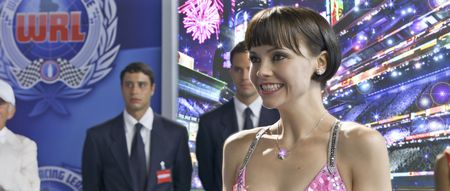
The only way for Speed to save his family’s business and the sport he loves is
to
beat Royalton at his own game. With the support of his family and his loyal
girlfriend,
Trixie (Christina Ricci), Speed teams with his one-time rival—the mysterious
Racer X
(Matthew Fox)—to win the race that had taken his brother’s life: the
death-defying,
cross-country rally known as The Crucible.
Yet, the ultimate test of Speed Racer’s true racing grit will be at the pinnacle
event of the World Racing League: the Grand Prix. But standing between Speed and
the checkered flag are the world’s best—and most cutthroat—competitors, fueled
by a
million-dollar bounty from Royalton to the driver who takes Speed out once and
for all.
“Speed Racer” marks the Wachowski brothers’ first writing/directing
collaboration
since “The Matrix” movies. Joel Silver, who previously worked with the
Wachowskis on
“The Matrix” movies and “V for Vendetta,” produced the film under his Silver
Pictures
banner. Grant Hill, Andy Wachowski and Larry Wachowski are also producers, with
David Lane Seltzer, Michael Lambert and Bruce Berman serving as executive
producers.
The behind-the-scenes creative team includes director of photography David
Tattersall, production designer Owen Paterson, editors Zach Staenberg and Roger
Barton, and costume designer Kym Barrett. The music is by Michael Giacchino.
John
Gaeta and Dan Glass are the visual effects supervisors.
“Speed Racer” stars Emile Hirsch (“Into the Wild”) in the title role; Christina
Ricci
(“The Opposite of Sex”) as Speed’s girlfriend Trixie; John Goodman (“The Big
Lebowski”) and Oscar winner Susan Sarandon (“Dead Man Walking”) as Pops Racer
and Mom Racer; Matthew Fox (TV’s “Lost”) as Racer X; Roger Allam (“The Queen,”
“V
for Vendetta”) as Royalton; Paulie Litt (TV’s “Hope & Faith”) as Spritle; Benno
Fürmann
(“The Mutant Chronicles”) as Inspector Detector; Hiroyuki Sanada (“The Last
Samurai”)
as Mr. Musha; Asian pop superstar Rain, making his American feature film debut,
as a
rival driver named Taejo Togokahn; Richard Roundtree (TV’s “Heroes,” “Shaft”) as
Ben
Burns; and Kick Gurry (“Daltry Calhoun”) as Sparky.
Based on the classic series created by anime pioneer Tatsuo Yoshida, the live-
action “Speed Racer” showcases the kind of revolutionary visual effects and
cutting-
edge storytelling that have become benchmarks of the Wachowski brothers’ films.
“Speed Racer” is a Warner Bros. Pictures presentation, in association with
Village Roadshow Pictures, of a Silver Pictures Production, in association with
Anarchos
Productions.


Digitally re-mastered into the unparalleled image and sound quality of The IMAX
Experience® with proprietary IMAX DMR® (digital re-mastering) technology, “Speed
Racer: The IMAX Experience” will debut concurrently with the nationwide 35mm
release
in conventional theatres.
“Speed Racer” has been rated PG by the MPAA for sequences of action, some
violence and language.
www.speedracerthemovie.com
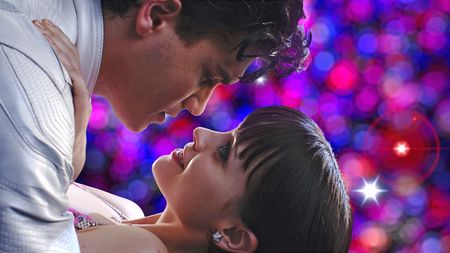
“To me, racing isn’t just a sport—it’s a way of life.”
-Speed Racer
REIGNITING THE MACH 5
Creators of “The Matrix” trilogy, writers/directors/producers Larry and Andy
Wachowski have helped redefine the action film genre with their unique brand of
filmmaking, which blends multi-layered storytelling with groundbreaking visual
effects.
Bringing the classic cartoon series “Speed Racer” to the big screen was an
opportunity for the Wachowskis to re-envision an enduring classic and, at the
same time,
reach a broader family audience.
“With ‘The Matrix,’ Larry and Andy created a visual style that altered your
consciousness as you watched the movie. You saw things that you could not
imagine
happening on film,” says producer Joel Silver. “And with ‘Speed Racer,’ they
wanted to
change the way you see movies again. They had a new concept in mind for telling
the
story with cars flying along the most spectacular and challenging
racetracks—fantastic
action sequences like nothing you’ve ever seen. It’s a new approach to combining
CGI
with live action. The brothers love to break the mold; they love to push the
envelope.”
Producer Grant Hill offers, “Besides being one of their favorite cartoons
growing
up, one of the things that interested the Wachowskis most in adapting ‘Speed
Racer’
was the strong family dynamic in the original series. Larry and Andy had a
strong desire
to make a family film; they wanted to create a movie their nieces and nephews
could
see.”
“They wrote a pure family movie, maintaining the essence of the original
centered on Speed and his family in a completely new adventure,” adds Silver.
“‘Speed
Racer’ is for everybody. It’s got great characters, great action beats and, of
course,
great visuals.”
The film centers on Speed Racer’s journey to become the best racecar driver in
the World Racing League (WRL). To Speed, the two most important aspects of his
life
are car racing and his family. The story positions Speed and his family as one
of the last
independent racing teams facing an increasingly uphill battle against fierce
competition
from racers backed by mega-sponsors. The stakes are so high that the outcome of
a
major race could determine the fate of a driver or an entire organization.
In creating the racing action, the Wachowskis tapped into their wildest
imaginations to conceive a style of auto racing beyond anything we know.
Racecars in
“Speed Racer” are a perfect synergy of form and function, capable of performing
gravity-
defying stunts on incredible courses at over 400 mph. Highly customized works of
automotive art, each racecar is wilder than the next and is designed to reflect
the
persona of its driver.
The vibrant, candy-colored world of “Speed Racer” is one in which many eras
and styles co-exist, all intersecting in the dominant sport of racing. “You’re
seeing
what’s past, present and future in the aesthetic of this film,” says Joel
Silver. “The
society is car crazy, and Larry and Andy have been able to come up with designs
for
cars that you have never seen before. We’ve seen fancy concept cars in magazines
and movies, but this film takes that to a totally new level. These cars can do
anything,
making the races thrilling beyond anything you’ve ever seen.”
Grant Hill offers, “Larry and Andy are always looking for ways to take things to
the next level. We looked at some extreme sports like skateboarding and
snowboarding,
which have a very fluid motion, and imagined how racecourses would need to look
and
how fast cars would need to go in order for drivers to perform similar aerial
maneuvers.”
Of course, no WRL race in “Speed Racer” would be complete without gladiator-
style battle tactics skirting the edge of what’s legal, involving spear hooks,
tire shanks
and saw blades. Silver offers, “This vision of an extreme, full-contact motor
sport, best
described as an acrobatic blend of martial arts and Formula 1, was dubbed by
Larry and
Andy as ‘Car-Fu,’ automotive martial arts.

“The original ‘Speed Racer’ series was the Wachowski brothers’ introduction to
Japanese animation,” reveals Silver. “Larry and Andy were fascinated by the
stories, the
action and the unique visual style of the series, all of which were so
remarkably different
from that of the other cartoons on TV during that time. They went on to become
big fans
of ‘Speed Racer,’ as well as of Japanese anime as a whole.”
In fact, fans of “Speed Racer” span multiple generations and many cultures. The
original “Speed Racer” cartoon series was born out of a Japanese manga (comic
book)
series, created by anime pioneer Tastuo Yoshida, entitled “Pilot Ace.” In 1967,
the
comic evolved into a Japanese television show named “Mach Go Go Go,” followed by
the English-dubbed, American adaptation, “Speed Racer,” six months later.
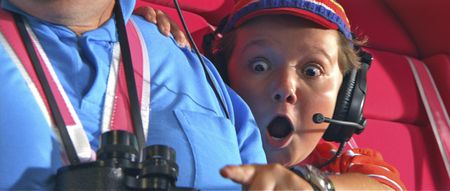

“Speed Racer” was an instant smash hit across the United States, capturing the
imaginations of young American audiences with its blend of exhilarating car
action,
international intrigue, family values, teen romance and irreverent humor. Unlike
anything
they had seen before, “Speed Racer” featured the young and determined hero who
triumphed against unscrupulous competitors while racing around the world in his
powerful and ultra sleek Mach 5.
Over 40 years and several television incarnations later, the story of Speed
Racer
and his adventures in the Mach 5 has been re-imagined for the big screen by the
Wachowski brothers, employing not only spectacular visual effects and
high-flying
action, but also cutting-edge photographic techniques and state-of-the-art
computer-
generated imagery.
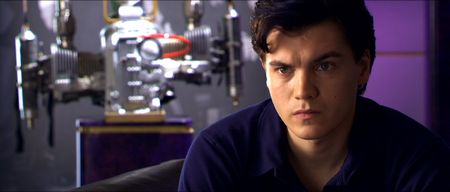
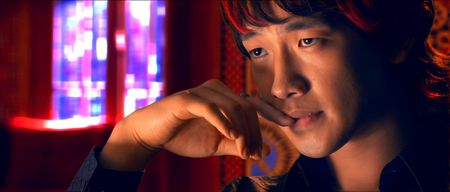
When the main cast of “Speed Racer” arrived at Babelsberg Studios in Berlin, the
Wachowski brothers gave the actors a first look at the world they would be
entering,
including paintings, storyboards and artwork, as well as an extended pre-vis (3D
storyboard animation) of a race sequence.
“Watching the pre-vis sequence was humbling,” states Emile Hirsch, who stars in
the title role of Speed Racer. “It was amazing to see how much work had already
been
done on this film before we even started shooting. It didn’t feel sci-fi, like
‘The Matrix’
films. It felt more magical. It’s more about colors than darkness.”
“There were 12 actors in the room, and I guarantee you, it’s a rare occasion
when so many actors are in a room together and completely speechless,” recalls
Matthew Fox, who plays Racer X. “Everyone was looking at each other, completely
blown away. It was pretty exciting. There are very few times in life when you’re
part of a
project that is endeavoring to do something that’s never been done before, and
this was
one of those times.”

THE RACER FAMILY, FRIENDS AND FOES
There are two elements at the center of “Speed Racer”—racing and the Racer
family, both of which are deeply intertwined. “Speed’s family eats, drinks, and
breathes
car racing. After all, their last name is Racer,” smiles Emile Hirsch. “They
work together
as a unit. It’s all about teamwork and doing the right thing. I think that’s
what makes the
heart of the story appealing—everyone gets to participate in the adventure.”
The Racer family home is an idyllic suburban single-family house, where Pops
Racer builds racecars in the garage and their pride and joy, the Mach 5, is the
centerpiece of the living room. Mom Racer is the backbone of the Racer
household,
providing comfort, support, and advice, not to mention delicious baked goods.
Speed’s
wisecracking younger brother, Spritle, and their family pet chimpanzee,
Chim-Chim,
have their own ways for staying close to the action by hitching rides in the
trunk of
Speed’s Mach 5 or hiding in unexpected places. Speed’s faithful girlfriend,
Trixie, shows
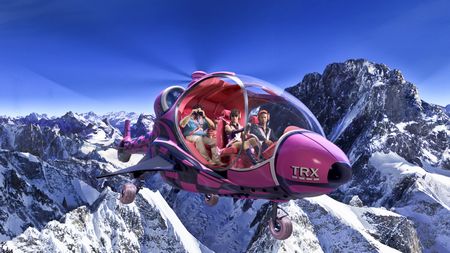
her dedication to the Racer family on, off and even above the track from her
pink
helicopter. Sparky provides dependable service to Racer Motors as Pops’ trusty
mechanic.
For the title role, Hirsch held the pole position in the minds of filmmakers
throughout an exhaustive casting process that spanned three continents and
involved
hundreds of actors. “I couldn’t believe it when I got the part,” Hirsch states.
“I used to
watch the ‘Speed Racer’ cartoon at home in the mornings while eating my cereal.
I’ve
watched every episode. I’m also a huge fan of ‘The Matrix’ trilogy, so I am
really excited
to be in a movie directed by Larry and Andy.”
“When we first met Emile, we knew that he had the right look, youthful appeal
and talent necessary to play Speed Racer,” Joel Silver offers. “At the time,
‘Into the
Wild’ had not even come out, but we also felt strongly about his ability to
carry the lead
role in our movie.”
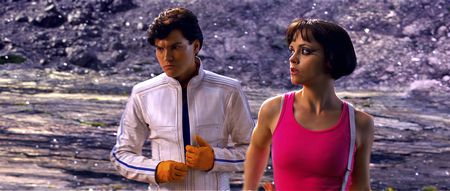
Christina Ricci plays Trixie, Speed’s number-one crush, who has been his friend
and fan since grade school. Smart, stylish and strong-willed, Trixie can be
found
cheering for Speed in the grandstand or helping him navigate treacherous
racecourses
from her helicopter.
“Trixie is my kind of girl,” says Ricci. “She’s always up for adventure and does
everything the boys do without the film commenting on the fact she’s a girl. She
does all
these things—strategizes with Speed, flies a helicopter and even does kung
fu—but she
has a special super cute ensemble for each activity. Trixie is a tomboy and
girly girl all
at the same time, which makes her really fun.”
Never one to discount the significance of personal style, Ricci recalls, “When I
went in for my meeting with the Wachowskis, I was intimidated to meet them
because I
had been such a big fan of theirs for so long. I was a bit shy and couldn’t
really speak,
but then I looked down and saw that we were all wearing the same black Chuck
Taylor
Converse sneakers and I knew then that everything was going to be alright.”
Another steadfast supporter in Speed’s world is Mom Racer, played by Susan
Sarandon. The Oscar-winning actress was attracted to the project by the
Wachowskis’
story, which emphasizes the importance of a cohesive family unit. “I liked the
idea that
the Racer family lives in a timeless little pod, where they still sit down
together to have
dinner every night,” she says. “Mom Racer is the glue that holds everybody
together.”
“Mom Racer is definitely the rock of the Racer family,” adds John Goodman, who
stars as the head of the Racer family in the role of Pops Racer. “She’s the one
everybody goes to with problems.”
Pops Racer is a brilliant car designer and engineer who builds Speed’s racecars,
just as he had Rex Racer’s cars before him. “He’s been building cars since Speed
was
an infant,” says Goodman. Staunchly independent and driven more by passion for
the
sport than profit, “Pops is extremely wary of Royalton’s offer,” Goodman adds.
“He
hopes that Speed will turn it down, but he’s willing to let Speed decide for
himself.”
Goodman, who also grew up watching the “Speed Racer” cartoon series on TV,
recalls, “I had never seen anything like ‘Speed Racer’ when it first came out,
so I
watched it all the time. When I heard that the Wachowskis were shooting a
live-action
version, I jumped at the chance be a part of it.”
While Emile Hirsch, John Goodman and the Wachowski brothers enjoyed the
“Speed Racer” television series as kids, Matthew Fox, who plays the mysterious
Racer
X, had a notably different experience. “I grew up on a farm in Wyoming without a
television, so I missed out on watching ‘Speed Racer’ as a kid.” Fox
nevertheless did
his homework prior to his first meeting with the Wachowskis. “I did some
research on
the cartoon series before I met with Larry and Andy, and when I saw how Racer X
was
portrayed in the original show, I became even more eager to play the role.”
Fox did share some common ground with the Wachowskis, noting, “One of the
first things they said to me about their goal with this project was that they
wanted to
make a movie their nieces and nephews could really enjoy. I have a ten-year-old
daughter and a five-and-a-half-year-old son, so knowing that my kids will see me
as
Racer X in this movie is tremendously exciting.” On the role of Racer X, Fox
states,
“This is not a guy that’s walking around in disguise because he wants to. He’s
operating
at a really deep level of intelligence gathering and working with a secret law
enforcement
organization to stop corruption in racing. The stakes are life-and-death for a
lot of
people, which require his true identity remain concealed.”
Doing their own share of inconspicuous intelligence gathering are the offbeat
dynamic duo of Spritle, the youngest member of the Racer family, and his pet
chimpanzee, Chim-Chim. The two are always looking for adventure, but are usually
left
behind by the adults, so they get creative in finding ways to join the fun, such
as stowing
away in the trunk of Speed’s Mach 5.
“Spritle is a mischievous little boy who wants to be like the grownups,” says
actor
Paulie Litt, who plays Spritle. “Everybody underestimates him. They wanna
protect him
because he’s just a child, but what they don’t know is that even though he’s
small, he’s
mighty. He’s chock-full of knowledge about racing and cars and wants to be part
of
everything, so he finds ways to avoid being left out. If he had his way, he’d be
in the
trunk of the Mach 5 for every race.”
Only 11 years old during production, Litt won the role of Spritle over 250 other
young hopefuls. “It was every kid’s dream,” Litt states. “I got to be on a movie
set in
Germany for the summer and I got to hang out with a chimpanzee all day. How cool
is
that?”
Chim-Chim was actually played by two chimps named Willy and Kenzie. “There
were really only two or three chimps in the world with the training to fit the
role,” says
animal coordinator Sled Reynolds. Willy, who was three years old and had the
benefit of
advanced training, was the lead chimp, while the younger Kenzie, at two, served
as
Willy’s understudy and stand-in.
Since Spritle and Chim-Chim are never far apart onscreen, it was important that
they develop a bond. The process of building a relationship between Litt and the
chimpanzees took place over the course of eight weeks. “Paulie spent two or
three
hours a day with Willy and Kenzie and gradually developed a rapport with them.
He was
very respectful of the chimps and became a natural with them,” Reynolds remarks.
“I’m a big animal person, so I had a blast working with Willy and Kenzie,” Litt
attests. “They’re so lovable and intelligent, and they had very different
personalities and
facial features, just like you and me.”
Recognizing Speed Racer as a real up-and-comer—and potential threat to his
dominance of the sport—billionaire tycoon E.P. Arnold Royalton, founder of the
multinational corporation Royalton Industries, offers Speed a lucrative
sponsorship deal
that will give him access to Royalton’s state-of-the-art equipment and training
facilities.
“Royalton offers Speed the deal of a lifetime, but with strings attached,” says
Hirsch. “He must choose between driving for Royalton for lots of money and
continuing
to race as an independent against the most powerfully backed drivers on the
circuit.
When Speed declines Royalton’s offer, Royalton threatens Speed, telling him that
all of
the races are fixed and that he will never win another race without Royalton.
From that
moment on, Speed sets out to prove Royalton wrong and to protect the sport that
he
loves.”
For the role of the greed-driven founder of Royalton Industries, the Wachowskis
sought the talents of acclaimed British actor Roger Allam, with whom they had
previously worked on “V for Vendetta.” Allam offers, “It’s great to work with
Larry and
Andy once again. The brothers are very relaxed on set and work great in tandem.”
Allam describes Royalton as “a self-made man. He’s not from a wealthy
background as one might assume for someone in his position. He is someone who
started out as an ambitious businessman who has worked hard for his success and,
in
doing so, created a vast industrial empire. He is powerful to an extent where he
thinks
he can influence the outcome of every race.”
Royalton’s latest plot involves manipulating two competing families on the WRL
circuit: Musha Motors and Togokahn Motors. The head of Musha Motors, Mr. Musha,
is
played by acclaimed Japanese actor Hiroyuki Sanada.
“Mr. Musha is a pure businessman,” remarks Sanada. “He has wanted to control
his main rival, Togokahn Motors, for a long time. Royalton knows this and offers
to
deliver Togokahn to Musha in exchange for Musha Motors’ transponder foundry.
This
deal will allow Musha to dominate his competition and allow Royalton to corner
the
transponder market.”
Sanada grew up watching the original Japanese version of “Mach Go Go Go” in
his native Japan. “I can still remember the opening song. ‘Speed Racer’ made
history
for Japanese animation in the United States and the Wachowski brothers are
always
making history with their films, so I am very happy to be a part of this movie.”
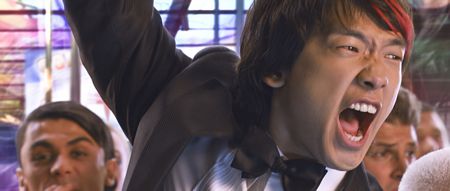
Making history in his own right is Korean pop sensation Rain, who was recently
named one of TIME Magazine’s Top 100 Most Influential People. Rain makes his
American feature debut in “Speed Racer” as Taejo Togokahn, the lead driver and
heir
apparent of Togokahn Motors.
“I think people are going to be blown away by Rain in this film. He has a great
presence onscreen that just commands your attention,” Silver states.
Rain’s character Taejo is forced to defend his family name when they are
threatened by Royalton’s plot. “Togokahn Motors has been in Taejo’s family for
five
generations,” notes Rain. “Racing in the WRL has changed a great deal over the
generations since Taejo’s family started the business. There used to be a
certain
nobility about the sport and the drivers, but now everything seems to be about
image,
branding and profits. Like Speed, my character is out to protect the family
business.”
Hot on the tracks of Royalton’s plot to take over Togokahn Motors is Inspector
Detector, played by German actor Benno Fürmann. “Inspector Detector has been
investigating corruption in the World Racing League for many years,” Fürmann
states.
“Now he is teamed with Racer X and they are getting close to uncovering
Royalton’s
scheme, but they need the help of Speed Racer to make it happen.”
Completing the main cast in “Speed Racer” are Australian actor Kick Gurry, who
plays Sparky, Racer Motors’ indispensable gearhead and a member of the extended
Racer family; and Richard Roundtree, who plays Ben Burns, a legendary WRL racer
and
former champion of the Grand Prix.
Fans of the original series may remember Speed’s longtime nemeses Snake
Oiler, Cruncher Block and the Gray Ghost—played by Christian Oliver, John
Benfield
and Moritz Bleibtreu, respectively. The Wachowskis have also introduced new
rivals,
including Jack “Cannonball” Taylor, one of the most celebrated drivers in the
WRL circuit
and star member of Royalton’s team, played by Ralph Herforth; Prince Kabala, a
driver
whose car is completely encrusted in precious jewels and worth an estimated $22
million, played by Ashley Walters; Delila, leader of the Flying Foxes Freight
team, whose
devious racing tactics may deflate Speed’s chances of finishing a race, played
by Jana
Pallaske; and Grand Prix competitor Kellie “Gearbox” Kalinkov, played by
Venezuelan-
born Indy-car driver Milka Duno.
Though the process of assembling the internationally diverse cast of “Speed
Racer” was no easy feat, producer Grant Hill offers, “I think Larry and Andy did
a
wonderful job populating the world of ‘Speed Racer.’ It was cool to hear so many
different languages being used on set, and an international project like ‘Speed
Racer’
deserves a truly international cast.”
“We really had an amazingly diverse cast, but everyone fit their roles
perfectly,”
agrees Joel Silver. “And it was great to watch the dynamic between Susan and
John
with the younger actors like Emile and Christina and Paulie. They really did
become like
a family on the set.”
THE CARS, THE RACETRACKS AND THE BIRTH OF “CAR-FU”
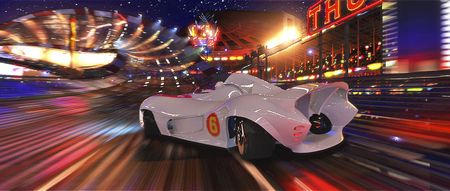
Speed Racer’s thundering Mach 5 is perhaps one of the world’s most
recognizable cars onscreen. Its aggressive profile, complemented by a glossy,
white
finish with a red ‘M’ emblazoned across the hood, is firmly etched in the minds
of “Speed
Racer” fans around the world. While the updated design of the Mach 5 could have
gone
in a number of directions, “we eventually came back to a semi-retro look with
very sleek
lines,” says production designer Owen Paterson.
“After exploring several possibilities, Larry and Andy looked at the original
Mach
5’s iconic profile and decided to retain the essence of the original because its
look is
truly timeless and unique,” says Joel Silver.
While the Mach 5 will always be the car most closely associated with Speed
Racer in the minds of diehard fans, the Wachowskis upped the ante by introducing
a
new generation of the Mach series—the Mach 6.
“As can be expected with Larry and Andy, they also wanted to break new ground
here,” says Paterson. “For the Mach 6, which is used strictly for track racing
in the
World Racing League, we went for a very bold-yet-refined profile, and maintained
the
color scheme and overall ‘M’ shape of the Mach 5.”
Furthermore, “Larry and Andy coined a term to describe the Mach 6 and cars in
its class in the film,” continues the production designer. “They called these
types of cars
‘T180s’ for their ability to turn their wheels 180 degrees and drift across
banks sideways,
generating several Gs of lateral acceleration.”
Paterson and his team began work nearly a year in advance of principal
photography to create more than 100 individual car designs. “In our world we
have
architects, but in the world of ‘Speed Racer’ people hire ‘carchitects’ to
custom build their
vehicles,” Paterson states.
“We brought together some of the most talented artists in the field, from
storyboard artists to top designers within the automotive industry. We wanted to
have
fun with them and let everyone bounce ideas off of one another,” says Hill.
Once the car designs were approved, they were modeled and painted in a digital
environment. Additionally, Speed’s Mach 5 and Racer X’s Shooting Star were
physically
constructed in full-scale for use in certain scenes. And while you could sit in
the cockpit
of each car, these full-size replicas weren’t actually going anywhere as no
power trains
were installed. All of the high-flying, hard-hitting car action in the film was
rendered
digitally with CGI.
The filmmakers initially contemplated the possibility of shooting race sequences
in the film using real cars on practical racetracks. However, Paterson notes,
“Given the
style of our cars and the high-impact action that we wanted to achieve, it made
much
more sense to create it digitally.”
“At the speeds they’re driving and with the combative techniques they use, there
are a lot of precarious moments on the track,” says visual effects supervisor
Dan Glass.
“It’s an extremely dangerous-looking sport, but no one gets seriously hurt,
because
we’ve developed a special device that protects the driver.”
Visual effects supervisor John Gaeta adds, “Larry and Andy came up with a
safety feature they call ‘Kwiksave Foam,’ which is like a big rubber ball that
inflates
around the driver to protect them in the event of a crash. This is standard
equipment on
all of the cars that compete in the World Racing League.”
As impressive as the cars are, they needed an equally dramatic place to show off
their moves. “The Wachowski brothers’ first directive was, ‘Our racetracks
should be a
cross between a giant ski slalom and a skateboard park,’” recalls Paterson.
“Larry and Andy felt strongly about making sure that each of the races looked
very different from each other,” says Silver. “Since we have the freedom to
build tracks
and backgrounds digitally, we really put our imaginations into overdrive. You’re
going to
see things that are fantastic and thrilling; the races will keep you on the edge
of your
seat.”
Four racetracks were created, each with unique characteristics. Not only do the
racetracks feature gut-challenging loop-the-loops, winding spirals and
breathtaking
jumps, but they also take place against exotic-looking environs.
Speed Racer’s hometown track is Thunderhead, where his late brother, Rex, still
holds the track record. While Thunderhead is a world-class track, it is not one
of the
majors on the WRL circuit. Paterson notes, “Thunderhead is a track that’s
definitely
seen better days. Still, it holds a special place in Speed’s heart because of
Rex Racer’s
legacy. It has all of the excitement our other tracks bring, including spirals,
banks,
butterflies and giant drops.”
The second track in “Speed Racer,” the Fuji Helexicon, a big-league track on the
WRL circuit, is set on a tropical archipelago against a backdrop of natural
volcanoes and
ultramodern buildings inspired by the designs of internationally renowned
architects.
The track weaves in and out of the atoll and over the glittering sea with
awe-inspiring
twists and turns.
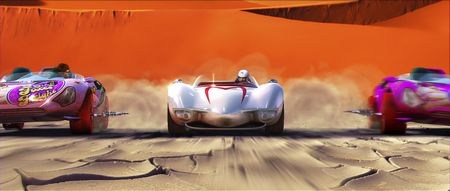
The Casa Cristo 5000 is the death-defying road rally race where Rex Racer lost
his life. This perilous course, so dangerous that it has been nicknamed “The
Crucible,”
spans several continents and crosses every imaginable terrain. Drivers must
endure
extreme climates, from the blistering desert heat in the Zunubian Desert to the
narrow
Glacier Cliffs and icy Maltese Ice Caves. One wrong turn could send a driver
plummeting thousands of feet to his or her demise. Though the WRL has made an
effort
to clean up the style of racing in this event, underhanded driving tricks,
including spear
hooks, tire shanks and catapults, make the Casa Cristo 5000 the most brutal test
of
endurance in “Speed Racer.”
“The Casa Cristo 5000 is the most treacherous cross-country race in the world,
and competitors will use whatever means to get ahead,” Paterson explains. “We
developed what I called the Roman chariot kind of racing, where we have big
swords
coming out of the cars and shields to protect the wheels.”
There is intense pressure to win the Casa Cristo 5000 because the champion will
gain entry to compete in the most highly regarded event in the WRL, the Grand
Prix. A
victory at the Grand Prix will not only garner fame and fortune for the winner,
but also
make him or her an instant legend in the World Racing League.
“Imagine an event bigger than the Daytona 500, the Indy 500 and the World Cup
combined,” says Joel Silver. “The WRL’s Grand Prix is this event in the world of
‘Speed
Racer.’”
“The Grand Prix racecourse is built right into the city of Cosmopolis,” Paterson
states. “It’s enormous. It is a fantastical high-rise track with giant dips,
loops and
butterfly turns that enable the cars to accelerate at breakneck speeds.”
The inspiration for the design and setting of the Grand Prix comes from the
Wachowski brothers, “who grew up in Chicago and had always enjoyed the idea of
being
able to watch a baseball game at Wrigley Field from the rooftops of its
surrounding
buildings,” Paterson continues. “They had this idea that we could take whole
skyscrapers and turn them into grandstands. As a result, the city itself became
a
grandstand for the biggest race of the year.”
Another feature of the Grand Prix racetrack was a visual illusion added by the
Wachowskis to pay homage to Eadweard Muybridge, a 19th-century photographer
known for pioneering instantaneous motion picture capture with multiple cameras,
the
principles of which were an influence in the development of creating the “Bullet
time”
effect in “The Matrix.”
Along one straightaway of the Grand Prix racetrack, the filmmakers placed a
series of zebra images along the wall in the background, and as Speed Racer and
his
racing competitors accelerate across the screen, the combined set of images
viewed in
rapid succession simulate the effect of the zebra running in motion, akin to
Muybridge’s
series of photographs known as “The Horse in Motion.”
“We love to give nods to our inspirations, and so the zebra zoetrope is
essentially
a wink to the inspiration of ‘Bullet time’ in a literal sense,” says Gaeta. “We
planted a lot
of illusions in the backgrounds of this film, and among them is this homage to
Muybridgean photography in the veil of an advertisement on the Grand Prix
track.”
Meticulous attention was also paid to covering the many camera angles required
to capture each actor’s close-ups and reactions during the fast-paced action
sequences
in “Speed Racer.” While the exterior of the cars were composed digitally,
full-size
cockpits—replete with steering wheels, gas and brake pedals and back-lit
instrument
panels—were fabricated and mounted on hydraulically powered gimbals controlled
by a
virtual-reality driving program to simulate vehicle dynamics of actual racecars.
Second unit director James McTeigue, director of “V for Vendetta,” worked with
his team to shoot the film’s four major racing sequences, staged against a 200 x
40-foot
green screen. The gimbals were designed to simulate the movement of the various
cars
in each race as they made their way around the tracks. The powerful,
hydraulically
operated platform enabled the cockpits to move in a three-dimensional space,
precisely
mimicking a driver’s commands over a custom-designed track.
“The gimbals’ base is controlled by software that ties the movement of the car
cockpit to the pre-visualized scene. We also threw in live elements like wind to
help the
actors feel as though they were actually driving instead of being driven,” says
Owen
Paterson.
From an actor’s perspective, Rain offers, “Riding the gimbal was pretty intense.
It’s probably the closest thing I’ll come to driving a Formula 1 car, but much
less
dangerous.”
“Working with a gimbal was a fun, new challenge for me,” recalls Emile Hirsch.
“You really get thrown around in there, so you don’t have to pretend like you’re
being
tossed around in a scene. It’s more realistic than pretending to drive something
stationary.”
Matthew Fox adds, “The gimbal is wild and requires a good amount of focus. It’s
important for the action to look convincing, since the racing in ‘Speed Racer’
is a full
contact sport. James and his team had total control of the gimbal and they
adjusted the
levels and manipulated that thing however they wanted. I was always telling them
to
‘Crank it up!’”
THE HYPER-STYLIZED WORLD OF “SPEED RACER”
Speed’s quest for racing glory takes him around the world, from the Thunderhead
racetrack in his hometown to the multi-continent Casa Cristo 5000 road rally to
the
Grand Prix in Cosmopolis. To create the varied settings and action sequences,
the
Wachowskis called on the expertise of some of the most innovative designers,
visual
effects artists and digital photographers in the field, many of whom they’d
worked with in
the past. The directors handed the critical task of overseeing the creation of
the film’s
2000-plus visual effects shots to visual effects supervisors Dan Glass and Oscar
winner
John Gaeta.
“We wanted to have locations from around the world that would normally be
impossible to shoot, like exotic foreign cities, arid deserts or icy mountain
roads,”
explains Owen Paterson. “Places where most directors wish to shoot but couldn’t
because it’s either too remote or can’t accommodate a film crew. Instead, the
decision
was made to take the best of those rare and exotic locations and ‘virtualize’
them,
allowing the visual effects department to incorporate them into scenes.”
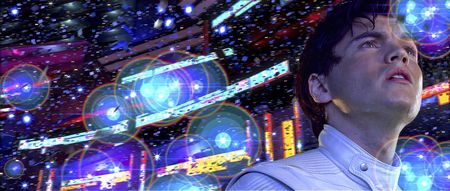
The final imagery in “Speed Racer” was created using actors against green
screens joined with high-definition digital image captures of far-reaching
locations,
including Italy, Morocco, Austria, Turkey and Death Valley. These images were
captured by a small camera team using ultrahigh resolution digital still cameras
and later
pieced together to create 360-degree panoramic backgrounds known as QuickTime
Virtual Reality (QTVR) spheres, also informally referred to by the “Speed Racer”
team as
“bubble photography.”
Dan Glass notes, “Because the bubble photography unit is made up of only a few
people and requires considerably less equipment than a full-scale production
team, we
were able to use exotic locations that typically don’t give access to large film
crews.”
“The idea is to get freer and freer with our creative process,” offers Gaeta.
“When the images captured were tiled together, it created a panoramic view in
which
you could put the camera where you want in postproduction, and see what you want
to
see at pretty much any focal length. We expanded on our ‘Bullet time’ concept
from
‘The Matrix’ with ‘Racer time,’ which is similar to ‘Bullet time’ but includes
attention to
planes of depth.”
The Wachowskis were the first filmmakers to utilize Sony’s F-23 HD camera,
which had not yet been released to the public when principal photography began.
“We used the first five F-23 cameras that Sony made, and the cameras
performed beautifully,” says director of photography David Tatersall, who had
worked on
“Star Wars: Episodes II and III,” both shot in HD. “This was a perfect choice
for the look
that Larry and Andy were aiming for. We composed our shots to look very sharp,
super
saturated and very glossy.”
“We pushed the colors beyond the usual limits to produce what we called
‘poptimistic’
or ‘techno-color’ imagery,” adds Glass.
To render the film’s myriad of visual effects shots, the Wachowskis achieved
what they called a “live-action anime look” using a visual-layering technique
that allows
the foreground, mid-ground and background to stay in focus, much like that of
traditional
2D animation. This technique came to be called by the filmmakers “2½D
technology.”
Glass explains, “In the film, each layer—the foregrounds, mid-grounds and
backgrounds—were created separately. The way these planes move against one
another has a quality we’ve all grown up seeing in cartoons; it’s like a second
language
to children.” Intentionally striving for emotion over realism and blurring lines
of
perspective, for instance, was quite liberating for the visual effects team.
“We’re playing
against perspective and creating images that deliberately break the rules.”
“Anime is such an expressive format,” states Gaeta. “In the cartoon series,
which was of course hand drawn, there are unrealistic perspectives deliberately
created
to spark emotions. It’s less about what’s real and more about what the artist
wants you
to feel. Translating this into live action involved a process that is, in the
simplest terms,
like creating moving collages.”
While many of the sets and locations in “Speed Racer” were virtual versions of
the locations or computer generated, a handful of practical sets were also
built.
Production designer Owen Paterson describes the world of “Speed Racer” as
“taking
place in a fusion retro-futuristic era, a parallel reality where the optimism
and fashion of
the 1960s is juxtaposed with the hyper-competitiveness and technology of the
future.
Larry and Andy didn’t want the world of ‘Speed Racer’ to be confined to a
specific era.”
Two contrasting milieus are presented in “Speed Racer”: one that the Racer
family inhabits, which is safe and suburban, and another that is sleek,
ultramodern and
overrun by corporate advertising. “The Racer family lives in an uncomplicated
suburban
landscape where the colors are warm, bright and very saturated,” says Paterson.
“We
did a lot of the concept work in Los Angeles and were influenced by the
mid-century
modern style of homes there.”
In contrast, Royalton Industries is based in the ultramodern city of Cosmopolis,
a
colder reality that is lit artificially by outdoor billboards and corporate
logos. Paterson
states, “We’ve taken the skyline of a bustling, modern city like Shanghai or
Hong Kong,
both architecturally and from an advertising sense, and then applied that to the
very
multinational conglomerate-driven world run by Royalton. It’s global branding
and
marketing on steroids.” Inside, Royalton’s office is a spacious but sterile
environment,
largely silver grey, but accented with shades of purple to convey a sense of
power,
wealth and extravagance.
As the Racer family is the heart of the film’s story, so too was the Racer
family
house the heart of the production’s shoot. It was on this set that many of the
film’s most
endearing family moments unfolded. Additionally, unlike a typical suburban home,
the
focal point of the Racer family living room was the Mach 5, parked right in the
middle of
house.
Coordination between Owen Paterson and costume designer Kym Barrett was
essential. Says Barrett, “All the characters have a color palette: Pops and Mom
are red
and green, respectively; Speed wears blue and white. To set off those costume
colors,
we used a lot of orange, turquoise and fuchsia pink in the house. We tied it all
together
with red floors, ‘Racer Red’ as we called it.” For sequences shot against green
screen,
Barrett had to find alternative color schemes as anything green would disappear
onscreen.
“In my first meeting with Larry and Andy, they told me they wanted rich primary
colors,” continues Barrett. “Instead of getting into too many specifics right
away, they
started the process by describing their concept of creating a live-action
cartoon for all
ages. Once that was established, they left me to my own devices.”
In referencing the original cartoon, Barrett found a stylized pop Americana of
the
1960s, in which her Racer family costumes would find their root. Barrett used
primary
colored fabrics, at times patterned, to achieve a retro-futuristic look. Speed
Racer’s outfit
in the cartoon series remained the same in every episode: the trademark blue
polo shirt
with white collar, white trousers and tan racing gloves, as well as a red
kerchief and red
socks. When initially creating the “Mach Go Go Go” hero in the 1960s, Tatsuo
Yoshida
was inspired by Elvis Presley’s look in “Viva Las Vegas.” Barrett took creative
license to
update the appearance of Speed, but gave a nod to the original series by
outfitting Emile
Hirsch in Speed’s classic outfit for the Casa Cristo 5000 rally race.
Trixie’s color palette was candy-colored pink, matching her zippy helicopter and
spirited personality. “I loved my outfits,” says Christina Ricci. “My
character’s very girly,
but also a little bit of a tomboy.”
Barrett had Spritle and Chim-Chim in mind when she approached Los Angeles-
based designer Paul Frank, whose monkey face graphic graces the wildly popular
line of
apparel and accessories for children and adults. Frank invited Barrett to visit
his
company’s warehouse, where she found the famous monkey-faced pajamas and thought
they’d be perfect for Spritle.
Barrett recalls, “As Paul and I talked, we thought, ‘Why not give Chim-Chim the
same pajamas but in reverse?’ So Paul agreed to design a graphic of a boy’s face
for us,
from which we created Chim-Chim’s pajamas. Everyone got a kick out of them.”
For the look of the various racecar drivers, including Snake Oiler and Gray
Ghost, Barrett aimed to create outfits that reflected the established car
designs. “Since
the cars were designed in advance, I sat down with Owen and discussed the
motifs,
colors and textures for each driver,” explains Barrett. Snake Oiler’s scaly,
rock star-
inspired costume and the Norseman-inspired attire of the Thor-Axine Inc. team
were
Barrett’s personal favorites. “I was fortunate because many of the drivers were
stunt men
who were game for anything and not worried about looking silly. We had a great
time
with the costumes.”
To design and handcraft the leather racing jumpsuits used in the film, Barrett
sought the help of two skilled leather makers from London with whom she had
worked on
“Eragon,” Patrick Whitaker and Keir Malem.
For Racer X, says Barrett, “We wanted to retain the Masked Racer’s imposing
physical presence from the cartoon. Racer X is a superhero, but not the caped
kind, so
we came up with a look that combines the essence of a superhero and motorbike
racer.
We decided to create a leather suit that was more everyday, one you could walk
around
in that didn’t need a lot of maintenance, and didn’t feel as though it was
pulled out only to
fight crime.”
“One of the first things Larry and Andy said after giving me the part was, ‘The
suit’s gonna be pretty tight,’ which was probably their way of saying, ‘Get in
shape,’”
laughs Matthew Fox.
Once on set, the leather jumpsuit presented a unique physical challenge for Fox.
“The suit heats up really fast. I was only able to do short takes at a time
during the fight
sequences before I had to cool off.”
By far the most challenging fight scene was staged on the set created for an
overnight pit stop during the Casa Cristo 5000 road race. Ninjas hired by
Royalton’s fixer
Cruncher Block invade the hotel rooms of Speed Racer and Racer X for a late
night
assassination attempt.
“The fight sequence involving Racer X, Speed and the ninjas was a lot of fun to
create,” says supervising stunt coordinator Chad Stahelski. “The tone for each
of the
fights was decidedly different. The ninja that fights Racer X is pretty serious,
so he gives
Racer X a run for his money, but the ninja that fights Speed is actually more of
a ‘nonja,’
because we wanted it to be a little more comedic.”
“When Racer X throws a punch you can expect some bone crunching,” asserts
Fox. “His blocks are very efficient and have a real rhythm to them.” Fox enjoyed
the
benefit of extensive martial arts training prior to working on “Speed Racer.”
“I’ve
practiced Tae Kwon Do for a couple of years and competed in tournaments in the
past,
so the martial arts stunts in this movie gave me a chance to revisit those
techniques.”
However, training for fight sequences was a new experience for Emile Hirsch.
“Working with the stunt team was pretty challenging. I mastered a little bit of
Kung Fu
and really enjoyed it. I liked learning the different sequences, and came to
appreciate
how much commitment and focus it takes to be a good stuntman.”
“We gave Emile the basic building blocks for becoming a stuntman. He is a fast
learner,” adds Stahelski. “Speed Racer” marks Stahelski’s fifth collaboration
with the
Wachowskis, having worked on all three “The Matrix” films and “V for Vendetta.”
“The brothers love working with the same people over and over,” comments Joel
Silver about the Wachowski brothers’ repeated collaborations with such
behind-the
scenes artists as Owen Paterson, John Gaeta, Dan Glass and Kym Barrett. “It
gives
them a familiar shorthand, which is key on any film set and especially on a
project of this
scope.”
On his first experience working with the Wachowskis, Hirsch offers, “I had no
idea that they would be so funny. You see ‘The Matrix’ trilogy and think, ‘Those
are
pretty serious guys.’ But they’re both fun-loving people. I think they’re just
kids at heart;
that’s why they were the perfect directors for this project. They really love
what they’re
doing and it shows.”
Fox says, “Working with Larry and Andy and such an incredible cast and crew
was amazing. There were moments when the entire cast was assembled, and you’d
look around at everybody in costume and you could hardly believe you were there.
We
had an awesome time.”
“It was an honor to work with the Wachowskis,” Rain remarks. “What I love most
about this project is that the story is about hopes and dreams. So when kids see
this
movie, the story might give them hope that if you try very hard, you can
accomplish
amazing things.”
Silver concludes, “We have wanted to make this movie for a long time, and we’re
fortunate enough to have had such a great team of actors, artisans and
technicians
working together to drive this 20th-century classic into the new millennium.
We’re thrilled
to have the chance to introduce ‘Speed Racer’ to a new generation and very proud
to
make a family film that audiences of all ages can enjoy.”
# # #
ABOUT THE CAST
EMILE HIRSCH (Speed Racer) was most recently seen in writer-director Sean
Penn’s critically acclaimed drama “Into the Wild,” based on the best-selling
book by Jon
Krakauer. Hirsch starred as Christopher McCandless, the idealistic college
graduate
who abandoned civilization for the Alaskan wilderness. For his work in the film,
Hirsch
won the National Board of Review Award for Breakthrough Performance by an Actor
and
received the Rising Star Award at this year’s Palm Springs International Film
Festival.
He was also nominated for two Screen Actors Guild Awards, a Critics Choice Award
and
a Gotham Award.
Previously, Hirsch starred in Nick Cassavetes’ true-life crime drama “Alpha
Dog,”
along with an ensemble cast which also featured Justin Timberlake, Sharon Stone
and
Bruce Willis. The film premiered to rave reviews at the 2006 Sundance Film
Festival.
Hirsch’s additional credits include Catherine Hardwicke’s “Lords of Dogtown,”
with Heath Ledger; “Imaginary Heroes,” directed by Dan Harris and also starring
Sigourney Weaver and Jeff Daniels; “The Girl Next Door,” with Elisha Cuthbert;
the film
festival favorite “The Mudge Boy”; “The Emperor’s Club,” with Kevin Kline and
Embeth
Davidtz; and “The Dangerous Lives of Altar Boys,” co-starring Kieran Culkin and
Jodie
Foster.
Hirsch is currently in production in San Francisco on Gus Van Sant’s biopic
“Milk,” in which he stars with Sean Penn, Josh Brolin and James Franco. The film
chronicles the life of Harvey Milk, a San Francisco city supervisor and the
country’s first
openly gay elected official, who was assassinated in 1978. Hirsch is portraying
gay
rights activist Cleve Jones, a Milk ally who went on to found the NAMES Project
AIDS
Memorial Quilt.
Born in Los Angeles, Hirsch grew up in Los Angeles and Santa Fe, New Mexico.
CHRISTINA RICCI (Trixie) most recently starred in this February’s offbeat,
contemporary fable “Penelope,” co-starring Reese Witherspoon and James McAvoy.
Ricci was last seen in “Black Snake Moan,” from director Craig Brewer, starring
opposite Samuel L. Jackson. Prior to that, she co-starred in the critically
acclaimed film
“Monster,” opposite Academy Award winner Charlize Theron, and earned an Emmy
Award nomination for her guest role on the hit ABC show “Grey’s Anatomy.”
Ricci won over audiences and critics as a child actor, beginning with her debut
in
“Mermaids,” opposite Cher and Winona Ryder. Especially memorable is her
portrayal of
the strangely adorable Wednesday Addams in Barry Sonnenfeld’s “The Addams
Family”
and its sequel, “Addams Family Values.” She starred in the summer ‘95 hit
“Casper,”
which, like “The Addams Family,” grossed over $100 million at the domestic box
office.
Ricci received the prestigious NATO ShowEast Star of the Year Award and the Star
of
Tomorrow Award from the Motion Picture Booker’s Club for her work in those
films.
Making a seamless transition to more mature roles in 1997, Ricci received
acclaim in Ang Lee’s ensemble film “The Ice Storm,” co-starring Kevin Kline,
Sigourney
Weaver, Joan Allen and Elijah Wood; then starred in Don Roos’ scathing comedy
“The
Opposite of Sex,” for which she received the Best Actress Award at the Seattle
Film
Festival, as well as Best Actress nominations for a Golden Globe Award, American
Comedy Award and Independent Spirit Award. She appeared opposite filmmaker
Vincent Gallo in his “Buffalo 66,” earning a National Board of Review Best
Supporting
Actress Award for her combined efforts in that film, “The Opposite of Sex” and
John
Waters’ “Pecker.” Ricci’s other projects include Wes Craven’s “Cursed,” Woody
Allen’s
romantic comedy “Anything Else,” Sally Potter’s “The Man Who Cried” and Tim
Burton’s
“Sleepy Hollow,” opposite Johnny Depp, in addition to a memorable cameo in Terry
Gilliam’s “Fear and Loathing in Las Vegas.”
Beyond her acting career, Ricci serves as the National Spokesperson for the
Rape, Abuse & Incest National Network (RAINN) and is a member of the
organization’s
National Leadership Council.
JOHN GOODMAN (Pops Racer) is one of the entertainment industry’s most
respected actors. He earned a Golden Globe nomination in 1992 for his chilling
performance in the Coen brothers’ heralded “Barton Fink,” after delivering a
breakthrough motion picture performance in the Coen brothers’ earlier “Raising
Arizona.”
He has since teamed with them in “The Big Lebowski” and “O Brother, Where Art
Thou?”
Goodman was most recently seen starring opposite Steve Carrell in the comedy
“Evan Almighty,” the highly anticipated sequel to “Bruce Almighty.” Last year,
he also
appeared in “Death Sentence,” with Kevin Bacon, and “Drunkboat,” opposite John
Malkovich. Previously, he starred with Marisa Tomei and Danny DeVito in the
romantic
comedy drama “Marilyn Hotchkiss Ballroom Dancing and Charm School.”
He has lent his voice to numerous animated characters as well, with voiceover
credits including “Monsters, Inc.,” “The Emperor’s New Groove,” “Tales of the
Rat Fink,”
“The Jungle Book 2” and, most recently, the Jerry Seinfeld-penned and produced
“Bee
Movie,” opposite Seinfeld and Renee Zellweger. He also voiced one of the main
characters in NBC’s animated primetime series “Father of the Pride.”
Goodman’s many additional film credits include “Beyond the Sea,” “Masked and
Anonymous,” “Storytelling,” “One Night at McCool’s,” “Coyote Ugly,” “What Planet
Are
You From?,” “Bringing Out the Dead,” “The Runner,” “Blues Brothers 2000,”
“Fallen,”
“The Borrowers,” “Mother Night,” “Pie in the Sky,” “The Flintstones,” “Born
Yesterday,”
“Matinee,” “The Babe,” “King Ralph,” “Arachnophobia,” “Stella,” “Always,” “Sea
of Love,”
“Everybody’s All-American,” “Punchline,” “The Wrong Guys,” “The Big Easy,”
“Burglar,”
“True Stories,” “Sweet Dreams,” “Maria’s Lovers,” “C.H.U.D.,” “Revenge of the
Nerds”
and “Eddie Macon’s Run.”
A St. Louis native, Goodman studied drama (with fellow students Kathleen
Turner and Tess Harper) at Southwest Missouri State, graduating in 1975 with a
B.F.A.
degree in Theatre. His stage credits include regional theatre productions of
“Henry IV,
Parts I and II,” “Antony and Cleopatra” and “As You Like It.” He performed in a
touring
production of “The Robber Bridegroom” and starred in three Broadway shows:
“Loose
Ends” in 1979, “Big River” in 1985 and “The Resistible Rise of Arturo Ui” in
2002. In
2001, he starred with Meryl Streep and Kevin Kline in the
Shakespeare-in-the-Park
production of “The Seagull.”
Goodman will next be seen onscreen in the drama “In the Electric Mist,” opposite
Tommy Lee Jones and Peter Sarsgaard. He is currently in production on two films:
director P.J. Hogan’s “Confessions of a Shopaholic,” based on Sophie Kinsella’s
acclaimed novel, and the indie romantic comedy “Gigantic,” with Paul Dano and
Zooey
Deschanel.
SUSAN SARANDON (Mom Racer) brings her own brand of fierce intelligence to
every role she plays, from her acclaimed, fearless portrayal in “Bull Durham” to
her
Academy Award-nominated performances in “Atlantic City,” “Thelma and Louise,”
“Lorenzo’s Oil” and “The Client,” and her Oscar-winning and SAG Award-winning
work in
“Dead Man Walking.”
Sarandon was recently seen as the villainous queen in the blockbuster live
action-animated hit “Enchanted” and in director John Turturro’s musical comedy
“Romance and Cigarettes,” opposite James Gandolfini, Kate Winslet and Steve
Buscemi. Her other recent credits include the drama “In the Valley of Elah,”
opposite
Tommy Lee Jones, and the comedy “Mr. Woodcock,” with Billy Bob Thornton.
Sarandon made her acting debut in the movie “Joe,” which she followed with a
continuing role in the daytime drama series “A World Apart.” Her early film
credits
include “The Great Waldo Pepper,” “Lovin’ Molly,” “The Front Page,” the 1975
cult
classic musical “The Rocky Horror Picture Show” and Louis Malle’s controversial
1978
film “Pretty Baby.”
Among Sarandon’s many other film credits are “Elizabethtown,” written and
directed by Cameron Crowe; “Alfie,” opposite Jude Law; “Shall We Dance?,” with
Richard Gere; “Noel,” with Robin Williams and Penelope Cruz; Brad Silberling’s
drama
“Moonlight Mile,” opposite Dustin Hoffman and Jake Gyllenhaal; “The Banger
Sisters,”
with Goldie Hawn; the comedy “Igby Goes Down”; Stanley Tucci’s “Joe Gould’s
Secret”;
Wayne Wang’s “Anywhere But Here,” with Natalie Portman; Tim Robbins’ drama
“Cradle
Will Rock”; the poignant comedy “Stepmom,” with Julia Roberts; the erotic farce
“Illuminata,” directed by John Turturro; and “Twilight,” opposite Paul Newman
and Gene
Hackman.
In addition to her many on-screen credits, she has lent her vocal talents to the
animated features “Rugrats in Paris,” “James and the Giant Peach” and “Cats &
Dogs,”
and served as narrator for Laleh Khadivi’s documentary “900 Women,” which dealt
with
female prison inmates. Her additional feature credits include “King of the
Gypsies,” “The
Hunger,” “The Buddy System,” “Compromising Positions,” “The Witches of Eastwick,”
“Sweet Hearts Dance,” “The January Man,” “A Dry White Season,” “White Palace,”
“Light
Sleeper,” “Bob Roberts,” “Little Women” and “Safe Passage.”
For television, Sarandon starred as Dr. Jerri Nielson in the 2003 CBS movie “Ice
Bound” and as Princess Wensicia Corrino in the Sci Fi Channel miniseries
“Children of
Dune.” She appeared in the telefilm “The Exonerated,” directed by Bob Balaban,
and
starred in HBO’s “Earthly Possessions,” based on Anne Tyler’s novel and directed
by
James Lapine, as well as in the CBS movie “Women of Valor” and the HBO
miniseries
“Mussolini and I,” opposite Bob Hoskins and Anthony Hopkins.
On Broadway, Sarandon appeared in Gore Vidal’s “An Evening with Richard
Nixon” and received critical acclaim for her performances off-Broadway in “A
Coupla
White Chicks Sitting Around Talking” and the thriller “Extremities.” She also
appeared
off-off-Broadway in the moving post-9/11 play “The Guys.”
Sarandon can currently be seen starring opposite Ralph Fiennes in the highly
acclaimed HBO biographical telefilm “Bernard and Doris,” which premiered on HBO
in
February.
MATTHEW FOX (Racer X) currently stars as the conflicted, heroic Dr. Jack
Shepherd on the hit ABC series “Lost.” For his work on the Emmy-winning Best
Drama,
Fox shared the 2005 Screen Actors Guild Ensemble Award and was also nominated
for
Golden Globe and Television Critics Association Awards.
Fox was most recently seen in the February release “Vantage Point,” a political
thriller in which he starred opposite Dennis Quaid, Sigourney Weaver, Forest
Whitaker
and William Hurt. Previously, he starred with Matthew McConaughey in the sports
drama “We Are Marshall,” playing a football coach in the inspiring story, based
on true
events, of a small town’s struggle with devastating loss. His feature credits
also include
writer-director Joe Carnahan’s crime thriller “Smokin’ Aces,” in which he joined
an
ensemble cast featuring Ben Affleck, Ray Liotta and Ryan Reynolds.
In 1999, he appeared in a touching turn opposite Donald Sutherland in the made-
for-television drama “Behind the Mask.” In 2002, he starred as a private
investigator
whose near-death experience bridges a gap to the spirit world in the UPN series
“Haunted.”
Fox first came to national prominence and received critical acclaim as Charlie
Salinger, eldest of five orphaned siblings, in the hugely popular “Party of
Five,” which ran
on the FOX Network from 1994 to 2000. The series received Golden Globe Award
nominations as Best Drama for two years in a row, winning the award in 1996.
ROGER ALLAM (Royalton) recently played Sir Robin Janvrin opposite Helen
Mirren’s Oscar-winning performance in Stephen Frears’ acclaimed biopic “The
Queen.”
His screen credits also include the wartime Irish drama “The Wind That Shakes
the
Barley,” Michael Winterbottom’s “Tristram Shandy: A Cock and Bull Story” and the
comedy caper “The Misadventures of Mr. Wilt.” “Speed Racer” reunites him with
filmmakers the Wachowski brothers and producer Joel Silver, with whom he
previously
worked on the action thriller “V for Vendetta.”
Allam’s extensive work in British and American television includes appearances
in such series as “The Thick of It,” “MI-5,” “The Catherine Tate Show,” “Waking
the
Dead” and “Between the Lines.” His telefilm credits include Showtime’s “The
Roman
Spring of Mrs. Stone,” with Helen Mirren; HBO’s “RKO 281,” in which he played
Walt
Disney; Hallmark Entertainment’s “Stranded”; the BBC’s “A Landing on the Sun”;
and
HBO’s “The Investigation: Inside a Terrorist Bombing.” He can currently be seen
in the
biographical drama “The Curse of Steptoe,” which premiered on the BBC in March.
Allam is also a distinguished stage actor, best known for his work with the
Royal
Shakespeare Company and the Royal National Theatre. He is the recipient of two
Laurence Olivier Theatre Awards: Best Supporting Actor for “Money,” in 2000 at
the
Royal National Theatre, and Best Actor for “Privates on Parade,” in 2002 at the
Donmar
Warehouse. He originated the role of Javert in the long-running hit musical “Les
Misérables,” and recently received acclaim in the West End for his role opposite
Jodhi
May in David Harrower’s dark psychological drama “Blackbird.”
PAULIE LITT (Spritle) has appeared in the feature films “Eternal Sunshine of the
Spotless Mind,” starring Jim Carrey and Kate Winslet, and “Jersey Girl,” with
Ben Affleck
and Jennifer Lopez.
Litt is perhaps best known as the quirky little brother in the popular ABC
sitcom
“Hope and Faith,” for which he received a 2006 Young Artist Award for Best
Supporting
Young Actor in a TV Comedy Series. Previously, Litt appeared on the NBC drama
“Third Watch” and had a recurring role on “Sesame Street” for two years. He
teamed up
with Regis Philbin to sing on “Live with Regis & Kelly’s 2004 Christmas Eve
Special.”
Additionally, Litt has appeared in more than 20 national TV commercials and
PSA’s.
He has appeared as a featured vocalist on “Showtime at the Apollo,” and is a
featured artist on Radio Disney’s “Incubator” program. He has performed at
various
Radio Disney shows and enjoyed more than 16 weeks of top ten chart success with
a
song on XM Kids Radio.
BENNO FÜRMANN (Inspector Detector) is an acclaimed German actor who has
appeared in several international English-language film and television
productions,
including “The Order,” opposite Heath Ledger and directed by Brian Helgeland;
HBO’s
acclaimed “My House in Umbria, starring Maggie Smith and directed by Richard
Loncraine; the miniseries “Ring of the Nibelungs/Dark Kingdom: The Dragon King”;
“Merry Christmas,” with Diane Kruger; “Crusade in Jeans”; and, most recently,
“The
Mutant Chronicles,” starring Thomas Jane and John Malkovich; Marc Rothemund’s
“Pornorama”; and Leander Haußmann’s “Warum Männer nicht zuhören und Frauen
nicht einparken können.”
In 2005, Fürmann, with actress Nina Hoss and writer-director Christian Petzold,
received the coveted Adolf Grimme Prize for “Wolfsburg.” In 2001, the Berlin
International Film Festival honored him as a Shooting Star. For his performance
in
“Freunde” (Friends) he won the 2000 Bavarian Film Award.
Following his feature debut in “Einfach nur Liebe” (Simply Love), Fürmann
appeared in director Til Schweiger’s feature debut “Der Eisbär” (The Polar
Bear).
Among his other film credits are Caroline Link’s “Pünktchen und Anton” (Annaluise
and
Anton), based on Erich Kästner’s novel; Sönke Wortmann’s “St. Pauli Nacht” (St.
Pauli
Night); Stefan Ruzowitzky’s “Anatomie” (Anatomy); Doris Dörrie’s “Nackt”
(Naked); Tom
Tykwer’s “Der Krieger und die Kaiserin” (The Princess and the Warrior); and
“Kanack
Attack.”
Fürmann began his career in 1991, appearing on German television in Edgar
Reitz’ miniseries “Die zweite Heimat” (2nd Heimat) and the telefilm “Schuld war
nur der
Bossanova” (Blame It on the Bossanova). His other television credits include the
RTL
series “Und Tschüss!” (Bye Now); his starring role as German boxing legend Bubi
Scholz in Roland Suso Richter’s miniseries “Die Bubi Scholz Story” (The Bubi
Scholz
Story), for which he received the German TV Award as Best Actor in a telefilm;
and the
popular miniseries “Die Sturmflut” (Storm Tide).
Fürmann will next be seen in writer-director Philipp Stölzl’s upcoming feature
“Nordwand.”
HIROYUKI SANADA (Mr. Musha) has impressed international audiences with
his versatility in such acclaimed films as “The Last Samurai,” with Tom Cruise,
Yoji
Yamada’s 2004 Oscar-nominated film “The Twilight Samurai” and “Sharaku,” an
official
selection at the 1995 Cannes Film Festival. Sanada also starred in the original
Japanese version of the modern horror-classic “The Ring.”
Most recently, Sanada was seen in the science fiction adventure film “Sunshine,”
directed by Danny Boyle, opposite Cillian Murphy, Chris Evans and Michelle Yeoh,
and
in “Rush Hour 3” as the lead villain, opposite Jackie Chan and Chris Tucker.
Previously,
he starred in Chen Kaige’s epic fantasy romance “The Promise,” a role which
required
him to learn Mandarin phonetically, and in 2005 made his English language film
debut in
the Merchant Ivory film “The White Countess,” opposite Ralph Fiennes and Natasha
Richardson.
He will next be seen starring opposite Anthony Hopkins in the drama “The City of
Your Final Destination,” which reunites Sanada with director James Ivory.
Also an internationally celebrated stage actor, Sanada starred as Romeo in an
acclaimed Japanese production of “Romeo & Juliet,” after which he starred as the
title
character in an acclaimed production of “Hamlet.” On the London stage, he
starred as
the Fool, alongside Nigel Hawthorne, in the Royal Shakespeare Company’s
millennium
production of “King Lear,” for which he was made a Member of the British Empire
(MBE)
by Queen Elizabeth II.
RAIN (Taejo Togokahn) is a top Korean R&B/pop singer whom TIME Magazine
named one of the “100 Most Influential People Who Shape Our World” in 2006; in
2007
PEOPLE Magazine included him in their annual “Most Beautiful People” issue.
After debuting with the 2002 album “Rain,” which spawned the hit single “Bad
Guy,” Rain starred in the 2003 drama series “Sang Doo! Let’s Go To School.” His
second album, “How to Avoid the Sun,” followed, and scored a hit single with the
title
track.
He subsequently starred in the 2004 drama series “Full House,” which became
one of the highest-rated Korean dramas of all time, enjoyed broadcast exposure
in many
countries and brought him the Best Actor Award at that year’s KBS Acting Awards.
While shooting the 2005 miniseries “A Love To Kill,” Rain’s headstrong approach
to the
challenging role made him a more versatile actor.
Rain’s third album, “It’s Raining,” sold over one million copies in Asia, making
it
his most successful album to date both domestically and internationally, and the
subsequent “Rainy Day” concert tour was a success in Korea, Japan, China, Taiwan
and
the United States, featuring two shows at New York City’s Madison Square Garden.
“Rain’s World,” the performer’s fourth album, was released in 2006 and led to
the highly
acclaimed “Rain’s Coming” World Tour.
In 2005, Rain became the first Asian performing artist invited to perform at the
MTV Video Music Awards. His other music industry honors include the MTV Asia
Grand
Slam. He was named Favorite Korean Artist at the 2005 MTV Asia Aid, held in
Bangkok, and won the Most Popular Asian Artist Award from Channel [V] Thailand,
as
well as the Best Buzz Asia Award at the 2005 MTV Japan Video Music Awards and
the
Best Korean Singer Award at the MTV-CCTV Mandarin Music Honors in Beijing.
Rain made his feature film debut in “I’m a Cyborg, But That’s OK,” directed by
Chan-wook Park. The film and its director won the Alfred Bauer prize at the 2007
Berlin
Film Festival, and Rain was named Best New Actor at the 43rd Baeksang Arts
Awards.
Rain is currently shooting the action film “Ninja Assassin,” which re-teams him
with producers Joel Silver, Andy Wachowski and Larry Wachowski.
RICHARD ROUNDTREE (Ben Burns) has been a leading actor for more than
thirty years. He recently won a Peabody Award for his narration of the PBS
documentary “The Rise and Fall of Jim Crow.”
Roundtree is perhaps best known to audiences for his starring role in Gordon
Parks’ 1971 action film “Shaft.” The film catapulted him into the world arena,
and he
continued the franchise with the features “Shaft’s Big Score!” and “Shaft in
Africa” and
the television series “Shaft.”
Roundtree has starred opposite some of Hollywood’s most well-known actors,
including Clint Eastwood, Robert Shaw, Peter O’Toole, Richard Harris, David
Niven,
Tony Curtis and Laurence Olivier. Among the more than 70 feature films in which
he
has appeared are the smash hit thriller “Se7en”; the critically acclaimed “Once
Upon a
Time…When We Were Colored”; the 2000 remake of “Shaft,” in which he reprised his
star-making role; “Steel,” with basketball superstar Shaquile O’Neal; “George of
the
Jungle,” with Brendan Fraiser; and “Corky Romano,” with Chris Kattan.
Roundtree’s television credits have included regular roles on the CBS series
“Outlaws”; “413 Hope Street,” for which he garnered an NAACP Image Award
nomination for Best Leading Actor in a Series; and ABC’s “Buddies,” with Dave
Chappel.
He has also appeared in many television movies, including the top-rated “Having
Our
Say,” in which he portrayed Booker T. Washington; “Christmas in Connecticut,”
directed
by Arnold Schwarzenegger; and the Starz! production of “Joe and Max.”
Roundtree began his career as a model before joining New York’s acclaimed
Negro Ensemble Company. A succession of off-Broadway performances followed,
leading to his starring role as Jack Johnson in “The Great White Hope.”
A dedicated advocate for the fight against breast cancer, Roundtree remains
active on the lecture circuit and consistently takes part in events to help
raise awareness
and funds towards finding a cure for the disease.
KICK GURRY (Sparky) began his film career in Australia by starring in the
Australian Film Institute’s Best Film of 2000, “Looking for Alibrandi,” opposite
Anthony
Lapaglia.
Gurry has subsequently worked alongside some of the most acclaimed directors
and actors working in film today, with feature credits including Terrence
Malick’s “The
Thin Red Line”; “Buffalo Soldiers,” with Joaquin Phoenix; David Mamet’s
“Spartan”; and
executive producer Quentin Tarantino’s “Daltry Calhoun.”
Back in Australia, Gurry shot the lead role in acclaimed director Alex Proyas’s
“Garage Days,” as well as Rachel Ward’s AFI Award-winning “The Big House.”
ABOUT THE FILMMAKERS
THE WACHOWSKI BROTHERS (Writers / Directors / Producers) were born and
raised in Chicago and have been working together for more than 30 years. Prior
to
writing, directing and producing “Speed Racer,” they wrote and produced “V for
Vendetta,” directed by James McTeigue and starring Natalie Portman and Hugo
Weaving. The Wachowskis also wrote, directed and executive produced “The Matrix”
trilogy, starring Keanu Reeves and Laurence Fishburne. In 1996, they wrote and
directed their first feature film, “Bound,” a thriller starring Gina Gershon,
Jennifer Tilly
and Joe Pantoliano.
JOEL SILVER (Producer), one of the most prolific and successful producers in
the history of motion pictures, has produced over 50 films, including the
groundbreaking
“The Matrix” trilogy, the blockbuster four-part “Lethal Weapon” franchise, and
the
seminal action films “Die Hard” and “Predator.” To date, Silver’s catalog of
films have
earned more than $10 billion in worldwide revenue from all sources.
He recently produced the holiday comedy “Fred Claus,” starring Vince Vaughn
and Paul Giamatti, and the critically acclaimed psychological thriller “The
Brave One,”
starring Jodie Foster and Terrence Howard under the direction of Neil Jordan.
Silver recently structured a deal for his Dark Castle Entertainment production
company, which gives him green-lighting power and creative control of all films
produced
under the banner. The next Dark Castle film to be released will be “RocknRolla,”
directed by Guy Ritchie and starring Gerard Butler, Tom Wilkinson, Thandie
Newton,
Chris “Ludacris” Bridges and Jeremy Piven. The film is slated to open on October
31,
2008. Upcoming Dark Castle films also include “Whiteout,” a thriller directed by
Dominic
Sena and starring Kate Beckinsale; the horror film “The Factory,” starring John
Cusack;
the horror thriller “Orphan”; and James McTeigue’s actioner “Ninja Assassin,”
which
Silver is producing with the Wachowski brothers.
Formed by Silver and Robert Zemeckis, in the spirit of the late horror
impresario
William Castle, Dark Castle previously produced a string of hit films beginning
with the
record-breaking 1999 release of “House on Haunted Hill,” followed by “Thir13en
Ghosts”
in 2001, “Ghost Ship” in 2002, “Gothika” in 2003 and “House of Wax” in 2005. In
2007,
Dark Castle released “The Reaping,” starring Hilary Swank.
Silver’s 1999 production “The Matrix” grossed over $456 million globally,
earning
more than any other Warner Bros. Pictures film in the studio’s history at the
time of its
release. Universally acclaimed for its innovative storytelling and visuals, “The
Matrix”
won four Academy Awards, including Best Visual Effects. The first DVD release to
sell
one million units, “The Matrix” DVD was instrumental in powering the initial
sale of
consumer DVD machines.
The second installment of the epic “Matrix” trilogy, “The Matrix Reloaded,”
earned
over $739 million at the worldwide box office, making it the highest-grossing
R-rated film
of all time. The opening weekend box office receipts for “The Matrix
Revolutions,” the
final explosive chapter in the trilogy, totaled a staggering $203 million
worldwide. To
date, “The Matrix” franchise has grossed $3 billion from all sources worldwide.
While overseeing production on “The Matrix Reloaded” and “The Matrix
Revolutions,” Silver produced the integral video game “Enter the Matrix,” which
features
one hour of additional film footage written and directed by the Wachowski
brothers and
starring Jada Pinkett Smith and Anthony Wong, who reprised their roles from the
films.
He also executive produced “The Animatrix,” a groundbreaking collection of nine
short
anime films inspired by the visionary action and storytelling that power “The
Matrix.”
Silver later produced the action thriller “V for Vendetta,” starring Natalie
Portman,
and the action comedy thriller “Kiss Kiss, Bang Bang,” written and directed by
“Lethal
Weapon” screenwriter Shane Black and starring Robert Downey Jr., Val Kilmer and
Michelle Monaghan. He also produced the hit films “Romeo Must Die,” starring Jet
Li
and Aaliyah; “Exit Wounds,” starring Steven Seagal and DMX; and “Swordfish,”
starring
John Travolta, Hugh Jackman and Halle Berry.
A successful television producer as well, Silver is currently executive
producing
the CBS Friday night series “Moonlight,” a romantic thriller with a twist on the
vampire
legend, which emerged as a hit last season, winning the People’s Choice Award
for
Favorite New TV Drama. He previously executive produced the critically acclaimed
UPN
television series “Veronica Mars,” starring Kristen Bell. Silver also executive
produced,
with Richard Donner, David Giler, Walter Hill and Robert Zemeckis, eight seasons
of the
award-winning HBO series “Tales from the Crypt,” as well as two “Tales from the
Crypt”
films.
Silver began his career at Lawrence Gordon Productions, where he ultimately
ascended to President of Motion Pictures. During his tenure, he also served as
associate producer on “The Warriors” and, with Gordon, produced “48 HRS.,”
“Streets of
Fire” and “Brewster’s Millions.”
In 1985, Silver launched his Silver Pictures production banner with the breakout
hit “Commando,” followed by “Jumpin’ Jack Flash” and “Predator.” Silver Pictures
solidified its status as one of the industry’s leading production companies with
the
release of the “Lethal Weapon” series and the action blockbusters “Die Hard” and
“Die
Hard 2: Die Harder.” Silver also went on to produce “The Last Boy Scout,”
“Demolition
Man,” “Richie Rich,” “Executive Decision” and “Conspiracy Theory.”
Long before starting his producing career, as a student at Columbia High School
in Maplewood, New Jersey, in 1967, Silver and a group of his friends developed a
game
called Ultimate Frisbee. The fast-moving team sport has since become a global
phenomenon supported by tournaments in 50 countries.
GRANT HILL (Producer) recently served as producer on “V for Vendetta,” and
executive producer and unit production manager on “The Matrix Reloaded” and “The
Matrix Revolutions.” Previously, he produced Terrence Malick’s “The Thin Red
Line”
and was co-producer on James Cameron’s “Titanic.” He is currently producing
Terrence
Malick’s “Tree of Life” and “Ninja Assasin” with Joel Silver, Andy Wachowski and
Larry
Wachowski.
DAVID LANE SELTZER (Executive Producer) is a founding partner of
Management 360, one of Hollywood’s leading management/production companies. He
began working on bringing “Speed Racer” to the big screen in 1986 when, at the
age of
21, he optioned the motion picture rights to the original animated TV series.
Seltzer has
been actively involved in the development of the project over the past 20 years.
Seltzer began his career in talent management at Industry Entertainment, where,
over the course of a decade, he began to represent numerous film and television
clients,
many of whom he continues to work with today. In addition, Seltzer also
represented the
late screen legend Jack Lemmon, for whom he executive produced the award-winning
Showtime film “Inherit the Wind.”
Seltzer studied history and literature at Harvard University, graduating in
1987.
After a stint a Columbia Pictures, he earned an MBA from the Wharton School of
Business in 1991.
MICHAEL LAMBERT (Executive Producer) has been working with filmed
entertainment since 1974, when he began his career at Viacom in New York City.
He
was involved in the start-up of Showtime and Lifetime cable networks, and was
responsible for the acquisition and sale of motion pictures for theatrical
distribution,
broadcast and cable television, eventually rising to the helm of the television
division at
age 27. He then joined HBO, where he was responsible for the international
coproduction
of HBO filmed entertainment, including HBO Premiere Films and Original
Television Series. Lambert is credited with establishing HBO Video and numerous
production and distribution joint ventures worldwide.
In 1985, Lambert moved to Los Angeles and joined 20th Century Fox Film
Corporation as President of Domestic Television. He oversaw the company’s
television
production and distribution activities, including such scripted shows as “21
Jump Street,”
“In Living Color,” “L.A. Law,” “M.A.S.H.,” “Mr. Belvedere,” “Mr. President,”
“The
Simpsons” and “The Tracey Ullman Show,” along with some of television’s first
reality
series, including “A Current Affair,” “Studs,” “America’s Most Wanted” and
“COPS.”
Lambert was also responsible for the distribution of all 20th Century Fox motion
picture
product to cable and broadcast television. He was instrumental in the
acquisition of the
Metromedia Television Station Group, which became the foundation of the Fox
Broadcast Network.
In 1992, Lambert Television, Inc. was formed as a media investment, holding and
management company with interests in broadcasting, technology, programming and
distribution. The company owns and operates television stations in the U.S. and
produces and distributes first-run syndicated television programs. Lambert
joined with
his longtime friends and business partners Hal Gaba and Norman Lear in the
formation
of Crescent Entertainment, which, through its relationship with Village Roadshow
Pictures, has been involved in the production of such motion pictures as
“Charlie and the
Chocolate Factory,” “Ocean’s Thirteen,” the Academy Award-winning “Happy Feet,”
“Unaccompanied Minors” and “I am Legend.”
BRUCE BERMAN (Executive Producer) is Chairman and CEO of Village
Roadshow Pictures. The company will co-produce 65 theatrical features in a joint
partnership with Warner Bros. through 2008, with all films distributed worldwide
by
Warner Bros. Pictures and in select territories by Village Roadshow Pictures.
The initial slate of films produced under the pact included such hits as
“Practical
Magic,” starring Sandra Bullock and Nicole Kidman; “Analyze This,” teaming
Robert De
Niro and Billy Crystal; “The Matrix,” starring Keanu Reeves and Laurence
Fishburne;
“Three Kings,” starring George Clooney; “Space Cowboys,” directed by and
starring Clint
Eastwood; and “Miss Congeniality,” starring Sandra Bullock and Benjamin Bratt.
Under the Village Roadshow Pictures banner, Berman has subsequently
executive produced such wide-ranging successes as “Training Day,” for which
Denzel
Washington won an Academy Award; “Ocean’s Eleven,” starring George Clooney, Brad
Pitt and Julia Roberts; its sequels “Ocean’s Twelve” and “Ocean’s Thirteen”;
“Two
Weeks’ Notice,” pairing Sandra Bullock and Hugh Grant; “Mystic River,” starring
Sean
Penn and Tim Robbins in Oscar-winning performances; the second and third
installments of “The Matrix” trilogy, “The Matrix Reloaded” and “The Matrix
Revolutions”;
Tim Burton’s “Charlie and the Chocolate Factory,” starring Johnny Depp; the
Oscar-
winning animated comedy adventure “Happy Feet”; Neil Jordan’s “The Brave One,”
starring Jodie Foster; and, most recently, the blockbuster “I Am Legend,”
starring Will
Smith.
Village Roadshow’s next release is the action comedy “Get Smart,” teaming
Steve Carell and Anne Hathaway. The company’s upcoming projects also include the
romantic drama “Nights in Rodanthe,” reuniting Richard Gere and Diane Lane; the
comedy “Yes Man,” starring Jim Carrey; and “Gran Torino,” directed by and
starring Clint
Eastwood.
Berman got his start in the motion picture business working with Jack Valenti at
the MPAA while attending Georgetown Law School in Washington, DC. After earning
his law degree, he landed a job at Casablanca Films in 1978. Moving to
Universal, he
worked his way up to a production Vice President in 1982.
In 1984, Berman joined Warner Bros. as a production Vice President, and was
promoted to Senior Vice President of Production four years later. He was
appointed
President of Theatrical Production in September 1989 and, in 1991, was named
President of Worldwide Theatrical Production, where he served through May 1996.
Under his aegis, Warner Bros. Pictures produced and distributed such films as
“Presumed Innocent,” “GoodFellas,” “Robin Hood: Prince of Thieves,” the
Oscar-winning
Best Picture “Driving Miss Daisy,” “Batman Forever,” “Under Siege,” “Malcolm X,”
“The
Bodyguard,” “JFK,” “The Fugitive,” “Dave,” “Disclosure,” “The Pelican Brief,”
“Outbreak,”
“The Client,” “A Time to Kill” and “Twister.”
In May of 1996, Berman started Plan B Entertainment, an independent motion
picture company at Warner Bros. Pictures. He was named Chairman and CEO of
Village Roadshow Pictures in February 1998.
DAVID TATTERSALL (Director of Photography) was born and raised in the
beautiful Lake District of northern England. He later attended Goldsmith’s
University of
London, where he graduated with a first class (Honors) Fine Arts Degree. He then
studied at Britain’s National Film and Television School, where he specialized
in camera
and lighting.
Tattersall’s highly regarded student films include “King’s Christmas,” which
received a 1987 BAFTA nomination for Best Short; “Caprice,” which was selected
for the
Edinburgh and Milan Film Festivals; and “Metropolis Apocalypse,” which screened
at
Cannes in 1988.
Tattersall is adept at switching between film and the very latest in digital
photography, including big budget, large scale, effects-laden, action-packed
adrenalin
rides, as well as smaller films which require a “fine art” touch. He has enjoyed
employing both talents in movies such as “Radioland Murders,” “Con Air,” “The
Majestic,” “The Green Mile,” “The Vertical Limit,” “Die Another Day,” “Lara
Croft Tomb
Raider: The Cradle of Life,” “Star Wars: Episodes I, II, III,” “XXX2,” “Next,”
“Matador”
and “The Hunting Party.” Tattersall’s television credits include “Yellowthread
Street” and
“The Young Indiana Jones Chronicles,” for which he won an Emmy Award and
received
A.S.C. nominations for Best Cinematography.
He is currently working on the remake of “The Day the Earth Stood Still.”
OWEN PATERSON (Production Designer) recently designed “V for Vendetta”
and both “The Matrix Revolutions” and “The Matrix Reloaded,” having also served
as
production designer on Andy and Larry Wachowski’s first installment of “The
Matrix”
trilogy. He is currently working in Australia on George Miller’s “Justice League
of
America.”
Paterson won an Australian Film Institute Award for Best Production Design for
Stephan Elliot’s “The Adventures of Priscilla, Queen of the Desert.” Among his
other
credits are “Red Planet,” Stephan Elliot’s “Welcome to Woop Woop,” “Race the
Sun,”
“Minnamurra,” “The Place at the Coast” and “Travelling North.” Paterson also
served as
art director on the Australian features “Bliss” and “The Coolangatta Gold.”
Paterson’s television credits include “Noriega: God’s Favorite,” “The Beast,”
“Shout! The Story of Johnny O’Keefe” and “The Riddle of the Stinson.”
ZACH STAENBERG (Editor) is an Academy Award-winning editor best-known
for his work on the groundbreaking “The Matrix” trilogy, the first of which
brought him an
Oscar in 2000. Staenberg’s relationship with writer-directors the Wachowski
brothers
dates back to 1996, when he edited the neo-noir crime thriller “Bound,” starring
Gina
Gershon and Jennifer Tilly. “Speed Racer” marks his fifth collaboration with the
Wachowskis.
Staenberg, a University of Wisconsin graduate in Communications, started out as
a production assistant on Brian De Palma’s “The Fury” before jump-starting his
editing
career on “Damien: Omen II” as an apprentice editor. In 1996, Staenberg won the
first
of his two ACE Eddie Awards for his work on the HBO telefilm “Gotti,” and also
garnered
his first Emmy nomination for Outstanding Editing.
Staenberg’s other feature and television credits include the compelling “Lord of
War” for Andrew Niccol; Peter Howitt’s “Antitrust”; A&E’s “The Crossing”; and
the
comedy classic “Police Academy.” Most recently, he edited “Mongol,” which
received an
Academy Award nomination for Best Foreign Language Film this year.
ROGER BARTON (Editor) served as editor and co-producer on the recent
blockbuster “Eragon.” Previously, he edited director Jim Sheridan’s “Get Rich or
Die
Tryin’” and director Michael Bay’s remake of “The Amityville Horror,” and was an
additional editor on Bay’s “The Island.”
In 2004, Barton relocated to Northern California to edit “Star Wars: Episode III
–
Revenge of the Sith” for George Lucas. Prior to that, he cut four pictures for
producer
Jerry Bruckheimer: “Bad Boys 2,” “Pearl Harbor,” “Gone in Sixty Seconds” and, as
associate editor, “Armageddon.”
He served as associate editor on James Cameron’s “Titanic,” which won 11
Academy Awards, including Best Editing. Barton’s other notable editing credits
include
“Ghost Ship” and the remake of the family comedy “That Darn Cat.” He was an
additional editor on the comedy “Detroit Rock City,” and a first assistant on
“Needful
Things,” “Rough Magic” and “Alaska.”
Barton began his editing career as a first assistant in long-form television
shows.
His early credits include “Love, Honor & Obey” for CBS, “Not Without My
Children” for
ABC and HBO’s “Indictment: The McMartin Trial,” which won an Emmy Award for Best
Achievement in Editing for a Miniseries or Special.
Barton graduated from Cal State Long Beach in 1989 after moving to Los
Angeles from the Pacific Northwest. He currently lives in Pacific Palisades with
his wife,
child and Chocolate Lab, Buddy.
KYM BARRETT (Costume Designer) began her career in theater, where she
gained eight years of experience as a costume designer. For her first film, Baz
Luhrmann’s “Romeo + Juliet,” she received a Saturn Award nomination from the
Academy of Science Fiction, Fantasy and Horror Films. Extensive work in
commercials
followed, and led to director Jake Kasdan’s film “Zero Effect,” on which her
work
specifically impressed cinematographer Bill Pope. When Pope insisted she meet
with
the directors of his next film, “The Matrix,” Barrett’s fruitful collaboration
with the
Wachowski brothers began.
After “The Matrix,” which became a phenomenon and earned Barrett both a
Costume Designers Guild Award nomination and her second Saturn Award nomination,
she went on to design the Persian Gulf War film “Three Kings,” the technically
demanding sci-fi actioner “Red Planet” and the Victorian Era London-set thriller
“From
Hell,” which earned her a Golden Satellite nomination as well as her third
Saturn Award
nomination. Her subsequent credits include “The Matrix Reloaded”; “The Matrix
Revolutions,” which brought her a fourth Saturn Award nomination; the horror
thriller
“Gothika,” starring Halle Berry and Robert Downey Jr.; and the romantic comedies
“Monster-in-Law,” starring Jane Fonda, and “Rumor Has It…,” with Jennifer
Aniston. In
2007, Barrett received her second Costume Designers Guild Award nomination, for
her
work on the fantasy action film “Eragon.”
Barrett’s designs will next be seen in two upcoming films: the historical drama
“The Children of Huang Shi,” with Jonathan Rhys Meyers and Radha Mitchell, and
the
sci-fi remake “The Day the Earth Stood Still,” on which she designed for
principal cast
members Keanu Reeves, Jennifer Connelly and Jaden Smith.
MICHAEL GIACCHINO (Composer) was nominated for an Academy Award this
year for his score to the animated blockbuster “Ratatouille,” which went on to
win the
Oscar for Best Animated Film. He made his feature film composing breakthrough
with
his acclaimed score for “The Incredibles,” and went on to compose music for the
live-
action superhero film “Sky High,” the comedy-drama “The Family Stone,” Albert
Brooks’
“Looking for Comedy in the Muslim World” and the thriller “Mission: Impossible
III.”
His next feature score will be heard in “Star Trek,” the highly anticipated
sci-fi
actioner from filmmaker J.J. Abrams.
In addition to his work in feature films, Giacchino has composed for many genres
in other media, including television shows, animated shorts, video games, and
standalone
symphonies, with themes running the gamut from driving to melancholic,
suspenseful to serene. Fans of the hit ABC shows “Lost” and “Alias” have been
enjoying
his compositions for several seasons. Previously, Giacchino scored the
PlayStation
video game based on Steven Spielberg’s summer box office hit “The Lost World,”
featuring the first original live orchestral score written for a PlayStation
console game,
which was recorded with the Seattle Symphony. He went on to compose many
orchestral scores for interactive media, including the highly successful “Medal
of Honor”
series, a World War II simulation game created by Spielberg.
On May 13th, 2000, the Haddonfield Symphony premiered Giacchino’s first
Symphony, “Camden 2000.” The concert took place at the Sony E-Center in Camden,
New Jersey, with proceeds benefiting the Heart of Camden, an organization
dedicated to
rebuilding inner-city housing.
Giacchino studied film production at the School of Visual Arts in New York City,
and subsequently pursued composition studies at the prestigious Juilliard
School.
JOHN GAETA (Visual Effects Supervisor) won an Academy Award and a BAFTA
Award for his work pioneering “Bullet Time” and other groundbreaking effects for
“The
Matrix.” He then continued his collaboration with the Wachowski brothers
overseeing
effects on the second and third films in the cinematic trilogy. For “The Matrix
Reloaded,”
he won two Visual Effects Society Awards: for Best Single Visual Effect and for
Outstanding Visual Effects. For “The Matrix Revolutions,” he again received a
VES
Award nomination for Outstanding Visual Effects.
Gaeta is active in advocating next-generation hybrid entertainment, fusing
stateof-
the-art film storytelling and interactive game design. Beyond his film role for
“Speed
Racer,” he assisted the Wachowskis additionally by advising on the look and play
objectives of the Wii game console and other video game counterparts.
DAN GLASS (Visual Effects Supervisor) won a Visual Effects Society Award for
his groundbreaking work in the Wachowski brothers’ “The Matrix Reloaded.”
Marking
his fourth collaboration with the visionary filmmakers on “Speed Racer,” Glass
also
served as visual effects supervisor on “The Matrix Revolutions” and “V for
Vendetta,” for
which he received a Satellite Award nomination for Best Visual Effects. In 2006,
he
received BAFTA and Saturn Award nominations for Best Visual Effects for
Christopher
Nolan’s “Batman Begins.” He was also visual effects supervisor on the horror
thriller
“Thir13en Ghosts.”
Glass began his career in visual effects in 1995 and went on to serve in various
capacities as a designer, compositer and animator. Among his many credits are
“Mission: Impossible,” “Mission: Impossible II,” “The Beach,” “Sleepy Hollow,”
“The Bone
Collector,” “Notting Hill,” “Tomorrow Never Dies” and “Muppet Treasure Island.”
# # #
Los hermanos Wachowski y el productor Joel Silver creadores de la
revolucionaria trilogía “The Matrix” ofrecen ahora la aventura de altos octanos,
“Speed Racer”, para toda la familia.
Ya sea volando a alta velocidad por toda la pista o tomando peligrosas
curvas a lo largo de toda la carrera, Speed Racer (Emile Hirsch) está en sus
aguas detrás del volante. El nació para las carreras de autos: es agresivo y
tiene
instinto, pero sobre todas las cosas no le tiene miedo a nada. La única persona
que podía hacerle competencia era su hermano, el legendario Rex Racer, a
quien él idolatraba. Pero Rex murió en una carrera de autos, y en su memoria
Speed quiere seguir ahora su legado.
Speed es leal a la escudería de autos de su familia. Su padre, Pops Racer
(John Goodman), es la cabeza de la empresa, y fue él quien diseñó el rugiente
auto de Speed, el Mach 5.
Un día, Speed rechaza una oferta muy lucrativa y tentadora que le
ofrece la empresa Industrias Royalton. Eso no solo enfurece al maníaco dueño
de la compañía (Roger Allam), sino que devela un terrible secreto: el resultado
final de algunas de las más importantes carreras está arreglado de antemano.
Un grupo de inescrupulosos magnates, maneja a su capricho a los más grandes
corredores, con el fin de obtener grandes ganancias. Ahora, si Speed no
acepta ser piloto de los autos de Royalton, Royalton se va a encargar de que
Speed ya nunca jamás cruce una meta.
La única forma en que Speed puede salvar la escudería de su familia, y
al mismo tiempo las carreras que tanto ama, es venciendo a Royalton en sus
propios términos. Contando con el apoyo de su familia, y con el de su leal novia
Trixie (Christina Ricci), Speed forma equipo con alguien que alguna vez había
sido su rival: el misterioso Racer X (Matthew Fox). Con su ayuda, Speed quiere
ganar la carrera que, en el pasado, había cobrado la vida de su hermano: la
carrera todo terreno que desafía la muerte, conocida como The Crucible.
La verdadera y más difícil prueba para Speed Racer como corredor, es el
Grand Prix de la Liga de Carreras Mundiales. Para que Speed pueda ver la
bandera a cuadritos de la meta final marcándolo como ganador, deberá
vencer a los mejores y más empedernidos corredores del mundo. Algunos de
ellos están muy incentivados por el premio de un millón de dólares ofrecido por
Royalton, si logran sacar - a cualquier costo y definitivamente- a Speed de la
carrera.
La película “Speed Racer” es el primer trabajo de los hermanos
Wachowski como escritores y directores, luego de la trilogía de filmes “The
Matrix”. Joel Silver, ya había trabajado con ellos, no sólo con todos los filmes
“The Matrix” sino también en “V for Vendetta”. Es él quien produce “Speed
Racer” bajo el nombre de su compañía productora Silver Pictures. Grant Hill,
Andy Wachowski y Larry Wachowski fueron también productores, y David Lane
Seltzer, Michael Lambert y Bruce Berman fueron productores ejecutivos.
Tras las imágenes, el equipo creativo estuvo compuesto por: el director
de fotografía David Tattersall, el diseñador de producción Owen Paterson, los
editores Zach Staenberg y Roger Barton, y la diseñadora de vestuario Kym
Barrett. Música de Michael Giacchino. John Gaeta y Dan Glass fueron los
supervisores de efectos visuales.
Los protagonistas de “Speed Racer” son: Emile Hirsch (“Into the Wild”) en
el papel principal; Christina Ricci (“The Opposite of Sex”) como la novia de
Speed, Trixie; John Goodman (“The Big Lebowski”) y la actriz ganadora del
Oscar Susan Sarandon (“Dead Man Walking”) respectivamente como Mom y
Pops Racer; Matthew Fox (“Lost” en televisión) interpreta a Racer X; Roger Allam
(“The Queen”, “V for Vendetta”) es Royalton; Paulie Litt (“Hope & Faith” en
televisión) es Spritle; Benno Fürmann (“The Mutant Chronicles”) es el Inspector
Detector; Hiroyuki Sanada (“The Last Samurai”) es el Señor Musha; Rain, la súper
estrella del pop asiático, en su gran debut en el cine americano, es el corredor
rival llamado Taejo Togokahn; Richard Roundtree (“Heroes” en televisión,
“Shaft”) es Ben Burns; y Kick Gurry (“Daltry Calhoun”) es Sparky.
“Speed Racer” está basada en la serie clásica creada por el pionero de
animación en Japón, Tatsuo Yoshida. Narrando la maravillosa historia por medio
de actuación en vivo, la película muestra el tipo de efectos visuales
revolucionarios, ya característicos en las películas de los hermanos Wachowski.
“Speed Racer” es una presentación de Warner Bros. Pictures en sociedad
con Village Roadshow Pictures, una producción Silver Pictures, en sociedad con
Anarchos Productions.
La película fue arreglada digitalmente para tener una imagen y
definición sin igual y la calidad de sonido The IMAX Experience® a través de
tecnología patentada IMAX DMR® (Digital Re-Mastering). Al mismo tiempo que
“Speed Racer”: THE IMAX Experience”, la película se estrenará nacionalmente
en los cines comunes de proyección tradicional de películas de 35mm.
“Speed Racer” ha sido clasificada “PG” (Parental Guidance Suggested
=Supervisión de los padres recomendada – parte del material puede ser poco
adecuado para niños) por la MPAA (Motion Picture Association of America), por
la acción de algunas escenas, por su violencia y su lenguaje.
www.speedracerthemovie.com.com
Para descargar información general de prensa y fotos de
SPEED RACER, del Internet, por favor visite:
http://press.warnerbros.com
.......... .......... ..........
“Para mí correr no es sólo un deporte—es mi manera de vivir”.
- Speed Racer
DANDO ARRANQUE AL MACH 5
Larry y Andy Wachowski, escritores, directores y productores fueron
quienes crearon la revolucionaria trilogía “The Matrix”. Ellos dieron nueva
definición a las películas de acción con su estilo de filmación único, el cual
mezcla varias capas de narrativa con increíbles efectos visuales.
“Speed Racer” era ya una clásica serie de dibujos animados de la TV. Al
llevarla a la pantalla grande, los Wachowski pudieron darle una nueva
perspectiva a este clásico probado, y al mismo tiempo, alcanzar el amplio
público que vé películas para la familia.
-“Con “The Matrix”, Larry y Andy crearon un estilo visual que cambió la
consciencia de los que ven cine. Ahora, uno puede ver cosas inimaginables en
un filme” – dice el productor Joel Silver- “Con “Speed Racer”, una vez más, los
hermanos se propusieron cambiar el modo en que uno vé las películas. Ellos ya
tenían un nuevo concepto en mente para relatar la historia de autos volando
para la pista más espectacular y arriesgada del mundo. El film tiene escenas
que uno no vio nunca jamás. Es un nuevo y distinto uso de técnicas, que
combina imágenes creadas por ordenador (CGI), y acción en vivo. A los
hermanos les gusta romper moldes pre-existentes, y llevar las cosas a su
extremo”.
El productor Grant Hill dice: -“Cuando yo era chico, esos dibujos
animados eran unos de mis favoritos. Pero al margen de eso, lo que me
interesaba a mí de esta nueva versión de “Speed Racer” de los hermanos
Wachowski, era la gran dinámica de familia que imita a la de la película
original. Ellos quisieron crear una película que sus sobrinas y sobrinos
pudieran
ver”.
-“Crearon una película para que la pudiera ver toda la familia, siempre
manteniendo la esencia del tema original, el cual se centra en Speed y su
familia. Pero esta es una nueva versión”- explica Silver - “Todos pueden ver
“Speed Racer”. Tiene buenos personajes, mucha acción y por supuesto,
imágenes increíbles”.
El argumento trata de las tribulaciones de Speed Racer para llegar a ser
el mejor corredor de autos de la Liga de Carreras Mundiales (World Racing
League ~WRL). Para Speed, las dos cosas más importantes de su vida son las
carreras y su familia. Todos ellos forman parte de uno de los pocos equipos de
corredores independientes que quedan. Ahora, deben competir contra
corredores que tienen mega-sponsors, y las cosas se ponen cada vez más
difíciles. Todo queda en juego al lanzarse una de estas grandes carreras, pues
el
resultado bien podría determinar el futuro de cada una de las organizaciones
participantes, o la de sus corredores.
Los hermanos Wachowski, idearon un tipo de carrera más audaz de lo
que cualquier imaginación pueda concebir. Los autos de carrera de la película
“Speed Racer” son un diseño de perfecto equilibrio de forma y función,
capaces de desafiar la gravedad y realizar increíbles piruetas a más de 400
mph. Cada uno de estos inventivos autos, uno más poderoso que el otro, casi
como una obra de arte, fueron diseñados para reflejar la personalidad de su
piloto hasta el último detalle.
En el mundo colorido de “Speed Racer” conviven muchos estilos de
distintas eras, teniendo en común el deporte de carreras. -“Uno puede ver el
pasado, el presente y el futuro en la estética de esta película” – dice Joel
Silver -
“A la gente le gustan los autos, y Larry y Andy incluyeron diseños de autos
nunca
antes vistos. Uno puede ver modelos raros de autos en revistas y películas, sin
embargo, este film lleva eso a un nuevo nivel, más alto. Estas máquinas pueden
hacer cualquier cosa, y por eso estas carreras son mucho más emocionantes
que cualquier otra cosa que uno haya visto en el pasado”.
Grant Hill comenta: -“Larry y Andy siempre están buscando formas de
hacer cosas nuevas, mejores que cualquier cosa conocida. Miramos deportes
audaces, como acrobacia en patinetas, y monopatines para nieve, pues ellos
se caracterizan por la gracia de sus movimientos. Entonces tratamos de
imaginamos cómo serían las carreras y qué velocidad necesitarían los autos, si
los pilotos pudieran hacer el mismo tipo de maniobras aéreas con sus
máquinas”.
Claro, ninguna de las carreras en las que participa “Speed Racer” –
como por ejemplo las carreras de la Liga Western Racing (WRL)- estaría
completa si no tuviera una lucha casi a muerte por alcanzar el primer puesto. En
ellas utilizan tácticas casi ilegales, como alambres de púa, clavos miguelito, y
ruedas aserradas. Silver agrega: -“Larry y Andy, llamaron a este deporte de
carrera, mezcla de acrobacia con artes marciales “Car-Fu”, artes marciales
automovilísticas”.
-“Cuando los hermanos Wachowski vieron la serie original “Speed Racer”
fue cuando conocieron ese tipo de animación japonesa”- detalla Silver -“A
Larry y a Andy les fascinaban esas historias, su acción y las imágenes de la
serie,
porque eran notablemente distintas de todos los otros dibujitos animados que
había en la televisión de aquella época. Se volvieron fanáticos de “Speed
Racer”, y de las animaciones japonesas en general”.
De hecho, los fanáticos de “Speed Racer” se extienden a lo largo de
muchas generaciones y culturas. Los dibujos originales de la serie “Speed
Racer”, salieron de las revistas de cómic japonesas, o manga. Las mismas,
fueron creadas por el pionero de animación Tatsuo Yoshida, y salieron con el
título “Pilot Ace”. En 1967, llevaron la historieta japonesa a la televisión,
con un
show que se llamó “Mach Go Go Go”. Seis meses después, su adaptación
doblada el inglés, se llamó en América “Speed Racer”.
“Speed Racer” fue todo un éxito a lo largo y ancho de los Estados Unidos.
Inmediatamente se ganó la fidelidad de los jóvenes televidentes, cautivando su
imaginación por medio de la gran acción de los autos, de las intrigas
internacionales, de los valores de familia, del romance adolescente y de su
humor irreverente. A diferencia de todo lo que hubieran visto antes, “Sped
Racer” presentaba un héroe joven y determinado, que triunfaba en su lucha
contra competidores inescrupulosos. El muchacho, competía alrededor del
mundo con su poderoso y brillante auto, el Mach 5.
Más de 40 años más tarde, y luego de varias y diferentes versiones en
televisión, la historia de las aventuras de Speed Racer con su auto el Mach 5,
toma una nueva imagen, esta vez en la pantalla grande. Esta nueva visión de
los hermanos Wachowski utiliza no sólo espectaculares efectos visuales y acción
de alto vuelo, sino también técnicas de filmación súper avanzadas, e imágenes
creadas por ordenador de alta tecnología.
Cuando el reparto de actores seleccionados para actuar en “Speed
Racer” llegó a los estudios Babelsberg de filmación, en Berlín, los hermanos
Wachowski les mostraron el mundo en el que entrarían en el film, a través de
dibujos, storyboards y pinturas, y con una breve demostración en animación
tridimensional de cómo serían las carreras.
-“Ver esa demostración fue impresionante”- confiesa Emile Hirsch, quien
interpreta el papel protagónico de Speed Racer -“Yo no podía creer todo el
trabajo que ya habían realizado para esta película antes que siquiera
comenzáramos a filmar. No parecía de ciencia-ficción, como los filmes “The
Matrix”, sino más bien algo mágico. Esta película es más bien toda color que
toda oscuridad”.
-“Había 12 actores en la sala, y en verdad, es muy extraña la ocasión en
la que tantos actores juntos en una habitación, se quedan completamente sin
palabras”- recuerda Matthew Fox, quien interpretó el papel de Racer X -“Todos
se miraban los unos a los otros, completamente impresionados, Fue muy
emocionante. No son muchas las ocasiones en la que uno es llamado para ser
parte de un intento de hacer algo nunca antes visto. Pero esta fue una de esas
pocas veces”.
AMIGOS Y ENEMIGOS DE LA FAMILIA RACER
Hay dos elementos centrales en el núcleo de la carrera de “Speed
Racer”: la carrera misma y la familia Racer, y ambos están profundamente
entremezclados.-“La familia de Speed come, bebe y respira carreras. Después
de todo, su apellido es Racer, que quiere decir corredor”- dice sonriendo Emile
Hirsch -“Juntos funcionan como una unidad. Ellos trabajan en equipo y se
preocupan por que las cosas se hagan bien. Creo que es eso lo atractivo de la
historia: todo el mundo participa en la aventura”.
El hogar de los Racer, es una casa en un idílico barrio suburbano, en
donde Pops Racer construye autos de carrera en su garaje. Allí nace el Mach 5,
su orgullo y alegría. El auto está estacionado en el centro de la sala de estar.
Mom Racer es el eje principal de la familia Racer, pues ella les da apoyo, los
cuida, los aconseja y además, les cocina cosas deliciosas. El travieso hermano
menor de Speed, Spritle, y el chimpancé Chim Chim, mascota de la familia,
tienen sus propios métodos para mantenerse incluidos en la acción. Por ejemplo
se meten en el baúl del Mach 5 de Speed o se esconden en los lugares menos
esperados. Luego está Trixie, la leal novia de Speed. Ella muestra su dedicación
a la familia Racer dentro y fuera de la pista de carreras, y aún por encima de
ella, en su helicóptero rosa. Sparky, el mecánico de confianza de Pops, provee
por su parte esmerado servicio a los autos Racer Motors.
A lo largo de la selección de actores – que se llevó a cabo en tres
continentes, en los que se presentaron cientos de actores - Hirsch estaba en la
lista principal en la mente de los cineastas. -“Cuando me dieron el papel no lo
podía creer”- confiesa Hirsch -“Yo siempre miraba los dibujitos de “Speed Racer”
en casa cuando era niño, mientras comía mi cereal. No me perdía ni un
episodio. También soy fanático de la trilogía “The Matrix”, por e o me encanta
poder estar en una película dirigida por Larry y Andy”.
-“La primera vez que nos encontramos con Emile, nos dimos cuenta de
que él tenia el aspecto deseado, era joven atractivo, y tenía talento como para
interpretar Speed Racer” – detalla Joel Silver -“Entonces, la película “Into the
Wild” todavía no había salido, pero teníamos mucha confianza en su habilidad
para interpretar el papel en nuestra película”.
Christina Ricci hace las veces de Trixie, por quien Speed viene muerto. Ella
era su amiga y fanática desde la escuela elemental. Es inteligente, tiene estilo
y
mucha fuerza de voluntad. Trixie siempre viva a Speed desde la tribuna y, desde
su helicóptero, lo ayuda a atravesar tramos peligrosos de la carrera.
-“Trixie es una chica de mi estilo”- dice Ricci -“Le encantan las aventuras
y puede hacer todo lo que hacen los muchachos sin que en la película se
comente el hecho de que ella es una chica. Ella crea estrategias junto con
Speed, vuela en helicóptero y hasta practica kung-fu, y pese a todas sus
actividades, tiene un conjunto especial de ropa súper lindo. –”Trixie hace cosas
de varón y a la vez es muy femenina, lo que la hace muy graciosa”.
El estilo personal es importante para Ricci, que recuerda: -“Cuando fui a
mi primer encuentro con los hermanos Wachowski, me sentía un tanto
intimidada, porque yo había sido gran admiradora suya por mucho tiempo.
Tenía un poco de vergüenza y no me salía hablar. Pero luego me dí cuenta que
los tres estábamos usando el mismo tipo de zapatillas tenis, Chuck Tylor
Converse color negro. Entonces supe que todo iba a salir bien”.
Mom Racer es otro gran pilar de apoyo para Speed, y es la actriz Susan
Sarandon quien interpreta este papel. A Sarandon, artista ganadora del Oscar,
le atrajo mucho la historia que los hermanos Wachowski habían escrito, porque
enfatiza la importancia de la unión familiar. -“Me gustó la idea de que la
familia
Racer viva en un espacio atemporal, en el cual siempre pueden sentarse para
cenar juntos cada noche”.- dice ella – “Mom Racer es la que mantiene a todos
unidos”.
-“No hay duda alguna que Mom Racer es el pilar de la familia”- dice
John Goodman, quien hace el papel del jefe de la familia Racer, interpretando
a Pops Racer -“Es a ella a quien todos cuentan sus problemas”.
Pops Racer es un ingeniero brillante en diseño. El construye los autos que
Speed corre. Antes, también había diseñado los autos que corría Rex Racer. -
“Pops construía autos desde que Speed era un niño”- dice Goodman –“Es
irreversiblemente independiente, y construye autos más por pasión que por la
ganancia que le dan. Pops tiene mucho cuidado y cautela cuando Royalton
hace su oferta” – sigue diciendo Goodman -“El espera que Speed la rechace,
pero prefiere que Speed tome sus propias decisiones”.
Goodman, también creció viendo los dibujitos de “Speed Racer” en la
televisión, y comenta: -“Cuando “Speed Racer” salió, yo nunca antes había
visto algo semejante, por eso lo veía siempre. Cuando me enteré de que los
hermanos Wachowski estaban filmando una versión en vivo, inmediatamente
aproveché la ocasión de ser parte de ello”.
Emile Hirsch, John Goodman y los hermanos Wachowski , todos miraban
la serie de televisión “Speed Racer” cuando eran chicos, pero para Matthew
Fox, que hace el papel del misterioso Racer X, la historia es totalmente
distinta.
“Crecí en una granja de Wyoming, y no teníamos televisión. Por eso me perdí
“Speed Racer”, y no lo pude ver de niño”. Pero Fox hizo su tarea antes de
entrevistarse con los Wachowski. -“Busqué información sobre la serie de dibujos
animados antes de encontrarme con Larry y con Andy. Cuando ví el Racer X en
el show original, me interesó todavía más interpretar el personaje”.
Fox y los hermanos Wachowski tenían algo en común. Cuenta el actor: -
“Una de las primeras cosas que me dijeron, era que querían hacer una película
que pudieran ver sus sobrinas y sobrinos. Por mi lado, yo tengo una hija de diez
años y un hijo de cinco años y medio. Por eso, para mí es maravilloso que ellos
me puedan ver en esta película haciendo el papel de Racer X”. Fox dice sobre
su personaje Racer X: - “No es un tipo que va por todos lados disfrazado porque
quiere. El en verdad está operando como agente secreto para el servicio de
inteligencia, investigando la corrupción organizada de las carreras. La vida de
mucha gente está en peligro, por eso él debe mantener su verdadera
personalidad en secreto”.
También está el dinámico dúo formado por Spritle, el benjamín de la
familia Racer, y su chimpancé Chim-Chim. Ellos hacen sus propias
investigaciones. Los dos siempre buscan aventuras, pero los adultos nunca los
dejan participar. Por eso deben encontrar su propia manera de divertirse, y
para ello, a veces van de colados en el baúl del Mach 5 de Speed.
-“Spritle es un chiquillo travieso que quiere ser igual que los grandes” –
dice el actor Paulie Litt, que hace el papel de Spritle -“Todos los subestiman,
en
verdad quieren protegerlo, porque él están solo un niño. Pero ellos no saben
que, aunque Spritle es chico es poderoso. Sabe mucho de carreras y de autos, y
quiere ser parte de todas las cosas. Entonces encuentra la forma de no quedar
afuera. Si pudiera estar en el baúl del Mach 5 en todas las carreras, lo haría”.
Litt, tenía tan solo 11 años durante la filmación. El obtuvo el papel de
Spritle en una competencia con 250 niños que se presentaron con muchas
esperanzas para la selección. -“Todos soñaban con ser elegidos”- dice Litt –
“Con sólo pensar en estar filmando en Alemania durante el verano, y hacer dúo
con un chimpancé, ¿quién no querría ser elegido?”
Chim-Chim en realidad fue actuado por dos distintos chimpancés
llamados Willy y Kenzie. -“Solamente había dos ó tres chimpancés en el mundo
entrenados suficientemente para el papel”- comenta el coordinador de
animales Sled Reynolds. Willy, de tres años de edad, que ya tenía entrenamiento
avanzado, era el chimpancé líder. Kenzie, el menor servía para reemplazar a
Willy, y para algunas otras escenas.
Como Spritle y Chim-Chim siempre están juntos en la pantalla, era
necesario que entre el niño y el animal hubiera cierta unión. Formar una
relación
entre Litt y los chimpancés tomó ocho semanas. -“Paulie pasaba dos ó tres
horas por día con Willy y Kenzie, y de a poco se formó una relación entre ellos.
El
respetaba a los chimpancés, y se formó una relación natural entre ellos”-
detalla
Reynolds.
-“Me encantan los animales, por eso para mí fue maravilloso trabajar con
Willy y Kenzie” -cuenta Litt -“Ellos son amorosos y muy inteligentes. Tiene
personalidades y caras distintas, al igual que las personas”.
El multi-millonario E.P. Arnold Royalton, fundador de la corporación
multinacional Industrias Royalton, reconoce el potencial de Speed Racer, y el
peligro que presenta en cuanto a las posibilidades de ganar la carrera.
Entonces le ofrece a Speed el auspicio lucrativo de Royalton, lo cual le daría
la
posibilidad de utilizar sus equipos de alta tecnología y sus lugares para
entrenamiento.
-“Royalton le ofrece a Speed el mejor trato de su vida, pero con
condiciones”- explica Hirsch -“El debe elegir entre correr para Royalton y ganar
grandes cantidades de dinero, o correr como independiente contra los
corredores auspiciados más poderosos del circuito. Pero Speed rechaza la
oferta de Royalton, entonces Royalton lo amenaza. Le explica que todas las
carreras están arregladas de antemano, y que si no corre para Royalton, nunca
jamás ganará una carrera. A partir de ese momento Speed se propone
demostrarle a Royalton que está equivocado, y además que hará todo lo
posible por proteger el deporte que él ama”.
Para interpretar el papel del ambicioso fundador de las Industrias
Royalton, los hermanos Wachowski eligieron el talento del actor británico Roger
Allam, con quien ya habían trabajado anteriormente en el filme “V for
Vendetta”. Allam dice: -“Trabajar otra vez con Larry y Andy fue maravilloso.
Tienen mucha tranquilidad para trabajar en el set, y son muy buenos en
equipo”.
Allam describe a su personaje Royalton diciendo: -“Es un hombre que se
formó a sí mismo. No viene de una familia rica como uno podría suponer de un
hombre que tiene su posición. Comenzó siendo un empresario muy ambicioso,
que trabajó arduamente para llegar al éxito, y logró crear un inmenso imperio
industrial. Su poder le hace pensar que puede arreglar el resultado de cada
carrera”.
Ahora, en su más nuevo complot, Royalton está tratando de manipular a
dos de las familias que compiten en el circuito de la Liga de Carreras Mundiales
(WRL): Musha Motors y Togokahn Motors. La cabeza de Musha Motors, el Señor
Musha, está interpretado por el aclamado actor japonés Hiroyuki Sanada.
-“El Señor Musha es un hombre puro negocios”- explica Sanada -“Desde
hace ya largo tiempo, quiere tener control de su rival más grande: Togokahn
Motors. Royalton lo sabe, y le ofrece conseguirle Togokahn Motors a Musha, a
cambio de la fundición de transpondedores Musha Motors. Ese arreglo le
permitirá a Musha dominar a su competencia y a Royalton acaparar el
mercado de transpondedores.
Sanada creció viendo por televisión los dibujos animados de la versión
original japonesa de “Mach Go Go Go”, en su nativo Japón. -“Todavía me
acuerdo la canción con que empezaba. “Speed Racer” hizo historia en la
animación japonesa en los Estados Unidos, y los hermanos Wachowski siempre
hacen historia con sus películas. Por eso estoy feliz de ser parte de esta”.
El cantante pop coreano, la gran sensación Rain, hace historia también
por su lado. Recientemente la revista “Time” lo listó entre las 100 personas de
más influencia. “Speed Racer” es el debut en el cine americano para Rain. Lo
hace interpretando el papel de Taejo Togokahn el piloto líder y aparentemente
heredero de la empresa Togokahn Motors.
-“Pienso que la gente se va a quedar totalmente asombrada con Rain en
esta película. Tiene increíble presencia en pantalla y tan solo con eso llama la
atención”- comenta Silver.
Taejo, el personaje que Rain interpreta, se ve forzado a defender el
nombre de su familia cuando son amenazados por Royalton. -“La empresa
Togokahn Motors ha pertenecido a la familia de Taejo durante cinco
generaciones”- explica Rain- “La carrera WRL cambió mucho a lo largo del
tiempo y las generaciones, desde que la familia Taejo comenzó con el negocio.
Antes había cierta nobleza en el deporte y sus corredores, pero ahora todo
parece centrarse en la imagen, la marca y las ganancias. Al igual que Speed,
mi personaje quiere defender a su familia y al negocio familiar”.
Siguiendo de cerca las andanzas de Royalton, para apropiarse de
Togokahn Motors, está el Inspector Detector, interpretado por el actor alemán
Benno Fürmann. -“El Inspector Detector ha estado investigando la corrupción
dentro de las carreras de la Liga de Carreras Mundiales durante muchos años”-
dice Fürmann –“Ahora hizo equipo con Racer X, y ya están muy cerca de
descubrir el complot de Royalton. Para eso, necesitan la ayuda de Speed
Racer”.
Completando el reparto principal de “Speed Racer”, están: el actor
australiano Kick Gurry, como Sparky, el indispensable jefe mecánico de Racer
Motors, y miembro de la extensa familia Racer; y Richard Roundtree, en el papel
de Ben Burns, un legendario corredor en las pistas WRL, y ex - campeón del
Grand Prix.
Los fanáticos de la serie original recordarán a los viejos rivales y Némesis
de Speed: Snake Oiler, Cruncher Block y Gray Ghost— interpretados
respectivamente por Christian Oliver, John Benfield y Moritz Bleibtreu. Los
hermanos Wachowski presentan aquí nuevos rivales: Jack “Cannonball” Taylor,
uno de los más famosos corredores de la carrera WRL, y miembro estrella del
equipo Royalton, fue interpretado por Ralph Herforth; Príncipe Kabala,
interpretado por Ashley Walters, es un corredor cuyo auto está incrustado con
piedras preciosas por un valor por encima de los $22 millones de dólares; Delila,
en la actuación de Jana Pallaske, es la líder del equipo de Zorros Voladores
(Flying Foxes), cuyas arteras tácticas en la carrera pueden dejar a Speed muy
pocas posibilidades de llegar a la meta; y la corredora del Grand Prix Kellie
“Gearbox” Kalinkov, interpretada por la piloto de carreras de autos de
Indianápolis, la venezolana Milka Duno.
Juntar un reparto de artistas tan internacional y tan diverso para actuar
en “Speed Racer” no fue fácil. Al respecto, el productor Grant Hill dice: -“Pienso
que Larry y Andy hicieron muy buen trabajo en la selección de actores para
interpretar los personajes que habitan el mundo de “Speed Racer”. Era muy
interesante escuchar tantos idiomas distintos en el set. Un trabajo tan
internacional como “Speed Racer” merecía un reparto verdaderamente
internacional”.
-“En verdad tuvimos una grupo de actores muy internacional, y cada uno
de ellos estaba perfecto en su papel”- dice acordando Joel Silver -“Fue
maravilloso ver la dinámica entre Susan y John interactuando con jóvenes
artistas como Emile, Christina y Paulie. Fue como tener una familia en el set”.
LOS AUTOS, LAS PISTAS Y EL NACIMIENTO DEL “CAR-FU”
El relampagueante Mach 5 de Speed Racer es tal vez uno de los autos
más fáciles de reconocer en las pantallas. Su perfil agresivo y su lustroso
color
blanco con una “M” roja pintada en la capota del motor, está grabado en la
mente de fanáticos de “Speed Racer” de todo el mundo. Si bien un mejorado
Mach 5 actualizado podría haber tenido futurístico diseño, -“siempre volvíamos
a su aspecto medio retro pero de líneas simples” dice el diseñador de
producción Owen Paterson.
-“Tras intentar distintas posibilidades Larry y Andy, mirando el icónico
Mach 5 original, decidieron conservar su esencia y su aspecto atemporal y
único”- detalla Joel Silver.
Si bien en Mach 5 siempre va a ser el auto más asociado con Speed
Racer en la mente de sus fanáticos, los hermanos Wachowski presentan un
nuevo modelo mejorado de la serie Mach: el Mach 6.
-“Típico de Larry y Andy, quisieron innovar en este campo también” –
dice Paterson -“Le dimos al Mach 6, una línea audaz pero bien definida. El auto
se usa estrictamente para correr la carrera de la Liga de Carreras Mundiales, y
mantuvimos los colores del Match y la gran “M” que ya tenía el Mach 5”.
Además, “Larry y Andy inventaron un término para definir al Mach 6 y a
los autos de su clase en esta película”- continúa diciendo el diseñador de
producción -“Llaman a este tipo de auto los “T180s”, por su habilidad de poder
dar vuelta sus ruedas en 180° y poder atravesar terrenos lateralmente a
increíbles velocidades”.
Paterson y su equipo comenzaron a trabajar en la película casi un año
antes de comenzar a filmar. Crearon más de 100 distintos modelos de autos. -
“En nuestro mundo tenemos arquitectos, pero en el mundo de “Speed Racer” la
gente contrata “arquitectos de autos” para construir vehículos a pedido” -
explica Paterson.
-“Juntamos a los más talentosos artistas en todos los campos, desde
artistas de storyboard a los más creativos diseñadores del mundo automotriz.
Queríamos divertirnos con ellos, y permitimos que todos propusieran ideas”- dice
Hill.
Una vez que los diseños de autos fueron aprobados, fueron modelados y
pintados digitalmente por ordenador. Además, se construyeron modelos en
tamaño real del Mach 5 de Speed y del Shooting Star de Racer X, para usarlos
en algunas escenas. Si bien uno podía sentarse en las cabinas de manejo de
estas réplicas, no se movían, pues no tenían instalados mecanismos para ello.
Toda la acción de alto vuelo, la gran velocidad y los grandes choques de los
autos, se llevaron a cabo digitalmente por medio de imágenes creadas por
ordenador (CGI).
Al principio los cineastas habían contemplado la posibilidad de
realmente filmar algunas de las escenas de carreras del film, utilizando autos
verdaderos y pistas de carreras existentes. Pero, como Paterson explica: -“Dado
el diseño de nuestros autos y la acción de alto impacto que queríamos crear,
tenía mucho más sentido crear todo digitalmente”.
-“Dada la alta velocidad a la que manejan y las técnicas combativas
que utilizan, hay muchos momentos de alto riesgo en las pistas de carreras” –
explica el supervisor de efectos visuales Dan Glass -“Este es un deporte
extremadamente peligroso, especialmente visualmente, pero nadie resulta
seriamente herido porque diseñamos un aparato especial que protege al
conductor”.
Es supervisor de efectos visuales John Gaeta agrega: “Larry y Andy
inventaron un sistema de seguridad al que llamaron “Kwiksave Foam”
(espumarápida salvadora), que es una enorme bola de goma que se infla
alrededor del conductor para protegerlo si el auto choca. Ese equipo debe
estar instalado en todos los autos que compiten en la carrera de la Liga de
Carreras Mundiales”.
Como los autos son impresionantes, necesitan tener un lugar igual de
impresionante para correr y poder mostrar sus destrezas. -“Los hermanos
Wachowski dijeron: -”Nuestras pistas de carrera deben ser una mezcla entre una
pista gigante para slalom de esquí y de parque para patinetas”- recuerda
Paterson.
-“Larry y Andy querían asegurarse que cada una de las carreras iba a ser
totalmente distinta de las otras”- explica Joel Silver -“Al tener la libertad de
poder construir las pistas y los fondos digitalmente, dimos rienda suelta a
nuestra
imaginación. Se van a ver cosas realmente fantásticas y excitantes. Estas
carreras van a mantener al espectador sin aliento”.
Se crearon cuatro pistas de carreras, cada una de ellas con
características únicas. Las pistas presentan espirales que hacen dar giros y
saltos
impresionantes, tanto que dan dolor de estómago y que lo dejan a uno sin
aliento; y contrastan con diversos y exóticos fondos.
La ciudad nativa de Speed Racer tiene una pista que se llama
Thunderhead, en la cual su difunto hermano, Rex, batió todos los récords. Si
bien Thunderhead es una de las pistas de la carrera mundial, no es una de las
más grandes del circuito WRL. Paterson explica: -“Thunderhead es una pista de
carreras que en el pasado tuvo tiempos mejores. Pero tiene un lugar especial en
el corazón de Speed, dada la historia que Rex Racer, su hermano, tuvo allí. Sin
embargo, la pista tiene todos los elementos necesarios para una carrera de
gran acción: espirales, curvas mariposas, enormes bajadas y subidas”.
La segunda pista de carreras que se ve en “Speed Racer”, es Fuji
Helexicon, una de las grandes del circuito de la ficticia Liga WRL. Como fondo,
tiene un archipiélago tropical, con volcanes naturales y edificación súper
moderna. Para diseñar los edificios, los artistas se inspiraron en diseños de
conocidos arquitectos. La pista atraviesa en ondas los atolones, pasa por las
brillantes aguas del mar con inspiradoras formas y grandes giros.
El circuito Casa Cristo 5000, es una carrera que va por las calles y
presenta peligros de muerte. Es allí en donde Rex Racer perdió la vida.
Participar
en ella implica alto riesgo. La carrera tiene el apodo de “The Crucible” (El
Crisol),
pues su circuito atraviesa varios continentes y atraviesa todo tipo de terreno
imaginable. Los pilotos deben soportar los climas más extremos, desde el
agobiante calor del desierto, a los peligrosos acantilados de hielo de glaciares,
o las congeladas cavernas maltesas. Con tan solo tomar mal una curva, los
corredores pueden salir volando hacia abajo miles de pies, hacia una muerte
segura. Aunque la Liga de Carreras Mundiales WRL hizo grandes esfuerzos para
mejorar el estilo de la carrera, no calcularon suficientemente los trucos de
manejo y artefactos utilizados por los corredores -como los garfios tipo lanzas,
las
ruedas especiales y las catapultas - los cuales convierten al circuito Casa
Cristo
5000, en una prueba de resistencia brutal.
-“Casa Cristo 5000 es la carrera todo terreno más peligrosa del mundo.
Sus pilotos hacen lo que fuera para ganar” - explica Paterson -“Desarrollamos lo
que yo llamo un tipo de antigua carrera romana, esas con los carros y los
caballos, en el sentido que hay espadas que salen de los costados de los autos,
y hay escudos que se abren para proteger las ruedas”.
Los pilotos tratarán de ganar a toda costa la carrera Casa Cristo 5000,
porque el campeón participará luego en la más codiciada carrera de la Liga: el
Grand Prix. Luego, el ganador del Grand Prix, no sólo recibirá fama y fortuna,
sino que se convertirá en leyenda de la Liga de Carreras Mundiales (WRL)
automáticamente.
-“Imagínate un evento más grande que la combinación de las carreras
Daytona 500, Indy 500 y la Copa Mundial”- dice Joel Silver -“El Grand Prix de la
WRL es exactamente eso en el mundo de “Speed Racer””.
-“La pista de carreras del Grand Prix está construida dentro de la ciudad
de Cosmópolis” - explica Paterson -“Es enorme. Es una pista fantástica en altos,
con caídas profundas, curvas y giros mariposa, que permiten que los autos
levanten velocidades fuera de serie”.
La inspiración para el diseño y los lugares que atraviesa el Grand Prix vino
de los hermanos Wachowski. -“Ellos crecieron en Chicago, y siempre les gustó la
idea de poder ver el juego en la cancha Wrigley desde los techos de los
edificios que la rodean” - explica Paterson - “Entonces tuvieron la idea de
convertir estos enormes rascacielos y convertirlos en gradas para observar la
carrera. El resultados de ello, es que la ciudad misma se convierte en la
tribuna
más gigante para ver la carrera más grande del año”.
Otra de las cosas ideadas por los Wachowski para la pista de carreras del
Grand Prix, fue una ilusión visual para rendir homenaje a Eadweard Muybridge,
un fotógrafo del siglo XIX conocido como pionero de la captura instantánea de
imágenes por medio de película, por medio de varias cámaras. Esos principios
influenciaron el desarrollo creativo con el efecto “Bullet Time” en el filme
“The
Matrix”.
Cerca de la pista del Grand Prix, los cineastas pusieron una serie de
imágenes de cebras en la pared del fondo, para que cuando Speed Racer y los
otros corredores pasaran velozmente a través de la pantalla, su pasar
intermitente diera el efecto visual de que las cebras estaban también corriendo.
El mismo sistema es el que tenían las fotos de Muybridge, conocidas como
“Caballo en movimiento”.
-“Nos gusta poder llevar a cabo nuestras ideas. El efecto carrusel de
imágenes de las cebras, es como un guiño a la inspiración del efecto visual
“Bullet Time” de cierta forma” – dice Gaeta- “Pusimos varias ilusiones ópticas
en
los fondos de esta película, entre ellas el homenaje a la fotografía Muybridge,
que aparece como una publicidad en los fondos de las pistas del Grand Prix”.
Se prestó precisa y meticulosa atención a las muchas cámaras que
cubrirían las tomas de primeros planos del actor, para filmar sus reacciones
durante las secuencias de gran acción en “Speed Racer”. Si bien el exterior de
los autos era completamente digital, las cabinas de los autos, con sus volantes,
relojes, pedales, y paneles llenos de luces, fueron fabricados y montados en
plataformas especiales con movimientos hidráulicos. Así “los autos” estaban
controlados por un programa de manejo de realidad-virtual, de forma que
copiaran la dinámica de movimientos de verdaderos autos de carreras.
James McTeigue, director de la segunda unidad de filmación, ya había
prestado cámaras al film “V for Vendetta”. McTeigue trabajó junto con su
equipo para filmar las cuatro carreras más importantes de la película, las
cuales
suceden delante de una gran pantalla verde de tamaño 200X40 pies. Se
utilizaron las plataformas movibles que habían sido diseñadas para simular el
movimiento de varios autos en cada carrera, para el momento en que los
pilotos toman sus posiciones en la pista.
La poderosa plataforma hidráulica, permitía que las cabinas de los autos
se movieran en un espacio tridimensional, imitando con precisión los
movimientos que los supuestos pilotos daban a sus máquinas en la virtual pista,
pero con seguridad completa para los actores.
-“Esta plataforma hidráulica está controlada por un programa para
ordenador. El programa hace que el movimiento de la cabina del auto está
perfectamente coordinado con los movimientos digitales del auto, previamente
diseñados por computadora. Además le agregamos cosas reales como viento,
para ayudar a los actores a ubicarse en la escena, como si realmente
estuvieran manejando un auto de carreras”- explica Owen Paterson –
“Incorporamos un motor de juegos para el manejo de la plataforma,
comúnmente conocido como “simulador de manejo””.
Rain, expresa su punto de vista como actor: -“Subirse y “manejar” esta
cabina de auto, en la plataforma movible era realmente divertido. Creo que es
lo más parecido a manejar un auto Formula 1, pero claro, menos peligroso”.
Por su lado, Emile Hirsch dice: -“Trabajar en la plataforma era súper
divertido, algo totalmente distinto para mí. La plataforma tiene la fuerza de
tirarlo a uno para los costados, por eso, no es necesario fingir eso. El
resultado es
una actuación mucho más natural que si uno estuviera actuando sobre un auto
estático”.
Matthew Fox agrega: -“La plataforma se mueve como loca, y uno
necesita realmente concentrarse. Es importante que la acción parezca real en
“Speed Racer”. James y su equipo tenían absoluto control de la plataforma, y
ellos ajustaron los niveles de sus movimientos a su conveniencia. Pero yo
siempre
les estaba gritando: ¡Más fuerte! ¡Más rápido!”.
EL MUNDO SÚPER ESTILIZADO DE “SPEED RACER”
Speed viaja por todo el mundo corriendo carreras de autos para
alcanzar la gloria. Comenzando por la pista de carreras de Thunderhead en su
ciudad natal, pasa por la pista multi-continental de Casa Cristo 5000 y luego
llega al Grand Prix de Cosmópolis. Para crear los fondos variados para las
distintas tomas de acción, los hermanos Wachowski contaron con la experiencia
de diseñadores súper innovadores, con artistas de efectos visuales, con
fotógrafos que usan tecnología digital, y con muchos otros profesionales con
quienes ya habían trabajado en el pasado. Los directores pusieron su confianza
en los supervisores de efectos visuales Dan Glass y el ganador del Oscar, John
Gaeta, para supervisar la creación de más de 2.000 efectos visuales.
-“Queríamos tener lugares exóticos de todo el mundo como fondo, en los
que normalmente sería casi imposible filmar. Por ejemplo, ciudades extranjeras
exóticas, desiertos o caminos de montaña helados”- explica Owen Paterson -
“Lugares en donde a la mayoría de los directores les encantaría filmar, pero no
pueden, ya sea porque es un lugar remoto, o porque sería muy difícil acomodar
allí a un equipo de filmación y actores. Entonces se tomó la decisión de
producir
esos lugares raros y exóticos “virtualmente”, cosa muy posible de lograr para la
gente del departamento de efectos visuales”.
Las imágenes finales de “Speed Racer” se crearon utilizando actores
contra pantallas verdes, las cuales posibilitaban luego ver fondos creados por
medio de alta definición digital. Es así como se logró que se vean lejanos
lugares
en Italia, Marruecos, Austria, Turquía y el Valle de la Muerte. Esos lugares
fueron
primero filmados por un pequeño grupo que utilizó resolución digital ultrahigh,
con cámaras con trípodes. Luego, esas tomas de separaron en partes para
formar una vista panorámica en 360°. Este tipo de fondo se conoce como
“esferas QuickTime Virtual Reality (QTVR)”. El equipo de producción de “Speed
Racer” familiarmente llamaba a esta técnica “fotografía burbuja”.
Dan Glass comenta” -“Como la fotografía burbuja es creada por una
unidad formada por un grupo pequeño de gente, y necesita mucho menos
equipo que una producción en gran escala, pudimos utilizar lugares lejanos en
los que usualmente no se puede filmar, porque no permiten el acceso de
grandes grupos de gente”.
-“La idea es ser cada vez más libres en nuestro proceso creativo”- explica
Gaeta- “Una vez que las imágenes filmadas se pusieron juntas en orden de
secuencia, creaban una vista panorámica, en la cual uno podía poner la
cámara exactamente donde quisiera, en la etapa de post- producción. Así uno
podía enfocar a cualquier distancia. Expandimos nuestro concepto “Bullet time”
utilizando el método “Racer time” de “The Matrix”, muy similar al “Bullet time”,
pero este último incluye los planos de profundidad”.
Los Wachowski fueron los primeros cineastas que utilizaron la cámara
Sony F-23 HD, que todavía no estaba disponible al público cuando comenzó el
rodaje principal.
-“Utilizamos las primeras cinco cámaras F-23 que hizo Sony, y funcionaron
maravillosamente”- explica el director de fotografía David Tattersall, que había
ya filmado los episodios II y III de “Star Wars”, ambos en HD. -“Fue la elección
perfecta para esta película, dada la idea de imágenes que tenían Larry y Andy.
Comprimimos nuestras imágenes para darles alta definición, las hicimos súper
saturadas y muy brillosas”.
-“Llevamos los colores más allá de los límites usuales, para producir los
que nosotros llamamos imágenes “poptimísticas” o “tecno – color”- agrega
Glass.
Para obtener esta miríada de tomas con efectos visuales, los Wachowski
lograron lo que ellos llaman “animación con aspecto de actuación en vivo”.
Para ello utilizaron una técnica de capas visuales, que permite que tanto el
fondo, las imágenes del medio y los alrededores queden en foco, de manera
parecida a la animación tradicional de 2 dimensiones.
-“Los cineastas llaman a esta técnica “Tecnología de “2½ dimensiones”-
explica Glass - “En el film, cada capa: los alrededores, las imágenes medias y
los
fondos, se crearon separadamente. El resultado de estos planos moviéndose
uno contra el otro, da las imágenes que todos vimos en dibujos animados al
crecer. Es como un segundo lenguaje para los niños”. La gente del equipo de
efectos visuales, intencionadamente se esforzó en dar realismo y emoción a las
imágenes, borroneando las líneas de perspectiva, lo cual les daba mucha
libertad para hacer. -“Jugamos con las perspectivas y creamos imágenes que
deliberadamente rompen las reglas”.
-“La animación es un formato de mucha expresión”- comenta Gaeta -
“en las series de dibujos animados, que claro, estaban dibujados a mano, hay
perspectivas falseadas e irreales, con el fin de resaltar las emociones. No es
tan
importante lo que es real, sino lo que el artista quiere que el espectador
sienta.
Al traducir esto a la acción en vivo, se necesitó un proceso, que en pocas
palabras, fue como crear collages movibles”.
Muchos de los escenarios y lugares de exteriores que se usaron en “Speed
Racer”, fueron versiones virtuales de lugares verdaderos, o fueron lugares
inventados y creados por computadora. Se construyeron también varios
escenarios. El diseñador de producción Owen Paterson comenta sobre el
mundo de “Speed Racer”: -“Es un lugar retro-futurístico, paralelo a la realidad,
donde se yuxtaponen el optimismo y la moda de la década de 1960, la híper
competencia, y la tecnología del futuro. Larry y Andy no querían que el mundo
de Speed Racerr estuviera limitado a una era específica”.
En “Speed Racer” hay dos medios que contrastan: uno en el que vive la
familia Racer, que es un lugar suburbano y seguro. El otro, es ese lugar
perfecto
y ultramoderno regido por la publicidad corporativa. -“La familia Racer vive en
un lugar suburbano sin complicaciones. Allí los colores son cálidos, brillantes
y
muy saturados”- explica Paterson -“Muchas de las ideas las sacamos de Los
Ángeles, y elegimos el estilo de casas de mitad de siglo”.
Todo lo opuesto, las Industrias Royalton quedan en la ultra moderna
ciudad de Cosmópolis, de aspecto frío, iluminada artificialmente por grandes
carteles y logos publicitarios. Paterson comenta: -“Le dimos el perfil de una
gran
ciudad moderna, como por ejemplo Shangai ó Hong Kong, tanto en su estilo
arquitectónico como en los carteles publicitarios que se ven. Luego, aplicamos
eso al mundo corporativo multinacional manejado por las industrias Royalton,
sus marcas globales y su híper mercadeo”. Por dentro, las oficinas Royalton son
grandes, pero dan la sensación de un lugar esterilizado, en gran parte de color
gris o plateado, pero acentuado con tonos violetas para dar sensación de
poder, riqueza y extravagancia.
De la misma forma que la familia Racer es el centro de la historia de la
película, también lo fue durante la filmación de la película. Algunos de los
momentos familiares más tiernos sucedieron en el set de filmación. Además, el
centro de importancia de los Racer, el auto Mach 5, está estacionado en la sala
principal, en el medio de todo, a diferencia de cualquier otra típica casa de
familia suburbana.
La coordinación del trabajo de Owen Paterson con el de la diseñadora
de vestuario Kym Barrett era fundamental en el film. Barrett comenta: -“Cada
personaje tiene su propia paleta de colores: para Pops y Mam es rojo y verde
respectivamente; Speed usa azul y blanco. Para hacer resaltar esos colores,
utilizamos muchos naranjas, turquesas y rosas fucsia en la casa. Luego, unimos
todo con pisos rojos, “Rojo Racer”, como terminamos llamándolo”. Para las
tomas filmadas contra la pantalla verde, Barrett debió usar un esquema de
colores distinto, para que las cosas no desaparecieran en la pantalla”.
-“En mi primer encuentro con Larry y Andy, ellos me dijeron que querían
colores primarios”- continúa diciendo Barrett- “No me dieron directivas
específicas. En vez, comenzaron a describir su idea de crear una película
animada con acción en vivo, apta para todo público. Una vez que eso estuvo
establecido, me dejaron hacer como quisiera”.
El referirse al dibujo animado original, Barrett encontró una América pop
estilizada, de la década de 1960. Allí encontró inspiración para sus trajes para
la
familia Racer. Barrett usó telas de colores primarios, a veces con diseños, para
lograr el aspecto- retro-futurístico deseado. La ropa de Speed Racerr en los
dibujos animados originales, era igual en todos los episodios: la tradicional
camiseta polo con cuello blanco, pantalones blancos, guantes de manejo color
suela, un pañuelo colorado al cuello haciendo conjunto con sus medias.
Cuando Tatsuo Yoshida creó inicialmente el héroe de “Mach Go Go Go” en la
década de 1960, se inspiró en el aspecto de Elvis Presley en la película “Viva
Las
Vegas”. Barrett se tomó la libertad de actualizar el look para Speed,
manteniendo el diseño de la serie original, al vestir a Emile Hirsch con la
clásica
ropa de Speed, para la carrera Casa Cristo 5000.
Para Trixie, los colores fueron rosa caramelo, tanto en su ropa como en su
helicóptero, lo cual iba muy bien con su energética personalidad. -“Me
encantaba mi ropa”- confiesa Christina Ricci -“Mi personaje es muy femenino, si
bien tiene un costado al que le gustan cosas de varones”.
Cuando Barrett fue a lo del diseñador de Los Ángeles, Paul Frank, tenía a
Spritle y a Chim-Chim en mente. Sus productos con la cara de un mono con
estirada cara, son populares en las líneas de accesorios y ropa para niños y
adultos. Frank invitó a Barrett a visitar el depósito de su fábrica, en donde
ella
encontró los famosos pijamas con la cara del mono, que serían perfectos para
Spritle.
La diseñadora recuerda:-“Mientras que Paul y yo hablábamos, pensé en
ponerle a Chim-Chim el mismo pijama, pero en vez de con cara de mono, con
cara de niño. Paul acordó diseñar una tela con cara de niño para nosotros, con
la cual creamos el pijama de Chim-Chim. A todo el mundo le encantó”.
Para la ropa de varios de los pilotos de la carrera de autos, incluyendo la
de Snake Oiler y la de Gray Ghost, Barrett creó conjuntos que iban con el diseño
de sus máquinas. -“Como los autos ya habían sido diseñados, me senté junto
con Owen para discutir los motivos, colores y texturas para cada corredor”-
explica Barrett. Los conjuntos favoritos de Barrett, personalmente, fueron el
escamoso traje de Snake Oiler tipo atuendo de estrella, y el traje con toque
escandinavo del equipo Thor-Axine Inc. -“Tuve mucha suerte porque muchos de
los pilotos eran dobles de acción, a quienes les importaba muy poco la ropa
que usaban y no se disgustaban si yo los vestía un poco locos. Nos divertimos
mucho diseñando el vestuario”.
Para diseñar y confeccionar los trajes de cuero de los corredores, Barrett
buscó la ayuda de dos expertos modistos de cuero de Londres, con quienes ya
había trabajado para el filme “Eragon”, Patrick Whitaker y Keir Malem.
Para Racer X, dice Barrett: -“Quisimos conservar la imponente presencia
física del Corredor Enmascarado, de los dibujos originales. Racer X es un súper
héroe, pero no del tipo de los que tienen capa. Entonces diseñamos un traje
que combina la esencia de súper héroe con la ropa de un corredor de
motocicletas. Decidimos crear un traje de cuero más de calle, uno que se
pudiera usar todos los días sin necesitar demasiado mantenimiento. También era
importante que no diera la sensación que su uso era para combatir el crimen”.
-“Una de las primeras cosas que Larry y Andy dijeron cuando me dieron
mi papel, fue que el traje iba a ser realmente ajustado. Supongo que fue su
manera de decirme que haga ejercicio y me ponga en forma” - dice riendo
Matthew Fox.
En el set, el traje de cuero presentaba un problema particular para Fox: -
“El traje se calentaba muy rápido. Sólo podíamos hacer breves tomas para las
escenas de lucha porque luego necesitaba refrescarme”.
La escena de lucha más difícil, por lejos, se efectuó en un set creado
para la parada nocturna para dar servicio al auto, en las rutas de la carrera
Casa Cristo 5000. Unos Ninjas contratados por Cruncher Block, el esbirro de
Royalton, invaden las habitaciones del hotel donde están Speed Racer y Racer
X, para tratar de asesinarlos.
-“En la escena de lucha, estaban Racer X, Speed y los Ninjas, y fue muy
divertido crearla” – dice el supervisor de dobles, Chad Stahelski -“El tono de
cada pelea fue totalmente diferente. El Ninja que pelea con Racer X
decididamente lo quiere matar, por lo que Racer X debe pelear seriamente.
Pero el Ninja que pelea con Speed es más un “nonja”, porque quería divertirse
más que cualquier otra cosa”.
-“Cuando Racer X pega una trompada, uno escucha el ruido de huesos
que se rompen”- dice Fox - “Sus bloqueos son muy efectivos y rítmicos”. Fox tuvo
la ventaja de entrenarse en artes mucho tiempo antes de trabajar en “Speed
Racer” -“Hice Tae Kwon por unos años y competí en torneos en el pasado. Las
escenas con artes marciales de esta película, me sirvieron para revisar todas
esas técnicas que había aprendido”.
Pero para Emile Hirsch, las escenas de peleas eran una experiencia
totalmente nueva. -“Trabajar con el equipo de dobles fue toda una
experiencia. Llegué a perfeccionar algunas técnicas de Kung Fu y me gustó
mucho. Me gustó aprender mis partes para las distintas escenas, y me dí cuenta
la dedicación y enfoque que deben tener los buenos dobles de acción”.
-“Enseñamos a Emile los pasos básicos para ser un doble de acción. El
aprende rápido”- detalla Stahelski. “Speed Racer” es la quinta película en la
que Stahelski trabaja con los Wachowski. Anteriormente había ya trabajado en
los tres filmes de “The Matrix” y en “V for Vendetta”.
-“A los hermanos les gusta trabajar con la misma gente una y otra vez”-
comenta Joel Silver sobre el hecho de que los hermanos Wachowski han
trabajado ya varias veces con profesionales de producción como Owen
Paterson, John Gaeta, Dan Glass y Kym Barrett -“De esa manera tienen la
ventaja de estar familiarizados con ellos, lo cual es clave en cualquier set de
filmación, y especialmente en un trabajo de este tamaño”.
Pero para Hirsch, esta era su primera experiencia trabajando con los
hermanos Wachowski, y al respecto dice: -“Ni me imaginaba que iban a ser tan
graciosos. Cuando uno ve la trilogía “The Matrix” uno piensa “Estos tipos deben
ser muy serios”. Pero a los dos les gusta divertirse. Creo que en el fondo son
dos
niños, y tal vez por eso mismo eran los directores perfectos para esta película.
Les encanta los que hacen, y se nota”.
Fox por su lado, dice: -“Trabajar con Larry y Andy y todo el reparto de
increíbles actores y la gente del equipo de filmación, fue maravilloso. Hubo
momentos en los que estaban allí todos los actores juntos en sus trajes. Y
cuando
uno miraba a su alrededor, era casi imposible de creer estar allí. En verdad,
hacer este film fue muy divertido”.
-“Para mí fue un honor trabajar con los Wachowski”- dice Rain- “Lo que
más me gustó de esta historia, es que el argumento trata de esperanzas y
sueños. Si los niños miran este filme, capaz les indique que si uno tiene
esperanzas y se esfuerza, se pueden alcanzar cosas increíbles”.
Silver termina diciendo: -“Quisimos hacer esta película por mucho tiempo.
Tuvimos la suerte de tener un increíble equipo de actores, artesanos y técnicos
trabajando juntos, para llevar a este clásico del siglo XX al nuevo milenio.
Estamos muy entusiasmados con la idea de presentar a “Speed Racer” a una
nueva generación, y de haber realizado una película apta para todo público,
para que todos la disfruten”.
.......... .......... ..........
SOBRE LOS ACTORES
EMILE HIRSCH (Speed Racer) hace poco se lo pudo ver en la película del
escritor- director Sean Penn, “Into the Wild”, drama grandemente loado por la
crítica. El mismo es una historia basada en el libro superventas de Jon Krakauer.
Hirsch hizo el papel de Christopher McCandless, un estudiante universitario
graduado, idealista, que abandona la civilización y se va a vivir en medio de la
naturaleza en Alaska. Por su trabajo en ese filme, Hirsch ganó el Premio a la
Gran Actuación de un Artista Masculino, otorgado por la Junta Nacional de
Críticos. También recibió el premio Rising Star de este año en el Festival de
Cine
Internacional de Palm Springs. Asimismo, fue postulado a los premios del Gremio
de Actores de Cine, al Critics Choice y al Gotham.
Anteriormente a esa película, Hirsch había sido protagonista del filme
policial de Nick Cassavetes, basado en un hecho real, “Alpha Dog”. En el
también actuaban Justin Timberlake, Sharon Stone y Bruce Willis. Tras su
première
en el Festival de Cine de Sundance 2006, el film tuvo muy buenas críticas.
Entre otros trabajos de Hirsch, cabe mencionar las películas: “Lords of
Dogtown” de Catherine Hardwicke, en donde también actuaba Heath Ledger;
“Imaginary Heroes”, dirigida por Dan Harris, y en la cual también eran
protagonistas Sigourney Weaver y Jeff Daniels; “The Girl Next Door”, con Elisha
Cuthbert; “The Mudge Boy” que fue película favorita en un festival; “The
Emperor”s Club”, con Kevin Kline y Embeth Davidtz; y “The Dangerous Lives of
Altar Boys”, co-protagonizada por Kieran Culkin y Jodie Foster.
Ahora Hirsch está en San Francisco, filmando la película biográfica “Milk”,
de Gus Van Sant. En ella, las estrellas son Sean Penn, Josh Brolin y James
Franco.
El film trata de la vida de Harvey Milk, un supervisor en la ciudad de San
Francisco que es el primer oficial de la ciudad que es abiertamente
homosexual. El fue asesinado en 1978. Hirsch hace el papel de Cleve Jones,
activista por los derechos de los homosexuales, aliado a Milk, fundador del
proyecto NAMES para la Manta Conmemorativa por los afectados por el SIDA.
Hirsch nació en Los Ángeles, y se crió entre las ciudades de Los Ángeles y
Santa Fe, Nuevo México.
CHRISTINA RICCI (Trixie) recientemente, en febrero, fue la estrella del film
de fantasía contemporánea, “Penelope”, donde también actuaban Reese
Witherspoon y James McAvoy.
Ricci actuó hace poco en “Black Snake Moan”, dirigida por Craig Brewer,
y co-protagonizada por Samuel L. Jackson. Anteriormente a ello, también
interpretó el papel principal en el aclamado “Monster”, en donde actuó junto a
la actriz ganadora del Premio de la Academia Charlize Theron. Además, por su
trabajo de actriz invitada en el show del canal ABC, “Grey”s Anatomy”, Ricci
fue postulada para un premio Emmy.
Ricci se ganó la admiración del público y los críticos siendo niña. Debutó
en el cine con la película “Mermaids”, en la que actuaban Cher y Winona
Ryder. También fue de notar, su interpretación memorable de la rara pero
adorable Wednesday Addams, en la película de Barry Sonnenfeld, “The
Addams Family”, y en la secuela “Addams Family Values”. En 1995, fue
protagonista en la exitosa “Casper”, la cual, al igual que “The Addams Family”,
recaudó $100 millones en taquillas nacionales. Ricci fue galardonada con el
prestigioso Premio Estrella del Año, otorgado por la Asociación Nacional de
Dueños de Cine (NATO), en su convención ShowEast Star. También recibió el
Premio Estrella del Futuro del Club de Contratistas de Cine (Motion Picture
Booker).
Ricci pasó de sus papeles de niña a interpretar personajes de adulto sin
problemas. En 1997, recibió grandes halagos por su trabajo en la aclamada
película de Ang Lee, “The Ice Storm”, en la cual también eran protagonistas
Kevin Kline, Sigourney Weaver, Joan Allen y Elijah Wood. Tras ello, actuó en el
filme cómico de Don Roos, “The Opposite of Sex”, trabajo por el que le
otorgaron el Premio a la Mejor Actriz en el Festival de Cine de Seattle.
Asimismo
fue candidata al premio a la Mejor Actriz en la entrega de Globos de Oro, y a
los premios American Comedy e Independent Spirit. Ricci actuó junto al
cineasta Vincent Gallo en su filme “Buffalo 66”, por el cual ganó el Premio a la
Mejor Actriz Secundaria, de la Junta Nacional de Críticos. Luego se la pudo ver
en las películas “The Opposite of Sex” y “Pecker” de John Waters. Otras
películas
en las que trabajó, fueron: “Cursed” de Wes Craven; la comedia romántica de
Woody Allen “Anything Else”; “The Man Who Cried” de Sally Potter y “Sleepy
Hollow”, de Tim Burton, donde actuó junto a Johnny Depp. También realizó un
Cameo memorable en el filme de Terry Gilliam, “Fear and Loathing in Las
Vegas”.
Además de su carrera como actriz, Ricci es vocera de la Red Nacional
Contra el Abuso y el Incesto (RAINN), y es también miembro del Consejo
Nacional de Liderazgo.
JOHN GOODMAN (Pops Racer) es uno de los más respetados actores del
mundo del entretenimiento. Fue candidato al premio Globo de Oro en 1992, por
su escalofriante interpretación en la película “Barton Fink”, de los hermanos
Coen. Anteriormente, su actuación ya se había destacado en otra película de
los hermanos Coen, “Raising Arizona”. Luego de esas dos, volvió aún a trabajar
en equipo con ellos en “The Big Lebowski” y en “O Brother, Where Art Thou?”
Recientemente, Goodman fue protagonista junto con Steve Carrell, en la
comedia “Evan Almighty”, y en la muy anticipada secuela de “Bruce Almighty”.
El año pasado, también trabajó en “Death Sentence”, junto a Kevin Bacon, y en
“Drunkboat”, con John Malkovich. Antes de ello, había trabajado junto a Marisa
Tomei y a Danny DeVito en la comedia romántica “Marilyn Hotchkiss Ballroom
Dancing and Charm School”.
Goodman prestó el talento de su voz a varias películas animadas. Entre
ellas están: “Monsters, Inc”, “The Emperor”s New Groove”, “Tales of the Rat
Fink”,
“The Jungle Book 2” y más recientemente la película escrita y producida por
Jerry Seinfeld “Bee Movie”, donde también se escuchan las voces de Seinfeld y
de Renée Zellweger. Goodman es también la voz de uno de los personajes
principales de la serie “Father of the Pride”, de la cadena NBC, la cual se
trasmite en horario de mayor audiencia.
Entre otras de las películas en las que trabajó, cabe mencionar: “Beyond
the Sea”, “Masked and Anonymous”, “Storytelling”, “One Night at McCool”s”,
“Coyote Ugly”, “What Planet Are Your From?”, “Bringing Out the Dead”, “The
Runner”, “Blues Brothers 2000”, “Fallen”, “The Borrowers”, “Mother Night”, “Pie
in
the Sky”, “The Flintstones”, “Born Yesterday”, “Matinee”, “The Babe”, “King
Ralph”, “Arachnophobia”, “Stella”, “Always”, “Sea of Love”, “Everybody”s All-
American”, “Punchline”, “The Wrong Guys”, “The Big Easy”, “Burglar”, “True
Stories”, “Sweet Dreams”, “Maria”s Lovers”, “C.H.U.D”., “Revenge of the Nerds” y
“Eddie Macon”s Run”.
Goodman nació en St. Louis. Estudió artes dramáticas en la Universidad
Estatal del sudoeste de Missouri. Algunas de sus compañeras eran Kathleen
Turner y Tess Harper. Se graduó en 1975 como Bachiller en Artes Teatrales.
Algunos de sus trabajos en teatro fueron las producciones de las obras “Henry
IV, Partes I y II”, “Antony and Cleopatra” y “As You Like It”, que se mostraban
en
teatros de la zona. Goodman fue parte integrante de la gira de la obra “The
Robber Bridegroom”l, y fue protagonista en 3 shows que se exhibieron en
Broadway: “Loose Ends” en 1979, “Big River” en 1985 y “The Resistible Rise of
Arturo Ui” en el año 2002. En el 2001, junto con Meryl Streep y Kevin Kline,
protagonizaron la producción de “The Seagull” en Shakespeare-in-the-Park.
Próximamente se lo podrá ver a Goodman en las pantallas de cine, en la
película “In the Electric Mist”, junto a Tommy Lee Jones y a Peter Sarsgaard.
Ahora mismo está rodando dos películas: “Confessions of a Shopaholic” bajo la
dirección de P.J. Hogan, la cual se basa en la aclamada novela de Sophie
Kinsella; y el film cómico independiente “Gigantic”, con Paul Dano y Zooey
Deschanel.
SUSAN SARANDON (Mom Racer) deja translucir su inteligencia en cada
personaje que interpreta, desde el film “Bull Durham”, a los papeles que le
valieron postulaciones para el premio de la Academia en “Atlantic City”,
“Thelma and Louise”, “Lorenzo”s Oil” y “The Client”, hasta “Dead Man Walking”
por la cual ganó el Oscar y el Premio del Gremio de Actores de Cine (SAG).
Recientemente se la pudo ver a Sarandon, en el papel de la reina
malvada, en la película mezcla de acción en vivo y animación “Enchanted”.
También actuó en la comedia musical “Romance and Cigarettes”, donde
también eran protagonistas James Gandolfini, Kate Winslet y Steve Buscemi,
bajo la dirección de John Turturro. Asimismo se la vió en acción en el drama “In
the Valley of Elah”, junto a Tommy Lee Jones, y en la comedia “Mr. Woodcock”,
con Billy Bob Thornton.
Sarandon debutó en cine con el film “Joe”, a lo que siguió un papel
estable en la serie dramática “A World Apart”. Sus primeros papeles se pudieron
ver en las películas “The Great Waldo Pepper”, “Lovin” Molly”, “The Front Page”,
el clásico de culto de 1975 “The Rocky Horror Picture Show” y en la
controvertida
película de Louis Malle “Pretty Baby” en 1978.
Entre las muchas otras películas en que trabajó Sarandon, cabe
mencionar: “Elizabethtown”, escrita y dirigida por Cameron Crowe; “Alfie”,
donde actuó junto a Jude Law; “Shall We Dance”, con Richard Gere; “Noel”,
con Robin Williams y Penélope Cruz; el film dramático de Brad Silberling,
“Moonlight Mile”, co-protagonizada por Dustin Hoffman y Jake Gyllenhaal; “The
Banger Sisters”, con Goldie Hawn; la comedia “Igby Goes Down”; “Joe Gould”s
Secret” de Stanley Tucci; “Anywhere But Here” de Wayne Wang, con Natalie
Portman; el drama de Tim Robbins “Cradle Will Rock”; la conmovedora comedia
“StepMom”, con Julia Roberts; la erótica “Illuminata”, dirigida por John
Turturro; y
“Twilight”, con Paul Newman y Gene Hackman.
Además de sus muchas películas como actriz, Sarandon ha prestado el
talento de su voz para muchas películas animadas, tales como “Rugrats in
Paris”, “James and the Giant Peach” y “Cats & Dogs”. También fue la narradora
en el documental de Laleh Khadivi, “900 Women”, que trataba sobre la
situación de las mujeres en presidios. Otras películas en las que su voz se
puede
escuchar son: “King of the Gypsies”, “The Hunger”, “The Buddy System”,
“Compromising Positions”, “The Witches of Eastwick”, “Sweet Hearts Dance”,
“The January Man”, “A Dry White Season”, “White Palace”, “Light Sleeper”, “Bob
Roberts”, “Little Women” y “Safe Passage”.
En televisión, en el 2003, Sarandon interpretó el papel de la doctora Jerri
Nielson, en la película para la cadena CBS “Ice Bound”. Luego hizo las veces de
la Princesa Wensicia Corrino, en la mini serie “Children of Dune” del canal Sci
Fi.
También actuó en el telefilm “The Exonerated”, dirigido por Bob Balaban, y en
“Earthly Possessions” del canal HBO, el cual estaba basado en una novela de
Anne Tyler. “Earthly Possessions” estaba dirigida por James Lapine. Asimismo
tuvo
un papel en la película del canal CBS, “Women of Valor”, y en la mini serie del
canal HBO, “Mussolini and I”, donde también actuaban Bob Hoskins y Anthony
Hopkins.
En Broadway, Sarandon apareció en la producción de Gore Vidal de “An
Evening with Richard Nixon, y luego, recibió muy buenas críticas por sus
actuaciones en las obras “A Coupla White Chicks Sitting Around Talking”, y el
policial “Extremities”, presentadas en teatros de barrio. La actriz también fue
parte de la presentación de la conmovedora obra post 11 de Septiembre, “The
Guys”, que se ofreció en pequeños teatros regionales.
En este momento, puede verse a Sarandon actuando junto a Ralph
Fiennes, en la muy aclamada película biográfica televisiva “Bernard and Doris”,
por la cadena HBO, la cual comenzó a transmitirse en el mes de Febrero.
MATTHEW FOX (Racer X) actualmente actúa como el conflictuado y
heroico Dr. Jack Shepherd, en la exitosa serie “Lost” del canal ABC. Por su
trabajo en la serie - ganadora del Premio Emmy al Mejor Drama, en el año 2005-
Fox compartió el Premio al Grupo de Actores del Gremio de Actores de Cine, y
fue también postulado para los premios Globo de Oro y el de la Asociación de
Críticos de Televisión.
Recientemente, en el mes de Febrero, se lo pudo ver a Fox en el estreno
de “Vantage Point”, una película de suspenso de tema político, en la que actuó
junto a Dennis Quaid, Sigourney Weaver, Forest Whitaker y William Hurt. Antes de
ello, trabajó con Matthew McConaughey en el drama de tema deportivo “We
Are Marshall”. En el film, hacía el papel de entrenador de fútbol americano, en
la inspiradora historia basada en un hecho real: la lucha de un pueblo tratando
de recuperarse de una desastrosa pérdida. Entre los trabajos de Fox en cine,
están: la película policial del director/ escritor Joe Carnahan, “Smokin” Aces”,
en la cual actuó junto a un reparto encabezado por Ben Affleck, Ray Liotta y
Ryan Reynolds.
En 1999, apareció en el emotivo drama “Behind the Mask”, hecho para
televisión, en donde actuaba junto a Donald Sutherland. En el año 2002, hizo el
papel de investigador privado que tuvo una experiencia con la muerte, lo que
le permitió pasar al mundo de los espíritus, en la serie para el canal UPN,
“Haunted”.
Fox comenzó a ser notado nacionalmente con el personaje Charlie
Salinger, el mayor de cinco huérfanos, en la inmensamente popular película
“Party of Five”, del canal FOX Network. Entonces los críticos comenzaron a notar
su trabajo. La serie, que se emitió por televisión entre los años 1994 y 2000,
fue
postulada al premio al Mejor Drama de los Globo de Oro, por dos años
seguidos, y ganó el premio en 1996.
ROGER ALLAM (Royalton). Hace poco interpretó el papel de Sir Robin
Janvrin junto a la actriz Helen Mirren, quien ganó el Oscar a la Mejor Actriz,
en el
aclamado filme biográfico de Stephen Frears, “The Queen”. Entre otras películas
de cine en las que Allam actuó, están: el drama de guerra “The Wind That
Shakes the Barley”, “Tristram Shandy: A Cock and Bull Story” de Michael
Winterbottom, y la comedia de aventuras “The Misadventures of Mr. Wilt”. En
“Speed Racer”, Allam vuelve a reunirse con los cineastas hermanos Wachowski y
el productor Joel Silver, con quien había trabajado antes en la aventura de
acción “V for Vendetta”.
El actor ha trabajado mucho en televisión, tanto en Inglaterra como en
América, apareciendo en series como: “The Thick of It”, “MI-5”, “The Catherine
Tate Show”, “Waking the Dead” y “Between the Lines”. Entre las películas para
televisión en las que actuó, cabe mencionar: “The Roman Spring of Mrs. Stone”
para el canal Showtime, con Helen Mirren; “RKO 281” para el canal HBO, en la
cual hacía el papel de Walt Disney; “Stranded” para Hallmark Entertainment; “A
Landing on the Sun” de la cadena BBC; y “The Investigation: Inside a Terrorist
Bombing” para el canal HBO.
Se lo puede ver también en estos días, en el drama biográfico “The Curse
of Steptoe”, el cual se estrenó en Marzo en la cadena de la BBC.
Allam es también un distinguido actor teatral, ya conocido por su trabajo
para la compañía Royal Shakespeare y el Teatro Real Nacional. El actor ha
recibido dos Premios Teatrales Laurence Olivier: uno en el año 2000 como Mejor
Actor Secundario por “Money”, que se ofreció en el Teatro Real Nacional; y la
segunda vez en el año 2002, esta vez al Mejor Actor, por “Privates on Parade”,
que se ofreció en el teatro Donmar Warehouse. Fue Allam quien actuó por
primera vez el papel de Javert, en el musical “Les Misérables”, que estuvo en
marquesinas por largo tiempo. Recientemente, el actor fue aclamado por su
trabajo junto a Jodhi May, en la obra de tema psicológico de David Harrower,
“Blackbird”, la cual se ofreció en el West End de Londres.
PAULIE LITT (Spritle) actuó en las películas “Eternal Sunshine of the Spotless
Mind”, junto a Jim Carrey y Kate Winslet, y en “Jersey Girl”, con Ben Affleck y
Jennifer Lopez.
Litt es conocido por su personaje del estrafalario hermano menor, en la
popular serie del canal ABC, “Hope and Faith”. Por su trabajo en ella, recibió
el
Premio al Joven Artista en un Papel Secundario en una Serie Cómica de TV 2006.
Antes de ello, se lo pudo ver a Litt en el drama del canal NBC, “Third Watch”.
También tuvo un papel estable en el programa “Sesame Street” durante dos
años. Litt junto con Regis Philbin, cantaron juntos en “Live with Regis &
Kelly’s
2004 Christmas Eve Special”.
Además, el actor apareció en más de 20 cortos comerciales para la
televisión nacional, y en anuncios públicos.
Litt apareció cantando en “Showtime at the Apollo”, y es actor en el
programa “Incubator” de Radio Disney. Actuó en varios shows de Radio Disney,
y se mantuvo por más de 16 semanas en las listas tope con una canción de XM
Kids Radio.
BENNO FÜRMANN (Inspector Detector) es un célebre actor alemán que
ya actuó en varias películas y producciones televisivas de habla inglesa
internacionales. Entre ellas se destacan: “The Order”, con Heath Ledger,
dirigida
por Brian Helgeland; “My House in Umbria”, para el canal HBO, en la cual
actuaba también Maggie Smith, dirigida por Richard Loncraine; la miniserie
“Ring of the Nibelungs/Dark Kingdom: The Dragon King”; “Merry Christmas”, junto
a Diane Kruger; “Crusade in Jeans”; ay más recientemente “The Mutant
Chronicles”, con Thomas Jane y John Malkovich; “Pornorama” de Marc
Rothemund; y “Warum Männer nicht zuhören und Frauen nicht einparken
können” de Leander Haußmann.
En el año 2005, Fürmann, y la actriz Nina Hoss, junto con el director/
escritor Christian Petzold, recibieron el muy ambicionado premio Adolf Grimme,
por “Wolfsburg”. En el 2001, durante el Festival de Cine Internacional de Berlin
fueron galardonados con el premio Estrella Fugaz. Por su actuación en
“Freunde” (“Amigos”), Fürmann ganó el Premio del Festival de Cine de Bavaria
del año 2000.
Tras su película debut como actor, “Einfach nur Liebe” (“Simplemente
Amor”), Fürmann trabajó en la película debut del director Til: “Pünktchen und
Anton” (“Annaluise y Anton”) de Caroline Link, basada en la novela de Erich
Kästner; “St. Pauli Nacht” (“Noche de St. Pauli”) de Sönke Wortmann;
“Anatomie” (“Anatomía”) de Stefan Ruzowitzky; “Nackt” (“Desnudo”) de Doris
Dörrie; “Der Krieger und die Kaiserin” (“La Princesa y el Guerrero”) de Tom
Tykwer; y “Kanack Attack”.
Fürmann comenzó su carrera en 1991, apareciendo en la miniserie de
Edgar Reitz para la televisión alemana, “Die zweite Heimat” (“El segundo
Heimat”), y en el telefilm “Schuld war nur der Bossanova” (“Culpa de la
Bossanova”). Entre otros de sus trabajos en televisión, están: la serie del
canal
RTL, “Und Tschüss!” (“Y Adiós”); su papel como el legendario boxeador alemán
Bubi Scholz, en la miniserie de Roland Suso Richter”,Die Bubi Scholz Story”
(Historia de Bubi Scholz), por la cual recibió el premio televisivo alemán al
Mejor
Actor en una Película para Televisión; y la popular miniserie “Die Sturmflut”
(“La
tormenta”).
Próximamente se lo podrá ver a Fürmann en “Nordwand”, del escritor/
director Philipp Stölzl.
HIROYUKI SANADA (Sr. Musha) ha impresionado al público internacional
por su versatilidad, interpretando papeles en películas como: “The Last
Samurai”, con Tom Cruise, “The Twilight Samurai”, filme de Yoji Yamada del 2004,
que fue postulado para el Oscar; y “Sharaku”, película que formó parte de la
selección oficial del Festival de Cine de Cannes 1995. Sanada también actuó en
la versión original japonesa de la ahora moderna película de terror clásica,
“The
Ring”.
Hace poco, también se pudo ver a Sanada en la película de ciencia –
ficción de aventuras “Sunshine”, dirigida por Danny Boyle, en donde actuaba
junto a Cillian Murphy, Chris Evans y Michelle Yeoh; y en “Rush Hour 3” como el
líder de los malos, protagonizada por Jackie Chan y Chris Tucker. Antes de ello,
ya había actuado en la fantasía romántica épica de Chen Kaige, “The
Promise”, interpretando un papel que requirió que aprendiera a hablar
correctamente (fonéticamente) el lenguaje mandarín. En el año 2005, debutó
en su primera película hablada en inglés, “The White Countess”, dirigida por
Merchant Ivory, y en la cual también actuaban Ralph Fiennes y Natasha
Richardson.
Próximamente, se lo podrá ver junto a Anthony Hopkins, en el drama “The
City of Your Final Destination”, en la cual Sanada vuelve a trabajar con el
director James Ivory.
Hiroyuki Sanada es un actor teatral aclamado internacionalmente. Actuó
en la muy aplaudida producción japonesa de “Romeo & Juliet”, luego,
interpretó el papel principal en la aclamada producción de “Hamlet”. En
teatros de Londres, interpretó el papel del loco, junto a Nigel Hawthrone, en la
producción del milenio de la obra “King Lear”, de la compañía teatral Royal
Shakespeare. Por su trabajo en ella, Sanada fue nombrado Miembro del Imperio
Británico por la Reina Isabel II.
RAIN (Taejo Togokahn) es un cantante coreano en el tope de las listas del
estilo R&B. En el año 2006, la revista “Time” lo listó como “Una de las 100
personas de más influencia en el estilo de nuestro mundo”. Al año siguiente, en
el 2007, la revista “People” lo incluyó en su edición anual titulada “La Gente
Más
Bella”.
El cantante sacó su primer álbum en el año 2002. Su nombre artístico era
Rain, y contenía su súper exitosa canción “Bad Guy”. En el año 2003, Rain
protagonizó la serie dramática “Sang Doo! Vamos a la Escuela“. A eso siguió su
segundo álbum, “Cómo evitar el sol”, que contenía la célebre canción del
mismo título.
Tras ello, en el 2004, Rain actuó en la serie dramática “Full House”, que se
convirtió en uno de los programas dramáticos coreanos de más alto ránking de
todos los tiempos. El mismo se pasó en muchos países, lo que le valió al artista
el
Premio al Mejor Actor, otorgado por la emisora pública coreana, KBS. En el año
2005, la gran actuación del artista en la miniserie “A Love To Kill”, permitió
que se
note su versatilidad profesional.
El tercer álbum de Rain, “It”s Raining”, vendió más de un millón de copias
en Asia, y pasó a ser su álbum más exitoso de todos los tiempos, tanto nacional
como internacionalmente. Tras ello, Rain realizó una gira súper exitosa con su
concierto “Rainy Day”, por Corea, Japón, China, Taiwan y los Estados Unidos,
donde tuvo dos shows en el Madison Square Garden de Nueva York. Más tarde,
en el año 2006, salió con su cuarto álbum, “Rain”s World”, que luego llevó a su
muy aclamada gira mundial “Rain”s Coming”.
En el 2005, Rain fue el primer artista asiático invitado a actuar durante la
entrega de premios MTV Video Music. Entre otros galardones que recibió por su
trabajo, cabe mencionar: el Premio MTV Asia Grand Slam; fue nombrado Artista
Coreano Favorito en el 2005, por MTV Asia Aid, organizado en Bangkok; ganó el
Premio al Artista Asiático Más Popular, otorgado por el Canal 5 de Tailandia,
también recibió el Premio Best Buzz Asia en el 2005, durante la entrega de
Premios de Videos Musicales MTV de Japón; además del Premio al Mejor
Cantante Coreano en la entrega de Premios de Honor Musicales MTV-CCTV
Mandarin de Pekín.
Rain debutó en cine con la película “I”m a Cyborg, But That”s OK“,
dirigida por Chan-wook Park. Tanto el film como su director, ganaron el Premio
Alfred Bauer 2007, en el Festival de Cine de Berlín. Rain fue nombrado Mejor
Actor Revelación en la 43ava entrega de los premios Baeksand Arts.
En este momento, Rain se encuentra filmando la película de acción
“Ninja Assassin”, la cual vuelve a reunir al productor Joel Silver con Andy
Wachowski y Larry Wachowski.
RICHARD ROUNDTREE (Ben Burns) ha sido primer actor desde hace más de
30 años. Hace poco ganó el Premio Peabody por su narración en el
documental del canal PBS, “The Rise and Fall of Jim Crow”.
Es posible que la gente reconozca a Roundtree al recordar su papel
principal en la película de acción de Gordon Parks, del año 1971: “Shaft”. El
film
lo catapultó a la fama mundial. El continuó la franquicia con las películas
“Shaft”s Big Score!” y “Shaft in África”, además de la serie televisiva “Shaft”.
Roundtree trabajó junto a artistas de Hollywood muy famosos, entre ellos:
Clint Eastwood, Robert Shaw, Peter O”Toole, Richard Harris, David Niven, Tony
Curtis y Laurence Olivier. Actuó en más de 70 películas de cine. Entre ellas se
destacan: le película de aplastante suspenso “Se7en”; la muy aclamada “Once
Upon a Time…When We Were Colored”; la nueva versión del año 2000 de
“Shaft”, en la cual volvía a retomar el papel principal; “Steel”, donde actuó
junto a la gran estrella del baloncesto Shaquile O”Neal; “George of the Jungle”,
con Brendan Fraiser; y “Corky Romano”, con Chris Kattan.
Entre los trabajos de Roundtree en televisión están: un papel estable en la
serie del canal CBS “Outlaws”; “413 Hope Street”, su trabajo allí le valió ser
postulado para el premio Image al Mejor Actor Principal en un Serie, otorgado
por la Asociación Nacional para el Avance de la Gente de Color (NAACP); su
actuación en “Buddies” junto a Dave Chappel, para el canal ABC. Además,
formó parte del reparto de varias películas para televisión, entre ellas “Having
Our Say”, en donde hizo el papel de Booker T. Washington; “Christmas in
Connecticut”, dirigida por Arnold Schwarzenegger; y la producción del canal
Starz! de “Joe and Max”.
Roundtree comenzó su carrera como modelo, y luego se unió a la
aclamada Compañía de Nueva York, Negro Ensemble. Tras ello, actuó en una
seguidilla de obras en teatros regionales, que le llevaron a la oportunidad de
realizar el papel principal de Jack Johnson en “The Great White Hope”.
Roundtree participa en organizaciones por la lucha contra el cáncer, da
conferencias y frecuentemente forma parte en eventos para la difusión de
información, y para juntar fondos para la búsqueda de una cura para la
enfermedad.
KICK GURRY (Sparky) comenzó su carrera en cine en Australia, con su
papel en “Looking for Alibrandi”, junto a Anthony Lapaglia, la cual ganó el
Premio a la Mejor Película de Festival de Cine Australiano 2000.
Tras ello, Gurry trabajó con algunos de los más famosos directores y
actores del cine de hoy, en películas como: “The Thin Red Line” de Terrence
Malick; “Buffalo Soldiers”, junto a Joaquin Phoenix; “Spartan” de David Mamet; y
“Daltry Calhoun”, en la cual fue productor ejecutivo Quentin Tarantino.
En Australia, Gurry interpretó el papel principal en “Garage Days”,
película del aclamado director Alex Proyas; y también actuó en el filme de
Rachel Ward, “The Big House”, el cual ganó el Premio del Instituto de Cine
Australiano.
SOBRE LOS REALIZADORES
LOS HERMANOS WACHOWSKI (Escritores/ Directores/ Productores)
nacieron y se criaron en Chicago, y hace ya 30 años que trabajan juntos. Antes
de escribir, dirigir y producir “Speed Racer”, habían escrito y producido “V for
Vendetta”, dirigida por James Mc Teigue, y protagonizada por Natalie Portman
y Hugo Weaving. Los Wachowski también fueron directores, escritores y
productores ejecutivos de la trilogía “The Matrix”, protagonizada por Keanu
Reeves y Laurence Fishburne. En 1996 escribieron y dirigieron su primera
película
para cine, “Bound”, un policial protagonizado por Gina Gershon, Jennifer Tilly y
Joe Pantoliano.
JOEL SILVER (Productor), es uno de los productores más prolíficos y
exitosos de la historia del cine. Produjo más de 50 películas, entre ellas la
innovadora trilogía “The Matrix”, la cuarta parte de la súper popular franquicia
“Lethal Weapon”, y las películas de acción “Die Hard” y “Predator”. Al día de
hoy, el catálogo de películas de Silver ha recaudado más de diez mil millones
de dólares alrededor del mundo, en ganancias de todas las fuentes.
Silver recientemente produjo la comedia navideña “Fred Claus”,
protagonizada por Paul Giamatti; y la muy aclamada película de suspenso de
tema psicológico, “The Brave One”, protagonizada por Jodie Foster y Terrence
Howard bajo la dirección de Neil Jordan.
Silver firmó recientemente un trato para su compañía productora Dark
Castle Entertainment, el cual le da el control creativo y el poder de dar luz
verde
a todas las películas realizadas bajo su marca. La próxima película a estrenarse
de Dark Castle será “RocknRolla”, dirigida por Guy Ritchie y protagonizada por
Gerard Butler, Tom Wilkinson, Thandie Newton, Chris “Ludacris” Bridges y Jeremy
Piven. “RocknRolla” está programada para estrenarse en el otoño del 2008.
Otras películas por estrenarse con el sello Dark Castle, serán: “Whiteout”, una
película de suspenso dirigida por Dominic Sena, protagonizada por Kate
Beckinsale; la película de terror “The Factory”, con la actuación de John
Cusack; el film de suspenso y terror “Orphan”; y la película de acción de James
McTeigue, “Ninja Assassin” producida por Silver junto con los hermanos
Wachowski.
Dark Castle Entertainment, fue fundada por Silver y Robert Zemeckis, con
la idea de imitar al difunto empresario de las películas de horror, William
Castle.
Dark Castle ha producido una larga cadena de filmes exitosos, comenzando
con la película que batió récords de taquilla durante su estreno “House on
Haunted Hill”, llegando al primer puesto en 1999. A ello siguió “Thir13en
Ghosts”
en el 2001, “Ghost Ship” en el 2002, “Gothika” en el 2003 y “House of Wax” en el
2005. En el año 2007 Dark Castle estrenó “The Reaping”, con Hilary Swank como
estrella.
En 1999 Silver produjo “The Matrix” film que recaudó mundialmente 456
millones de dólares, convirtiéndose en el momento de su estreno, en el film de
mayores ganancias en la historia de los estudios de Warner Bros. Pictures. “The
Matrix” fue universalmente aclamada por su innovadora manera de llevar a
cabo la historia, y por sus imágenes. La película ganó cuatro premios de la
Academia, incluyendo el Premio a los Mejores Efectos Visuales. Cuando el DVD
de la película salió a la venta, vendió más de un millón de unidades, haciendo
que “The Matrix” tuviera mucha importancia en las ventas iniciales de
reproductores de DVD para el hogar.
La segunda entrega de la saga de la trilogía “Matrix”, “The Matrix
Reloaded”, recaudó más de $739 millones de dólares en taquillas
mundialmente, colocándola en el primer puesto en ganancias entre las
películas clasificadas R de todos los tiempos. La primera semana tras el estreno
del último y explosivo capítulo final de la trilogía Matrix, “The Matrix
Revolutions”
vendió $203 millones de dólares en taquillas en el mundo entero. De esta forma,
al día de hoy, la franquicia “The Matrix” ha recaudado más de $3 mil millones
de dólares mundialmente en ventas de todas las fuentes.
Mientras que supervisaba la producción de “The Matrix Reloaded” y de
“The Matrix Revolutions”, Silver produjo el juego integral para video “Enter the
Matrix”, que contiene una hora extra de partes de filmación, escritas y
dirigidas
por los hermanos Wachowski. Allí actúa Jada Pinkett y Anthony Wong, quienes
retomaron sus papeles originales en la película. Silver también fue productor
ejecutivo de una innovadora colección de nueve cortometrajes, “The
Animatrix”, inspirados en las imágenes, la acción y el novedoso guión de “The
Matrix”.
Luego Silver produjo el drama de acción “V for Vendetta”,
protagonizada por Natalie Portman, y la comedia de acción y suspenso “Kiss
Kiss Bang Bang”, escrita y dirigida por Shane Black, guionista de “Lethal
Weapon”, y protagonizada por Robert Downey Jr., Val Kilmer y Michelle
Monaghan. Silver también produjo “Romeo Must Die”, protagonizada por Jet Li y
Aaliyah; “Exit Wounds”, con la actuación de Steven Seagal y DMX; y “Swordfish”,
con las estrellas John Travolta, Hugh Jackman y Halle Berry.
Silver también es un exitoso productor para televisión. Ahora es el
productor ejecutivo de la nueva serie de los viernes a la noche, del canal CBS,
“Moonlight”, una película romántica de suspenso, con el aditivo de ser una
leyenda de vampiros. Dicha serie se convirtió en uno de los grandes éxitos de la
pasada temporada, y ganó el Premio People”s Choice al Nuevo Drama de TV
Favorito. Anteriormente, Silver había producido la elogiada serie televisiva de
UPN, “Veronica Mars”, protagonizada por Kristen Bell. Silver asimismo fue
productor ejecutivo junto a Richard Donner, David Giler, Walter Hill y Robert
Zemeckis, de ocho temporadas de la afamada y premiada serie del canal HBO,
“Tales From the Crypt”, y también de dos películas para cine de “Tales From the
Crypt”.
Silver comenzó su carrera en la casa productora Lawrence Gordon, y
ascendió en los puestos hasta llegar al de Presidente de Películas para Cine.
Durante ese tiempo fue productor asociado para “The Warriors”, y junto con
Gordon produjo “48 HRS”, “Streets of Fire” y “Brewster”s Millions”.
En 1985, Silver fundó su propia casa productora, Silver Pictures, y con ella
produjo “Commando”, a la cual siguió “Jumpin” Jack Flash” y “Predator”. Silver
Pictures afianzó su lugar como empresa líder en la industria de la producción de
películas, cuando estrenó la serie “Lethal Weapon”, y los exitazos de acción
“Die Hard” y “Die Hard 2: Die Harder”. Luego Silver produjo “The Last Boy
Scout”,
“Demolition Man”, “Richie Rich”, “Executive Decision” y “Conspiracy Theory”.
Mucho antes de empezar con su carrera en cine, en 1967 cuando Silver
era todavía estudiante en el colegio secundario Columbia en Maplewood, New
Jersey, él y un grupo de amigos crearon un juego al que llamaron Ultimate
Frisbee. Desde entonces, este deporte de equipo y de gran movimiento, se
convirtió en un fenómeno mundial, y hoy día existen campeonatos del mismo
en más de 50 países.
GRANT HILL (Productor) recientemente fue productor de “V for Vendetta”
y participó como productor ejecutivo y director de la primera unidad de
producción, en “The Matrix Reloaded” y “The Matrix Revolutions”. Con
anterioridad, produjo “The Thin Red Line”, de Terrence Malick y fue coproductor
de “Titanic” de James Cameron. Ahora está produciendo el filme “Tree of Life”
de Terrence Malick; y “Ninja Assassin” de Joel Silver, Andy Wachowski y Larry
Wachowski.
DAVID LANE SELTZER (Productor Ejecutivo) es socio fundador de
Management 360, una de las compañías de manejo de talentos y producción
líder de Hollywood. Seltzer comenzó a trabajar en el plan para llevar a la gran
pantalla a “Speed Racer” en 1986, a la edad de 21 años, cuando compró los
derechos para cine de la serie de TV original. Desde hace 20 años, él ha estado
activamente involucrado en el desarrollo de la misma.
Seltzer comenzó su carrera en manejo de talentos en Industry
Entertainment, en donde a lo largo de una década, representó a varios clientes
de cine y televisión. Todavía hoy sigue trabajando con algunos de ellos.
Seltzer era el representante del ya fallecido y legendario actor de cine,
Jack Lemmon, para quien fue productor ejecutivo para su premiada película
para Showtime, “Inherit the Wind”.
Seltzer estudió historia y literatura en la Universidad de Harvard, de donde
se graduó en 1987. Tras trabajar por corto tiempo en Columbia Pictures, hizo una
maestría en negocios en la Escuela Wharton de Negocios, en 1991.
MICHAEL LAMBERT (Productor Ejecutivo) ha trabajado en el mundo del
entretenimiento desde 1974, cuando comenzó su carrera en Viacom en la
ciudad de Nueva York.
El fue parte de la gente que dio inicio a las redes televisivas Showtime y
Lifetime. Estaba a cargo de la adquisición y venta de películas para
distribución
en los cines, para su transmisión por cable televisión, levantando El nivel del
campo en la televisión a los 27 años. Luego pasó a trabajar para el canal HBO,
en donde era responsable de las co-producciones internacionales de las
películas HBO, que incluían películas HBO Premiere, y series originales para
televisión. Se acredita a Lambert por haber establecido HBO Video, y muchas
otras iniciativas conjuntas de producción y distribución de películas alrededor
del mundo.
En 1985, Lambert se mudó a Los Ángeles, para trabajar para la
corporación de Películas de 20th Century Fox, en el puesto de Presidente de
Televisión Nacional. El supervisó las actividades de producción de televisión y
distribución de la compañía, incluyendo shows como “21 Jump Street”, “In Living
Color”, “L.A. Law”, “M.A.S.H”, “Mr. Belvedere”, “Mr. President”, “The Simpsons”
y
“The Tracey Ullman Show”, junto con algunas series de televisión-realidad como
“A Current Affair”, “Studs”, “America”s Most Wanted” y “COPS”. Lambert fue
también responsable de la distribución de todas las películas de 20th Century
Fox para cable y televisión. El fue clave en la adquisición de Metromedia
Television Station Group, que fue la base para lo que luego sería Fox Broadcast
Network.
En 1992 se formó Lambert Television Inc, como compañía de inversiones
en medios, holding y manejo, con intereses en transición, tecnología,
programación y distribución. La empresa es dueña y opera estaciones de
televisión en los Estados Unidos, y produce y distribuye programas inicialmente
hechos para televisión. Lambert se juntó a sus amigos y socios de negocios Hal
Gaba y Norman Lear, para formar Crescent Entertainment. A través de sus
relaciones con Village Roadshow Pictures, la empresa ha sido parte de la
producción de películas como “Charlie and the Chocolate Factory”, “Ocean”s
Thirteen”, la ganadora del Premio de la Academia “Happy Feet”,
“Unaccompanied Minors” y “I am Legend”.
BRUCE BERMAN (Productor Ejecutivo) es Presidente y Director Ejecutivo de
Village Roadshow Pictures. La compañía va a co-producir 65 películas en
sociedad con Warner Bros. Pictures en un período que termina en el 2008. Todas
ellas serán distribuidas mundialmente por Warner Bros. Pictures, y en algunos
territorios selectos por Village Roadshow Pictures.
La lista inicial de películas producidas bajo ese acuerdo, incluía títulos
que luego resultaron muy exitosos, como por ejemplo “Practical Magic”,
protagonizada por Sandra Bullock y Nicole Kidman; “Analyze This” que puso
juntos a Robert De Niro y a Billy Crystal; “The Matrix”, con Keanu Reeves y
Laurence Fishburne en los papeles principales; “Three Kings” con George
Clooney como estrella; “Space Cowboys” dirigida y actuada por Clint
Eastwood; y “Miss Congeniality” protagonizada por Sandra Bullock y Benjamin
Bratt.
Bajo el sello Village Roadshow Pictures, Berman ha sido productor
ejecutivo de películas inmensamente exitosas como: “Training Day”, con la cual
la estrella Denzel Washington ganó un Premio de la Academia; “Ocean”s
Eleven”, protagonizada por George Clooney, Brad Pitt, y Julia Roberts; y sus
secuelas “Ocean”s Twelve” y “Ocean”s Thirteen”; “Two Weeks Notice”, con
Sandra Bullock y Hugh Grant; “Mystic River”, interpretada por Sean Penn y Tim
Robbins con actuaciones que les valieron un Oscar respectivamente; la
segunda y la tercera película de la trilogía “The Matrix”, “The Matrix Reloaded”
y
“The Matrix Revolutions”; “Charlie and the Chocolate Factory”, dirigida por Tim
Burton y protagonizada por Johnny Depp; la película animada de comedia y
aventuras ganadora del Oscar, “Happy Feet”; “The Brave One” de Neil Jordan,
con Jodie Foster como estrella, y el film más reciente, la exitosa “I am Legend”
con Will Smith.
La próxima película por estrenarse de la casa productora Village
Roadshow, es la comedia “Get Smart”, con el actor Steve Carell y Ann
Hathaway. Otras películas venideras son: el drama romántico “Nights in
Rodanthe”, la cual vuelve a reunir a Richard Gere y Diane Lane; la comedia
“Yes Man”, con Jim Carrey; y “Gran Torino” dirigida y actuada por Clint
Eastwood.
Berman inició su carrera en el mundo del cine trabajando junto a Jack
Valenti, en la MPAA (Motion Picture Association of America- Asociación de Cine
de América) en Washington DC, siendo su asistente, mientras que estudiaba
Derecho en la Universidad local Georgetown. Al graduarse como abogado,
comenzó a trabajar en Casablanca Films, en 1978. Luego pasó a trabajar en
Universal Pictures, donde fue escalando posiciones hasta que en 1982 se
convirtió en su Vicepresidente.
En 1984 Berman se integró a Warner Bros. como Vicepresidente, y fue
promovido a Vicepresidente de Producción cuatro años más tarde. Fue
nombrado Presidente de Producciones Cinematográficas en Septiembre de
1989, Presidente de Producciones Cinematográficas Mundiales en 1991, función
que realizó hasta Mayo de 1996. Bajo su teneduría, los estudios Warner Bros.
Pictures produjeron y distribuyeron películas de la importancia de “Presumed
Innocent”, “GoodFellas”, “Robin Hood: Prince of Thieves”, “Driving Miss Daisy”
ganadora del Oscar a la Mejor Película, “Batman Forever”, “Under Siege”,
“Malcolm X”, “The Bodyguard”, “JFK”, “The Fugitive”, “Dave”, “Disclosure”, “The
Pelican Brief”, “Outbreak”, “The Client”, “A Time to Kill” y “Twister”.
En mayo de 1996 Berman puso en marcha Plan B Entertainment, una
compañía independiente productora de películas con base en Warner Bros.
Pictures. En febrero de 1998, fue nombrado Presidente y Director Ejecutivo de
Village Roadshow Pictures.
DAVID TATTERSALL (Director de fotografía) nació y se crió en el hermoso
distrito Lake del norte de Inglaterra. Más tarde estudió Artes en la Universidad
Goldsmith de Londres, de donde se graduó con honores. Luego estudió en la
Escuela Nacional de Cine y Televisión Británica, en donde se especializó en
cámaras e iluminación. Las películas distinguidas de Tattersall siendo
estudiante,
fueron: “King Christmas”, que fue postulada para el premio al Mejor Corto de la
Academia Británica de Artes de Cine y Televisión (BAFTA) en 1987; “Caprice”, la
cual fue seleccionada para los festivales de cine de Edinburgo y Milán; y
“Metrópolis Apocalypse”, que se pasó en Cannes en 1988.
A Tattersall, le encanta intercambiar las tomas entre película común y lo
último en fotografía digital, incluyendo tomas llenas de efectos y acción que
hacen fluir la adrenalina, en trabajos de gran escala y de alto presupuesto.
Pero
también lo hace en películas más pequeñas que necesitan buenos toques de
arte. El ha usado ambas técnicas en películas como: “Radioland Murders”,
“Con Air”, “The Majestic”, “The Green Mile”, “The Vertical Limit”, “Die another
Day”, “Lara Croft Tomb Rider: The Cradle of Life”, “Star Wars: Episodes I, II,
III”,
“XXX2”, “Next”, “Matador”, y “The Hunting Party”.
Entre los trabajos de Tattersall para televisión, deben mencionarse
“Yellowthread Street” y “The Young Indiana Jones Chronicles”, por la cual ganó
un Premio Emmy, y fue postulado al Premio a la Mejor Fotografía, otorgado por
la Sociedad Americana de Camarógrafos (A.S.C)
En este momento, Tattersall está trabajando en una nueva versión de
“The Day the Earth Stood Still”.
OWEN PATERSON (Diseñador de Producción) hace poco diseñó la
producción del filme “V for Vendetta” y la de ambas “The Matrix Revolutions” y
“The Matrix Reloaded”. Fue también diseñador de producción de la primera
película de la trilogía de “The Matrix”. En este momento se encuentra en
Australia trabajando en “Justice League of America” de George Miller.
Paterson ganó el Premio al Mejor Diseño de Producción, otorgado por el
Instituto Australiano de Cine, por su labor en “The Adventures of Priscilla,
Queen
of the Desert”, de Stephan Elliot. Entre otras de sus trabajos, cabe mencionar:
“Red Planet”; “Welcome to Woop Woop”, de Stephan Elliot; “Race the Sun”,
“Minnamurra”, “The Place at the Coast” y “Travelling North”. Paterson también
ha trabajado como director de arte en el largometraje australiano “Bliss”, y en
“The Coolangatta Gold”.
Entre los trabajos de Paterson en televisión, destacan “Noriega: God”s
Favorite”, “The Beast”, “Shout! The Story of Johnny O”Keefe” y “The Riddle of
the
Stinson”.
ZACH STAENBERG (Montaje) es un editor premiado con el Premio de la
Academia por su trabajo en la innovadora trilogía de filmes “The Matrix”, el
primero de los cuales le valió el Oscar en el año 2000. La relación de Staenberg
con los escritores-directores hermanos Wachowski, se remonta al año 1996,
cuando realizó el montaje de la película policial neo-noir “Bound”, en la que
actuaban Gina Gershon y Jennifer Tilly. “Speed Racer” es la quinta vez que
Staenberg trabaja con los Wachowski.
Estudió Comunicaciones en la Universidad de Wisconsin, y comenzó a
trabajar de asistente de producción para la película “The Fury” del director
Brian
De Palma. Luego pasó a ser editor asistente en un cambio de carrera, en la
película “Damien: Omen II”. En 1996, Staenberg ganó el primero de sus dos
Premios Eddie de la organización de Editores de Cine Americanos (ACE), por su
trabajo en el telefilm “Gotti” del canal HBO. También fue por primera vez
candidato al premio Emmy al Montaje Sobresaliente.
Otros de los trabajos que Staenberg realizó en cine y televisión, fueron: la
atractiva “Lord of War” de Andrew Niccol; “Antitrust” de Peter Howitt; “The
Crossing” para A&E; y la comedia clásica “Police Academy”. Más
recientemente realizó el montaje de “Mongol”, filme que fue postulado como
Mejor Película Extranjera para los premios de la Academia de este año.
ROGER BARTON (Montaje) fue editor y co-productor de la reciente y
exitosa “Eragon”. Antes de ellos, había editado el filme “Get Rich or die Tryin”
del director Jim Sheridan, y la nueva versión de “The Amityville Horror” del
director Michael Bay. Asimismo Barton fue editor adicional de “The Island”,
también de Bay.
En el año 2004, Barton se mudó al norte de California, para realizar el
montaje de “Star Wars: Episode III – Revenge of the Sith” para George Lucas.
Antes de ellos, realizó el montaje de cuatro películas del productor Jerry
Bruckheimer: “Bad Boys 2”, “Pearl Harbor”, “Gone in Sixty Seconds”, y fue editor
asociado en “Armageddon”.
También fue editor asociado para el “Titanic” de James Cameron, que
ganó 11 premios de la Academia, entre ellos el de al Mejor Montaje. Otros
trabajos de montaje de Barton, pudieron verse en las películas “Ghost Ship” y en
la nueva versión de la comedia para la familia “That Darn Cat”. Fue editor
adicional en la comedia “Detroit Rock City”, y primer asistente en “Needful
Things”, “Rough Magic” y “Alaska”.
Barton comenzó su carrera de editor como primer asistente en shows
hechos especialmente para televisión. Entre sus primeros trabajos cabe
mencionar: “Love, Honor & Obey” para el canal CBS, “Not Without My Children”
para ABC e “Indictment: The McMartin Trial” para HBO, el cual ganó el Premio
Emmy al Mejor Logro de Montaje en una Miniserie o Especial.
Barton estudió y se graduó en 1989 en Cal State Long Beach, tras
mudarse a Los Angeles desde Pacific Northwest. Ahora vive en Pacific Palisades
con su esposa, su hijo y un perro labrador color chocolate llamado Buddy.
KYM BARRETT (Diseñadora de vestuario) comenzó su carrera en teatro, en
donde ganó ocho años de experiencia como diseñadora de vestuario. Su
primer trabajo para una película fue “Romeo + Juliet” de Baz Luhrmann. Por ello
fue postulada para el premio Saturno, otorgado por la Academia de Filmes de
Ciencia Ficción, Fantasía y Horror. Barret trabajó mucho para comerciales, lo
que la puso en contacto con el director Jake Kasdan, y trabajó para su película
“Zero Effect”. Su trabajo en ella impresionó el cineasta Bill Pope. Cuando Pope
insistió en que ella conociera a los directores de su próxima película, “The
Matrix”, comenzó la fructífera relación de Barrett con los hermanos Wachowski.
“The Matrix”, se convirtió en un fenómeno, y le valió a Barrett ser
candidata al premio del Gremio de Diseñadores de Vestuario, y a su segunda
postulación al premio Saturno. Tras ello, Barret diseño el vestuario de la
película
sobre la Guerra del Golfo Persa, “Three Kings”; la película de acción de ciencia
ficción “Red Planet”; y el film de suspenso de la era victoriana en Londres
“From
Hell”. Esta última la valió ser candidata al premio Golden Satellite y asimismo
por
tercera vea al premio Saturno. Sus trabajos posteriores a ello incluyen las
películas: “The Matrix Reloaded”; “The Matrix Revolutions”, por la cual fue
listada
por cuarta vez como candidata al premio Saturn; la película de terror
“Gothika”, protagonizada por Halle Berry y Robert Downey Jr.; y las comedias
románticas “Monster-in-Law”, con Jane Fonda, y “Rumor Has It…”, con Jennifer
Aniston. En el año 2007, Barrett fue postulada por segunda vez al premio
otorgado por el Gremio de Diseñadores de Vestuario, por su trabajo en la
película de fantasía y acción “Eragon”.
Los diseños de Barrett podrán verse próximamente en dos películas aún
por estrenarse: el drama histórico “The Children of Huang Shi”, con Jonathan
Rhys Meyers y Radha Mitchell; y la nueva versión del film de ciencia -ficción
“The
Day the Earth Stood Still”, en la cual ella diseñó el vestuario de los actores
principales Keanu Reeves, Jennifer Connelly y Jaden Smith.
MICHAEL GIACCHINO (Compositor) este año fue candidato al premio de
la Academia por su música para la exitosa película animada “Ratatouille”, la
cual ganó el Oscar a la Mejor Película Animada. Su primer trabajo de
composición para una película, fue su aclamada música para “The Incredibles”.
Luego compuso la música para el superhéroe de acción en vivo “Sky High”,
para la comedia - drama “The Family Stone”, “Looking for Comedy in the Muslim
World” de Albert Brooks y para la película de suspenso “Mission: Impossible
III”.
Próximamente se escuchará su música en “Star Trek”, el muy esperado
filme de ciencia ficción del cineasta J.J. Abrams.
Además de sus composiciones para cine, Giacchino ha compuesto
muchos otros tipos de géneros para otros medios, como shows de televisión,
cortometrajes animados, juegos de video, y sinfonías, con temas variados que
pasan por la melancolía, al suspenso y a la calma. Los fanáticos de los shows
televisivos del canal ABC “Lost” y “Alias”, han escuchado sus composiciones
ahora por varias temporadas. Previo a ello, Giacchino había puesto música al
juego de video PlayStation, basado en la exitosa película de Steven Spielberg
del verano, “The Lost World”. Esa fue la primera música original con una
orquesta en vivo, escrita para un juego PlayStation, y fue interpretada por la
Orquesta Sinfónica de Seattle. Tras ello compuso varias obras sinfónicas para
medios interactivos, entre ellos la serie “Medalla de Honor”, un juego de
simulación de la Segunda Guerra Mundial creado por Spielberg.
El 13 de Mayo del 2000, la orquesta sinfónica Haddonfield tocó la primera
sinfonía de Giacchino, “Camden 2000”. El concierto se ofreció en el Sony E-
Center en Camden, New Jersey. Los fondos recaudados se ofrecieron en
beneficio a Heart of Camden, una organización dedicada a reconstruir casas
del centro de la ciudad.
Giacchino estudió producción de películas en la Escuela de Artes
Visuales de la ciudad de Nueva York. Luego estudió música en la prestigiosa
escuela Juilliard.
JOHN GAETA (Supervisor de Efectos Visuales) ganó el Premio de la
Academia y el de la Academia Británica de Artes de Cine y Televisión (BAFTA),
por su trabajo pionero en “Bullet Time” y por otros trabajos innovadores en “The
Matrix”. Gaeta siguió trabajando con los hermanos Wachowski, supervisando los
efectos visuales de su segunda y tercera películas, de la trilogía. Por “The
Matrix
Reloaded”, Gaeta ganó dos Premios de la Sociedad de Efectos Visuales (VES):
al Mejor Único Efecto Visual, y a los Efectos Visuales Sobresalientes. Por “The
Matrix Revolutions”, volvió a ser candidato al premio VES a los Efectos Visuales
Sobresalientes.
Gaeta activamente aboga por el entretenimiento híbrido de la próxima
generación, el cual fusiona historias filmadas con alta tecnología con diseños
de
juegos interactivos. Además del trabajo que realizó para “Speed Racer”, Gaeta
ayudó a los Wachowski aconsejándoles sobre el aspecto y los objetivos de
juego para el juego para la consola Wii, y otros sistemas de juegos de video.
DAN GLASS (Supervisor de Efectos Visuales) ganó el Premio de la
Sociedad de Efectos Visuales (VES) por su innovador trabajo en “The Matrix
Reloaded” de los hermanos Wachowski. “Speed Racer” es su cuarto trabajo con
los visionarios cineastas, pues Glass también había sido supervisor de efectos
visuales en “The Matrix Revolutions” y en “V for Vendetta”, por la cual fue
postulado para el premio Satellite a los Mejores Efectos Visuales. En el año
2006,
fue candidato a los premios de la Academia Británica de Artes de Cine y
Televisión (BAFTA), y al Saturn a los Mejores Efectos Visuales, por “Batman
Begins”
de Christopher Nolan. El también fue supervisor de efectos visuales para la
película de terror “Thir13en Ghosts”.
Glass comenzó su carrera en efectos visuales en 1995, y ocupó distintos
puestos como diseñador, compositor y animador. Entre sus muchos trabajos,
cabe mencionar: “Mission: Impossible”, “Mission: Impossible II”, “The Beach”,
“Sleepy Hollow”, “The Bone Collector”, “Notting Hill”, “Tomorrow Never Dies” y
“Muppet Treasure Island”.
WARNER BROS. PICTURES Presents
In Association with VILLAGE ROADSHOW PICTURES
A SILVER PICTURES Production
In Association with ANARCHOS PRODUCTIONS
CAST
Speed
Young Speed
Mom
Speed’s Teacher
Young Trixie
Rex
Everyman Announcer
Local Announcer
Harold Ledermann Announcer
Japanese Announcer
Russian Announcer
Italian Announcer
French Announcer
Celtic Announcer
Sparky
Snake Oiler
Pops
Crew Chief / Sempre Fi-Ber Driver
Blackjack Benelli
Spritle
Chim Chim
Trixie
Blonde Pack Leader
Race Announcer
Race Commentator
Big Mouth
Press Man
Racer X
EMILE HIRSCH
NICHOLAS ELIA
SUSAN SARANDON
MELISSA HOLROYD
ARIEL WINTER
SCOTT PORTER
GIAN GANZIANO
PETER FERNANDEZ
HARVEY FRIEDMAN
SADAO UEDA
VALERY TSCHEPLANOWA
SAMI LORIS
OLIVIER MARLO
SEAN McDONAGH
KICK GURRY
CHRISTIAN OLIVER
JOHN GOODMAN
VINZENZ KIEFER
MARK ZAK
PAULIE LITT
“WILLY”
“KENZIE”
CHRISTINA RICCI
JULIA JOYCE
CLAYTON NEMROW
RICKY WATSON
BRANDON ROBINSON
L. TREY WILSON
MATTHEW FOX
Minx NAYO K. WALLACE
Royalton ROGER ALLAM
Flight Attendant LAUREN BLAKE
Gennie COSMA SHIVA HAGEN
Cannonball Taylor RALPH HERFORTH
Taejo Togokahn RAIN
Vinny – Cruncher Thug WALDEMAR KOBUS
Cruncher Block JOHN BENFIELD
Cruncher Thug MAX HOPP
Truck Driver JULIE T. WALLACE
Mr. Musha HIROYUKI SANADA
Marvin The Cleaning Man MATTHIAS REDLHAMMER
Joel Goldman ECKI HOFFMANN
Security Goon STEPHEN MARCUS
Fuji Announcers ART LA FLEUR
PETER NAVY TUIASOSOPO
Horuko YU NAN
Grey Ghost MORITZ BLEIBTREU
Dour Face PAUL SIRR
Ben Burns RICHARD ROUNDTREE
Inspector Detector BENNO FÜRMANN
Casa Christo Announcer RAMON TIKARAM
Johnny “Goodboy” Jones MELVIL POUPAUD
Queen of Casa Christo KAD”Y” TAYLOR
Shark Driver JUNIOR SONE ENANG
Delila JANA PALLASKE
Flying Fox DARI MAXIMOVA
Sempre Fi-Ber Leader WERNER DAEHN
Thor-azine Leader KOMI TOGBONOU
Hydro-cell Driver LEILA ROZARIO
C.I.B. Security Man STEVEN WILSON
Taejo Body Guard KARL YUNE
Mr. Togokahn TOGO IGAWA
Fuji Reporters JONATHAN KINSLER
ANATOLE TAUBMAN
Cass Jones BEN MILES
Security Official FRANK WITTER
Senior Race Official MEGAN GAY
Grand Prix Female Announder CORINNE ORR
Nitro JOE MAZZA
Yakuza Driver JOON PARK
Denise LUDMILLA ISMAILOW
Gearbox MILKA DUNO
Count Down Tower Woman AMIRA OSMAN
Prince Kabala ASHLEY WALTERS
German Announcer JENS NEUHAUS
Turkish Announcer SESEDE TERZIYAN
Korean Announcer ILL-YOUNG KIM
Japanese Announcer YURIRI NAKA
Spanish Announcer OSCAR ORTEGA SANCHEZ
Chinese Announcer YU FANG
Persian Announcer NARGES RASHIDI
Grand Prix Announcer ANDRÉS CANTOR
Supervising Stunt Coordinator CHAD STAHELSKI
Stunt Coordinator DAVID LEITCH
Stunt Coordinator Germany ANTJE “ANGIE” RAU
Ninja Stunts PHILLIP TAN
JON VALERA
Stunt Doubles
JAN BOEHME SASCHA GIRNDT
MARTIN GOERES STEFAN LANGEL
ALEXANDRA NAZAHN RALF TILLMANN
Stunt Players
EDUARD GEBER
TIMO HONSA
RALF KOCH
GIANFRANCO LEANDRIN
ALEXANDER MAGERL
MIKE MÖLLER
CHRISTOPHER O’HARA
CHRISTOPHER PALERMO
THORSTEN PAPST
MARKUS PUETTERICH
TIM RIGBY
MATTHIAS SCHENDEL
ANDREAS SCHULZ
ESKINDIR TESFAY
VLADIMIR VILANOW
OLIVER WIESNER
Stunt Riggers
FILMMAKERS
Written and Directed by
Produced by
Produced by
Executive Producers
Director of Photography
Production Designer
Edited by
Music by
Co-Producer
Visual Effects Supervisors
Costumes Designed by
Casting by
Unit Production Managers
CHRISTIAN GNEISSL
ARMIN HOUBEN
MATHIS LANDWEHR
WOLFGANG LINDNER
ALISTER MAZZOTTI
JOCKEL NEUBAUER
NOON ORSATTI
MARKUS PAPIERNIK
LEO PLANK
SWEN RASCHKA
MATT RUGETTI
KATRIN SCHRAKE
WOLFGANG STEGEMANN
ANDREAS TIETZ
VANESSA WIEDUWILT
RALF HAEGER
UWE ARNDT
THE WACHOWSKI BROTHERS
JOEL SILVER
GRANT HILL
ANDY WACHOWSKI
LARRY WACHOWSKI
DAVID LANE SELTZER
MICHAEL LAMBERT
and BRUCE BERMAN
DAVID TATTERSALL, B.S.C.
OWEN PATERSON
ZACH STAENBERG, A.C.E.
ROGER BARTON
MICHAEL GIACCHINO
JESSICA ALAN
JOHN GAETA
DAN GLASS
KYM BARRETT
LORA KENNEDY
LUCINDA SYSON C.D.G.
ROBERTO MALERBA
GRANT HILL
First Assistant Director TERRY NEEDHAM
Key Second Assistant Director EMMA HORTON
Based on the original animated series
“SPEED RACER” created by TATSUO
YOSHIDA and Produced by
TATSUNOKO PRODUCTIONS
A Co-Production between VELOCITY
PRODUCTIONS LIMITED and SECHSTE
BABELSBERG FILM GmBH
Supervising Sound Editor /
Sound Designer DANE A. DAVIS, M.P.S.E.
Visual Effects Producer DENISE DAVIS
Co-Producers ROBERTO MALERBA
HENNING MOLFENTER
CARL L. WOEBCKEN
ART DEPARTMENT
Supervising Art Director HUGH BATEUP
Senior Art Director SEBASTIAN KRAWINKEL
Art Director MARCO BITTNER ROSSER
On Set Art Director ANJA MÜLLER
Art Director Virtual Vehicles STEPHAN GESSLER
Assistant Art Directors STEFAN SPETH
DAVID SCHEUNEMANN
JENS LÖCKMANN
Coordinator ROXY KONRAD
Conceptual Artists
ALICE DARROW GEOFREY DARROW
GEORGE HULL PATRICK JANICKE
JEFF JULIAN ROBERT KALAFUT
WARREN MANSER ED NATIVIDAD
PETER POPKEN VLADIMIR SPASOJEVIC
Conceptual Set Designer J. ANDRE CHAINTREUIL
Digital Set Designers KIM FREDERIKSEN
WOLFGANG METSCHAN
Senior Graphic Designer HENNING BREHM
Graphic Designer Virtual Vehicles ALEJANDRO LECUNA
Graphic Artist ERIC SEGOL
Storyboard Artists STEVE SKROCE
TANI KUNITAKE
MANUEL PLANK-JORGE
3D Car Modelers ALEXANDER SCHNEIDER
KARL STRAHLENFORF
Draftspersons SABINE ENGELBERG
JOHANNA MÜNCH
Draftsperson/Modelmaker STEPHANIE RASS
Modelmaker IRIS ROESCH
Design Clearance/Digital Advertising PATRICIA FOREMAN
Liaison
Coordinator/Concept Researcher GREGORY BARTKUS
Art Department/VFX Liaison MANDY SIU
Assistant Coordinator TONI ANSCHÜTZ
Assistants ALISSA DAVIS
LEIF HENDEL
P.A.s OLIVER WOLTER
JONATHAN SCHULD
SET DECORATION
Set Decorator PETER WALPOLE
Assistant Set Decorator JUDITH ROSSKOTH
Buyers ULI ISFORT
KATHARINA BIRKENFELD
Buyer (U.K.) BEVERLEY BUTCHER
Coordinator SIMONE FUST
Car Component Buyer ALEXANDER STOLLE
CAMERA
1ST Assistant “A” Camera DENNIS ROGERS
2ND Assistant “A” Camera WON-SUK PARK
Operator “B” Camera SEBASTIAN MEUSCHEL
1ST Assistant “B” Camera THOMAS GOTTSCHALK
2ND Assistants “B” Camera RAFAEL JENERAL
OLE THOMAS
Camera Trainee DAVID SCHAUFERT
Still Photographer DAVID APPLEBY
Unit Publicist BRONWYN PRESTON
Script Supervisor JULIE BROWN
HD & VIDEO ASSIST
Supervising HD Operator LESTOR DUNTON
HD Operator MICHAEL TAYLOR
HD Consultant FRED MEYERS
Assistant Codex Operator CHRISTIAN WEHRLE
Video Assist JOHN BOWMAN
Assistant Video Assist MARTIN BARTELS
SOUND
Production Sound Mixer IVAN SHARROCK
Boom Operator BARRY O’SULLIVAN
Sound Technician BENJAMIN DUNKER
GRIP & ELECTRIC
Gaffer ALBRECHT SILBERBERGER
Best Boy ROLAND PATZELT
Electricians
FRANK “PACO” DIDLAUKIES BJÖRN KÖRNER
PETER KRAMER SEBASTIAN LINDNER
JENS MACKELDEY SANDRA SCHLOMM
STEPHAN SCHNEIDER AXEL SCHOLZ
FELIX “LUCE” WEDDIGE
Dimmer Board Operator MIKE WÄCHTER
Junior Electricians ALEX ZEIHN
CHRISTOF GRUNZ
Rigging Gaffer DIETMAR HAUPT
Rigging Electricians MATTHIAS ERDINGER
CHRISTIAN RYBKA
ROLAND MODES
Key Grip DIETER BÄHR
Dolly Grip KENNETH ATHERFOLD
Grips GLENN KÖNIG
CHRISTIAN SCHEIBE
ILKO PETKOW
Crane Technician JENS DENKENA
COSTUMES
Supervisor BARBARA JÄGER
Assistant Designers SPARKA LEE HALL
FRANK BOHN
Supervisor (L.A.) LISA LOVAAS
Assistant Designer (L.A.) STACY CABALLERO
Head Textile Artist MATT REITSMA
Textile Artists SONJA ALBARTUS
ANNA MUNRO
ANDREA VAN REIMERSDAHL
GILLIAN WOOD
Principal Racer Leathers PATRICK WHITAKER
KEIR MALEM
Concept Artist AXEL EICHHORST
Concept Artist (L.A.) FELIPE SANCHEZ
Illustrator ALICE EBLING
Key Costumer ISABELL LOGEN
Key Set Costumer DIETKE BRANDT
Key Costumer (L.A.) SABRINA CALLEY
Personal Dresser for Emile Hirsch VIDA WOLFBAUER
Set Costumers
KATRIN BEHRENS ELLEN FIEDLER
CLAUDIA GONSCHOREK ANNA KLAGES
METIN MISDIK ANGELA RENNEBERG
ANDRÈ SCHOPF-MARKOV CAROL WEGNER
Assistant SOPHIE JENTZSCH
Still/Scanning Costumer LUCILLA SIMBARI
Scanning Costumer KAREN BRAKENRIDGE
Crowd Coordinator SERENA FIUMI
Assistant Crowd Coordinator GERHARD GOLLNHOFER
Extras Fitters DÖRTHE SCHNEIDER
SIMONE ZIMMERMANN
Cutter / Coordinator RAQUEL STERN
Office Runners VERONIKA HOFFMAN
ANNE PIPPERT
Chief Cutter JEANETTE APEL
Chief Cutter (U.K.) MELANIE CARTER
Seamstresses
CHRISTINA BUDNEWSKI DORIS GRZESCHUCHNA
KAREN HEESE CAROLA SCHUNKE
ERIKA WOOP ESTHER ZAHN
CLAUDIA ZYKA
Helmet Supervisor ANDREAS BRANDT
Sculptors SEBASTIAN LOCHMANN
HALUK ATALAYMANN
NINA VON SECKENDORFF
Airbrush Artists SUSI MONTORO
TORSTEN BRILL
Buyers MICHAEL SIEDERSLEBEN
INGA-BRITT WASSMANN
Vintage Buyer MEGAN WILLIAMS
HAIR AND MAKEUP
Designer JEREMY WOODHEAD
Stylists PAULA PRICE
PAUL GOOCH
PETRA SCHAUMANN
VALESKA SCHITTHELM
Makeup Stylist TANYA LODGE
Hair Stylist PAUL MOONEY
PROPERTY
Property Master AXEL KAHNT
Assistant Property Master ALEXANDER LIEBENTHRON
Buyer CHRISTOPH KETTENRING
Standby MITCH NICLAS
Standby Assistant STEFAN “PEPE” BAUMGÄRTNER
Store Woman FRIEDERIKE BECKERT
Lead Set Dresser GRIT KRONACHER
Set Dressers CHRISTOPH HEINECKE
MAX SCHMIGALLA
GRIT KÜHNEL
TIM SEHLING
LUDOLF BÖHM
WOLF MARCUS GÖPPNER
Junior Set Dresser TOM SCHEELE
MARC FIELK
ANNE GRUMBRECHT
Property Makers JACOB VON DOHNANYI
JOHANNES BRÖMEL
Greenslady PETRA PIEPER
Electricians VIVIEN SCHRÖDER
MAX GANSSMANN
Carpenter BERTRAM GAUSS
Food Economist HARTMUT KEUCHEL
EDITORIAL
1ST Assistants JOSEPH JETT SALLY
IAN SLATER
Assistants CATHERINE CHASE
CALVIN WIMMER
LARS KARICH
VFX GIAN GANZIANO
GEORGE McCARTHY
Assistant VFX JEREMY BRADLEY
BRETT SCHLAMAN
Quality Control Assistant CLAUDIA LECHEN
Data Manager DENNIS BORK
Post Production P.A. THADDEUS BAKER
P.A.s PAUL STRAW
KAI LAMBERTON
VISUAL EFFECTS
Digital Effects Supervisor JAKE MORRISON
Additional VFX Supervisor CHAS JARRETT
Digital Production Manager PATRICK KEARNEY
VFX Production Manager BILL STURGEON
Technical Operations Supervisor MATT WALTERS
Coordinators DANIELLE COSTA
BETH HOWE
ALEXA HALE
Digital Effects Coordinator KATIE SPINELLI
Data Wrangler CHRIS MOORE
On-Set VFX Production Manager MARCIA GAY
On-Set Coordinator MURIEL GERARD
Assistant Coordinators FRANZISCA PUPPE
THERESA MAYER
Previs Concept Lead EUISUNG LEE
Previs Supervisors KYLE ROBINSON
ALEX VEGH
Previs Artists
BERND ANGERER LYNDON BARROIS
COLIN BENOIT TOM BRUNO
AARON HOLLY ANDREW C. JONES
DORIAN KNAPP SCOTT MCGINLEY
MARCEL PELZER ETHAN REITZ
STEFFI SCHEIL ALEXANDER SCHOTT
MICHAEL WARNER CARSTEN WOITHE
Environment Plate Supervisor DENNIS MARTIN
Environment Art Director LUBO HRISTOV
Look Development Lead STEPHEN LAWES
Environment Technical Support KATJA FISCHER
HAYDEN TOPPERWIEN
Assistant Digital Artist VENTI HRISTOVA
Still / Footage Research DEBORAH RICKETTS
CG Car Modeling Supervisor MICHAEL MEYERS
CG Car Modelers MARKO SCHÖBEL
RALF RENDELMANN
Lead Compositor AMANDA MORRISON
Imaging Artist JEFF KALMUS
Compositors
LLOYD BARNETT BEVERLY BERNACKI
JEREMY BURNS KARLA CURBY
JERRY HALL JENNIFER HALPER
JENNIFER HUNT JAMES MONTALBANO
ZIAD SEIRAFI
Junior Compositor MICHAEL LIV
2D Paint and Roto GILLIAN GEORGE
JONATHAN JAMISON
Systems Programmer LEAH MCKELVIE
Technical Support A.J. CALOMAY
PHILLIP J. MCLAUGHLIN
NICHOLAS WERNER
DPX Wrangler DAVE FEINSILBER
Assistant Data Wrangler SCOTT FRITZHALL
Set Data Wranglers GLENN HOLBROOK
BASTIAN HOPFGARTEN
CHRISTIAN KORNECK
Gimbal Operator DON GRAY
Encodacam Supervisor JOE LEWIS
Encodacam Operators DANIEL BESOCKE
HALL HUTCHISON
P.A.s ASHLEY HUME
CORBIN MEHL
HEIDI FRANKL
RHETT FINCH
DEON HAYMAN
SPECIAL EFFECTS
Supervisor ULI NEFZER
Project Manager ROLF HANKE
Foreman NORMAN ERNST
Senior Technicians THOMAS THIELE
NICOLA DE CHIO
TILL HERTRICH
STEFAN SCHÜLLER
ALBERTO DE GIL RICART
MICHAEL RUDNICK
ULRICH KOBELIUS
TOM CHRIST
Buyer THOMAS “FRITZ” FRIEDRICH
Technicians ULF THIELE
MICHAEL SPINDLER
Assistants SYLVIO LIENERT
PATRICK PAUL KONCZA-SCHUSTER
WEAPONS / PICTURE VEHICLES
Senior Armourer JENS SCHMIEDEL
Armourer THOMAS SCHULTZ
Junior Armourer PHILIPP STÖCKLEIN
Picture Vehicle Coordinators FRANK DOCKHORN
MICHAEL FECHNER
Picture Vehicle Coordinator Assistant NILS STRNAD
PRODUCTION
Line Producer MARCUS LOGES
Unit Manager ANJA WEDELL
Production Coordinator DAMIAN ANDERSON
Assistant Production Coordinator KATHARINA GAPSKI
Accommodation Coordinator DIANA GAPP
Travel Coordinator ALEKSANDRA BACHMANN
Production Secretary CHRISTINA SYRING
Health & Safety Coordinator JAKE EDMONDS
Dialect Coach CLIFFORD DE SPENSER
Set Teacher JUDY JENNINGS
Production Liaison MICHELLE SHNAIDER
IT Manager TILO MEISEL
IT Manager (Chicago) RYAN SCHNIZLEIN
Office P.As MODESTA HENZE
ELLIE KEMPS
Key Office Coordinator TODD GOODRICH
Assistant to the Wachowski Brothers FIONA KENNEDY
Anarchos Assistant JIM JEROME
Assistants to Joel Silver AARON AUCH
STACY RASKIN
Assistant to Grant Hill MATT BILSKI
Assistant to Henning Molfenter MIRJAM WEBER
Assistant to Emile Hirsch CHET BADALATO
ACCOUNTING
Financial Controller ROBERT THREADGOLD
1ST Assistant JOANIE AHUNA
Accountant (U.K.) BECKY MAXWELL
Accountant KARSTEN OLAF PIEL
VFX LINDEN WINELAND JOHNSON
2ND Assistant PATRICK PLUMMER
Assistants NINA BÜTTNER
CHRISTIAN FISCHER
LENA SCHMIGALLA
Assistant Cashier SEBASTIAN BUCHER
File Clerks RAVI NADARAJAH
LISA SCHMIGALLA
LOUISA THOMAS
LOCATIONS
Executive Location Manager MARKUS BENSCH
Location Managers MARCO GIACALONE
SABINE SCHULMEYER
Assistant Location Manager MICHAELA IFKOVITS
Location Research BILL BOWLING
PETER ORTH
Scouts BASHAAR WAHAB
FRIEDERIKE VON RAUCH
Coordinator VOLKER ZOBELT
Office P.A. RÈNE WUTTKE
Set Manager SVEN JENUWEIN
Facilities Manager / Assistant Set MICHAEL HERBELL
Manager
Key Set P.A. JAN PROPPE
Set P.As MARTIN-CHRISTOPHER BODE
KATINKA NARJES
ASSISTANT DIRECTORS /
SET OPERATIONS
Second Assistant Director KIM WHITTAKER
Additional Second Assistant Director TIMOTHY PRICE
3RD Assistant Directors CARLY LEWISOHN
NICK VELA
CO-3RD Assistant Director MIGUEL ANGELO PATE
Crowd Assistant Directors CAROLINE VEYSSIÈRE
KATHARINA HOFMANN
Cast P.A ERICH KRAUS
Crowd P.A FRANZISKA KOCH
Intern ARIEL WINTER
Set Medic FRANK GUHN
Workshop Nurse ANKE GOLDSCHMIDT
Construction Nurse INES KONCZAK
Stand-Ins KLAUS BOECHEL
NANCY FELLINGER
BIRGIT FINCK
WOLFGANG ORIWOL
HANNES MEYER
CHIMPANZEE UNIT
Animal Coordinator SLED REYNOLDS
Animal Trainers GREGORY LILLE
SHERRI WORRELL
MIKE JAMES CASEY
German Animal Handler MICHAEL SCHWEUNEKE
CASTING
Casting (Germany) ANJA DIHRBERG
Associate (U.K.) KATE RINGSELL
Associate (L.A.) ARLENE KIYABU
Assistant (L.A.) JENNIFER WEINSTEIN
Assistants to Anja Dihrberg BIANCA KUMMROW
KATHRIN BESSERT
Extras Casting IRIS MÜLLER
Extras Casting Assistants MARCEL DYKIERT
MARCEL MÜLLER
TANJA PLOETZ
NELLA TESIC
DOCUMENTARY / WEBSITE
Documentary Producers JOSH ORECK
ERIC MATTHIES
TRICIA TODD
Documentary Field Producer PAUL FENKART
Documentary Camera ALEXANDER DU PREL
Documentary Sound RAINER SCHWARTE
Website Designer SPENCER LAMM
Web Content Producer SHARON BRAY
MODEL MAKERS
Supervising Model Maker FRANK SCHLEGEL
Senior Model Maker SIMON WEISSE
Model Makers
RICARD VALLVERDÚ I BALMANA GEROLD BUBLAK
JEAN JAQUES CHABOISSIER HOLGER DELFS
ALEX FRIEDRICH MANO GIESEN
KEVIN HARRIS ALESSANDRO E. LA ROCCA
RÜDIGER LAUBE JEAN LOUIS LE BRETON
ANGEL PEDRO MARTINEZ NICOLAUS METZGER
EDUARDO BARRAGAN MOLINA NIELS MÜLLER
FUMIARI OGAWA BEN PALMER
MARIA REISER FRANTS RODVALT
HONORIO UBRI SIMÓN
Model Maker/Shopper HENRI GRUND
Standby MALTE SCHMIDT
Junior Model Makers CINDY SCHNITTER
ROMAN PREISGER
JAN MEURER
Assistants
MANUEL DULZ LOBITO FISCH
HOLGER GRAHN BIANCA HINRICHSEN
THORSTEN KNAPP DIMITRY KZNETSOV
URSULA LINKE UDO LUCKOW
SWEN LUPPINO RUTH MÜNZNER
DANIEL NIENABER MARCEL SCHÖRKEN
Painters SVEN WUSTLICH
MARKUS ZEIER
Secretary LINDA KY
Prop Manufacture P.A. STEFAN KOLBE
Intern MARIAN ISSMER
CONSTRUCTION
Supervisor ANDY EVANS
Manager DIERK GRAHLOW
Assistant Manager IAN GREEN
Buyer PATRICIA KRAHL
H.O.D. Painter GARY GLEESON
H.O.D. Plasterer KENNETH POWELL
H.O.D. Carpenter MATTHIAS KULEWATZ
H.O.D. Rigger ULRICH POSSELT
Supervisor Carpenters CHRISTIAN SCHLAAK
ANDRE BRÜGGEMANN
Supervisor Stagehand HENDRIK WAUER
TRANSPORTATION
Coordinator SEBASTIAN NEITSCH
Captain MARIAN GOEPEL
Drivers Captain NORBERT MENTROP
Additional Drivers Captain STEFFEN HARONITIS
Office Assistant KARSTEN MATERN
Driver to Larry Wachowski PAOLO MAGGIO
Driver to Andy Wachowski JENS NEUHAUS
Driver to Grant Hill FLORIAN DIECKMANN
Driver / Assistants ALEX ”BIG AL” MÜLLER-LENHARTZ
CHRISTIANE MANDEL
GRIT MENZZER
ANDREAS PAULI
MICHAEL STÜTZ
Cast Drivers CARLOS FARIA
DANIEL HUHN
BERND KÖPPE
JAN LUO
MICHAEL K. WACKER
Production Drivers
ANDREAS BARTEL MANFRED DOGLER
MICHÈL DOSDALL DIRK DREBELOW
FRANK GUST WOLFGANG “WUFF” HÜTTER
PEGGY HURTIG DANIEL JANSSEN
TEGWYN JONES MARCEL DE LAMOTTE
MATHIAS LANGWICH JAKOB LUTTERBACK
DIRK MEFFERT PER SANSTRUP
DANIEL SCHNELL SILKE WERNER
BENJAMIN WEIDNER ANDREAS “JIMI” WILKE
MIKLAS WITTMAN ROBERT WOLFF
NICK WOOTTON-JONES
Art Department Drivers MEHMET ATMACA
FELIX ECKERT
Construction Driver HEINZ BITTE
Costume Drivers ALTAY ÜNSAL
GUIDO KUCKUCK
Props Driver WOLFGANG STÜBNER
Set Decoration Drivers MIKE-PAUL MÜLLER
CLAES SCHWENNEN
SFX Driver BERT-RÜDIGER FIX
VFX Drivers AXEL HÜBNER
THOMAS SIEGERT
RENÈ JANICKE
Equipment Shuttle Driver FRANK “FRÄNKY” HOHAUS
Truck Wranglers KASPAR FALKENROTH
MARCO FISCHER
Truck Wrangler / Chimp Truck Driver FRANK MATHWIG
H.O.D Facilities RANDY NICHOL
Facilities Drivers THOMAS BLOCK
KONSTANTIN JURY
JAN PRUDÖHL
Second Unit Director JAMES McTEIGUE
SECOND UNIT
Director of Photography HARVEY HARRISON, B.S.C.
Production Manager MIKI EMMRICH
1ST Assistant Director SCOTT KIRBY
2ND Assistant Director THORNE MUTERT
Production Coordinator JULIA SCHULZE
Office P.A. KERSTIN KACZMAREK
Assistant to James McTeigue KATHARINA HAASE
Office P.A / Trainee PAUL B. STEHR
3RD Assistant Director ALEXANDER VOLK
Set P.A. JOHANNES SCHRÖDER
Assistant Director P.A. / Trainee MATHIAS WEGER
Camera Operator GARY SPRATLING
1ST Assistants “C” Camera XAVER KRINGER
VIVIANE BENDJUS
2ND Assistant “C” Camera STEFAN WALKOWIAK
Operator “E” Camera ISABELLE ARNOLD
1ST Assistant “E” Camera HEIKO WENTORP
2ND Assistant “E” Camera ANDREAS PÖLZL
Camera Trainees JULIAN LANDWEER
ANDRE SCHUMÉ
Still Photographer JULIANA MALUCELLI
Script Supervisor SHARON MANSFIELD
Production Sound Mixer RAOUL GRASS
Boom Operator DIRK THEO SCHÄFER
DIT Engineer / Codex Operator DALE HUNTER
Codex Operator Assistant MATTHIAS PILZ
Video Assist EDDIE HANDSCHAK
Video Assist Assistant JAN PAUL GAULY
Gaffer RONALD SCHWARZ
Best Boy ARMIN BACH
Best Boy / Electrician MICHAEL RIECK
Electricians PETER RABE
KARSTEN TIETZ
SIMON RAINER
PETER KOSEL
HARTMUT LOWACK
MICHAEL JOHN WALSH
ALEXANDER SCHAAK
RENATUS TÖPKE
Dimmer Board Operators CHRISTIAN BLASCHKE
FELIX HELD
Key Grip MARKUS PLUTA
Grips HAGEN RAEDER
HANS HELLNER
JAN BRUN
JACOB ENGEL
Remote Head Technician AARON DOUGLAS
RÉNE GEBHARD
Standby Prop JASON TORBETT
Standby Prop Assistant STEFAN SELLIN
Set Manager KLAUS KATHER
Location Set P.A.s KELLY NICOLA SCHREITER
PAUL MELZOW
Location Trainee NICO VIETS
Set Nurse NADINE STARGARDT
Transportation Captain BIRK MÜLLER
Drivers Captain NILS KONRAD
Driver to James McTeigue ANDREAS SCHUMACHER
Production Drivers ANDREAS ABRAHAM
KLAUS HACKL
STEFFAN KNABE
ANDREAS KORPEL
ROBERT JAMES NAPIER
JUSEF RAYAN
MIRKO REICHWALD
CARSTEN UHLIG
ELEMENT UNIT
Director of Photography / Camera MARTIN FUHRER
Operator
VFX On-Set Supervisor TOM PROCTOR
1ST Assistant Director MARTIN KRAUKA
2ND Assistant Director ANDREW McEWAN
Assistant Director TOBIAS ASAM
Assistant Director P.A / Trainee CAROLINE KÄMPFER
Camera Operator GERD BREITER
1ST Assistant Camera GRAHAM MARTYR
2ND Assistants Camera ROMY KAA
NADINE NEUNEIER
Script Supervisor ZOE SIMIJONOVIC
Sound Mixer MATTHIAS RICHTER
Video Assist ANIL RANGAPPA
Gaffer GÖTZ SCHMIDT ZUR NEDDEN
Dimmer Board Operator / Electrician TILL SADLOWSKI
Electricians GEORG SIMMENDINGER
SASCHA GÖRLICH
ARIAN UTING
TILO GLAWE
Dimmer Board Operator THORSTEN WACKER
Key Grip PAUL FREUER
Grip OLIVER SENKPAUL
Standby Prop DAVID THUMMERER
SPLINTER UNIT
Director of Photography / Camera DANIELE MASSACCESI
Operator
1ST Assistant Camera SASCHA WERDEHAUSEN
2ND Assistant Camera ANDRÉS LIZANA PRADO
Script Supervisor SILKE DUNKER
Sound Mixer FELIX ANDRIESSENS
Gaffer SASCHA WOLFRAM
Electrician CHRISOPHER DURTH
Junior Electrician GOLO JAHN
Junior Grip SEBASTIAN MAYER
BUBBLE UNIT
Supervisor NEIL RAVAN
Production Supervisor KELLY HELSTROM – MAXWELL
Location Manager PHILIP KOHLER
Location Manager Rome / Greece ERIK PAOLETTI
Coordinator LULU MORGAN
Photographer STEFAN ERHARD
Photographer Assistant MORITZ VON LÜPKE
Photo Technician DAVID MILLER
POST PRODUCTION
Sound Design & Editorial DANETRACKS, INC.
Co-Supervising Sound Editor WILLIAM R. DEAN, M.P.S.E.
Dialogue/ ADR Supervisor STEPHANIE FLACK, M.P.S.E.
Foley Supervisor SCOTT CURTIS
Sound Effects Editors DAVID A. WHITTAKER, M.P.S.E
A.D. YERYS
BRYAN WATKINS, M.P.S.E.
1ST Assistant Sound Editor NANCY BARKER
2ND Assistant Sound Editors CHRISTOPHER ALBA
STEPHANIE BROWN
ADR Mixers THOMAS J. O’CONNELL
TROY PORTER
DOUG MURRAY
ADR Recordists RICK CANELLI
JASON OLIVER
ADR Voice Casting BARBARA HARRIS
Foley Artists JOHN ROESCH
ALYSON MOORE
DAVID FEIN
Foley Mixer MARY JO LANG
Re-Recording Mixers JOHN REITZ
GREGG RUDLOFF
RICK KLINE
Mix Tech RYAN MURPHY
Additional Re-Recording Mixer TOM OZANICH
Conductor / Orchestrator TIM SIMONEC
Additional Orchestrators JACK HAYES
CHRIS TILTON
PETER BOYER
RICHARD BRONSKILL
CHAD SEITER
LARRY KENTON
Score Recorded and Mixed by DAN WALLIN
Music Contractor R. HEISSER-WILSON
Music Copyist BOOKER WHITE
Music Editors JOE E. RAND
STEPHEN M. DAVIS
Assistant Music Editors PAUL APELGREN
ALEX LEVY
STEVEN R. GALLOWAY
Score Coordinator ANDREA DATZMAN
Music Consultant ETHAN STOLLER
Scoring Crew GREG DENNEN
RYAN ROBINSON
RICHARD WHEELER
VFX VENDORS
Visual Effects by DIGITAL DOMAIN
Visual Effects Supervisors KIM LIBRERI MOHEN LEO
Visual Effects Producer JULIAN LEVI
Digital Effects Supervisors JOHNNY GIBSON DARREN M. POE
Animation Supervisor ERIK GAMACHE
CG Supervisors HAARM-PIETER DUIKER
RICHARD MORTON
PAUL GEORGE PALOP
SERGE SRETSCHINSKY
Compositing Sequence Supervisors DAN COBBETT
MIKE MALONEY
CG Modeling Supervisor
Matte Painter Supervisor
Rotoscoping Supervisor
Digital Effects Producer
Visual Effects Concept Artists
Modelers
ANDREW BRADBURY SCOTT BRUST
BRIAN CHRISTIAN
PHILIP KOCH ERROL LANIER
HOWIE MUZIKA
DAVID SANCHEZ
Lead Character Rigger
Character Riggers
Animators
DAVID BREAUX JR. RICHARD CURBY
JORDAN HARRIS T. DANIEL HOFSTEDT
RAUL MOREN PATRICK PEREZ
TIM RANCK DOUGLAS SAYRE
3D Integration Leads
3D Integration Artists
CG Lighting Artists
CHARLES ABOU AAD MATTHEW BELL
SHAUN COMLY MIKE DALZELL
FREDERIC DURAND AMY EDWARDS
TOBY LESTER GAINES JULIE GARCIA
PAUL GIMM MARIBETH GLASS
STAN R. HAPTAS JESSE HILDRETH
ISAAC IRVIN KENNY JACKSON
GABRIEL KOERNER DONNA LANASA
JOSHUA LEVINE MICHAEL LEVINE
MICHAEL LUSBY CARA PAUL
SABA ROUFCHAIE MIKE ROBY
KEVIN SEARS BILL SPRADLIN
BLAKE SWEENEY CRAIG SYLVESTER
Lead CG Effects Artist
CG Effects Artists
TOM ALLEN DENNIS BLAKEY
MICHAEL CLIVE
DANIEL P. FERREIRA
FRANKLIN LONDIN ANDREW PAULES
ALFRED URRUTIA JUN WATANABE
Matte Painters
MANNIX BENNETT BRENTON COTTMAN
JONATHAN GREEN RICK RISCHE
Digital Texture Paint Leads
Digital Texture Painters
SUN CHUNG TED DAVIS
ERIC MATTSON PHIYEN NGUYEN
ANNA SILVEY KARA VANDELEUR
Compositors
BOB ROESLER
MELANIE OKAMURA
WEI ZHENG
JOSHUA H. JOHNSON
MARGARET B. LYNCH
CLAAS HENKE DEAN TSCHETTER
LERSAK BUNUPURADAH
GATH E. DORSAINVILLE
DAVE LO
PETER NYE
DAN WANKET
PAUL JORDAN
MATTIAS JERVILL
ADAM GLENDON SIDWELL
TOM GURNEY
CHRISTINA HSU
ERIC PETEY
LARRY WHITE
GEOFFREY BAUMANN
SHELLEY LAROCCA COURTE
JESSE JAMES CHISHOLM
AMANDA JOHNSTONE
MATTHEW T. BOUCHARD
BILL DORAIS
KENNY JACK EVANS
PHILLIP GILES
JUAN GOMEZ
JIM HILLIN
SAMSON KAO
HOYA LEE
DAVID LIU
SEAN RIVET
MARGARET BRIGHT-RYAN
JEREMY STERNBERG
GENEVIEVE YEE
BRANDON DAVIS
TODD BOYCE
SEAN C. CUNNINGHAM TODD DUFOUR
ATSUSHI IKARASHI KENT LIDKE
RYO SAKAGUCHI
ERIK ZIMMERMANN
THOMAS ESMERALDA
GREG SZAFRANSKI
NICHOLAS BARNES PAO JITMAKUSOL
GEORGE KRAUTER
BRIAN RIPLEY
BRIAN BEGUN PATRICK BERGERON
KEVIN BOUCHEZ CHRIS CROWELL
STEVEN FAGERQUIST
MICHAEL HARBOUR NILES HECKMAN
HEATHER HOYLAND ARUNA INVERSIN
JEFF KIM DARYL KLEIN
JAMES KURODA PHILIP LANGE
DAVE LOCKWOOD
MARC MORISSETTE
KYM OLSEN MARLO J. PABON
CRISTIN PESCOSOLIDO
OLIVER P. SARDA DONOVAN SCOTT
LINDA TREMBLAY-GEIBEL
JEAN-FREDERIC VEILLEUX
Technical Developers
BRANDON ASHWORTH I-FEI CHEN
JONATHAN GERBER LORI GREEN
BRAD HERMAN JOSEPH JONES
DAN MILLING DOUG ROBLE
FRANK REUTER RAMPRASAD SAMPATH
Rotoscope Artists
WALLY CHIN STEPHANIE MURPHY
KEITH WEILMUENSTER
Visual Effects Editor
Digital Effects Production Supervisors
Visual Effects Coordinator
Assistant Visual Effects Coordinator
Digital Effects Coordinators
DANIELLE DIMARCO BARTO
HILARY KLARBERG
Technical Support
AUSTEN ARMUS RYAN MAYEDA
Visual Effects by BUF
Visual Effects Supervisors
VFX Production
SIMON VANESSE
PIERRE ESCANDE
NICOLAS DELVAL
CG Supervisors
CHADI ABO ALOION ALSOOD
XAVIER ALLARD FABRICE LAGAYETTE
FREDERIC BOULIN
CYRILLE SICARD
BASTIEN LAURENT
CHRISTOPHE DUPUIS
AUDREY FERRARA ANH TU MAI
Berlin Visual Effects Supervisors
OLIVIER DUMONT
BENJAMIN MALHERBE
Digital Artists
HERVÉ ANCEAU JUSTINE GASQUET
NIKI BERN
GARETH DINNEEN
SCOTT GASTELLU MARTIN HALL
ALEX HENNING
GABRIELLA URBINA KALAITZIDIS
PAUL KULIKOWSKI
KENNETH LITTLETON
MICHAEL MELCHIORRE
BRUCE NICHOLSON MIKE OCOBOC
MICHAEL PECCHIA
FRANCIS PUTHANANGADI JOE REESE
FLORIAN STROBL
GUERDON TRUEBLOOD
ANDRES VITALE PATRICK ZENTIS
FRANK GALLEGO
BRIAN GYSS
MICHAEL MECKLER
JIM ROTHROCK
ASUKA TOHDA
KRISTEN SWANSON
NICOLE YOBLONSKI NINA YOON
KEVIN LANEAVE
COLLEEN MURPHY
FRANCO PIETRANTONIO
JEN UNDERDAHL
BRON BARRY
MELISSA BEERY SARAH CAVE
TODD MAUGH ANTHONY RUEY
MICHAEL QUAN
PIERRE BUFFIN GEOFFREY NIQUET
FRANÇOIS-XAVIER AUBAGUE
CAROLINE AUDEBERT
YOEL GODO EKKARAT RODTHONG
LUCAS SALTON
GREGORY LANFRANCHI
ANTOINE DESCHAMPS
BENJAMIN VENANCIE
OLIVIER PRIGENT RAPHAËL ZITO
CHRISTOPHE ZITO
YANN DE CADOUDAL
YOANE PAVAD
XAVIER ANDRÉ
LORIS PAILLIER CHRISTOPHE ANDREÏ
HANNIBAL POENARU
NOLWENN RIMBAULT ROMAIN BAVENT
JÉRÉMY ROBERT PAUL BELOT
MICHEL SAMRETH FRANCK BOUTRY
BRUCE SICARD SIRIUS BUISSON
CYRIL TCHERNOMORDIK
ALEXANDRE LAGALLARDE
MAXIME LAURENT LISE VAUTRIN
ALINE LEMAIRE MATHIEU VAVRIL
NATASHA LEROUX DAVID VERBEKE
MIKAEL LYNEN DOMINIQUE VIDAL
SANDRINE LURDE ROMAIN VALLÉE
SIMON MAGNAN GUILHEM VU
JULIEN MEILLARD ZHIPENG XING
Software Development
XAVIER BEC CLEMENT REMBACH
Visual Effects by
Visual Effects Supervisor
Visual Effects Producer
Digital Effects Supervisor
Visual Effects Production Supervisor
Animation Supervisor
Computer Graphics Supervisors
THEO BIALEK
ADAM MARTINEZ HENRIK FÄLT
AMY CHRISTENSEN JASON ANDERSON
ANDREAS PROCOPIOU JEFF SCHU
ANNIE MAHLIK JEREMIE WINSLOW
APRYL KNOBBE JESUS DESANTIAGO
ATSUSHI SATO
PAUL A. DAVIES BILL LA BARGE
PERICLES MICHIELIN BRIAN H. BURKS
RANJITH KIZAKKEY
JONATHAN S. SWARTZ
CHRIS GALLAGHER
ROSENDO SALAZAR CRAIG FEIFAREK
SCOTT WILLMAN DAN LAVENDER
SEUNGHYUK KIM
KARTHIK THANGAVELU
DAVID WORMAN KI JONG HONG
DAVID WIEZER KUAN LIN
DIMITRE BERBEROV KUI HAN LEE
DYLAN GOTTLIEB LAIDE AGUNBIADE
ERIC WARREN LYNN BASAS
EVANGELINE MONROY MIKE JIANG
Visual Effects by
JOHN L. JACK DANIEL P. ROSEN
KEVIN BELL DAN BORNSTEIN
CHRISTINA DRAHOS
GREGORY GINSBURGER
IVAN GIRARD
HERVE BARBEREAU MICKAEL GIROD
ARASH HABIBI
TRISTAN HOCQUET
JOHN HREICH
TOM KAN
THIBAULT BUNOUST
ARNAUD TISSEYRE FLORENT CADEL
GANAEL CHEVALLIER
GUILLAUME DESBOIS
JEAN-FRANÇOIS D'IZARNY
BORIS DUONG
PASCAL ETANGSALE
FREDERIC FOURIER
SÉBASTIEN BLAINEAU- ORTEGA
SONY PICTURES IMAGEWORKS INC.
KEVIN MACK
LISA GOLDBERG
PETER NOFZ
JENNY FULLE
MARCO MARENGHI
DANIEL EATON PATRICK COHEN
MINH DUONG
NICK HIATT
NICOLE HERR
ORDE STEVANOSKI
PATRICK WITTING
JIM "BIG DOG" MCLEAN
JOHN GIFFONI
JOHN SCHMIDT
CHRISTIAN BOUDMAN
ROBERT W. CRAIN
JOSEPH CAVANAUGH
JULES ESCHLIMAN
JUSTIN MILLER
DANIEL LA CHAPELLE
SUSAN KORNFELD
TERRANCE TORNBERG
THE-HUNG QUACH
THEO VANDERNOOT
THOMAS CORE
WINSTON QUITASOL
YUKIKO YAMANAKA
EVIL EYE PICTURES, LLC.
MATT MCDONALD
MICHAEL BREYMANN
KATHARINE EVANS TAU GERBER
JUSTIN GRAHAM JESSICA HSIEH
KORY JUUL CHERYL KERR
RUHEENE MASAND LAUREN MORIMOTO
JOEY SANTAN ERIC SCHWEICKERT
Visual Effects by
Visual Effects Supervisor
Visual Effects Producer
Compositing Supervisor
CG Supervisor
CG Supervisor
Lead Animator
Visual Effects by
JOHN KNOLL JILL BROOKS
KEVIN SPROUT MICHAEL CONTE
MICHAEL JAMIESON TODD VAZIRI
Matte Paintings/Environments by
NEVIANA HRISTOV RON CRABB
MEG M. LITTLER DANNY GARCIA
STANIMIR MILEV HRISTO CHUKOV
Visual Effects by
BRYAN HIROTA PATRICK KAVANAUGH
MATT WILSON MATHIAS FRODIN
GREGORY LIEGEY LUKE VALLEE
Visual Effects by
BEN PASCHKE GRESHAM LOCHNER
Visual Effects by
SEAN CUSHING ANTHONY LUPOI
Visual Effects by
Visual Effects by
Visual Effects Supervisor
Visual Effects by
3D Scanning by
Digital Intermediate by
Colorist
Executive Producer
Producer
Associate Producer
Coordinator
Editor
Assistant Editors
STEVE JAWORSKI
JESSICA LASZLO
CAMERON NEILSON
NOWELL VALERI
CAFÉ FX
JOHN VAN VLIET
DAVID VAN DYKE
MICHAEL CASHORE
TODD SHERIDAN PERRY
BRYAN GODWIN
THANH “JOHN” NGUYEN
Industrial Light & Magic
A Lucasfilm LTD. Company
San Francisco, California
PATRICK TUBACH
ERICH IPPEN
BRANDON WARNER
CHRISTOV EFFECTS AND DESIGN, INC.
ALINA ANON
RUSI HRISTOV
ANDREI ANDREEV
CIS – HOLLYWOOD
JULIA GAUDETTE
MARC NANJO
DAVID WAHLBERG
RISING SUN PICTURES
DAVID WOODLAND
PIXEL LIBERATION FRONT
LAURA ZENTIL
STARZ MEDIA/FILM ROMAN
PACIFIC TITLE AND ART STUDIO
MARK FREUND
LOLA
EYETRONICS
PACIFIC TITLE AND ART STUDIO
MAXINE GERVAIS
LADD LANFORD
CINDY BOND
EMILY FENSTER
LISA MARKOU
NATHAN FITZGERALD
DAWN LLEWELYN
JESSE WAGLER
Lead Color Assist DAVID KENNEDY
Color Assist TRAVIS FLYNN
Software Lead BLAKE G. SLOAN
Color Calibration ORSON RHEINFURTH
Technical Operations KEVIN BRAUN
ANDY TRAN
Studio Logos, Main and End Titles
Designed and Produced by PROLOGUE FILMS
Designers KYLE COOPER
HEEBOK LEE
Producers IAN DAWSON
SETH KLEINBERG
Production
HIROSHI ENDO AARON BECKER
ALEX HANSON SVEN ZUEGE
KURT MATTILA NATHANIEL PARK
GABRIEL DIAZ ELIZABETH NEWMAN
ANTHONY MABIN LORI FREITAG
Digital On Set Support PACE
Grip & Electric Equipment ARRI MUNICH™
Crane Suppliers MAT
Animals Provided by GENTLE JUNGLE
Motion Base Software R FACTOR
Car Concept Design TFX
Concept Artist BEYOND C. CO. LTD.
Digital Asset Management OTC PRODUCTIONS
Avid Equipment Provided by PIVOTAL POST
Catering STARS DINNER
On Set Security BLOC. INC.
THE FILMMAKERS ARE GRATEFUL TO THEIR
FAMILIES FOR LIFE-GIVING SUPPORT,
ESPECIALLY ALISA AND KARIN
AS WELL AS THEIR OWN BELOVED MOM AND POPS.
The Producers Wish To Thank
MERCEDES BENZ MUSEUM
DEUTSCHES TECHNIKMUSEUM BERLIN
BANDPRO CAMERAS
PAUL FRANK
SPARCO
IC! BERLIN
FAKE PR, CLARE & MIKE LANGHAMMER
FALKE
ROECKL
NICK HOLLAND, HOLLAND ESQUIRE
CRAFTSMAN
DZ BANK – ARCHITECT FRANK GEHRY
Filmed on location
STIFTUNG PREUSSISCHE SCHLÖSSER UND
GÄRTEN BERLIN – BRANDENBURG
AUL LÖBE HAUS – ARCHITECT PROF.
STEPHAN BRAUNFELS (BDA)
APPIA ANTICA REGIONAL PARK
VOLKSWAGEN’S DIE GLÄSERNE MANUFAKTUR
CORBIS
GETTY IMAGES
ALEX GOLLEGGER
DAIMLERCHRYLSER AG
Stock Footage from “MOONRAKER”
©1979 DANJAQ, LLC & UNITED ARTISTS
CORPORATION
Courtesy of MGM CLIP & STILL
“GO SPEED RACER GO”
Written by NOBUYOSHI KOSHIBE
and YOSHIDA YOSHIYUKI
Score from the SPEED RACER
classic television series (1966-1967)
Written by NOBUYOSHI KOSHIBE
"JONNY QUEST (Background)"
Written by JOSEPH BARBERA, WILLIAM HANNA
and HOYT CURTIN
"BEWITCHED"
Written by RICHARD RODGERS and LORENZ HART
Performed by LES PAUL and MARY FORD
Courtesy of CAPITOL RECORDS
Under license from EMI FILM & TELEVISION MUSIC
"FREE BIRD"
Written by ALLEN COLLINS and RONNIE VAN ZANT
Performed by LYNYRD SKYNYRD
Courtesy of GEFFEN RECORDS
Under license from
UNIVERSAL MUSIC ENTERPRISES
“GO SPEED RACER GO”
Written by NOBUYOSHI KOSHIBE
and YOSHIDA YOSHIYUKI
Produced by ALI DEE and JASON GLEED
Performed by
ALI DEE and THE DEEKOMPRESSORS
ALI DEE and THE DEEKOMPRESSORS
appear courtesy of DEETOWN ENTERTAINMENT
Contains samples from the “SPEED RACER” classic
television series (1966-1967)
Licensed courtesy of SPEED RACER ENTERPRISES, INC.
American Humane monitored the animal action.
Certificate # AHA01728
Color by TECHNICOLOR®
KODAK MOTION PICTURE PRODUCTS
FUJI MOTION PICTURE PRODUCTS
Approved #44193
Motion Picture Association of America
DOLBY Digital SDDS DTS Digital
FFA
Filmed at Studio Babelsberg
This Motion Picture
© 2008 Warner Bros. Entertainment Inc. - – U.S., Canada, Bahamas & Bermuda
© 2008 Village Roadshow Films (BVI) Limited - – All Other Territories
Story and Screenplay
© 2008 Warner Bros. Entertainment Inc. - – U.S., Canada, Bahamas & Bermuda
© 2008 Village Roadshow Films (BVI) Limited - – All Other Territories
Original Score
© 2008 Warner-Olive Music , LLC
SPEED RACER
Warner Bros. Distribution
http://speedracerthemovie.warnerbros.com/
(C) MBN 2008