
The Taking of Pelham 1 2 3
Production Information
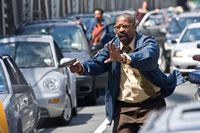
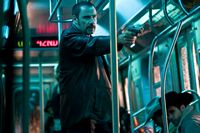
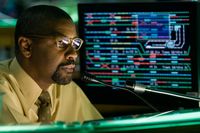
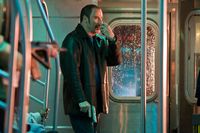
In The Taking of Pelham 1 2 3, Denzel Washington stars as New York City subway dispatcher Walter Garber, whose ordinary day is thrown into chaos by an audacious crime: the hijacking of a subway train. John Travolta stars as Ryder, the criminal mastermind who, as leader of a highly-armed gang of four, threatens to execute the train’s passengers unless a large ransom is paid within one hour. As the tension mounts beneath his feet, Garber employs his vast knowledge of the subway system in a battle to outwit Ryder and save the hostages. But there’s one riddle Garber can't solve: even if the thieves get the money, how can they possibly escape?
Columbia Pictures and Metro-Goldwyn-Mayer Pictures present in association with Relativity Media a Scott Free / Escape Artists production, a film by Tony Scott, The Taking of Pelham 1 2 3. The film stars Denzel Washington, John Travolta, John Turturro, Luis Guzman, Michael Rispoli, and James Gandolfini. Directed by Tony Scott. Produced by Todd Black, Tony Scott, Jason Blumenthal, and Steve Tisch. Screenplay by Brian Helgeland. Based on the novel by John Godey. Executive producers are Barry Waldman, Michael Costigan, and Ryan Kavanaugh. Director of Photography is Tobias Schliessler, ASC. Production Designer is Chris Seagers. Editor is Chris Lebenzon, A.C.E. Costume Designer is RenÈe Ehrlich Kalfus. Music by Harry Gregson-Williams.
The Taking of Pelham 1 2 3 has been rated R by the Motion Picture Association of America for violence and pervasive language. The film will be released in theaters nationwide on June 12, 2009.

ABOUT THE FILM
Director Tony Scott frames the hijacking of a subway train and the subsequent standoff between cops and crooks as a terrifying cat-and-mouse game, pitting an ordinary, overburdened train dispatcher, played by Denzel Washington, against a mercurial vengeful killer portrayed by John Travolta in the new action thriller The Taking of Pelham 1 2 3.
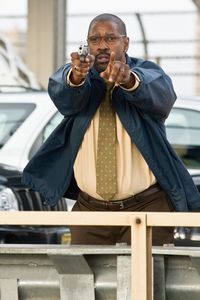
Washington says that he was attracted to the role by finding a most unusual character at the center of the action-thriller. “He’s not a cop, he is a civil servant,” the actor explains. “When he’s confronted with Ryder’s demands, he’s like, ‘Look, where’s the hostage negotiator? This is not what I do.’ Walter Garber is not a superhero. He’s scared.”
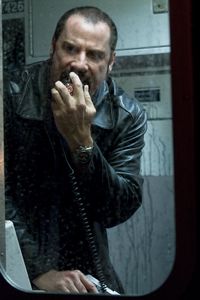
Similarly, John Travolta found his character, Ryder, to be loaded with possibilities. “Playing a bad guy is freeing because good guys restrain themselves,” explains Travolta. “With a bad guy you can create your own moral fiber for him in varying degrees, and usually out of a wide envelope of behavior. I can be wild, calm, nutty, charming, or whatever I want.”
The Taking of Pelham 1 2 3 began life as a bestselling novel by John Godey. The book’s central puzzle kept readers guessing. Who would rob a subway train? You’d have to be crazy – the subway is a closed system. Even if you get the money, there’s nowhere to escape. The novel was first adapted for the screen in 1974, starring Walter Matthau and Robert Shaw, and today remains a cult classic.
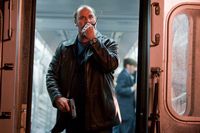
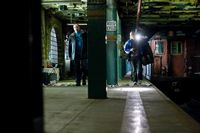
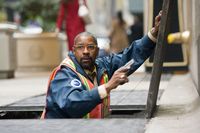
The filmmakers approached the new adaptation – Scott, screenwriter Brian Helgeland, and producers Todd Black, Jason Blumenthal, and Steve Tisch, along with Scott – not as a remake of the classic film, which they felt stands on its own. Instead, they returned to the novel, retelling the story as a highly contemporary thriller and reinventing it for a modern-day New York. “It’s a
great story, yet unknown to new generations of filmgoers,” Scott says. “The world, and New York City in particular, has changed a lot since 1974.”John Travolta says that though the new film has some of the same elements as the first adaptation, the new film is “The Taking of Pelham 1 2 3 on steroids – very intense, very hyped up, and very contemporary.”
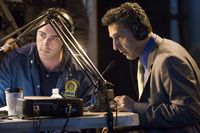
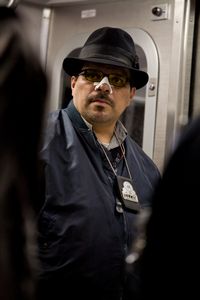
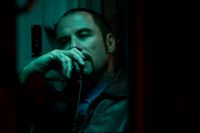
“I’ve always liked stories where people are put in extreme circumstances, and you see how they respond when things go wrong,” says Helgeland, who won an OscarÆ for his script for L.A. Confidential. He approached producer Todd Black, for whom Helgeland had written and directed A Knight’s Tale.
“We watched the movie again and realized what a fun story it was,” remembers Black, whose producing credits include The Pursuit of Happyness and Knowing. “It felt right not for a remaking, but a retelling.”
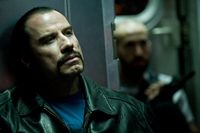
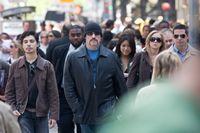
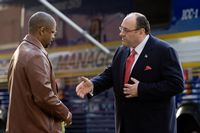
That retelling would set the film apart from the earlier adaptation in crucial ways. “I was interested in developing much more of a relationship between the dispatcher and the hijacker,” says Helgeland. “I felt neither the novel nor the original movie really forced Garber and Ryder to crawl under each other’s skin to figure each other out.”
The dispatcher, Garber, seeks to clear a stain on his reputation: a charge of bribery that resulted in his demotion from MTA administrator to dispatcher and now drives him to go head-to-head with the hijacker. “He believes if he helps the people on the train, he can make amends,” Helgeland says. “Garber seeks redemption.”
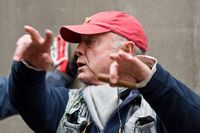
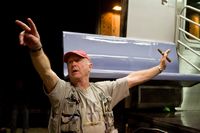
By contrast, Ryder seeks revenge. Travolta’s Ryder is terrifyingly intelligent and red-hot manic, one moment showing mercy, then in a split second exploding in deadly fury. In his previous life, he thrived on Wall Street until imprisoned for embezzlement; now his motivations include settling a score with New York City.
The characters are as opposed as the worlds they inhabit. “Garber works for MTA NYC Transit, above ground, and when we researched it, we found it was very high-tech, like NASA,” says Scott. “I took that world, the quiet and cleanliness and high tech quality of the MTA, and balanced that with the darkness and grittiness and bowels of New York in the subways.”
The director believed there was only one way to achieve his vision. “Tony felt very strongly about shooting the real tunnels when we decided to make this movie,” Barry Waldman, executive producer, remembers. “He wanted the sound and the fright of being in and around moving trains, for the subway to become a third character after Denzel and John.”
“Usually people build sets and try to reconstruct it on a stage instead, but there’s nothing like capturing reality,” Waldman continues. “It’s difficult, it’s dirty, but it’s exciting. It’s a challenge, and I always love a challenge.” And a challenge it was – with temperatures above ground hitting 100 degrees and below ground even hotter.
Scott ended up filming in the subway for four weeks, the longest and most extensive shoot ever in New York’s subway. The production was granted access to areas NYC Transit had never before allowed a film crew, including the makers of the original Pelham.
Shooting in the tunnels can be a harrowing experience, with 400 tons of train roaring past only inches away, while the train’s “third rail shoes,” or electrical conductors, speed by even closer, with 600 volts of electricity coursing through them. “You don’t realize how big the trains are when you’re on the platform,” Washington explains. “But when you’re down on the tracks, those things are monsters, rolling at 40, 50 miles an hour. The wind can whip you around, so you’ve got to brace yourself.”
NYC Transit officials kept close watch to ensure safety; still, actors and crew were forewarned, as is every individual who enters the tunnels, that trains could come on any track, at any moment, and from any direction… and everyone should always assume the third rail is live at all times.
At the helm of The Taking of Pelham 1 2 3 is Tony Scott, the-man-behind-the-mayhem of numerous action classics, including Top Gun, Crimson Tide, True Romance, Man on Fire, and DÈj‡ Vu.
With camera movement, quick pans, saturated colors, and selected focus among his inimitable visual vocabulary, the director builds an escalating sense of suspense and dread in the thriller. “Tony is really a painter,” says Black. “The way he shot the scenes in the subway completely hypnotizes you and makes you feel like you’re right there.”
Scott views the tunnels as a unique and separate world. “My goal was to touch that world in a way that I felt nobody has ever touched it before.”
CASTING THE FILM
At the moment that the filmmakers began to consider a new adaptation of The Taking of Pelham 1 2 3, they had one name in mind for their leading man. “Only an actor like Denzel Washington, with his powerful screen presence and immense talent, could make such an ordinary character in an ordinary desk job so compelling to watch,” Helgeland says.
Nor did it hurt that Washington had a long history with Scott, starring in three of the director’s films, DÈj‡ Vu, Man on Fire, and Crimson Tide. “He’s the best, he has a good heart,” Washington says about Scott. “Tony works harder than anybody, so whenever he calls I come running.”
Washington also had a strong professional relationship with the screenwriter and the producer who courted him. Helgeland had written Man on Fire that starred Washington, while Black produced the actor’s two acclaimed directorial efforts, Antwone Fisher and The Great Debaters. Washington was eager to work with Black again. “Todd Black knows what he’s doing,” says Washington. “He’s the consummate professional producer, one of the biggest in Hollywood.”
Scott was impressed by Washington’s take on the character. “He said, ‘I’ve played FBI, I’ve played CIA.’ He recently played a hostage negotiator in Inside Man, so he didn’t want to do that. He was looking for something different. We found the difference in simplicity. Denzel plays Garber as the Everyman, the guy next door, in a very honest way, and it’s the perfect counterpoint to John Travolta’s angry character.”
Helgeland adds, “It’s compelling to watch how someone who has no experience reacts when the phone rings and a killer is on the other end.”
For the role, Washington talked to veteran subway workers, including one who just retired after 60 years. He also befriended Joseph Jackson, a train dispatcher in the Rail Control Center. Like Washington’s character, Jackson began his career driving a subway train. Responsible each day for the safety of the five million passengers that traverse an underground system as large as the city itself, a dispatcher’s most critical skill is staying cool during an emergency. “Passengers tend to get panicky, especially in the tunnels,” says Jackson, who served as a technical advisor on the film. “Plus, there are only two crew members aboard each train to help. You don’t want people trying to get off the trains in between stations.” In this case, the dispatcher can be the critical liaison that smooths out an emergency situation.
Observing the dispatcher, Washington seemed “like a computer, taking it all in,” remembers producer Todd Black. “Denzel would watch silently, then ask questions. He knows how to embody real people, to capture their gestures, things they would say. There’s no one better at that.”
In a sense, Washington had spent many years preparing for the role. “I grew up in New York and I took the 2 train from 241st and White Plains Road every day,” he says. “When I was a kid, I’d go between cars, between stations, sneak down the side of the train. You never went too far. It was interesting, after 30 years, to be on the subway.”
The Taking of Pelham 1 2 3 was also unusual for the actors in that the two main characters, Garber and Ryder, are apart for so much of the film. Garber is above ground in the control center as Ryder manipulates him from the subways below. “For the first six weeks, I didn’t even see John,” says Washington. “We were both on set, but I was in one room and he was in another. We had a very interesting scene in which he embarrasses Garber; he finds out a lot about Garber and vice versa. We develop a relationship, twisted as it may be. The trick, when you have these two characters on opposite ends, is how you’re going to get them together.”
Indeed, with Garber cast, the list of actors who could hold their own opposite Washington’s dynamic screen presence was short. The role of Ryder required an actor who could make the character larger than life. John Travolta fit the bill. “When you give him a truly imposing role, Travolta knows how to pump a color and energy into it that I think no other actor can,” Black says.
Tony Scott and his team researched prison culture, which influenced Ryder’s closely cropped hair, handlebar mustache, and tattooed neck. While imprisoned for a white-collar crime, Ryder underwent a fundamental transformation. “We found several people who’d embezzled money and gone to prison for it and came out very changed by their experience,” Helgeland says.
Ryder aims his rage at New York City as a living, breathing, byzantine entity that destroys lives. “He’s built up resentment toward the city, feeling betrayed and mistreated,” Travolta says. “I decided he was calculated to some degree, but at the same time, he is a stimulus/response type of guy, meaning you can push his buttons. Say the wrong word, and he goes off.”
For supporting roles, the filmmakers drew from New York City’s rich pool of talent, including several actors who previously had worked with Washington, Travolta, or Scott. James Gandolfini appeared in the director’s True Romance and Crimson Tide before becoming a household name as the crime boss of “The Sopranos.” He goes from mobster to mayor of New York in The Taking of Pelham 1 2 3.
Travolta was also delighted that Gandolfini took on an altogether different role from his seasoned bad-guy persona; their professional relationship dates back to Get Shorty. “I’ve known him for 14 years – this is our fifth movie together,” Travolta says. Travolta sees Gandolfini’s mayor, an independently wealthy businessman plagued by waning popularity, as a departure. “He plays someone who is more aware of self-image, and what he means to his public. I think that was a nice change for James.”
Tony Scott had long wanted to work with John Turturro and had come close on several projects, but it has never worked out until now. The director recruited the actor – a favorite of the Coen Brothers (Barton Fink and O Brother, Where Art Thou) and Spike Lee (Do The Right Thing and Mo’ Better Blues) – to portray Lieutenant Vincent Camonetti, the head of the New York Police Department’s hostage negotiation team.
As a native New Yorker, Turturro was a big fan of the 1974 film. He points out his character wasn’t in the original Pelham. “Back then, the NYPD didn’t have a hostage negotiator,” Turturro explains. “The job was invented afterwards.”
The screenwriters based the role on the current commanding officer of the NYPD’s Hostage Negotiation Team, Lt. Jack Cambria. “Almost all of John’s dialogue comes directly from Cambria. He told us exactly what he would say to a terrorist,” Helgeland says.
Lt. Cambria, who also served as a technical advisor, compliments Turturro as a quick study. “We know very well every time we have to enter somebody’s house for an arrest, there’s probably a 50/50 chance at best of coming out, but the hostages expect you’re going to save the world. You have to maintain an air of confidence to do this work, and John Turturro is outstanding at pulling that off.”
“After each take, I’d talk to Jack,” says Turturro. “It’s essential that you have these people around you. He was very thoughtful and not inhibiting. He’s been doing the job for so long that the acting challenge is to capture a piece of it while knowing that you’re not going to get the whole thing. So I’d check with Jack – ‘what do you think, what would you do, was that real, was that bogus’ – and he’d say, ‘Yeah, I can buy that.’”
Though not surprising, it is interesting the way Turturro draws a distinction between acting and police work. If the job of acting is finding the emotion of a scene, he says, “being a cop is about separating your feelings from your job. I’ve played a few cops, I’ve done some research, and I have tremendous respect for what they do. It’s a hard job.”
Washington says that when he got together with Turturro and Gandolfini, he would experience another transformation. “John, Gandolfini and myself, we’re a bunch of New York guys, so it was a lot of fun. All I had to do was sit in a room with them and before you know it, I’m Italian.”
Hovering over Garber’s desk is his hard-nosed boss, the head of NYC Transit’s Rail Control Center. John Johnson, portrayed by Michael Rispoli, has no doubt Garber is guilty of the bribery charges and openly insults and harasses him. The character of Johnson takes his name from the real chief transportation officer at NYC Transit (but not modeled on him). “The real John Johnson is a pretty formidable guy,” according to Rispoli. “I said to him, ‘You’re an ex-Marine?’ and he says, ‘There are no ex-Marines.’ That’s the way he runs the Control Center, with real organizational skill and command.”
The lone NYC Transit employee who believes in Garber is Delgado, a rookie, up-and-coming train dispatcher. During his research, Ramon Rodriguez observed camaraderie among dispatchers in the frequently high-pressured environment of the Rail Control Center. “They’re on the mic all day, giving instructions. It’s almost like working at an airport,” says Rodriguez, whose credits include HBO’s “The Wire” and the recent feature Surfer, Dude. “They look out for each other. There’s a brotherhood.”
Below ground, Ryder relies on Ramos, a brooding, disgruntled former train operator he met in prison, whose first-hand experience of the tunnels is vital to the hijacking and, most importantly, the escape. Travolta easily played off Luis Guzman, familiar with the veteran actor from working together before. “He does a very simple, very introspective take on his character in the movie, which I like,” Travolta says. “He doesn’t realize what he’s gotten into until he’s in the middle of madness.”
Guzman understood how Ryder could sell his character such an outrageous scheme. “Ryder is Mr. Smooth Talker, Mr. Salesman, and Ramos naively buys the whole plan,” says Guzman. “Once the gang has taken over the train and starts killing passengers, though, he has second thoughts. During filming, I spent a lot of the time in my own head, saying ‘What the hell am I doing here, and how can I get out of this?’”
The added strength of such a diverse supporting cast only intensifies and accentuates the heavy pairing of Washington and Travolta. “Viewers should see this film if they want to be thoroughly entertained by two brilliant actors dancing with one another for two hours,” Black says. “It constantly keeps you on the edge of your chair.”
FILMING ABOVE GROUND: THE SETS AND LOCATIONS
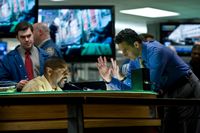
Inside a nondescript building in a secret location in midtown Manhattan lies NYC Transit’s brand-spanking-new, state-of-the-art Rail Control Center, which handles the entire subway system’s never-ending flow of human traffic. In The Taking of Pelham 1 2 3, this is where Garber sits at his desk and wages a battle of life or death with a Jekyll-and-Hyde-like hijacker.
Although much of the movie was shot on site – due to the doggedness of Tony Scott’s long-time location manager Janice Polley, along with NYC Transit’s liaison, Alberteen Anderson – the locale that sets the pulse of the film remained hidden from cameras.
Anderson initially took the filmmakers to the recently vacated former Rail Control Center in Brooklyn, made famous in the 1974 version of Pelham. Though dormant, the space is still functional and serves as a backup to the new center. “The Brooklyn facility gave us good insight into the layout and how the system works,” production designer Chris Seagers says. “We would have loved to film there, but logistically it wasn’t practical. Everything was hard-wired in, none of the desks moved, and obviously we couldn’t pull out walls or control the computer screens.”
After the initial visit to the former facility, Scott and a select few members of the filmmaking team were granted access to the new facility. “It was like NASA, this amazing, huge space,” Seagers says. The new Control Center looked like – according to Seagers – a movie set. “We decided to create our own version,” the production designer explains. “We took the essence of the new center’s design, with all its flash, and combined it with bits-and-pieces of details from the older control room, which was classic New York City, down and dirty.”
The crew erected the fantasy Rail Control Center on a soundstage at Kaufman-Astoria Studios in Queens. Among its features: 150-foot-long video boards with interactive playback. “Chris Seagers got the guy who designed the actual NYC Transit boards to design ours, so it’s virtually a carbon copy,” says Black.
Meanwhile, back down in the tunnels, things were getting cramped. As anyone who rides the subway at rush hour knows, space is tight. Explains executive producer Barry Waldman: “When you’re trying to film inside the train operator’s cab, which is probably five-by-three, there is no way to squeeze in two actors, a make-up artist, hair, wardrobe, and sound person.”
Not to mention the four, sometimes five, cameras that Scott employed. “Directors are getting used to having multiple cameras, but Tony definitely brings it to another level,” cinematographer Tobias Schliessler says. From his perch on an apple box, Scott quietly guided his multiple camera operators during each take, like a maestro conducting his orchestra. Even in the smallest of spaces, Scott often brought in a 360-degree dolly track. Yet not even the director could magically fit his actors, crews, and cameras into a closet designed for a solitary train operator.
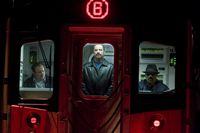
The solution: build a better subway car. On stage at Kaufman Astoria Studios, the crew constructed a car from scratch, using pieces from real trains. NYC Transit was eager to help; after all, it’s not easy finding ways to recycle 40 tons of steel. (And yet they do: old subway cars are buried at sea, used to rebuild eroding barrier reefs.)
The new subway car was designed to accommodate all the cameras the director could want and more. “We could open all the doors where we wanted to, remove all the panels that we needed to, light it any way we wanted to, and build shooting platforms all the way around it,” Waldman says. Built on a hydraulics system and placed on a track, the car could move 40 feet then stop on a dime.
Even the actors couldn’t tell the faux car from the real deal. “The first time I saw it, I thought they brought a New York City subway train into the studios,” says Luis Guzman. “I said, ‘Wow, how did they do that?’ It was just made out of wood and metal, but it looked absolutely real.”
As any production crew can attest, filming in New York is its own experience. “It’s a city with nine million people, and the volume of traffic is tremendous,” says executive producer Barry Waldman. “You don’t get a sense of it until you’re standing in the middle of a street trying to shoot a scene where there’s nothing but honking cars that just want to get from point A to point B and really don’t care that you’re making a movie.”
The “money run” offered an especially challenging sequence to design and execute. “It was unique in the sense that it wasn’t really a car chase,” explains Chuck Picerni, Tony Scott’s stunt coordinator for 17 years. “It was about the jeopardy involved in driving this money to the train station in time.”
To distinguish his Pelham from the first, Scott aimed to create a more visually exciting atmosphere by filming part of the “money run” under an elevated train, almost as homage to another classic New York film of the 1970s, The French Connection. “There’s such interesting light beneath the elevated train,” says production designer Chris Seagers. “Though its dark, light punches in through the buildings which looks great when you’re going at high speed. Tony wanted to capture that.”
BELOW GROUND: FILMING IN THE SUBWAY
For the uninitiated to New York City, negotiating the subway is like swimming ocean waters in January: alien, scary, exhilarating. Some five million people pass through these tunnels each day; learning to master the mysteries of a modern transport system more than a century old is a rite of passage into New York City’s urban tribe. Riders try not to think about what might lurk outside the train’s doors in the pitch black: the occasional trash fire, rats, the unforgiving third rail.
The Taking of Pelham 1 2 3 had to confront these challenges and more on a daily basis in order to make a film with a plot that unfolds below ground. Then again, movies have a long history of exploring the tunnels, dating back to 1904 when the subway first opened and Thomas Edison mounted a camera on a train to capture its trek along the path of the city’s first subway.
In July 2007, nine months prior to filming, Tony Scott’s production team arrived in New York to research and prep for Pelham. Their liaison, and keeper of the key to all things transit, was Alberteen Anderson, director, Film and Special Events for NYC Transit’s Department of Corporate Communications. One of the unit’s primary purposes is to acclimate people not accustomed to working around 400 tons of moving steel and guarantee their safety. The unit also helps accommodate a movie company’s special requests. For example, for the 1994 film The Cowboy Way, Anderson’s unit helped get horses onto the Manhattan Bridge so that Keifer Sutherland and Woody Harrelson could make the leap from horseback to a racing B-train. And when producers of Money Train and Die Hard With a Vengeance wanted to buy their very own subway cars, Anderson managed to fill the order (as both productions happened to coincide with NYC Transit's scrapping of a fleet of 40-year-old cars).
What NYC Transit granted Pelham was unprecedented access. The team scouted practically the entire system: tunnels, stations, Grand Central, and the new Rail Control Center. “In the past, we’ve allowed filming on a platform or inside a train, but very little filming with actors down on the track,” says Joe Grodzinsky, Superintendent Rapid Transit Operations, who has overseen several shoots in a 35-year career. “Pelham shot scenes with the actors on the track as trains moved past them. That was unique.”
Any production company seeking to film must first enroll in an eight-hour safety-training course – the same required of any NYC Transit employee who steps foot in the tunnel. For Pelham, this meant the entire cast and crew, ultimately some 400 people. Anderson says, “I was impressed. Some productions have balked, but this group understood filming down here was too scary not to do everything exactly right. The attitude came from the top down: ‘I don’t want to be carried out of here, I want to go home to my family.’”
In an old, converted public school, where red and green circles resembling track lights mark exits and entrances, actors and crew learned under the tutelage of Bob Willis at the NYC Transit Learning Center how to navigate tracks, identify hazards, and most importantly, avoid the electrical contact rail, better known as the third rail.
“John Travolta loved the class because he’s so into transportation,” Willis says. “Luis Guzman grew up in New York and used to like watching the train yards as a kid.”
The third rail is just as dangerous as legend would have it. A touch can lose a limb or a life. “They showed us a photograph of what happens if you hit that third rail,” Washington says. “And it ain’t nice.”
After class, students hopped a subway to an R station. In regulation boots and safety vest, flashlight in hand, one by one they descended into the subway. Movie stars and production assistants alike stepped around garbage, cast-off syringes, or whatever else the tunnel offered. Also to be avoided: any puddles of liquid, because, Willis says, “if you’re from New York, you can assume it is what you think it is.”
Second only to the danger of the third rail is the danger of an oncoming train – in fact, failing to look both ways is the number one cause of fatalities in the subway. So what do you do if you’re in the tunnel and you hear the two whistles indicating a train is coming? “Center yourself between the columns, press your shoulder against one, place your hand flat against the opposite,” Willis instructs. “Now don’t move. If you stand with your hands in your pocket, the wind can pull you right in. And don’t stick your neck out to see if the train is coming!” The train rumbles down the track with a deafening roar, whipping up dust and dirt (and who knows what else), tall as a building (too high to see in the windows)… and all with double-intensity when one train passes in front and another passes behind. “And don’t turn around to look at it!” Willis barks.
Willis’s lessons were the top priority during filming, even more important than filming. “Tony Scott listened when we recommended that a scene could be shot in a safer and more expedient manner,” says Grodzinsky. “We’ve worked with a lot of movie people before, but Tony was the most approachable and agreeable. Every day, he stood on a milk crate and gave a safety talk or made changes based on our recommendations. The film crew got used to asking Transit personnel questions before they did anything on or near the track area.”
As production designer Chris Seagers describes it, “Shooting became an immensely complicated and highly organized set of military maneuvers every day.”
The Hoyt-Schermerhorn Station in downtown Brooklyn became the shooting location for a number of sequences: the sniper scene, the criminals’ escape, and throwing the train operator’s body out of the car. 50 to 100 crewmembers crammed onto a narrow platform, while beneath them, actors shot in an isolated section of a dusty, very dark “ghost tunnel” – the track for the now-defunct HH shuttle, which happened to lay next to the very-much-in-service tracks for the A, C, and G trains.
Filming was laborious. Every piece of metal – tripods, cameras, booms – was wrapped in four layers of tape to avoid conducting electricity. The crew built its own wooden ladders and transit workers covered the third rail with heavy rubber mats. “Each time the crew completed filming a scene and needed to relocate personnel and equipment, we would remove the power from all tracks before permitting production personnel to enter the track area,” remembers Grodzinsky. “After completing preparations, all nonessential personnel were cleared from the track and NYCT personnel thoroughly inspected the tracks, making certain not one piece of equipment or debris remained, before turning the power back on.”
Turning the power back on is not like flipping a light switch. “The process involves a chain of command and sending men to certain breaker houses,” explains Glenn Tortorella, superintendent third rail, Power Division. This meant 30-minute delays to shut the power off or on between scenes, as many as nine times a day.
Every day the crew grew more used to the foreign surroundings, “and every day we warned them not to get too comfortable,” recalls Tony Annaruma, a train service supervisor. “We worry about people becoming too complacent. When people stop concentrating on their surroundings is when they get hurt. Most of our fatalities have happened to guys who have worked here 20 years or more.”
Transit personnel went so far as to scrutinize some 200 extras’ shoes before Scott shot the passenger evacuation scene in the tunnel at Church Avenue. “We looked at the footwear and pointed out people who shouldn’t be down there,” Annaruma says. “Some were in high heels, which just aren’t feasible for walking the tracks at night. “
Annaruma was also on hand when Denzel Washington filmed a scene high atop the Manhattan Bridge. “Denzel had to stand very close to the track,” says Annarumma. “When that train barreled by full speed, he was scared. He wasn’t going to budge. After he was done, he came up to some of us and said, ‘I give you guys credit.’”
Strangely, in four weeks of filming underground, the tunnel’s most notorious denizen, the rat (or track rabbit as it is sometimes called), kept a low profile. “I guess there were too many of us for them to want to mingle,” says actor Luis Guzman. “It would have gotten stomped.”
With the shoot completed, the MTA’s Anderson considers The Taking of Pelham 1 2 3 the most intense production she has ever experienced. She also calls it one of the most rewarding. “As intense as it was, I was able to thank the production company for how professional they were. I never once had a problem with this company. Everyone went home safe to his or her family.”
SUBWAY FUN FACTS
Say you’ve hijacked a subway train and you need to escape. How does one get out of a tunnel?
Ever notice those metal grates on New York City sidewalks painted bright yellow? They’re exits used to evacuate tunnels during emergencies. Open up the grate from below, and you may find yourself in the middle of a busy sidewalk or in a park. One grate even opens up inside an elegant, 19th-century town house in Brooklyn. The Greek Revival, which the neighbors call “Shaft House,” serves as a front to conceal a fan plant for the IRT train. At the touch of a button from a remote location, the plant can supply fresh air, or expel smoke and heat in the case of a subway fire.
Is New York’s subway the longest in the world?
No, that title goes to the London Underground. Dating back to 1863, the Tube is also oldest. New York, however, can boast the largest fleet of subway cars, more than 6,400.
How many miles of track make up the subway system?
NYC Transit reports that the system has roughly 660 miles of track in "revenue service," that is, to transport passengers. Laid end to end, the subway tracks would stretch from New York City to Chicago.
Which line offers the longest ride without changing trains?
Take the A train from 207th Street in Manhattan to Far Rockaway in Queens to experience the single longest line in the world, 31 miles.
Which station is located the deepest below ground? How low does it go?
The deepest underground station is the 191st Street Station on the No. 1 line in Manhattan, located 180 feet below street level:
Why are riders called “strap hangers”?
It’s an anachronistic nickname from the days when standing riders held on to straps suspended from the train’s ceiling.
Where do old subway cars go to die?
From beneath the sidewalk to under the sea, they are “reefed.” They are used in constructing man-made barriers to promote sea life all along the Atlantic coast.
ABOUT THE CAST
Two-time Academy AwardÆ-winning actor DENZEL WASHINGTON (Walter Garber) is a man constantly on the move. Never comfortable repeating himself or his successes, Washington is always in search of new challenges and his numerous and varied film and stage portrayals bear this out. From Trip, an embittered runaway slave in Glory, to South African freedom fighter Steven Biko in Cry Freedom; From Shakespeare's tragic historical figure Richard III, to the rogue detective, Alonzo in Training Day, Washington has amazed and entertained us with a rich array of characters distinctly his own.
In late December 2007, Washington directed and co-starred with Academy AwardÆ winning actor Forest Whitaker in The Great Debaters, a drama based on the true story of Melvin B. Tolson, a professor at Wiley College, who, in 1935, inspired students from the school’s debate team to challenge Harvard in the national championship.
In November 2007, Washington starred alongside Russell Crowe in Ridley Scott’s American Gangster. The film grossed $43.6M in its first weekend and earned Washington his largest opening weekend to date.
March 2006 saw Washington in Spike Lee’s Inside Man. Co-starring Clive Owen and Jodie Foster, this film took in $29M in its opening weekend, and marking Washington’s second biggest opening to date.
As 2006 came to an end, Washington thrilled audiences yet again in Touchstone Pictures’ DÈj‡ Vu, re-teaming with director Tony Scott. In this “flashback” romantic thriller, Washington plays an ATF agent who travels back in time to save a woman from being murdered, falling in love with her in the process.
In 2004, Washington collaborated with director Tony Scott on Man on Fire. In this film, Washington plays an ex marine who has been hired to protect a young girl, played by Dakota Fanning, from kidnapping threats. That same year, Washington was also seen in The Manchurian Candidate, a modern day remake of the 1962 classic film for Paramount Pictures. In the film, directed by Jonathan Demme, Washington starred along side Meryl Streep and Liev Schreiber, in the part that Frank Sinatra made famous.
Washington was honored with the Academy AwardÆ for his acclaimed performance in Training Day, directed by Antoine Fuqua. The film was only one of two in 2001 that spent two weeks at the number one spot at the box office.
In 2003, Washington was seen in Out of Time, directed by Carl Franklin. Washington played opposite Eva Mendez and Sanaa Lathan in the murder mystery thriller for MGM.
December 2002 marked Denzel Washington’s feature film directorial debut with Antwone Fisher. The film, which is based on a true-life story, and inspired by the best-selling autobiography, Finding Fish, follows Fisher, a troubled young sailor played by newcomer Derek Luke, as he comes to terms with his past. The film won critical praise, and was awarded the Stanley Kramer Award from the Producers Guild of America, as well as winning NAACP Awards for Outstanding Motion Picture and Outstanding Supporting Actor for Washington.
Also in 2002, Washington was seen in John Q, a story about a down-on-his-luck father whose son is in need of a heart transplant. The film established an opening day record for President’s Day weekend, grossing $24.1 million. The film garnered Washington a NAACP Image Award for Outstanding Actor in a Motion Picture.
In September 2000, he starred in Jerry Bruckheimer’s box-office sensation Remember the Titans, which took in $115M domestic. Earlier that year, he starred in Universal’s The Hurricane, reteaming with director Norman Jewison. Washington received a Golden Globe Award for Best Actor and an Academy AwardÆ nomination (his fourth) for his performance.
In November 1999, he starred in Universal’s The Bone Collector, the adaptation of Jeffrey Deaver’s novel about the search for a serial killer, co-starring Angelina Jolie and directed by Phillip Noyce.
In 1998, he starred in the crime thriller Fallen (Warner Bros.) for director Greg Hoblit, and in Spike Lee’s He Got Game, released by Touchstone (Disney). Also, he re-teamed with director Ed Zwick in the 20th Century-Fox terrorist thriller The Siege, co-starring Annette Bening and Bruce Willis.
In the summer 1996, he starred in the critically acclaimed military drama Courage Under Fire for his Glory director, Ed Zwick. Later that year, Washington starred opposite Whitney Houston in Penny Marshall's romantic comedy The Preacher's Wife.
In 1995, Washington starred opposite Gene Hackman as Navy Lieutenant Commander Ron Hunter in Tony Scott's underwater action adventure Crimson Tide; as an ex-cop released from prison to track down a computer-generated criminal in the futuristic thriller Virtuosity; and as World War II veteran Easy Rawlins, in the 1940s romantic thriller Devil in a Blue Dress (which Washington's Mundy Lane Entertainment produced with Jonathan Demme's Clinica Estetico)..Another critically acclaimed performance was his portrayal of Malcolm X in director Spike Lee's biographical epic, Malcolm X. MonuFor his portrayal, Denzel received a number of accolades, including an Academy AwardÆ nomination for Best Actor.
In addition to his accomplishments on screen, Washington took on a very different type of role in 2000. He produced the HBO documentary Half Past Autumn: The Life and Works of Gordon Parks, nominated for two Emmys. Also, he served as executive producer on Hank Aaron: Chasing The Dream, a biographical documentary for TBS which was nominated for an Emmy Award. Additionally, Washington's narration of the legend of "John Henry" was nominated for a 1996 Grammy Award in the category of Best Spoken Word Album for Children and he was awarded the 1996 NAACP Image Award for his performance in the animated children's special Happily Ever After: Rumpelstiltskin.
A native of Mt. Vernon, New York, Washington had his career sights set on medicine when he attended Fordham University. During a stint as a summer camp counselor he appeared in one of their theatre productions; Washington was bitten by the acting bug and returned to Fordham that year seeking the tutelage of Robinson Stone, one of the school's leading professors. Upon graduation from Fordham, Washington was accepted into San Francisco's prestigious American Conservatory Theater. Following an intensive year of study in their theater program, he returned to New York after a brief stop in Los Angeles.
Washington's professional New York theater career began with Joseph Papp's Shakespeare in the Park and was quickly followed by numerous off-Broadway productions including “Ceremonies in Dark Old Men”; “When The Chickens Came Home to Roost” (in which he portrayed Malcolm X); “One Tiger to a Hill”; “Man and Superman”; “Othello”; and “A Soldier's Play,” for which he won an Obie Award. Washington's more recent stage appearances include the Broadway production of “Checkmates” and “Richard III,” which was produced as part of the 1990 free Shakespeare in the Park series hosted by Joseph Papp's Public Theatre in New York City.
Washington was 'discovered' by Hollywood when he was cast in 1979 in the television film “Flesh and Blood.” But it was Washington’s award-winning performance on stage in “A Soldier's Play” that captured the attention of the producers of the NBC television series “St. Elsewhere,” and he was soon cast in that long-running hit series as Dr. Phillip Chandler. His other television credits include “The George McKenna Story,” “License to Kill,” and “Wilma.”
In 1982, Washington re-created his role from “A Soldier's Play” for Norman Jewison's film version. Re-titled A Soldier's Story, Denzel's portrayal of Private Peterson was critically well-received. Washington went on to star in Sidney Lumet's Power, Richard Attenborough's Cry Freedom, for which he received his first OscarÆ nomination, For Queen and Country, The Mighty Quinn, Heart Condition, Glory, for which he won the Academy AwardÆ for Best Supporting Actor, and Spike Lee's Mo' Better Blues. Washington also starred in the action adventure film, Ricochet, and in Mira Nair's bittersweet comedy Mississippi Masala.
Additional film credits include Kenneth Branaugh's film adaptation of Much Ado About Nothing, Jonathan Demme's controversial Philadelphia with Tom Hanks, and The Pelican Brief, based on the John Grisham novel.
JOHN TRAVOLTA (Ryder) has been honored twice with Academy AwardÆ nominations, the latest for his riveting portrayal of a philosophical hit-man in Quentin Tarantino's Pulp Fiction. He also received BAFTA and Golden Globe nominations for this highly acclaimed role and was named Best Actor by the Los Angeles Film Critics Association, among other distinguished awards.
Travolta garnered further praise as a Mafioso-turned-movie producer in the comedy sensation Get Shorty, winning the Golden Globe Award for Best Actor in a Motion Picture, Musical or Comedy.† In 1998 Travolta was honored by the British Academy of Film and Television Arts with the Britannia Award; and in that same year he received the Lifetime Achievement Award at the Chicago Film Festival.†Travolta also won the prestigious Alan J. Pakula Award from the US Broadcast Critics Association for his performance in A Civil Action, based on the best-selling book and directed by Steve Zailian.† He was nominated again for a Golden Globe for his performance in Primary Colors, directed by Mike Nichols and co-starring Emma Thompson and Billy Bob Thornton, and in 2008, he received his fourth Golden Globe nomination for his role as Edna Turnblad in the big screen, box office hit Hairspray; as a result of this performance, the Chicago Film Critics and the Santa Barbara Film Festival decided to recognize John with a Lifetime Achievement Award for his role in Hairspray.
He previously starred in some of the most monumental films of our generation, including earning his first OscarÆ and Golden Globe nominations for his role in the blockbuster Saturday Night Fever, which launched the disco phenomenon in the 1970's.† He went on to star in the big screen version of the long-running musical Grease and the wildly successful Urban Cowboy, which also influenced trends in popular culture.† Additional film credits include the Brian DePalma thrillers Carrie and Blowout, as well as Amy Heckerling's hit comedy Look Who's Talking and Nora Ephron’s comic hit Michael.† Travolta starred in Phenomenon and took an equally distinctive turn as an action star in John Woo's top-grossing Broken Arrow.† He also starred in the classic Face/Off opposite Nicolas Cage and The General's Daughter co-starring Madeline Stowe.† Recently, Travolta reprised the role of ultra cool Chili Palmer in the Get Shorty sequel Be Cool. In addition, he starred opposite Scarlett Johansson in the critically acclaimed independent feature film A Love Song for Bobby Long, which was screened at the Venice Film Festival, where both Travolta and the film won rave reviews.
Other recent feature film credits include the hit action-thriller Ladder 49 with Joaquin Phoenix, the movie version of the wildly successful comic book The Punisher, the drama Basic directed by John McTiernan, the psychological thriller Domestic Disturbance directed by Harold Becker, the hit action picture Swordfish with Halle Berry and Hugh Jackman and directed by Dominic Sena, the successful sci-fi movie Battlefield Earth, based upon the best-selling novel by L. Ron Hubbard, and Lonely Hearts co-starring James Gandolfini and Salma Hayek which is based on the true story of the elusive “Lonely Hearts Killers” of the late 1940s.†
Most recently, Travolta starred in the big screen musical sensation Hairspray, for which he received rave reviews and a Golden Globe nomination for his portrayal of Edna Turnblad. He also recently provided the voice of the lead character in Disney’s animated hit Bolt. He also starred in the box office hit comedy Wild Hogs and he will next be seen starring opposite Robin Williams and Kelly Preston in Disney’s Old Dogs.
JOHN TURTURRO (Lt. Camonetti) studied at the Yale School of Drama and for his theatrical debut created the title role of John Patrick Shanley’s “Danny and the Deep Blue Sea” for which he won an Obie Award and a Theater World Award.† Since then he has performed on stage in “Waiting for Godot,” in the title role of Bertold Brecht’s “The Resistible Rise of Arturo Ui,” and most recently, in Eduardo De Filippo’s “Souls of Naples,” for which he was nominated for a Drama Desk Award.
For his work on television, Turturro was nominated for a SAG Award for his work in the role of Billy Martin in “The Bronx is Burning” in 2008 and for his portrayal of Howard Cosell in “Monday Night Mayhem” in 2003.† In 2004, he won an Emmy for his guest appearance on the hit series “Monk.”
Turturro has performed in more than 60 films, including Martin Scorcese’s The Color of Money, Tony Bill’s Five Corners, Spike Lee’s Do the Right Thing and Jungle Fever, Robert Redford’s Quiz Show, Peter Weir’s Fearless, Tom DiCillo’s Box of Moonlight, Francesco Rosi’s La Tregua, and Joel and Ethan Coen’s Miller’s Crossing, The Big Lebowski, and O Brother, Where Art Thou. For his lead role in the Coen Brothers’ Barton Fink, he won the Best Actor Award at the Cannes Film Festival and the David di Donatello Award. He also appeared in Robert De Niro’s The Good Shepherd and Anthony Hopkins’ directorial and writing debut Slipstream.
In 2007, Turturro expanded his fan base with a brand new, younger audience with his success as Agent Simmons in Michael Bay’s smash hit Transformers. Other recent films include James McBride’s critically acclaimed Miracle at St. Anna directed by Spike Lee, the wacky comedy You Don’t Mess with the Zohan co-written by and starring Adam Sandler, Barry Levinson’s What Just Happened? with Bruce Willis and Stanley Tucci, and Noah Baumbach’s Margot at the Wedding starring Nicole Kidman, Jack Black and Jennifer Jason Leigh.
Turturro can currently be seen in Andrei Konchalovsky’s fantasy Nutcracker: The Untold Story costarring Elle Fanning, Nathan Lane and Richard E. Grant.
For his directorial debut Mac, Turturro won the Camera d’Or from the Cannes Film Festival. He has directed two other films Illuminata and Romance & Cigarettes.
LUIS GUZMAN’s (Ramos) most recent feature film releases include Nothing Like the Holidays with Freddy Rodriguez, Alfred Molina and John Leguizamo; Yes Man with Jim Carrey; Fighting with Terence Howard and Channing Tatum; He’s Just Not That Into You with Drew Barrymore and Scarlett Johansson; and The Cleaner, opposite Samuel L. Jackson, directed by Renny Harlin. He also voiced a character in Disney’s Beverly Hills Chihuahua.
Guzman has also played substantial roles in War with Jason Statham and Jet Li; Todd Phillips’ School for Scoundrels; Richard Linklater’s Fast Food Nation; Waiting, with Anna Faris and Ryan Reynolds; Dreamer, with Kurt Russell and Dakota Fanning; Carlito’s Way, with Al Pacino and Sean Penn; Carlito’s Way: Rise to Power, with Mario Van Peebles and Sean Combs; Lemony Snicket’s Series of Unfortunate Events, with Jim Carrey; Anger Management, with Adam Sandler and Jack Nicholson; and Confidence with Ed Burns and Dustin Hoffman, directed by James Foley. Guzman also starred in Punch-Drunk Love, with Adam Sandler, directed by Paul Thomas Anderson, and Welcome to Collinwood with George Clooney.
The former social worker has become a well-known leading and character actor, appearing in over 60 feature films. Born in Puerto Rico, Guzman grew up in Manhattan. He graduated from City College, after which he worked as a youth counselor at the Henry Street Settlement House while performing in street theater and independent films. Mr. Guzman's first big break was a guest appearance on the NBC series “Miami Vice.”
Guzman has appeared in three films for Sidney Lumet (Family Business, Guilty as Sin, and Q&A), two films for Brian De Palma (Snake Eyes and Carlito's Way) three films for Paul Thomas Anderson (Magnolia, Boogie Nights, and Punch Drunk Love), and three films for Steven Soderbergh (Traffic, The Limey, for which Guzman received an Independent Spirit Award nomination for Best Supporting Actor, and Out of Sight).
Guzman's other films include Anthony Minghella's Mr. Wonderful, Ridley Scott's Black Rain, The Hard Way, Cadillac Man, True Believer, and The Count of Monte Cristo, directed by Kevin Reynolds.
For television, Guzman recently played a lead role in the HBO series “John from Cincinnati.”
Early in his career, Guzman made guest appearances on many television shows, including ABC's “NYPD Blue,” NBC's “Law & Order,” and HBO's “Oz.”
MICHAEL RISPOLI (John Johnson) has amassed an impressive film and television career in drama, comedy, and in thrillers. His film credits include Disney's Invincible opposite Mark Wahlberg, The Weather Man opposite Nicolas Cage and Michael Caine, Mr. 3000 opposite Bernie Mac, Lonely Hearts opposite John Travolta, Death to Smoochy directed by Danny DeVito, Spike Lee's Summer of Sam, John Dahl's Rounders, and Brian De Palma's Snake Eyes. Rispoli played the lead in Two Family House, which won the Sundance Film Festival Audience Award in 2000. Some of his other feature credits include See You in September, Black Irish, One Last Thing, Scared City, Volcano, To Die For, Feeling Minnesota, While You Were Sleeping, The Juror, and One Tough Cop.
Rispoli is perhaps best known for his recurring role as Jackie Aprile in the HBO series, “The Sopranos.” He was recently seen as Jimmy Breslin in ESPN miniseries, “The Bronx is Burning,” starred in Dean Devlin's TNT series “Talk to Me,” David Milch's CBS series “Big Apple,” the NBC pilot “Fort Pit” and numerous other television series including “Naked Hotel,” “Furst Family,” “The Beat,” “Russo,” and “Bram and Alice.” His recurring roles for television are “The Black Donnellys,” “Third Watch,” and “10-8.” He has also appeared as a guest lead in “E.R.,” “C.S.I. Crime Scene Investigation,” and “Law & Order: Criminal Intent.”
Rispoli began his career on stage performing in the Circle Rep/Steppenwolf revival of “Balm in Gilead,” directed by John Malkovich. He is a co-founder of the Willow Cabin Theatre Company. The WCTC staged a production of “Wilder, Wilder, Wilder - Three by Thornton” that moved to off-Broadway and then to Broadway, earning a Tony nomination. In 2004, Rispoli starred and received rave reviews in the off-Broadway production of the play “Magic Hands Freddy” opposite Ralph Macchio. Rispoli has appeared in New York and regional theatre in productions of “Macbeth,” “Tartuffe,” “A Midsummer Night's Dream,” and “O'Neill's Sea Plays,” among many others. Since then, he has accumulated an extensive list of movie, television and stage credits.
Rispoli resides in New York with his wife and three children.
JAMES GANDOLFINI (Mayor) has made his mark in a variety of roles in over twenty motion pictures and television programs.† Currently he is on stage in the Broadway production God of Carnage starring along side Marcia Gay Harden, Jeff Daniels and Hope Davis.† Next, he can be seen in In the Loop, the independent feature being released by IFC Films as well as Where the Wild Things Are director Spike Jonze's upcoming adaptation of Maurice Sendak's classic children's story. Gandolfini last wrapped production on Welcome to the Rileys’, a film with Kristen Stewar
t and Melissa Leo.On the small screen, he executive produced the Emmy-nominated HBO Documentary Film Alive Day Memories: Home From Iraq, a moving documentary that surveys the physical and emotional cost of war through soldiers' memories of the day in Iraq. Gandolfini conducted interviews in which the soldiers share their feelings on their future, their severe disabilities and their devotion to the country. Gandolfini also starred in the HBO Emmy Award-winning drama “The Sopranos,” where he portrayed the series lead, Tony Soprano. †His portrayal of mob boss Tony Soprano brought him three Emmy Awards and a Golden Globe Award for Best Actor in a Drama Series. †He has won four Screen Actors Guild Awards, including two for Outstanding Male Actor in a Drama Series and two shared with “The Sopranos” cast for Outstanding Ensemble Cast.
Gandolfini's other films include Romance & Cigarettes, a film in which he starred opposite Susan Sarandon and Kate Winslet, directed by John Turturro with Joel and Ethan Coen producing; Lonely Hearts with John Travolta and Salma Hayek; director Steve Zaillian's All the King's Men, starring opposite Sean Penn and Jude Law; Mike Mitchell's Surviving Christmas, opposite Ben Affleck; the Coen brothers The Man Who Wasn't There; The Last Castle, directed by Rod Lurie and starring Robert Redford; Gore Verbinski's The Mexican, starring Brad Pitt and Julia Roberts; Joel Schumacher's Eight Millimeter with Nicolas Cage and Joaquin Phoenix; Steve Zaillian's A Civil Action, with John Travolta and Robert Duvall; Peter Chelsom's The Mighty, with Sharon Stone; Nick Cassavetes' She's So Lovely, starring Sean Penn and Robin Wright-Penn; Fallen, directed by Gregory Hoblit, with Denzel Washington; Sidney Lumet's Night Falls on Manhattan, with Andy Garcia and Lena Olin; Brian Gibson's The Juror, with Alec Baldwin and Demi Moore; Get Shorty, with Danny DeVito and John Travolta; Tony Scott's Crimson Tide, starring Gene Hackman and Denzel Washington; Angie, with Geena Davis; and his first Tony Scott picture, True Romance, starring Christian Slater and Patricia Arquette.
Born in Westwood, New Jersey, Gandolfini graduated from Rutgers University before beginning his acting career in New York theatre. †He made his Broadway debut in the 1992 revival of A Streetcar Named Desire with Alec Baldwin and Jessica Lange. He currently resides in New York.
RAMON RODRIGUEZ (Delgado) is fast becoming one of Hollywood’s most promising young actors.† Having completed starring roles in two of this summer’s biggest blockbuster films, Rodriguez is poised for an exciting ride.†
Rodriguez just wrapped Paramount Pictures’ tentpole Transformers: Revenge of the Fallen, directed by Michael Bay.
Rodriguez’s passion for his craft does not stop with big studio pictures. Focusing on quality characters and scripts that he can deeply delve into, Rodriguez was honored to be cast in the plum role of Renaldo for Seasons 4 and 5 of HBO’s The Wire. Immediately following his stint on The Wire, Rodriguez starred in ABC’s “Day Break” alongside Taye Diggs. He moved audiences and critics alike in the role of Eduardo in the critically acclaimed indie film Bella which won the Audience Award at The Toronto Film Festival. He has appeared in Newline’s Pride and Glory with Edward Norton and Colin Farrell and shot Surfer, Dude with Matthew McConaughey.
Rodriguez, who grew up on Manhattan’s Lower East Side dreamed of joining the NBA as a child.† A college basketball star, he was encouraged to enter a Nike basketball trick competition.† After winning the competition, Rodriguez was put on the Nike Freestyle tour and in a series of Nike commercials.† Guest starring television appearances on shows like “Law and Order: SVU” and “Rescue Me” soon followed as Rodriguez began to make his mark.
†
In addition to acting, Rodriguez continues to run a basketball performance group called Project Playground that appears during half-time shows at NBA and college basketball games and in television and movies.† He is an avid salsa dancer and spent time in the professional Abakua Latin Dance Company. He is currently writing a script in his native New York City.
ABOUT THE FILMMAKERS
Tony Scott
(Director/Producer) has created a series of landmark action films, mastering the balance of technical virtuosity with an exuberant sense of tempo. Scott, a member of the exclusive club of billion dollar-grossing directors, has been one of mainstream Hollywood's more reliable and stylish action filmmakers since the mid-1980s. With one high profile project set for release and many more in development, Scott shows no sign of slowing the pace.Prior to The Taking of Pelham 1 2 3, Scott directed DÈj‡ Vu. The film marked Scott’s third collaboration with Denzel Washington and his sixth collaboration with Jerry Bruckheimer. In 1995, he directed Crimson Tide, starring Washington and Gene Hackman and produced by Bruckheimer, which received both critical and popular acclaim. Scott went on to direct Washington again in the 2004 action thriller Man on Fire, this time alongside Dakota Fanning and Christopher Walken.
Scott made his feature debut in 1983 with the modern vampire story The Hunger, starring Catherine Deneuve, David Bowie, and Susan Sarandon. The movie was adapted as a trilogy for Showtime in 1998, in which Scott directed one episode starring Giovanni Ribisi and David Bowie. In 1986, Scott directed Tom Cruise and Kelly McGillis in the mega-blockbuster Top Gun; the film’s stunning aerial sequences helped make it a global success. Scott confirmed his place as one of Hollywood's premiere action directors the following year with Beverly Hills Cop II, starring Eddie Murphy.
Scott's ability to mine box office gold from a deft blending of material and talent was evident in Touchstone Pictures' Enemy of the State. Reuniting Scott with Gene Hackman and producer Jerry Bruckheimer, the political thriller starring Will Smith, became one of the biggest hits of 1998. In 2001, Scott directed Universal’s Spy Game, a taut, ambitious thriller that reunited screen giants Robert Redford and Brad Pitt. In 2005, after years of development, Scott finally brought his beloved project Domino to the screen with an all-star cast lead by Kiera Knightley portraying real life bounty hunter Domino Harvey.
Scott’s Additional film credits include: Revenge (1988), with Kevin Costner and Anthony Quinn; Days of Thunder (1990), starring Tom Cruise and Robert Duvall; The Last Boy Scout (1991), with Bruce Willis; the critically acclaimed True Romance (1993), starring Christian Slater, Roseanna Arquette and Christopher Walken, with a script by Quentin Tarantino; and The Fan (1996), starring Robert De Niro and Wesley Snipes.
Born in Newcastle, Tyne and Wear, England, Scott attended the Sunderland Art School, where he received a fine arts degree in painting. While completing a yearlong post-graduate study at Leeds College, he developed an interest in cinematography and made One of the Missing, a half hour film financed by the British Film Institute and based on an Ambrose Bierce short story. He then went on to earn his Master of Fine Arts degree at the Royal College of Arts, completing another film for the British Film Institute, Loving Memory, from an original script financed by Albert Finney.
In 1973, Scott partnered with brother Ridley to form the London-based commercial production company, RSA. Over the next decade, Scott created some of the world’s most entertaining and memorable commercials, honing his film vocabulary and picking up every major honor in the field, including: a number of Clio awards, several Silver and Gold Lion Awards from the Cannes International Television/Cinema Commercials Festival, and London’s prestigious Designers & Art Directors Award. While working as a commercial director, Scott also made three movies for television: two documentaries and a one-hour special entitled “Author of Beltraffio” from the story by Henry James. In 2002, under the RSA banner, Scott produced a series of stylish short film adver-tainments for automaker BMW starring Clive Owen. Scott himself directed one of these shorts entitled Beat the Devil that featured Owen, James Brown and Gary Oldman.
In 1995, the two brothers went on to form the film and television production company Scott Free. With offices in Los Angeles and London, the Scott’s have produced such films as In Her Shoes, Tristan + Isolde, and the Academy AwardÆ-nominated The Assassination of Jesse James by the Coward Robert Ford, starring Brad Pitt. They also executive produce the hit CBS series “Numbers”, currently in its fifth season.
TODD BLACK (Producer) counts among his recent feature film credits The Pursuit of Happyness, starring Will Smith, and The Great Debaters, starring Denzel Washington and Forrest Whitaker. He was nominated for a Golden Globe for Best Picture (Drama) for The Great Debaters. In addition, Black was honored with the Producers Guild’s Stanley Kramer Award for The Great Debaters and for his 2002 film Antwone Fisher.
Black and Escape Artists also recently produced Seven Pounds, starring Will Smith and directed by Gabriele Muccino, for Columbia Pictures, and Knowing, starring Nicolas Cage and directed by Alex Proyas, for Summit Entertainment.
Born in Dallas and raised in Los Angeles, Black attended the theatre program at the University of Southern California. He began his entertainment career as a casting associate.
In 1995, Black became President of Motion Picture Production at Sony’s Mandalay Entertainment and managed such films as Donnie Brasco, Seven Years in Tibet, I Know What You Did Last Summer, Les Miserables and Wild Things.
In January 2000, Black, along with his partner Jason Blumenthal, merged with the Steve Tisch Company to form Escape Artists, an independently financed company housed at Sony Pictures. Their first produced movie was A Knight’s Tale, starring Heath Ledger.
Black’s acclaimed drama Antwone Fisher was a decade-long labor of love that marked Academy AwardÆ-winner Denzel Washington’s directorial debut and launched the career of screenwriter Antwone Fisher. In 2005, The Weather Man marked Black’s second collaboration with writer Steve Conrad. The pair met when Black discovered Conrad’s first screenplay, Wrestling Ernest Hemingway, which he produced for director Randa Haines.
JASON BLUMENTHAL (Producer) was born and raised in Los Angeles and attended Syracuse University’s S.I. Newhouse School of Public Communications. After graduation, he joined Wizan/Black Films in 1990. There, Blumenthal was involved with the development and production of Iron Eagle II and Split Decisions, a family drama about three generations of prizefighters that starred Gene Hackman. He also worked on The Guardian, directed by William Friedkin; Short Time, with Dabney Coleman and Teri Garr; and Class Act, starring Kid N’ Play. Blumenthal executive produced Becoming Colette, written by Ruth Graham Black, and Fire in the Sky.
Other credits include Wrestling Ernest Hemingway, directed by Randa Haines and starring Robert Duvall, Richard Harris and Shirley MacLaine; Dunston Checks In, starring Jason Alexander, Faye Dunaway and Rupert Everett; A Family Thing, starring James Earl Jones and Robert Duvall; and Bio-Dome, starring Pauly Shore and Stephen Baldwin.
Blumenthal was Senior Vice President of feature production at Mandalay Entertainment, a division of Sony Pictures Entertainment, from the company’s inception in 1995 through March of 1998. During his tenure, Blumenthal managed Mandalay’s production slate and films such as The Fan, starring Robert De Niro and Wesley Snipes; Donnie Brasco, starring Al Pacino and Johnny Depp; Seven Years in Tibet, starring Brad Pitt; I Know What You Did Last Summer, No. 1 at the box office for three weeks while grossing $130 million worldwide; I Still Know What You Did Last Summer; Les Miserables, starring Liam Neeson and Uma Thurman; Wild Things, starring Neve Campbell, Kevin Bacon and Matt Dillon; Gloria, starring Sharon Stone; and Deep End of the Ocean, starring Michelle Pfeiffer.
In April 1998, Blumenthal and his partner Todd Black formed Black & Blu Entertainment, entering into a first-look production deal at Sony Pictures Entertainment. In 2001, Black & Blu merged with the Steve Tisch Co. (Forrest Gump) to become Escape Artists, while still maintaining their first-look deal at Sony Pictures. Escape Artists has since produced A Knight’s Tale, starring Heath Ledger; Antwone Fisher, directed by and starring Denzel Washington; The Pursuit of Happyness, starring Will Smith and directed by Gabriele Muccino; and The Weather Man, starring Nicolas Cage and Michael Caine; Seven Pounds, which reunited Smith and Muccino; and, most recently, Knowing, starring Nicolas Cage and directed by Alex Proyas.
Steve Tisch (Producer) is responsible for 1994’s Academy AwardÆ-winning Best Picture Forrest Gump, starring Tom Hanks, as well as launching Tom Cruise’s career with the sleeper hit Risky Business in 1983. He also served as Executive Producer on Guy Ritchie’s Lock, Stock And Two Smoking Barrels, Snatch and the critically-acclaimed American History X, starring Edward Norton.
In 2005, Tisch was named Chairman and Executive Vice President of the New York Giants of the NFL. In 2008, the Giants became Super Bowl Champions for the third time in NFL history. Tisch has the distinction of being the only Hollywood producer with both an Academy AwardÆ and The Lombardi Trophy.
Tisch is a partner in Escape Artists, a production company formed in 2001, based at Sony Pictures Entertainment. Escape Artists released The Pursuit of Happyness, starring Will Smith and Thandie Newton, in December of 2006, and The Weather Man, starring Nicolas Cage and Michael Caine in the fall of 2005. His most recent credits are Seven Pounds, which reunited Smith with his Pursuit of Happyness director, Gabriele Muccino, and Knowing, starring Nicolas Cage for director Alex Proyas.
In addition, Tisch contributes his time and financial resources to such organizations as the ERAS Center, Pediatric AIDS Foundation and the Women’s Cancer Research Foundation. Tisch is a member of the Board of Advisors at the Tisch School of the Arts at New York University, Board of Trustees of The Geffen Theatre in Los Angeles, The Museum of Contemporary Art in Los Angeles and is on the Board of Trustees of the Preston Robert Tisch Brain Cancer Center at Duke University.
Academy AwardÆ-winner BRIAN HELGELAND (Screenplay) re-teams with director Tony Scott, after having penned Scott's Man on Fire, starring Denzel Washington, in 2004.
Helgeland has written or co-written sixteen feature films, including L.A. Confidential, for which he won an Academy AwardÆ for best adapted screenplay, and Mystic River, for which he was nominated for the best adapted screenplay OscarÆ.
Helgeland wrote the original screenplay for Conspiracy Theory, starring Julia Roberts and Mel Gibson, and also wrote and directed the films A Knight's Tale, starring Heath Ledger, and Payback, starring Mel Gibson. Helgeland is also the screenwriter on the upcoming Green Zone starring Matt Damon and directed by Paul Greengrass.
JOHN GODEY (Book by), the pen name of Morton Freedgood, was born in Brooklyn, New York, in 1912. A graduate of City College, Godey had several articles and short stories published in Cosmopolitan, Collier's, Esquire, and other magazines while working full time in the motion picture industry in New York in the 1940s. Godey held publicity posts for such studios as United Artists, 20th Century Fox, and Paramount, before he decided to focus on his writing, while continuing to work part-time for the movie business.
His first novel The Wall-to-Wall Trap was published under his own name in 1957. Later, Freedgood decided to use the pen name John Godey, borrowed from the title of a 19th-century women's publication, to differentiate his crime novels from his more literary writing.
As John Godey, he achieved commercial success with the books A Thrill a Minute With Jack Albany, Never Put Off Till Tomorrow What You Can Kill Today and The Three Worlds of Johnny Handsome. The Taking of Pelham One Two Three, his novel about the hijacking of a New York City subway train, was a best seller in 1973 and was made into a hit movie starring Walter Matthau, Robert Shaw, Martin Balsam, and Hector Elizondo, in 1974.
Other feature adaptations of Godey’s books include Never a Dull Moment (1968), starring Dick Van Dyke and Edward G. Robinson, Johnny Handsome (1989), starring Ellen Barkin, Mickey Rourke, and Elizabeth McGovern. Television adaptations of his novels include Never a Dull Moment for Disneyland and The Taking of Pelham One Two Three (1998) with Edward James Olmos and Vincent D’Onofrio.
Godey went on to write four other thrillers: The Talisman, published in 1976, The Snake (1978), Nella (1981), and Fatal Beauty (1984). Godey’s thrillers were translated into many languages, including Bengali, Catalan, Spanish, French, Danish, Dutch, French, German, Hungarian, Japanese, Maylayan, Norwegian, Portuguese, and Swedish.
He died April 16, 2006 in his home in West New York, New Jersey.
BARRY WALDMAN (Executive Producer) recently worked with director Tony Scott on DÈj‡ Vu, starring Denzel Washington, and on Domino, with Keira Knightley.
Waldman’s collaboration with producer Jerry Bruckheimer includes such films as National Treasure and its sequel National Treasure: Book of Secrets, Bad Boys and Bad Boys II, Pearl Harbor, Gone in 60 Seconds, Armageddon, Kangaroo Jack, and The Rock. Prior to producing, he acted as the production manager on Batman & Robin and The Craft.
Born and raised in New York, Waldman moved to Florida to complete his studies at the University of Miami. Upon graduation, he paid his dues as a production assistant before quickly moving up the ranks to become an assistant director on various independent films and television programs. He first met producer Jerry Bruckheimer and director Michael Bay when he worked on the second unit of the original Bad Boys, which sparked a long running association with both entertainment moguls.
Waldman realized his ambition as he quickly progressed to producing and production managing such popular television shows as Key West and Dead at 21, which garnered a Genesis Award and a CableACE nomination. Another highlight included producing a documentary shot on location in Nicaragua, Honduras, and Costa Rica depicting the war between the Sandanistas and Contras. When Waldman decided to make a transition to feature films, he relocated to Los Angeles and has continued to work non-stop on some of the industry’s most prestigious big-budget projects.
MICHAEL COSTIGAN (Executive Producer) is president of Scott Free, Ridley and Tony Scott's production company, which is based at 20th Century Fox. Scott Free most recently produced Body of Lies, directed by Ridley Scott, starring Leonardo DiCaprio and Russell Crowe, and based on the novel by Washington Post correspondent David Ignatius for Warner Brothers. Scott Free is in post-production on Tell-Tale, a psychological thriller directed by Michael Cuesta (Dexter, L.I.E.) starring Josh Lucas, Lena Headey and Brian Cox, and is currently shooting Cracks, which Jordan Scott is directing, starring Eva Green.
Costigan made the transition to producing movies in 2004 with Brokeback Mountain. Directed by Ang Lee and adapted from the Annie Proulx short story by Larry McMurtry and Diana Ossana. The film was nominated for the Academy AwardÆ for Best Picture, and won OscarsÆ for Best Director and Best Screenplay.
Costigan began his career at Sony Pictures, where he was a production executive for nine years. As Executive Vice President of Production, he oversaw the acquisition, development and production of films including Milos Forman's Academy AwardÆ-nominated The People vs. Larry Flynt; James Mangold's Girl, Interrupted; McG's first installment of Charlie’s Angels; Guy Ritchie’s Snatch; Gus Van Sant's acclaimed To Die For; Andrew Niccol's debut film Gattaca; and Wes Anderson's debut feature Bottle Rocket.
RYAN KAVANAUGH (Executive Producer) is a principal of Relativity Media, LLC, a financing, consulting and production company that structures slate financing for both major studios and independent production entities.
Kavanaugh, along with his Relativity partner, Lynwood Spinks, creates business and financial structures for a number of studios, production companies and producers, and has introduced more than $3.2 billion of capital to such structures. Clients and deals include Marvel, Atmosphere Entertainment MM and French distributor/sales agent Exception Wild Bunch, among others.
Kavanaugh recently created a unique financing package, Gun Hill Road, LLC, which provides discrete and separate funds for both Sony Pictures Entertainment and Universal Pictures, marking the first time two studios have received funds from the same funding source and providing production funding for a total of 22 films in various stages of production and release. He facilitated a $528-million multipicture co-financing arrangement for Warner Bros. Pictures, as well as a $525-million financing deal for Marvel Enterprises, and structured and raised a 120-million euro acquisition, production and distribution fund for Exception Wild Bunch S.A., the French distribution and sales company founded by former StudioCanal management.
Through its partnership with Virtual Studios, Relativity finances two to three pictures per month. Kavanaugh recently arranged the financing for and will be executive producer of Conquistador, to be directed by Cannes and Sundance award winner Andrucha Waddington and star Emmy-and three-time-Golden Globe-nominated actor Antonio Banderas; Morgan's Summit, written and to be directed by Academy AwardÆ winner Tom Schulman; and The Great Pretender, starring Emmy-and Golden Globe-nominated actor Ewan McGregor. In addition, Kavanaugh arranged the financing to bring Top Cow Productions' Witchblade to the big screen, with production beginning last year on two feature films to be shot back-to-back. The films are based on the best-selling action-fantasy comic book, which also earned a loyal following as a TNT television series.
Kavanaugh also arranged the financing for and was executive producer of two films for Mark Canton's Atmosphere Entertainment MM: Full of It and George A. Romero's Land of the Dead. Recently, he has executive produced films including The International, The Tale of Despereaux, Death Race, 21, The Bank Job, Charlie Wilson's War, 3:10 to Yuma, Gridiron Gang, I Now Pronounce You Chuck & Larry, and The Kingdom.
Prior to his work with Relativity, Kavanaugh started a venture capital company at the age of 22, and during that time raised and invested more than $400 million in equity for a number of venture and private-equity transactions.
TOBIAS SCHLIESSLER, ASC (Director of Photography) recently lensed the action/drama Hancock for director Peter Berg. He had previously collaborated with Berg on the high school football drama Friday Night Lights, and the action/drama The Rundown. Schliessler’s motion picture credits also include Dreamgirls, for director Bill Condon, and Bait, directed by Antoine Fuqua.
Schliessler has also served as the cinematographer on numerous telefilms, including The Long Way Home, Outrage, The Escape, The Limbic Region, and Mandela and de Klerk.
A native of Germany, Schliessler studied filmmaking at Simon Fraser University in British Columbia, Canada. He began his career shooting documentaries, and then segued into independent features, television movies, music videos, and commercials.
Schliessler was honored in consecutive years by the Association of Independent Commercial Producers (AICP) for his cinematography on two celebrated television spots: in 2000 for Audi’s “Wake-Up” commercial, and the following year for the Lincoln Financial spot, “Doctor.” Both are now part of the permanent archives of The Museum of Modern Art’s Department of Film and Video in New York City. His commercial work also includes ads for such products as Lexus, Ford, AOL, and AT&T.
CHRIS SEAGERS (Production Designer) began his association with Tony Scott as a supervising art director and production designer for the Moroccan portion of Spy Game, and most recently worked for Scott on DÈj‡ Vu, Man on Fire, and Domino.
Seagers was the production designer on the spy spoof Johnny English, and the supervising art director on Captain Corelli’s Mandolin and The End of the Affair.
His other credits as art director include Saving Private Ryan, for which he was part of the design team that was nominated for the prestigious Art Directors Guild Award for Excellence in Production Design, The Good Thief, The Crying Game, and A Kiss Before Dying.
CHRIS LEBENZON, A.C.E. (Editor) has teamed up many times with Tony Scott, and twice received Academy AwardÆ nominations for his work with the director: on the hit films Crimson Tide and Top Gun.
Lebenzon also collaborated with Scott on such films as DÈj‡ Vu, Enemy of The State, Days of Thunder, The Last Boy Scout, Revenge, and Beverly Hills Cop 2.
Lebenzon has also collaborated numerous times with director Tim Burton on such films as Sweeney Todd: The Demon Barber of Fleet Street, Charlie and the Chocolate Factory, Corpse Bride, Big Fish, Planet of the Apes, Sleepy Hollow, Mars Attacks, Ed Wood, Tim Burton’s The Nightmare Before Christmas, and Batman Returns. Among his other credits are Pearl Harbor, Gone in Sixty Seconds, Armageddon, and Con Air, all for producer Jerry Bruckheimer, as well as Eragon, Radio, XXX, Midnight Run, and Weird Science.
REN…E EHRLICH KALFUS (Costume Designer) most recently designed the costumes for the upcoming films What Happens in Vegas…, starring Ashton Kutcher, Cameron Diaz, and Queen Latifah; and Baby Mama, starring Tina Fey, Amy Poehler, Greg Kinnear, and Sigourney Weaver. Other recent credits include Perfect Stranger, starring Bruce Willis and Halle Berry and directed by James Foley and Robert Benton’s The Feast of Love, starring Greg Kinnear, Morgan Freeman, Rhada Mitchell, and Selma Blair.
Kalfus has also designed a number of films with director Lasse Hallstrom. This includes Once Around, What’s Eating Gilbert Grape, The Cider House Rules,†The Shipping News, and Chocolat, for which Kalfus†received BAFTA and Costume Designers Guild Award nominations.
The designer’s other films include Game 6, Ladder 49, The Life of David Gale, Pay it Forward, Snow Falling on Cedars, Addicted to Love, The Evening Star, Dead Man Walking, Let It Be Me, Safe Passage, With Honors, and the TV film Crazy in Love.†
HARRY GREGSON-WILLIAMS (Music) is one of Hollywood's most sought after composers, working on a variety of high-profile projects, both animated and live-action. Over the last few years, Gregson-Williams has scored some of the industries biggest blockbusters including Shrek the Third, The Chronicles of Narnia: The Lion, The Witch, and The Wardrobe (for which he received nominations for a Golden Globe and Grammy, Shrek (for which he received a BAFTA nomination), Shrek 2, and Chicken Run. He most recently wrote the score for Gone Baby Gone, which marked the directorial debut of Ben Affleck, and The Chronicles of Narnia: Prince Caspian.
Gregson-Williams has collaborated on several movies with director Tony Scott including Man on Fire, Domino, Spy Game and DÈj‡ Vu, as well as three films with Joel Schumacher - the thriller Phone Booth, Veronica Guerin and The Number 23. His other film credits include Seraphim Falls, Kingdom of Heaven (nominated for a Classical Brit award and winning a Golden Satellite award), Bridget Jones: The Edge of Reason, Enemy of the State, The Replacement Killers, Smilla's Sense of Snow, and Antz.
Born in England to a musical family, Gregson-Williams earned a scholarship from the music school of St. John's College in Cambridge at the age of seven.† By age 13, his singing had been featured on over a dozen records, and he subsequently earned a coveted spot at the Guildhall School of Music and Drama in London.† He started his film career as an orchestrator and arranger for composer Stanley Myers, and went on to compose his first scores for the veteran English director, Nicolas Roeg. Gregson-Williams' initiation in to Hollywood film scoring was then facilitated by his collaboration and friendship with OscarÆ-winning composer Hans Zimmer.† This resulted in Gregson-Williams providing music for such films as The Rock, Broken Arrow, The Fan, Muppet Treasure Island, Armageddon, As Good as it Gets, and The Prince of Egypt. Gregson-Williams has conducted acclaimed concerts of his music from The Chronicles of Narnia: The Lion, The Witch and The Wardrobe in Madrid in 2006 and in Denver in 2007. Upcoming projects include Prince of Persia: The Sands of Time and Shrek Goes Fourth.
“ACADEMY AWARDÆ” and “OSCARÆ” are the registered trademarks and service marks of the Academy of Motion Picture Arts and Sciences.”
InformaciÛn sobre la producciÛn
En The Taking of Pelham 1 2 3, Denzel Washington interpreta al despachador del metro de Nueva York Walter Garber, cuyo habitual dÌa de trabajo se transforma en un caos por un golpe comando muy audaz: el secuestro de un tren subterraneo. John Travolta encarna a Ryder, el cerebro criminal detr·s de la operaciÛn, quien al frente de un grupo armado hasta los dientes integrado por cuatro delincuentes, amenaza con ejecutar a los pasajeros del metro cuando se cumpla una hora a menos que se pague una fuerte suma como rescate. A medida que la tensiÛn aumenta, Garber utiliza su vasto conocimiento de las lineas del metro en una batalla para burlar a Ryder y salvar a los rehenes.†Pero hay un misterio que Garber no puede resolver: a·n si los ladrones consiguen el dinero, øcÛmo podr·n hacer para escapar?
Columbia Pictures y Metro-Goldwyn-Mayer Pictures en sociedad con Relativity Media presentan una producciÛn de Scott Free / Escape Artists, una pelÌcula de Tony Scott, The Taking of Pelham 1 2 3. Con Denzel Washington, John Travolta, John Turturro, Luis Guzman, Michael Rispoli, y James Gandolfini. Dirigida por Tony Scott. Los productores son Todd Black, Tony Scott, Jason Blumenthal y Steve Tisch. El guiÛn es de Brian Helgeland. Basada en la novela homÛnima de John Godey. Los productores ejecutivos son Barry Waldman, Michael Costigan y Ryan Kavanaugh. El director de fotografÌa es Tobias Schliessler, ASC. El director de arte es Chris Seagers. El editor es Chris Lebenzon, A.C.E. La diseÒadora de vestuario es RenÈe Ehrlich Kalfus. La m·sica es de Harry Gregson-Williams.
Este filme ha sido calificado R por la Motion Picture Association of America for escenas de violencia y palabras fuertes. El filme ser· estrenado en los cines de todo el paÌs el 12 de junio de 2009.
SOBRE LA PELÕCULA
El director Tony Scott trae a la pantalla el secuestro de un tren subterr·neo y el subsiguiente enfrentamiento entre policÌas y criminales. Denzel Washington, un despachador del metro sobrecargado de trabajo, se opone en un aterrador juego del gato y el ratÛn a John Travolta, un temperamental asesino sediento de venganza, en el nuevo thriller de acciÛn The Taking of Pelham 1 2 3.
Washington confiesa que lo que m·s le atrajo de la pelÌcula fue que presentaba un protagonista poco com·n para un thriller de acciÛn. "No es un policÌa, es un empleado com·n y corriente", explica el actor. "Cuando escucha las exigencias de Ryder, lo primero que atina a decirle es: “øDÛnde est· el especialista en casos de rehenes? Este no es mi trabajo”. Walter Garber no es un superhÈroe; est· asustado”.
Del mismo modo, John Travolta encontrÛ en su personaje, Ryder, un gran potencial. “Interpretar al villano de la pelÌcula me resulta liberador porque los buenos siempre deben contener sus impulsos”, explica Travolta. “A los villanos puedes crearles una moral propia con diversos matices que, normalmente, puede incluir diferentes rasgos de personalidad. Puedo ser salvaje, tranquilo, alocado, encantador... lo que se me ocurra”.
The Taking of Pelham 1 2 3 naciÛ en forma de novela, con el best-seller escrito por John Godey. El enigma central del libro dejÛ a los lectores con muchos interrogantes øEn quÈ cabeza cabe asaltar un tren del metro? HabrÌa que estar loco... el metro es un sistema cerrado; incluso si logras conseguir el dinero, no hay lugar a donde escapar. La novela tuvo su primera adaptaciÛn al cine en 1974 con Walter Matthau y Robert Shaw como protagonistas y la pelÌcula sigue siendo un cl·sico de culto hasta el dÌa de hoy.
Los realizadores —Scott, el guionista Brian Helgeland, y los productores Todd Black, Jason Blumenthal y Steve Tisch, junto a Scott— no encararon la nueva adaptaciÛn como una remake de la primera pelÌcula, ya que Èsta, en su opiniÛn, tiene valor en sÌ misma. En cambio, decidieron centrarse en la novela y volver a contar la historia como un thriller contempor·neo, reinvent·ndola en el contexto de la Nueva York moderna. “Es una historia fant·stica que las nuevas generaciones de espectadores no conocen”, dice Scott. “El mundo, y en particular Nueva York, cambiÛ mucho desde 1974".
John Travolta opina que, a pesar de que algunos de los elementos del nuevo filme coinciden con los de la primera adaptaciÛn, la nueva versiÛn es “The Taking of Pelham 1 2 3" despuÈs de haber consumido esteroides: muy intensa, muy extrema y muy contempor·nea”.
“Siempre me gustaron las historias en las que se pone a los personajes en situaciones extremas porque te dan la oportunidad de ver cÛmo responden cuando todo sale mal”, dice Helgeland, quien obtuvo un OscarÆ por el guiÛn de L.A. Confidential. Se acercÛ, entonces, al productor Todd Black, para quien Helgeland habÌa escrito y dirigido A Knight’s Tale.
“Volvimos a mirar la pelÌcula y nos dimos cuenta de que era una historia verdaderamente entretenida”, recuerda Black, que produjo pelÌculas como The Pursuit of Happyness y Knowing. “Nos pareciÛ que, m·s que hacer una remake, lo correcto serÌa volver a contarla”.
La nueva adaptaciÛn se diferenciarÌa de la primera versiÛn en algunos puntos fundamentales. “Me interesaba hacer m·s hincapiÈ en la relaciÛn entre el despachador y el secuestrador”, dice Helgeland. “A mi entender, ni la novela, ni la pelÌcula original obligaban a Garber y Ryder a ponerse en la piel del otro, a llegar a descifrarse realmente”.
El despachador, Garber, busca limpiar una mancha en su reputaciÛn: una acusaciÛn de soborno por la cual lo quitaron de su cargo como administrador de la MTA descendiÈndolo a la categorÌa despachador y que, ahora, lo lleva a enfrentarse de igual a igual con un secuestrador. “Garber cree que ayudar a los pasajeros cautivos en el metro es una forma de compensaciÛn", dice Helgeland. “Est· buscando redimirse".
Por el contrario, lo que busca Ryder es venganza. El personaje de Travolta es un manÌaco temperamental y de una inteligencia sobrecogedora, que por momentos se muestra piadoso para estallar, segundos m·s tarde, en una furia letal. En el pasado, habÌa sido un hombre exitoso de Wall Street hasta que lo condenaron a prisiÛn por desfalco; ahora, una de sus motivaciones es saldar cuentas con la ciudad de Nueva York.
Los personajes son tan opuestos como los mundos que habitan. “Garber trabaja para la MTA NYC Transit, bajo tierra. Cuando hicimos la investigaciÛn, descubrimos que era un lugar muy tecnolÛgico, como la NASA”, cuenta Scott. “TomÈ ese mundo, el mundo tranquilo y limpio, de alta tecnologÌa de la MTA, y lo contrapuse con la oscuridad, la aspereza y el car·cter visceral de los trenes subterr·neos de Nueva York”.
Para el director, habÌa una sola forma de lograr darle vida a su visiÛn. "Cuando decidimos hacer esta pelÌcula, Tony estaba convencido de que habÌa que filmar en los verdaderos t·neles”, recuerda Barry Waldman, productor ejecutivo. “QuerÌa recuperar los sonidos y el miedo que provoca el hecho de estar entre trenes en movimiento; querÌa que el metro se convirtiera en un tercer personaje entre Denzel y John".
“Por lo general, lo que se hace es construir sets y tratar de reconstruir todo en un escenario, pero no hay nada como capturar la realidad”, sigue Waldman. “Es difÌcil y es sucio, pero tambiÈn es excitante. Es un desafÌo y me encanta que me desafÌen". Y este sÌ que fue un reto, con temperaturas por sobre los 38 grados y, bajo tierra, a·n m·s.
Al final, Scott filmÛ en el metro durante cuatro semanas enteras, el perÌodo de tiempo m·s largo que se le haya otorgado a la filmaciÛn de una pelÌcula en el metro de Nueva York. A la producciÛn se le permitiÛ el acceso a ·reas de la MTA NYC Transit a las que nunca antes habÌa podido entrar un equipo tÈcnico, ni siquiera los integrantes de la Pelham original.
Filmar en los t·neles puede ser una experiencia sobrecogedora: los trenes de 400 toneladas pasan rugiendo a sÛlo unos centÌmetros y los conductores elÈctricos, que transportan una carga de 600 voltios, se encuentran a·n m·s cerca. “Desde la plataforma, no te das cuenta de lo grandes que son los trenes”, explica Washington. “Pero cuando bajas a la vÌas, son unos monstruos que pasan a 60, 80 kilÛmetros por hora. Generan una corriente de aire que te puede sacudir, asÌ que hay que agarrarse".
Los empleados del MTA vigilaron de cerca para cerciorarse de que no existieran riesgos. De todos modos, como a todos los que entran a los t·neles, a los actores y al equipo tÈcnico se les advirtiÛ que los trenes pueden pasar por cualquier vÌa, en cualquier momento y desde cualquier direcciÛn... y todos tienen que suponer siempre que el tercer riel est· activo en todo momento.
A la cabeza de The Taking of Pelham 1 2 3 se encuentra Tony Scott, el hombre detr·s de una gran cantidad de pelÌculas cl·sicas de acciÛn, como Top Gun, Crimson Tide, True Romance, Man on Fire y DÈj‡ Vu.
Mediante movimientos de c·mara, paneos r·pidos y colores saturados, y haciendo hincapiÈ en algunos elementos particulares de su inimitable vocabulario visual, el director le da al thriller una creciente sensaciÛn de suspenso y terror. "Tony, en realidad, es un pintor”, dice Black. “El modo en que filmÛ las escenas del metro te hipnotiza por completo y te hace sentir que est·s allÌ mismo”.
Scott ve los t·neles como un mundo ·nico, separado de la realidad. “Mi objetivo era acercarme a ese mundo de un modo completamente original”.
EL PROCESO DE SELECCI”N DEL ELENCO
Desde el preciso momento en que comenzaron a pensar en hacer una nueva adaptaciÛn de The Taking of Pelham 1 2 3, los realizadores ya tenÌan al protagonista en mente. "SÛlo un actor como Denzel Washington, con su poderosa presencia en pantalla e inmenso talento, podÌa hacer que un personaje tan ordinario con un trabajo tan com·n resultara atractivo".
Por otra parte, tampoco estuvo de m·s que Washington y Scott tuvieran una larga historia compartida, dado que el actor protagonizÛ tres de las pelÌculas del director, DÈj‡ Vu, Man on Fire y Crimson Tide. “Es el mejor, tiene un corazÛn de oro”, dice Washington sobre Scott. “No conozco a nadie que trabaje m·s que Tony, por eso cada vez que llama corro a su encuentro”.
Adem·s, Washington ya tenÌa una relaciÛn profesional sÛlida tanto con el guionista como con el productor que fueron en su b·squeda. Helgeland habÌa escrito el guiÛn de Man on Fire, protagonizada por Washington, mientras que Black produjo las dos aclamadas pelÌculas en las que el actor se desempeÒÛ como director, Antwone Fisher y The Great Debaters. “Todd Black sabe lo que hace”, dice Washington. "Es un productor profesional consumado y uno de los mejores de Hollywood".
Scott quedÛ impresionado con el enfoque de Washington sobre el personaje. “Me dijo: ‘Ya hice de agente del FBI y tambiÈn de uno de la CIA’. Adem·s, hace poco interpretÛ a un especialista en casos de rehenes en Inside Man, asÌ que no querÌa volver a hacer lo mismo. Estaba buscando algo diferente y encontramos esa diferencia en la simplicidad. La interpretaciÛn de Denzel de Garber como un hombre com·n, igual a cualquier vecino, es muy franca y es la contraparte ideal del personaje furioso de Travolta”.
Por su parte, Helgeland agrega: “Es una idea muy atrayente la de ver cÛmo reacciona una persona sin experiencia cuando suena el telÈfono y del otro lado hay un asesino".
Para este papel, Washington hablÛ con algunos ex trabajadores de la MTA; entre ellos, uno que acababa de jubilarse despuÈs de 60 aÒos de trabajo. TambiÈn se hizo amigo de Joseph Jackson, un despachador de trenes del centro de control de rieles. Tal como el personaje de Washington, Jackson comenzÛ su carrera como conductor de trenes subterr·neos. El despachador tiene a su cargo la seguridad de los cinco millones de pasajeros que todos los dÌas recorren la ciudad haciendo uso de un sistema de transporte subterr·neo que es casi tan grande como la ciudad misma, por eso uno de sus atributos m·s importantes es saber mantenerse calmo durante una emergencia. “Los pasajeros tienden a entrar en p·nico, en especial en los t·neles”, explica Jackson, quien se desempeÒÛ como asesor tÈcnico del filme. “Adem·s, hay sÛlo dos empleados a bordo de cada tren para ayudar. Es necesario evitar que la gente intente salir del tren entre las estaciones". En esos casos, el despachador puede convertirse en una figura de extrema importancia para apaciguar una situaciÛn de emergencia.
Cuando observaba al despachador en acciÛn, Washington parecÌa “una computadora procesando datos”, recuerda el productor Todd Black. “Denzel se quedaba mirando en silencio y luego hacÌa preguntas. Es un actor que sabe cÛmo interpretar personas reales, cÛmo capturar sus gestos y su forma de pensar y expresarse. En ese sentido, no hay nadie mejor que Èl".
En cierto sentido, puede decirse que Washington estuvo aÒos prepar·ndose para este papel. “Me criÈ en Nueva York y todos los dÌas me tomaba el metro 2 desde la 241st y White Plains Road”, cuenta. “De pequeÒo, me gustaba meterme entre los vagones y espiar el costado del tren. No me cansaba nunca. Fue interesante volver al metro despuÈs de 30 aÒos”.
Un aspecto inusual de The Taking of Pelham 1 2 3 para los actores fue el hecho de que los dos personajes principales, Garber y Ryder, estuvieran separados durante gran parte de la pelÌcula. Garber est· en la superficie, en el centro de control de la MTA, mientras que Ryder lo manipula desde las profundidades del metro. “Las primeras seis semanas ni me crucÈ con John”, dice Washington. “Los dos est·bamos en el set, pero yo estaba en un cuarto y Èl en otro. Tenemos una escena muy interesante en la que Ryder averg¸enza a Garber; cada uno de los personajes descubre muchos detalles de la vida del otro. Por m·s retorcida que Èsta sea, los dos llegan a forjar una relaciÛn. Lo complicado cuando tienes dos personajes tan opuestos como estos es encontrarles un punto de uniÛn”.
De hecho, con Denzel Washington como Garber, la lista de actores que podÌan estar a la altura de su dinamismo en escena no era muy extensa. El papel de Ryder requerÌa de un actor que pudiera darle dimensiones Èpicas al personaje, y John Travolta tenÌa todo lo necesario. “Cuando se enfrenta a un papel realmente imponente, Travolta sabe inyectarle color y energÌa como ning·n otro actor”, dice Black.
Tony Scott y su equipo investigaron la cultura carcelaria, la cual inspirÛ el corte de pelo casi al ras, el bigote tipo manubrio y el cuello tatuado de Ryder. Si bien su condena habÌa sido por un delito de cuello blanco, Ryder sufre un cambio radical en prisiÛn. “Encontramos mucha gente que habÌa sido condenada por desfalco y saliÛ de prisiÛn muy cambiada”, cuenta Helgeland.
Ryder enfoca su ira en la ciudad de Nueva York, como si fuera un ser vivo y traicionero que destruye vidas. “Ha acumulado un gran resentimiento contra la ciudad porque se siente traicionado y maltratado”, dice Travolta. “DecidÌ que tuviera cierta frialdad; pero, al mismo tiempo, es una persona muy impulsiva, lo que significa que con sÛlo apretar un botÛn, con sÛlo pronunciar una palabra equivocada, puedes hacerlo estallar”.
Para los papeles secundarios, los realizadores acudieron a la gran fuente de talentos de Nueva York y, muchos de los actores que eligieron, ya habÌan trabajado antes con Washington, Travolta o Scott. James Gandolfini apareciÛ en True Romance y Crimson Tide de Scott antes de hacerse conocido como el jefe mafioso de “The Sopranos”. En The Taking of Pelham 1 2 3 pasa de g·ngster a alcalde.
A Travolta le pareciÛ una excelente idea que Gandolfini se embarcara en un personaje pr·cticamente opuesto al papel de villano en el que ya es un experto. La relaciÛn profesional entre los dos actores se remonta a Get Shorty. “Hace 14 aÒos que lo conozco: Èsta es nuestra quinta pelÌcula juntos”, dice Travolta. El actor considera que el papel de alcalde —un hombre de negocios adinerado al que atormenta el constante descenso de su popularidad— representa un quiebre en la carrera de Gandolfini. “Interpreta a un hombre mucho m·s consciente de su imagen y de lo que representa para su p·blico. En mi opiniÛn, fue un buen cambio para James”.
Hace tiempo que Tony Scott querÌa trabajar con John Turturro; de hecho, estuvieron a punto de concretarlo en varios proyectos, pero hasta ahora nunca lo habÌan logrado. El director convocÛ al actor —uno de los favoritos de los hermanos Coen (Barton Fink y O Brother, Where Art Thou) y Spike Lee (Do The Right Thing y Mo’ Better Blues)— para que interpretara al teniente Vincent Camonetti, lÌder del equipo de negociaciÛn de rehenes del Departamento de PolicÌa de Nueva York.
Como buen neoyorquino, Turturro fue un gran fan·tico de la pelÌcula de 1974. El actor seÒala que su personaje no estaba en la pelÌcula original. “En ese entonces, el Departamento de PolicÌa de Nueva York no tenÌa un especialista en casos de rehenes", explica. "El puesto apareciÛ m·s tarde".
Los guionistas basaron el personaje en el actual oficial al mando del equipo de negociaciÛn de rehenes del Departamento de PolicÌa de Nueva York, el teniente Jack Cambria. “Casi todas las frases de John provienen de Cambria. Nos dijo exactamente quÈ le dirÌa a un terrorista”, cuenta Helgeland.
El teniente Cambria, que tambiÈn colaborÛ como asesor tÈcnico, elogia las dotes de estudiante de Turturro. “Cada vez que entramos a una casa para hacer un arresto somos conscientes de que las probabilidades de salir con vida son de un 50/50, pero los rehenes te ven como un superhÈroe. Para hacer este trabajo, hay que mostrarse siempre confiado y John Turturro lo hace de manera excepcional".
“DespuÈs de cada toma me acercaba a Jack”, cuenta Turturro. “Es fundamental rodearse de gente como Èl. Fue muy considerado y nunca me hizo sentir cohibido. Hace aÒos que hace este trabajo y mi desafÌo como actor era captar al menos una pequeÒa parte de toda esa experiencia aunque sabÌa que no iba a poder incorporarla en su totalidad. Por eso en todo momento me apoyÈ en Jack —‘øquÈ opinas?, øquÈ harÌas?, øte pareciÛ real?, øse vio muy falso?’— y Èl me decÌa si era creÌble”.
Aunque evidente, es interesante la distinciÛn que hace Turturro entre el trabajo del actor y el del policÌa. Mientras que ser actor pasa por ponerse en contacto con la emociÛn de una escena, dice, “ser policÌa significa separar los sentimientos del trabajo. No es la primera vez que interpreto a un policÌa; ya habÌa investigado un poco y respeto mucho lo que hacen. Es un trabajo muy difÌcil”.
Washington cuenta que cuando se reuniÛ con Turturro y Gandolfini, experimentÛ una nueva transformaciÛn. “John, Gandolfini y yo somos todos de Nueva York, asÌ que fue muy divertido. No tenÌa m·s que sentarme en una habitaciÛn con ellos y, listo, ya era de orÌgen italiano".
Revoloteando sobre el escritorio de Garber est· su riguroso jefe, el director del Centro de Control de Rieles de la MTA. John Johnson, interpretado por Michael Rispoli, quien tiene la certeza de que Garber es culpable de las acusaciones de soborno que pesan sobre Èl y por eso lo insulta y acosa abiertamente. El personaje de John Johnson no sÛlo est· basado en el verdadero jefe de la oficina de transportes de la MTA, sino que adem·s toma su nombre. “El John Johnson real es una excelente persona", opina Rispoli. "Un dÌa le preguntÈ si era ex marine y me contestÛ: ‘No existen los ex marines’. Es asÌ como dirige el centro de control, con capacidad de organizaciÛn y autoridad”.
El ·nico empleado de la MTA que cree en la inocencia de Garber es Delgado, un despachador novato pero prometedor. Durante su investigaciÛn, RamÛn RodrÌguez observÛ una gran camaraderÌa entre los despachadores, quienes trabajan en un ambiente de gran tensiÛn. “Est·n todo el dÌa pegados al micrÛfono dando instrucciones. Es casi como trabajar en el aeropuerto”, dice RodrÌguez, entre cuyos trabajos se cuentan “The Wire” de HBO y la reciente pelÌcula Surfer, Dude. “Se cubren mutuamente las espaldas. Son como hermanos”.
Bajo tierra, Ryler se apoya en Ramos, un inquietante ex maquinista disconforme con la vida que conociÛ en prisiÛn, cuyo conocimiento de los t·neles es vital para el secuestro y, sobre todo, para la huida. A John Travolta no le costÛ convencer a Luis Guzman, pues se conocÌan de pelÌculas anteriores. “En esta pelÌcula, interpreta a su personaje desde un punto de vista muy simple e introspectivo que me gusta mucho”, dice Travolta. "No se da cuenta en quÈ se ha metido hasta que se encuentra en medio del caos".
Guzman comprendiÛ cÛmo fue que Ryder logrÛ venderle a su personaje un plan tan atroz. “Ryder sabe cÛmo endulzarle el oÌdo, es un gran vendedor y Ramos, inocentemente, se compra todo el plan", dice Guzman. “Sin embargo, despuÈs de que la pandilla toma el tren y comienza a asesinar a los pasajeros, ya no est· tan convencido. A lo largo del filme, mi personaje se pasa mucho tiempo sumergido en sus pensamientos, pregunt·ndose ‘øQuÈ demonios hago aquÌ?, øcÛmo voy a salir de esta?”
La potencia que le aporta a la pelÌcula un grupo tan diverso de actores de reparto no hace m·s que intensificar la fuerza de la dupla Washington/Travolta. "Si lo que est·n buscando es entretenimiento, los espectadores no se pueden perder esta pelÌcula en la que dos actores brillantes se desafÌan durante dos horas”, dice Black. “Te mantiene sentado en el borde de tu butaca hasta el final”.
FILMANDO A RAS DEL SUELO: LOS SETS Y LOCACIONES
Dentro de un edificio poco distinguible en una locaciÛn secreta en el centro de Manhattan se encuentra el flamante y vanguardista Centro de Control de Trenes de la Autoridad Metropolitana del Transporte (MTA, por sus siglas en inglÈs), dependiente de la Autoridad de Tr·nsito, que maneja el interminable caudal de tr·nsito humano de todo el sistema del metro. En The Taking of Pelham 1 2 3, es en este lugar donde Garber se sienta en su escritorio y libra una batalla de vida o muerte con un secuestrador con doble personalidad.
A pesar de que gran parte de la pelÌcula se rodÛ en ese lugar, gracias a la tenacidad de Janice Polley, la gerente de locaciones que viene trabajando junto a Tony Scott desde hace largo tiempo, y la participaciÛn de una autoridad de la MTA, Alberteen Anderson, el escenario que marca el ritmo de la pelÌcula se mantuvo alejado de las c·maras.
La ubicaciÛn del centro sigue siendo ultra secreta para protegerlo y que no se convierta en el blanco de un ataque terrorista. Anderson llevÛ a los realizadores en primer lugar al recientemente desocupado ex Centro de Control de Trenes en Brooklyn, que se hizo famoso en la versiÛn de 1974 de Pelham. A pesar de que se encuentra inactivo, el espacio sigue siendo funcional y sirve como respaldo del nuevo centro. “Las instalaciones de Brooklyn nos ayudaron a comprender el esquema y el funcionamiento del sistema”, seÒala el diseÒador de producciÛn Chris Seagers. “Nos hubiera encantado filmar allÌ, pero no era demasiado pr·ctico a nivel logÌstico. Todo estaba empotrado, ninguno de los escritorios podÌa moverse, y obviamente no podÌamos quitar paredes ni controlar las pantallas de las computadoras”.
Luego de la visita inicial al antiguo complejo, a Scott y unos pocos miembros selectos del equipo de filmaciÛn se les permitiÛ ingresar a las nuevas instalaciones. “Era como la NASA, un espacio increÌble e inmenso”, dice Seagers. Con m·s de 60 metros de largo, techos de altura triple y gigantescas pantallas de computadora salidas de 1984, el nuevo Centro de Control se veÌa – seg·n Seagers – como un set de filmaciÛn. “Decidimos crear nuestra propia versiÛn”, explica el director de arte. “Tomamos la esencia del diseÒo del nuevo centro, en toda su gloria, y lo combinamos con algunos pequeÒos detalles del antiguo cuarto de control, que tenÌa, lisa y llanamente, un aire a la Nueva York cl·sica”.
El equipo construyÛ el ficticio Centro de Control de Trenes en un foro de sonido en los estudios Kaufman-Astoria en Queens. Entre sus caracterÌsticas se encuentran tableros de control de 45 metros de largo con reproducciÛn interactiva. “Chris Seagers logrÛ que la persona que diseÒÛ los tableros verdaderos de la MTA diseÒara los nuestros, por lo que son pr·cticamente una copia exacta”, seÒala Black.
Mientras tanto, de vuelta en los t·neles, las cosas se estaban poniendo un tanto apretujadas. Como bien lo sabe cualquiera que use el metro en la hora pico, el espacio es estrecho. Explica el productor ejecutivo Barry Waldman: “Cuando est·s intentando filmar adentro del compartimiento del conductor, que mide probablemente 1,5 por 1, no hay modo de que entren dos actores, un maquillador, un estilista, las personas encargadas del vestuario y del sonido”.
Sin mencionar las cuatro, y hasta a veces cinco, c·maras que utilizaba Scott. “Los directores se est·n acostumbrando a tener m·ltiples c·maras, pero Tony definitivamente lo lleva a otro nivel”, dice el director de fotografÌa Tobias Schliessler. Desde su lugar, en lo alto de un cajÛn de manzanas, Scott guiaba tranquilamente a sus m·ltiples operadores de c·mara durante cada toma, como un ‘maestro’ conduciendo a su orquesta. Incluso en el m·s estrecho de los espacios, con frecuencia Scott traÌa una plataforma rodante de 360 grados. Y sin embargo, ni siquiera el director podÌa hacer que m·gicamente entraran sus actores, su equipo y sus c·maras en un cuartito diseÒado para un solitario maquinista.
La soluciÛn: construir un vagÛn de metro mejor. En el set de filmaciÛn en los estudios Kaufman Astoria, el equipo construyÛ un vagÛn desde cero, utilizando piezas de trenes reales. La MTA estaba deseosa de ayudar; despuÈs de todo, no es f·cil encontrar maneras de reciclar 400 toneladas de acero. (Y sin embargo lo hacen: los viejos vagones de subterr·neo se entierran en el mar, y se utilizan para reconstruir las barreras de arrecifes en erosiÛn).
El nuevo vagÛn de metro fue diseÒado para que cupieran todas las c·maras que el director pudiera querer y a·n m·s. “PodÌamos abrir todas las puertas donde querÌamos, quitar todos los paneles que necesit·ramos, iluminarlo en el modo en que quisiÈramos, y construir plataformas de rodaje todo a su alrededor”, dice Waldman. Construido sobre un sistema hidr·ulico y colocado sobre rieles, el vagÛn podÌa moverse 12 metros y luego parar en seco.
Ni siquiera los actores podÌan distinguir el vagÛn falso del verdadero. “La primera vez que lo vi, pensÈ que habÌan traÌdo un tren de metro de la ciudad de Nueva York al estudio”, seÒala Luis Guzm·n. “Dije, ‘Vaya, øcÛmo lo hicieron?’ Estaba hecho tan sÛlo de madera y metal, pero se veÌa completamente real”.
Como lo puede afirmar cualquier equipo de filmaciÛn, rodar en Nueva York es una experiencia en sÌ misma. “Es una ciudad con nueve millones de habitantes, y el volumen de tr·nsito es impresionante”, dice el productor ejecutivo Barry Waldman. “No terminas de darte cuenta de eso hasta que est·s parado en el medio de una calle tratando de rodar una escena donde no hay nada m·s que autos tocando el claxÛn, cuyos conductores sÛlo quieren ir desde un punto A a un punto B y a quienes realmente no les importa que estÈs haciendo una pelÌcula”.
La “carrera para entregar el dinero” fue una secuencia particularmente desafiante de diseÒar y ejecutar. “Fue ·nica en el sentido de que no era realmente una persecuciÛn en automÛvil”, explica Chuck Picerni, el coordinador de escenas de riesgo de Tony Scott desde hace 17 aÒos. “Era acerca del peligro que involucraba llevar este dinero en automÛvil a la estaciÛn de tren y a tiempo”.
Para diferenciar su versiÛn de Pelham de la primera, Scott apuntÛ a crear una atmÛsfera m·s emocionante a nivel visual al filmar parte de la “carrera para entregar el dinero” debajo de un tren elevado, casi como un homenaje a otra pelÌcula cl·sica de Nueva York de la dÈcada del 70, The French Connection. “Hay una luz tan interesante debajo del tren elevado”, dice el diseÒador de producciÛn Chris Seagers. “A pesar de que est· oscuro, la luz se mete a travÈs de los edificios, lo cual se ve grandioso cuando vas a alta velocidad. Tony querÌa capturar ese efecto”.
BAJO TIERRA: RODANDO EN EL METRO
Para las personas no acostumbradas a la ciudad de Nueva York, lidiar con el metro es como nadar en el ocÈano en pleno invierno: extraÒo, temible, estimulante. Alrededor de cinco millones de personas atraviesan estos t·neles cada dÌa; aprender a dominar los misterios de un sistema de transporte moderno que tiene m·s de un siglo de vida es un rito de iniciaciÛn a la tribu urbana de Nueva York. Los pasajeros tratan de no pensar en quÈ podrÌa estar acech·ndolos m·s all· de las puertas del tren en la densa oscuridad: el espor·dico fuego quemando basura, las ratas, el implacable tercer riel.
The Taking of Pelham 1 2 3 debiÛ enfrentar estos y m·s desafÌos todos los dÌas para poder llevar a cabo una pelÌcula con una trama que se desarrolla debajo del suelo. Y sin embargo, las pelÌculas tienen una larga historia de exploraciÛn de los t·neles, que se remonta a 1904 cuando se inaugurÛ el primer metro y Thomas Edison colocÛ una c·mara en un tren para capturar su expediciÛn a lo largo de la avenida Lexington.
En julio de 2007, nueve meses antes de comenzar el rodaje, el equipo de filmaciÛn de Tony Scott arribÛ a Nueva York para comenzar su investigaciÛn y prepararse para Pelham. Su contacto, y guardi·n de las llaves de todo lo concerniente al tr·nsito, era Alberteen Anderson, directora del Departamento de PelÌculas y Eventos Especiales de la MTA. Uno de los principales propÛsitos de la unidad es aclimatar a las personas no acostumbradas a trabajar alrededor de 400 toneladas de acero en movimiento y garantizar su seguridad. La unidad tambiÈn ayuda a que se tengan en cuenta los requerimientos especiales de un equipo de filmaciÛn. Por ejemplo, para la pelÌcula de 1994 The Cowboy Way, la unidad de Anderson ayudÛ a que pudieran ingresar caballos al puente de Manhattan para que Keifer Sutherland pudiera saltar desde un caballo a un tren de la lÌnea B en movimiento – y se dio cuenta durante la toma que el tercer riel estaba encendido. Y cuando los productores de Money Train y Die Hard With a Vengeance quisieron comprar sus propios vagones de metro, Anderson logrÛ conseguirlos (dado que ambas producciones coincidieron con el desmantelamiento de una flota de vagones de 40 aÒos por parte del Departamento de Tr·nsito de la ciudad de Nueva York).
Lo que la MTA le concediÛ a Pelham fue un acceso sin precedentes. El equipo explorÛ pr·cticamente todo el sistema: t·neles, estaciones, la estaciÛn Grand Central, y el nuevo Centro de Control de Trenes. “Hemos permitido filmar sobre las plataformas o dentro de los trenes, pero muy pocas veces con actores sobre los rieles”, dice Joe Grodzinsky, superintendente de Operaciones de Tr·nsito R·pidas, quien ha supervisado varias filmaciones durante sus 31 aÒos de carrera. “Pelham se rodÛ sobre los rieles con los actores mientras que habÌa trenes realmente en funcionamiento a su alrededor. Es la primera vez que se hace algo asÌ”.
Cualquier compaÒÌa de filmaciÛn que desee rodar en el metro debe en primer lugar inscribirse en un curso de entrenamiento en seguridad de ocho horas de duraciÛn – el mismo que debe realizar cualquier empleado de la MTA que ponga pie en el t·nel. Para Pelham, esto significÛ que todo el reparto y el equipo de filmaciÛn tuviera que hacerlo, unas 400 personas a fin de cuentas. Anderson seÒala, “Estaba impresionada. Algunos grupos en otros rodajes se han negado rotundamente, pero este equipo entendiÛ que filmar aquÌ abajo daba demasiado miedo como para no hacer todo del modo que corresponde. La actitud era la misma de arriba a abajo: ‘No quiero que me saquen en camilla fuera de aquÌ, quiero volver a casa con mi familia’”.
En una antigua y transformada escuela p·blica, donde cÌrculos rojos y verdes semejantes a luces de carriles marcan las entradas y salidas, los actores y el equipo de filmaciÛn aprendieron, bajo la tutela de Bob Willis en el Centro de EnseÒanza de la MTA, como manejarse entre los rieles, identificar peligros, y lo m·s importante, evitar el riel de contacto elÈctrico, mejor conocido como el tercer riel.
“A John Travolta le encantÛ la clase porque le interesa mucho todo lo relacionado con el transporte”, dice Willis. “Luis Guzm·n creciÛ en Nueva York y de pequeÒo le gustaba mirar la playa de maniobras de trenes”.
El tercer riel es tan peligroso como cuenta la leyenda. Un sÛlo toque puede hacerte perder un miembro o la vida. “Nos mostraron una foto de lo que ocurre si tocas ese tercer riel”, seÒala Washington. “Y no es nada lindo”.
Luego de la clase, los estudiantes tomaron un metro hasta una estaciÛn de la linea R. Con las botas y el chaleco de seguridad reglamentarios, linterna en mano, uno por uno descendieron hacia el metro. Tanto las estrellas de cine como los asistentes de producciÛn caminaron entre basura, jeringas desechadas, y cualquier otra cosa que ofreciera el t·nel. TambiÈn hay que evitar cualquier charco de lÌquido, porque, dice Willis, “si eres de Nueva York, puedes asumir que se trata de lo que est·s pensando”.
Otro peligro le sigue de cerca al del tercer riel y es el peligro de un tren que se aproxima: de hecho, la primera causa de muerte en el subterr·neo se debe a olvidarse de mirar hacia ambos lados. Y entonces øquÈ haces si est·s en un t·nel y escuchas los dos silbatos que indican que se aproxima un tren? “Te ubicas entre las columnas, presionas tu hombro contra una, colocas tu mano, bien plana, sobre la otra columna”, instruye Willis. “Ahora no te muevas. Si te paras con las manos en los bolsillos, el viento te puede jalar justo hacia el tren. °Y no estires el cuello para ver si viene el tren!” El tren retumba por el carril con un ruido ensordecedor, desparramando polvo y suciedad (y quiÈn sabe quÈ m·s), alto como un edificio (demasiado arriba para ver por las ventanas)… y la intensidad se duplica cuando un tren pasa por adelante y el otro por detr·s. “°Y no te des vuelta para mirarlo!” grita Willis.
Las lecciones de Willis fueron la prioridad n·mero uno durante el rodaje, incluso m·s importantes que la filmaciÛn. “Tony Scott nos escuchaba si decÌamos que algo podÌa rodarse mejor porque era m·s seguro o m·s viable”, seÒala Grodzinsky. “Hemos trabajado con mucha gente de la industria del cine y Tony fue el m·s accesible y conciliador. Cada maÒana, se paraba sobre un cajÛn de leche y daba una clase sobre seguridad o realizaba cambios basados en nuestras recomendaciones. El equipo de filmaciÛn se acostumbrÛ a preguntar antes de hacer cualquier cosa”.
Como lo describe el director de arte Chris Seagers, “la filmaciÛn se convirtiÛ, todos los dÌas, en un conjunto de maniobras militares inmensamente complicado y altamente organizado”.
La estaciÛn Hoyt-Schumerhorn en el centro de Brooklyn se convirtiÛ en la locaciÛn de filmaciÛn para varias secuencias: la escena del francotirador, el escape de los criminales, y la escena cuando arrojan el cuerpo del conductor fuera del vagÛn. De 50 a 100 miembros del equipo de filmaciÛn se apiÒaban en una plataforma angosta mientras, debajo de ellos, los actores rodaban en una secciÛn aislada de un “t·nel fantasma”, polvoriento y muy oscuro – el carril del linea especial HH, la que ya no funciona, y que est· ubicada justo al lado de los muy activos carriles de las lineas A, C, y G.
El rodaje fue difÌcil. Cada pieza de metal – trÌpodes, c·maras, los micrÛfonos – se envolvÌan en cuatro capas de cinta adhesiva para evitar la conducciÛn de electricidad. El equipo construyÛ sus propias escaleras de madera y los empleados de tr·nsito cubrÌan el tercer riel con pesadas alfombras de goma. “Cada vez que terminaban de rodar una escena, cort·bamos la electricidad, sac·bamos a todos de los carriles, y movÌamos los equipos, asegur·ndonos de que no quedara un sÛlo deshecho. SÛlo entonces podÌamos volver a conectar la electricidad”, recuerda Grodzinsky.
Volver a conectar la electricidad no es como encender un interruptor de luz. “El proceso implica una cadena de mando y enviar operarios a determinadas casetas de cortacircuitos”, explica Glenn Tortorella, superintendente del tercer riel, de la DivisiÛn de Electricidad. Esto significaba demoras de 30 minutos entre las escenas para cortar o conectar la electricidad, incluso hasta nueve veces en el dÌa. A medida que el rodaje avanzaba, y luego de obtener permiso para pasar por encima de la cadena de mando, Tortorella logrÛ bajar la duraciÛn de los intervalos a tan sÛlo 10 minutos.
Cada dÌa el equipo de filmaciÛn se acostumbraba a·n m·s al extraÒo entorno, “y cada dÌa les advertÌamos que no se pusieran tan cÛmodos”, recuerda Tony Annaruma, un supervisor del servicio de reparaciÛn de trenes. “Nos preocupa que la gente se acostumbre tanto. Cuando dejan de concentrarse en su entorno es cuando se lastiman. La mayorÌa de los accidentes fatales le han ocurrido a personas que trabajaron aquÌ 20 aÒos o m·s”.
El personal de tr·nsito llegÛ al extremo de registrar el calzado de alrededor de 200 extras antes de que Scott rodara la escena de evacuaciÛn de los pasajeros en el t·nel de la avenida Church. “Miramos los zapatos y seÒalamos a aquellas personas que no deberÌan estar allÌ abajo”, comenta Annaruma. “Algunas usaban tacos altos, que no son viables para caminar por los carriles por la noche”.
Annaruma tambiÈn resultÛ de ayuda cuando Denzel Washington rodÛ una escena encima del puente de Manhattan. “Denzel debÌa pararse muy cerca de los rieles”, dice Annarumma. “Cuando ese tren pasaba a toda velocidad, se sintiÛ asustado. Pero no iba a moverse de lugar. Luego de que terminÛ de rodar la escena, se acercÛ a algunos de nosotros y nos dijo, ‘realmente los admiro muchachos’”.
Los trabajadores de la MTA, a su vez, expresaron su respeto por la profesiÛn de actor. Cuando John Travolta no estuvo disponible para una toma, el equipo de producciÛn contratÛ a un inspector de construcciÛn quien se veÌa idÈntico a Travolta para que lo sustituyera en el puente. “La escena se filmÛ desde un helicÛptero por lo que debÌa mover sus labios”, recuerda Anderson. “°Estaba aterrorizado! No del puente—pasÛ dos aÒos andando a rastras por encima de Èl. TenÌa miedo de actuar”. (Otro empleado sustituyÛ a Travolta cada vez que una escena requerÌa que estuviera operando el tren. La razÛn de que la MTA emplee a m·s de un doble de Travolta todavÌa no ha podido ser suficientemente explicado a ninguno de los integrantes del equipo tÈcnico).
Curiosamente, durante cuatro semanas de filmaciÛn bajo tierra, los habitantes m·s notorios de los t·neles, las ratas (o conejos de los rieles, como se las llama en ocasiones), pasaron desapercibidas. “Creo que habÌa demasiados de nosotros como para que quisieran relacionarse”, seÒala el actor Luis Guzm·n. “Las hubiÈramos pisoteado”.
Una vez que finalizÛ el rodaje, Anderson, de la MTA, considera que The Taking of Pelham 1 2 3 ha sido la producciÛn m·s intensa que ha experimentado. TambiÈn la describiÛ como una de las m·s gratificantes. “A pesar de lo intenso que fue, pude agradecer a la compaÒÌa de producciÛn por el profesionalismo que demostraron. Nunca tuve ning·n problema con esta compaÒÌa. Todos volvieron ilesos a sus hogares para reencontrarse con sus familias”.
DATOS CURIOSOS SOBRE EL METRO
Digamos que has secuestrado un tren del metro, y necesitas escaparte. øCÛmo lo puedes lograr?
øAlguna vez viste esas rejillas en las aceras en Nueva York, pintadas de amarillo? Son salidas de emergencia que sirven para evacuar los t·neles durante una emergencia. Abre la rejilla desde abajo y te puedes encontrar en medio de una avenida o un parque. Hay una que incluso da a una elegante casa del siglo XIX en Brooklyn. Hay una planta de ventilaciÛn en un edificio que los vecinos llaman “Shaft House” que est· disimulada con un estilo neo-greco, que se utiliza en la lÌnea del tren IRT. Apretando un botÛn desde un lugar remoto, la planta puede suministrar aire fresco a los t·neles, o extraer humo y calor en caso de incendio.
øEl metro de Nueva York es el m·s largo del mundo?
No, ese tÌtulo se lo lleva el metro de Londres. El “Tube” tambiÈn es el m·s viejo, data de 1863. Sin embargo el de Nueva York es el que m·s vagones tiene, son m·s de 6.400.
øCu·ntos kilÛmetros de vÌas tiene toda la red?
La MTA informa que el sistema tiene unos 1060 kilÛmetros de vÌas “que generan ingresos”, es decir, para transportar pasajeros. En lÌnea recta, las vÌas llegarÌan desde Nueva York hasta Chicago.
øQuÈ lÌnea es la m·s larga sin cambiar de tren?
Toma el tren A desde la calle 207 en Manhattan hasta Far Rockaway en Queens para viajar en la lÌnea m·s larga del mundo, 50 kilÛmetros.
øCu·l es la estaciÛn que est· a m·s profundidad debajo de la tierra? øA quÈ profundidad se encuentra?
La estaciÛn m·s profunda es la de la calle 191 en la lÌnea 1 en Manhattan, ubicada a 55 metros debajo de las calles.
øPor quÈ a los pasajeros del metro de Nueva York se los llama “strap hangers”?
Es una expresiÛn anacrÛnica que viene de los dÌas en que los pasajeros que viajaban de a pie se agarraban de las correas que colgaban del techo de los vagones.
øAdonde llevan los vagones que ya no se usan m·s?
Pasan de estar bajo las aceras a estar debajo del mar. Muchos de los vagones se convierten en un arrecife; se utilizan para construir barreras artificiales en el mar para ayudar a la vida marina en la costa atl·ntica.
SOBRE EL ELENCO
El dos veces ganador de un Premio de la Academia DENZEL WASHINGTON (Walter Garber) es un hombre que no se queda quieto. Jam·s se conforma con copiarse a si mismo o con su Èxito ya consagrado, y siempre est· a la b·squeda de nuevos desafÌos, que consigue con sus numerosas y muy variadas interpretaciones en cine y en teatro. Desde Trip, un amargado esclavo fugado en Glory, hasta el luchador sudafricano por la libertad Steven Biko en Cry Freedom; desde la tr·gica figura histÛrica de Shakespeare Richard III, hasta el corrupto detective Alonzo en Training Day, Washington nos ha sorprendido y entretenido con un gran abanico de personajes claramente ·nicos.
A finales de 2007, Washington dirigiÛ y coprotagonizÛ junto al actor ganador de un Premio de la Academia Forest Whitaker la pelÌcula The Great Debaters, un drama basado en la historia real de Melvin B. Tolson, un profesor de Wiley College, que en 1935 inspirÛ a sus estudiantes que formaban parte del equipo de debate a desafiar a la Universidad de Harvard en una competencia nacional.
En noviembre de 2007, Washington actuÛ junto a Russell Crowe en American Gangster de Ridley Scott. El filmÈ recaudÛ $43.6 millones en su primer fin de semana y fue la pelÌcula que m·s recaudÛ en su primer fin de semana en la que participÛ Washington.
En marzo de 2006, Washington actuÛ en Inside Man de Spike Lee. Coprotagonizada por Clive Owen y Jodie Foster, esta pelÌcula recaudÛ $29 millones en su primer fin de semana y fue la segunda que m·s recaudÛ en su primer fin de semana en la carrera del actor.
A finales de 2006 Washington impresionÛ al p·blico una vez mas en DÈj‡ Vu de Touchstone Pictures, trabajando nuevamente con el director Tony Scott. En este thriller rom·ntico a base de “flashbacks”, Washington interpreta a un agente de la ATF que viaja en el tiempo para salvar a una mujer de ser asesinada, enamor·ndose de ella en el proceso.
En 2004, Washington colaborÛ junto a Tony Scott en Man on Fire. En esta pelÌcula, Washington interpretÛ a un ex marine que es contratado para proteger a una niÒa, interpretada por Dakota Fanning, de un posible secuestro. Ese mismo aÒo, Washington tambiÈn fue visto en The Manchurian Candidate, una revisiÛn moderna del cl·sico filme de 1962 de Paramount Pictures. En esta pelÌcula, dirigida por Jonathan Demme, Washington fue protagonista junto a Meryl Streep y Liev Schreiber, en el papel que hizo famoso Frank Sinatra.
Washington fue galardonado con un Premio de la Academia por su elogiada actuaciÛn en Training Day, dirigida por Antoine Fuqua. La pelÌcula fue sÛlo una de dos que en 2001 estuvieron en el primer puesto en la taquilla durante dos semanas.
En 2003, Washington participÛ en Out of Time, dirigida por Carl Franklin. Washington actuÛ junto a Eva Mendes y Sanaa Lathan en el thriller de criemn y misterio de MGM.
En diciembre de 2002, Denzel Washington realizÛ su debut como director con Antwone Fisher. La pelÌcula, inspirada en una historia real, est· basada en la exitosa autobiografÌa Finding Fish, y cuenta la historia de Fisher, un perturbado joven marinero interpretado por el novel actor Derek Luke, a medida que se reconcilia con su pasado. El filme cosechÛ elogios de la crÌtica y ganÛ el premio Stanley Kramer del Producers Guild of America, y tambiÈn ganÛ premios de la NAACP a la Mejor PelÌcula y al Mejor Actor de Reparto para Washington.
TambiÈn en 2002 Washington fue visto en John Q, la historia sobre un padre aquejado por muchos problemas cuyo hijo necesita un transplante de corazÛn. El filme marcÛ un record de recaudaciÛn en el fin de semana de President’s Day, alcanzando los $24.1 millones. Adem·s Washington ganÛ un premio NAACP Image al Mejor Actor en una PelÌcula.
En septiembre de 2000, protagonizÛ la taquillera pelÌcula de Jerry Bruckheimer Remember the Titans, que recaudÛ $115 millones sÛlo en los Estados Unidos. Antes de eso, ese mismo aÒo, actuÛ en The Hurricane, trabajando nuevamente junto al director Norman Jewison. Washington ganÛ un Globo de Oro al Mejor Actor y fue nominado al Oscar Æ por cuarta vez por su actuaciÛn.
En noviembre de 1999, actuÛ en The Bone Collector de Universal, la adaptaciÛn de la novela de Jeffrey Deaver sobre la b·squeda de un asesino serial, junto a Angelina Jolie y dirigida por Phillip Noyce.
En 1998, protagonizÛ el thriller Fallen (Warner Bros.) para el director Greg Hoblit, y tambiÈn actuÛ en He Got Game de Spike Lee, estrenada por Touchstone (Disney). TambiÈn volviÛ a trabajar junto al director Ed Zwick en el thriller sobre terroristas de 20th Century-Fox The Siege, co-protagonizada por Annette Bening y Bruce Willis.
En el verano de 1996, protagonizÛ el elogiado drama militar Courage Under Fire para el director de Glory, Ed Zwick. M·s adelante ese mismo aÒo, Washington actuÛ junto a Whitney Houston en la comedia rom·ntica de Penny Marshall The Preacher’s Wife.
En 1995, Washington actuÛ junto a Gene Hackman en el papel del teniente de Marina Ron Hunter en el filme de acciÛn y aventuras de Tony Scott Crimson Tide, y tambiÈn bien fue un ex policÌa liberado de prisiÛn para perseguir a un criminal virtual en el thriller futurista Virtuosity, y en el papel del veterano de la Segunda Guerra Mundial Easy Rawlins, en el thriller rom·ntico ambientado en los 40’ Devil in a Blue Dress (producida por Mundy Lane Entertainment de Washington junto a Clinica Estetico de Jonathan Demme). Otra actuaciÛn muy elogiada fue su encarnaciÛn de Malcolm X en la biografÌa Èpica de Spike Lee, Malcolm X. Por esta interpretaciÛn, Denzel recibiÛ varios reconocimientos, incluyendo una nominaciÛn a un Premio de la AcademiaÆ.
Adem·s de sus logros en la pantalla, Washington asumiÛ un papel muy distinto en 2000. Produjo el documental de HBO Half Past Autumn: The Life and Works of Gordon Parks, nominado a dos Emmys. Adem·s fue productor ejecutivo en Hank Aaron: Chasing The Dream, un documental biogr·fico para TBS que fue nominado a un Emmy. Por otra parte, la narraciÛn de Washington sobre la leyenda de “John Henry” fue nominada a un Grammy en 1996 en la categorÌa de Mejor ¡lbum Narrado para NiÒos y ganÛ el premio NAACP Image de 1996 por su performance en el programa especial animado para niÒos Happily Ever After: Rumpelstiltskin.
Nacido en Mt. Vernon, Nueva York, Washington tenÌa pensado estudiar medicina cuando entrÛ en la Fordham University. Sin embargo, conociÛ la pasiÛn por la actuaciÛn un verano cuando trabajaba de consejero en un campamento y participÛ en una pequeÒa obra de teatro. Al volver a Fordham ese mismo aÒo buscÛ la tutorÌa de Robinson Stone, uno de los profesores m·s renombrados de la instituciÛn. Tras graduarse de Frodham, Washington fue aceptado en el prestigioso American Conservatory Theater de San Francisco. Tras un intenso aÒo de estudio en el programa de teatro, volviÛ a Nueva York tras una breve estadÌa en Los ¡ngeles.
La carrera teatral de Washington en Nueva York comenzÛ con el ciclo Shakespeare in the Park de Joseph Papp, y luego siguiÛ con un gran n·mero de puestas del Off-Broadway incluyendo “Ceremonies in Dark Old Men”; “When The Chickens Came Home To Roost” (en la que interpretÛ a Malcolm X); “One Tiger to a Hill”; “Man and Superman”; “Othello”; y “A Soldier’s Play”, por la cual ganÛ un premio Obie. Las actuaciones m·s recientes de Washington sobre las tablas incluyen la puesta de Broadway de “Checkmates” y “Richard III”, que fue producida como parte de la serie gratuita de Shakespeare in the Park de 1990 realizada por el Public Theater de Joseph Papp en Nueva York.
Washington fue “descubierto” por Hollywood cuando fue seleccionado en 1979 para el filme de televisiÛn “Flesh and Blood”. Pero fue su galardonada actuaciÛn sobre las tablas en “A Soldier’s Play” la que cautivÛ a los productores de la serie de NBC “St. Elsewhere” y r·pidamente fue incorporado a la exitosa serie como el Dr. Phillip Chandler. Entre sus otros crÈditos televisivos se cuentan “The George McKenna Story”, “License to Kill”, y “Wilma”.
En 1982, Washington recreÛ su papel de “A Soldier’s Play” para la versiÛn cinematogr·fica de Norman Jewison. Bajo el tÌtulo A Soldier’s Story, la interpretaciÛn de Denzel del soldado Peterson fue muy elogiada por la crÌtica. Washington luego protagonizÛ Power de Sidney Lumet, Cry Freedom de Richard Attenborough, filme que le valiÛ su primera nominaciÛn al OscarÆ, For Queen and Country, The Mighty Quinn, Heart Condition, Glory, por la cual ganÛ el Premio de la AcademiaÆ al Mejor Actor de Reparto, y Mo’ Better Blues de Spike Lee. Washington tambiÈn actuÛ en el filme de aventuras Ricochet y en la comedia agridulce de Mira Fair Mississippi Masala.
Entre sus otros crÈditos cinematogr·ficos se cuentan la adaptaciÛn filmica de Kenneth Branaugh de Much Ado About Nothing, la controversial Philadelphia de Jonathan Demme junto a Tom Hanks, y The Pelican Brief, basada en la novela de John Grisham.
JOHN TRAVOLTA (Ryder) ha sido honrado dos veces con nominaciones al Premio de la AcademiaÆ, la ·ltima por su fascinante interpretaciÛn de un filosÛfico asesino a sueldo en la pelÌcula de Quentin Tarantino “Pulp Fiction”. RecibiÛ nominaciones al BAFTA y al Globo de OroÆ por su muy aclamado papel y fue nombrado Mejor Actor por la AsociaciÛn de CrÌticos de Cine de Los ¡ngeles, entre otros distinguidos premios.
Travolta cosechÛ m·s elogios como el mafioso que se convierte en productor de cine en la comedia sensaciÛn “Get Shorty”, papel por el que ganÛ el Globo de OroÆ al Mejor Actor de PelÌcula, Musical o Comedia.†En 1998, Travolta fue honrado por la Academia Brit·nica de Cine y TelevisiÛn con el premio Britannia; adem·s, recibiÛ el premio Lifetime Achievement en el Festival de Cine de Chicago. Travolta tambiÈn ganÛ el prestigioso premio Alan J. Pakula otorgado por la AsociaciÛn de CrÌticos de Estados Unidos por su interpretaciÛn en “A Civil Action”. Fue nominado nuevamente a un Globo de Oro por su actuaciÛn en “Primary Colors”, pelÌcula dirigida por Mike Nichols, con la participaciÛn de Emma Thompson y Billy Bob Thornton. Recientemente, Travolta fue nominado a un Globo de Oro por su memorable actuaciÛn como Edna Turnblad en el musical Èxito de taquilla “Hairspray”.
Travolta obtuvo su primera nominaciÛn al OscarÆ y al Globo de OroÆ por su papel en el Èxito de taquilla “Saturday Night Fever”, con el cual se lanzÛ el fenÛmeno disco en la dÈcada del setenta. Travolta continuÛ protagonizando en el cine una versiÛn del musical “Grease” y la salvajemente exitosa “Urban Cowboy”. Adem·s, entre sus trabajos en cine se incluyen los thrillers de Brian DePalma “Carrie” y “Blowout”, asÌ como tambiÈn la comedia de Amy Heckerling, “Look Who's Talking”, y el Èxito de Nora Ephron, “Michael”.†Travolta protagonizÛ “Phenomenon” y tomÛ un camino completamente distinto como estrella de acciÛn en la pelÌcula de John Woo “Broken Arrow”.†TambiÈn protagonizÛ el cl·sico “Face/Off”, junto a Nicolas Cage, y “The General’s Daughter”, junto a Stowe.†Recientemente, Travolta volviÛ a interpretar su papel en “Get Shorty” en su secuela “Be Cool”. Adem·s, actuÛ junto a Scarlett Johansson en la pelÌcula independiente aclamada por la crÌtica “A Love Song for Bobby Long”, la cual se estrenÛ en el Festival de Cine de Venecia.
Otros trabajos recientes en cine incluyen el thriller de acciÛn “Ladder 49” junto a Joaquin Phoenix, la versiÛn cinematogr·fica del comic “The Punisher”, el drama “Basic”, dirigido por John McTiernan, el thriller psicolÛgico “Domestic Disturbance”, dirigido por Harold Becker, la pelÌcula de acciÛn “Swordfish”, junto a Halle Berry y Hugh Jackman, la pelÌcula de ciencia ficciÛn “Battlefield Earth” y “Lonely Hearts”, junto a James Gandolfini y Salma Hayek, la que est· basada en la historia real de los escurridizos "asesinos de los corazones solitarios" de finales de la dÈcada del '40.
Recientemente, Travolta participÛ en la sensaciÛn musical de la pantalla grande Hairspray, por la que recibiÛ excelentes crÌticas y una nominaciÛn al Globo de Oro por su interpretaciÛn de Edna Turnblad. TambiÈn aportÛ la voz al personaje del tÌtulo en el Èxito animado de Disney Bolt. Adem·s protagonizÛ la exitosa comedia Wild Hogs y pronto ser· visto junto a Robin Williams y Kelly Preston en Old Dogs de Disney.
JOHN TURTURRO (Teniente Camonetti) estudiÛ en la Escuela de Teatro de Yale y para su debut teatral encarnÛ el personaje principal de “Danny and the Deep Blue Sea” de John Patrick Shanley, por el cual ganÛ un premio Obie y un premio Theater World. Desde entonces ha actuado en las obras “Esperando a Godot”, en el papel principal, en “La resistible ascensiÛn Arturo Ui” de Bertold Brecht, y, m·s recientemente, en “Souls of Naples” de Eduardo de Filippo, por la cual fue nominado a un premio Drama Desk.
Por su trabajo en televisiÛn, Turturro fue nominado a un premio de la SAG por su papel interpretando a Billy Martin en “The Bronx is Burning” en 2008, y por su trabajo en el rol de Howard Cosell en “Monday Night Mayhem” en 2003. En 2004 ganÛ un Emmy por su participaciÛn como invitado estelar en la exitosa serie “Monk”.
Turturro ha participado en m·s de 60 pelÌculas, incluyendo The Color of Money de Martin Scorcese, Five Corners de Tony Bills, Do the Right Thing y Jungle Fever de Spike Lee, Quiz Show de Robert Redford, Fearless de Peter Weir, Box of Moonlight de Tom DiCillo, La Tregua de Francesco Rosi, y Miller’s Crossing, The Big Lebowski y O Brother, Where Art Thou de Joel y Ethan Coen. Por su papel protagÛnico en Barton Fink de los hermanos Coen, ganÛ el Premio al Mejor Actor en el Festival de Cine de Cannes, y tambiÈn ganÛ un premio David di Donatello. Adem·s participÛ en The Good Shepherd de Robert De Niro y en el debut como guionista y director de Anthony Hopkins, Slipstream.
En 2007, Turturro expandiÛ su n·mero de seguidores cautivando a un nuevo p·blico joven con su exitoso papel como el agente Simmons en la taquillera Transformers de Michael Bay. Entre sus otras pelÌculas recientes se cuentan la elogiada Miracle at St. Anna de James McBride y dirigida por Spike Lee, la disparatada comedia You Don’t Mess with Zohan, co-escrita y co-protagonizada por Adam Sandler, What Just Happened? de Barry Levinson con Bruce Willis y Stanley Tucci, y Margot at the Wedding de Noah Baumbach con Nicole Kidman, Jack Black y Jennifer Jason Leigh.
Turturro puede ser visto actualmente en Nutcracker: The Untold Story de Andrei Konchalovsky, junto a Elle Fanning, Nathan Lane y Richard E. Grant.
Por su debut como director en Mac, Turturro ganÛ la Camera d’Or del Festival de Cine de Cannes. TambiÈn ha dirigido otras dos pelÌculas, Illuminata y Romance & Cigarrettes.
Los estrenos m·s recientes de LUIS GUZM¡N (Ramos) incluyen Nothing Like the Holidays junto a Freddy RodrÌguez, Alfred Molina y John Leguizamo; Yes Man con Jim Carrey; Fighting con Terence Howard y Channing Tatum; He’s Just Not That Into You con Drew Barrymore y Scarlett Johansson; y The Cleaner, junto a Samuel L. Jackson, dirigida por Renny Harlin. TambiÈn realizÛ el doblaje de uno de los personajes en Beverly Hills Chihuahua de Disney.
Guzm·n tambiÈn ha encarnado papeles importantes en War, junto a Jason Statham y Jet Li; School for Scoundrels de Todd Phillips; Fast Food Nation de Richard Linklater; Waiting con Anna Faris y Ryan Reynolds; Dreamer, junto a Kurt Russell y Dakota Fanning; Carlito’s Way, con Al Pacino y Sean Penn; Carlito’s Way: Rise to Power junto a Mario Van Peebles y Sean Combs; Lemony Snicket’s Series of Unfortunate Events con Jim Carrey; Anger Management junto a Adam Sandler y Jack Nicholson; y Confidence con Ed Burns y Dustin Hoffman, y dirigida por James Foley. Guzm·n tambiÈn actuÛ en Punch-Drunk Love, con Adam Sandler, dirigida por Paul Thomas Anderson, y en Welcome to Collinwood, junto a George Clooney.
El ex trabajador social se ha convertido en un reconocido actor, con m·s de 60 pelÌculas en su haber. Nacido en Puerto Rico, Guzm·n creciÛ en Manhattan. Se graduÛ del City Collage, y luego trabajÛ como consejero juvenil en el Henry Street Settlement House mientras hacÌa algunas obras de teatro y cine independiente. El primer trabajo importante del Sr. Guzm·n fue una participaciÛn en la serie de NBC “Miami Vice”.
Guzman tambiÈn participÛ en tres filmes para Sidney Lumet (Family Business, Guilty as Sin y Q&A), dos filmes de Brian De Palma (Snake Eyes y Carlito’s Way), tres para Paul Thomas Anderson (Magnolia, Boogie Nights, y Punch Drunk Love), y tres para Steven Soderbergh (Traffic, The Limey, filme por el cual Guzm·n fue nominado a un premio Independent Spirit al Mejor Actor de Reparto, y Out of Sight).
Entre las otras pelÌculas de Guzm·n se cuentan Mr. Wonderful de Anthony Minghella, Black Rain de Ridley Scott, The Hard Way, Cadillac Man, True Believer y The Count of Monte Cristo, dirigida por Kevin Reynolds.
Para la televisiÛn, Guzm·n tuvÛ recientemente un papel protagÛnico en la serie de HBO “John from Cincinnati”.
A comienzos de su carrera, Guzman tuvo participaciones como actor invitado en varias series de televisiÛn, incluyendo “NYPD Blue” de ABC, “Law & Order” de NBC y “Oz” de HBO.
MICHAEL RISPOLI (John Johnson) ha desarrollado una impresionante carrera en cine y televisiÛn en drama, comedia y thrillers. Sus crÈditos incluyen Invincible de Disney junto a Mark Wahlberg, The Weather Man junto a Nicolas Cage y Michael Caine, Mr. 3000 con Bernie Mac, Lonely Hearts con John Travolta, Death to Smoochy dirigida por Danny DeVito, Summer of Sam de Spike Lee, Rounders de John Dahl, y Snake Eyes de Brian De Palma. Rispoli interpretÛ el rol principal en Two Family House, la que recibiÛ el Premio de la Audencia en el Festival de Sundance de 2000. Entre sus otros crÈditos cinematogr·ficos se cuentan See You in September, Black Irish, One Last Thing, Scared City, Volcano, To Die For, Feeling Minnesota, While You Were Sleeping, The Juror, y One Tough Cop.
Rispoli es quiz·s m·s conocido por su papel como Jackie Aprile en la serie de HBO “The Sopranos”. Ha sido visto recientemente en el rol de Jimmy Breslin en la miniserie de ESPN “The Bronx is Burning”, protagonizÛ la serie de Dean Devlin para TNT “Talk to Me”, y tambiÈn trabajÛ en la serie para CBS de David Milch “Big Apple”, el piloto para NBC “Fort Pit” y varias otras series televisivas incluyendo “Naked Hotel”, “Furst Family”, “The Beat”, “Russo”, y “Bram and Alice”. Otros papeles recurrentes en televisiÛn fueron en “The Black Donnellys”, “Third Watch” y “10-8”. TambiÈn apareciÛ como actor invitado en “E.R.”, “C.S.I. Crime Scene Investigation” y “Law & Order: Criminal Intent”.
Rispoli comenzÛ su carrera en teatro actuando en la nueva versiÛn de “Balm in Gilead” de Circle Rep/Steppenwolf y dirigida por John Malkovich. Es co-fundador de la Willow Cabin Theater Company. La WCTC realizÛ una puesta de “Wilder, Wilder, Wilder – Three by Thornton” que pasÛ al Off-Broadway y luego a Broadway y ganÛ una nominaciÛn a un Tony. En 2004, Rispoli protagonizÛ y recibiÛ excelentes crÌticas por la puesta del Off-Broadway de la obra “Magic Hands Freddy” junto a Ralph Macchio. Rispoli actuÛ en puestas en Nueva York y regionales de “Macbeth” y “Tartufo”, “SueÒo de una noche de verano” y “O’Neill’s Sea Plays” entre muchas otras. Desde entonces, ha acumulado una extensa lista de crÈditos en pelÌculas, televisiÛn y teatro.
Rispoli vive en Nueva York junto a su mujer y tres hijos.
JAMES GANDOLFINI (Alcalde) ha dejado su marca en la variedad de roles que interpretÛ en m·s de veinte pelÌculas y programas de televisiÛn. Actualmente, participa de la puesta de Broadway de God of Carnage junto a Marcia Gay Harden, Jeff Daniels y Hope Davis.†En breve, se lo podr· ver en In the Loop, la pelÌcula independiente de IFC Films, asÌ como en, Where the Wild Things Are la venidera adaptaciÛn de Spike Jonze de la cl·sica historia para niÒos de Maurice Sendak. Gandolfini finalizÛ la filmaciÛn de Welcome to the Rileys’, pelÌcula en la que tambiÈn participaron Kristen Stewar
t y Melissa Leo.En la televisiÛn, fue el productor ejecutivo del documental de HBO Alive Day Memories: Home From Iraq, nominado al Emmy, el cual explora los costos fÌsicos y emocionales de la guerra a travÈs de las memorias de los soldados de sus dÌas en Iraq. Gandolfini realizÛ entrevistas a los soldados quienes compartÌan sus sentimientos acerca del futuro, de sus severas heridas y de su devociÛn por su paÌs. Gandolfini tambiÈn protagonizÛ el drama de HBO ganador del Emmy “The Sopranos,” en el cual interpretÛ al personaje principal Tony Soprano. Su interpretaciÛn del jefe de la mafia le valiÛ tres premios Emmy y un Globo de Oro al Mejor Actor de Serie Dram·tica. GanÛ cuatro premios del Screen Actors Guild, entre ellos dos como Mejor Actor de Serie Dram·tica y dos compartidos con el resto del elenco de “The Sopranos” al Mejor Reparto.
Entre los otros trabajos cinematogr·ficos de Gandolfini se incluyen Romance & Cigarettes, pelÌcula en la que participÛ junto a Susan Sarandon y Kate Winslet, dirigida por John Turturro con la producciÛn de Joel y Ethan Coen; Lonely Hearts junto a John Travolta y Salma Hayek; All the King's Men del director Steve Zaillian, junto a Sean Penn y Jude Law; Surviving Christmas de Mike Mitchell, junto a Ben Affleck; The Man Who Wasn't There de los hermanos Coen; The Last Castle, dirigida por Rod Lurie y protagonizada por Robert Redford; The Mexican de Gore Verbinski, protagonizada por Brad Pitt y Julia Roberts; Eight Millimeter de Joel Schumacher junto a Nicolas Cage y Joaquin Phoenix; A Civil Action de Steve Zaillian, con John Travolta y Robert Duvall; The Mighty de Peter Chelsom, con Sharon Stone; She's So Lovely de Nick Cassavetes, protagonizada por Sean Penn y Robin Wright-Penn; Fallen, dirigida por Gregory Hoblit, junto a Denzel Washington; Night Falls on Manhattan de Sidney Lumet, con Andy GarcÌa y Lena Olin; The Juror de Brian Gibson, con Alec Baldwin y Demi Moore; Get Shorty, junto a Danny DeVito y John Travolta; Crimson Tide de Tony Scott, protagonizada por Gene Hackman y Denzel Washington; Angie, con Geena Davis; y su primera participaciÛn en una pelÌcula de Tony Scott, True Romance, protagonizada por Christian Slater y Patricia Arquette.
Nacido en Westwood, Nueva Jersey, Gandolfini se graduÛ en la Universidad Rutgers antes de comenzar su carrera como actor en el teatro en Nueva York. DebutÛ en Broadway en la reediciÛn de 1992 de Un tranvÌa llamado deseo junto a Alec Baldwin y Jessica Lange. Actualmente vive en Nueva York.
RAM”N RODRÕGUEZ (Delgado) se est· convirtiendo r·pidamente en uno de los actores jÛvenes m·s prometedores de Hollywood.†Habiendo participado en dos de las pelÌculas m·s exitosas de este verano, Rodriguez est· listo para un futuro emocionante.
Rodriguez recientemente finalizÛ la filmaciÛn de una pelÌcula fundamental para Paramount Pictures, Transformers: Revenge of the Fallen, dirigida por Michael Bay.
La pasiÛn de Rodriguez por su trabajo no solo puede verse en pelÌculas de los grandes estudios. Concentrado en personajes de calidad y guiones en los cuales pueda profundizar, Rodriguez fue honrado al ser seleccionado para interpretar el codiciado papel de Renaldo para las temporadas 4 y 5 de la serie de HBO The Wire. Inmediatamente despuÈs de cumplir su perÌodo en The Wire, RodrÌguez protagonizÛ junto a Taye Diggs “Day Break” para ABC. ConmoviÛ por igual al p·blico y a la crÌtica en su papel de Eduardo en la muy aclamada pelÌcula independiente Bella, la cual ganÛ el Premio de la Audiencia en el Festival de Cine de Toronto. ParticipÛ en la pelÌcula de New Line Pride and Glory junto a Edward Norton y Colin Farrell y trabajÛ junto a Matthew McConaughey en Surfer, Dude.
RodrÌguez, quien se criÛ en la zona sureste de Manhattan, soÒaba con jugar en la NBA cuando era un niÒo.†Estrella del b·squetbol en la universidad, fue alentado a ingresar a una competencia de trucos de b·squetbol de Nike. Luego de ganar dicha competencia, RodrÌguez participÛ de la gira Nike Freestyle y en una serie de comerciales de la marca.†Le siguieron participaciones en las series “Law and Order: SVU” y “Rescue Me”.
†
Adem·s de actuar, RodrÌguez dirige un grupo de b·squetbol llamado Project Playground que participa en los shows de los entretiempos de la NBA, en juegos de b·squetbol universitario, en televisiÛn y en pelÌculas. Es un ·vido bailarÌn de salsa y participa de la compaÒÌa de baile profesional Abakua Latin Dance Company. Actualmente est· escribiendo un guiÛn en su Nueva York natal.
SOBRE LOS REALIZADORES
Tony Scott
(director/productor) ha creado una serie de famosas pelÌculas de acciÛn, dominando el equilibrio entre el virtuosismo tÈcnico y un exuberante sentido del ritmo. Scott, miembro del exclusivo club de directores que ha recaudado al menos mil millones de dÛlares con sus pelÌculas, ha sido desde mediados de la dÈcada del 80 uno de los directores de acciÛn de Hollywood m·s confiables y de mejor estilo. Con un gran proyecto a punto de estrenarse y muchos m·s en desarrollo, Scott no muestra intenciÛn de detenerse.Antes de The Taking of Pelham 1 2 3, Scott dirigiÛ DÈj‡ Vu. La pelÌcula fue la tercera colaboraciÛn de Scott con Denzel Washington y la sexta con Jerry Bruckheimer. En 1995, dirigiÛ Crimson Tide, protagonizada por Washington y Gene Hackman y producida por Bruckheimer, la cual recibiÛ elogios de la crÌtica y del p·blico. Scott luego dirigiÛ a Washington en el 2004 en el thriller de acciÛn Man on Fire, junto a Dakota Fanning y Christopher Walken.
Scott debutÛ en 1983 con la moderna historia de vampiros The Hunger, protagonizada por Catherine Deneuve, David Bowie, y Susan Sarandon. La pelÌcula fue adaptada como trilogÌa para Showtime en 1998, donde Scott dirigiÛ un episodio protagonizado por Giovanni Ribisi y David Bowie. En 1986, Scott dirigiÛ a Tom Cruise y a Kelly McGillis en la exitosÌsima Top Gun; las impresionantes secuencias aÈreas de la pelÌcula colaboraron con su Èxito internacional. Scott confirmÛ su lugar como uno de los mejores directores de pelÌculas de acciÛn de Hollywood al aÒo siguiente con Beverly Hills Cop II, protagonizada por Eddie Murphy.
La capacidad de Scott para generar una mina de oro en la taquilla a partir de una h·bil mezcla de material y talento fue evidente en la pelÌcula de Touchstone Pictures Enemy of the State. Est· pelÌcula reuniÛ a Scott con Gene Hackman y el productor Jerry Bruckheimer, el thriller polÌtico que contaba con la participaciÛn de Will Smith, se convirtiÛ en uno de los mayores Èxitos del aÒo 1998. En el 2001, Scott dirigiÛ para Universal Spy Game, un thriller tenso y ambicioso que reunÌa a dos gigantes del cine, Robert Redford y Brad Pitt. En el 2005, luego de varios aÒos de desarrollo, Scott finalmente llevÛ a la pantalla su querido proyecto Domino con un elenco lleno de estrellas y encabezado por Kiera Knightley en el papel de la cazadora de recompensas Domino Harvey.
Entre los otros trabajos de Scott se incluyen: Revenge (1988), con Kevin Costner y Anthony Quinn; Days of Thunder (1990), protagonizada por Tom Cruise y Robert Duvall; The Last Boy Scout (1991), con Bruce Willis; la elogiada por la crÌtica True Romance (1993), protagonizada por Christian Slater, Roseanna Arquette y Christopher Walken, y guiÛn de Quentin Tarantino; y The Fan (1996), protagonizada por Robert De Niro y Wesley Snipes.
Nacido en Newcastle, Tyne and Wear, Inglaterra, Scott asistiÛ a la escuela de arte Sunderland, donde recibiÛ un tÌtulo en pintura. Mientras completaba un estudio de postgrado en el Leeds College, desarrollÛ interÈs por la cinematografÌa y realizÛ One of the Missing, una pelÌcula de media hora financiada por el British Film Institute y basada en un cuento de Ambrose Bierce. Luego se graduÛ en Arte en el Royal College of Arts y completÛ otra pelÌcula para el British Film Institute, Loving Memory, basada en un guiÛn original financiado por Albert Finney.
En 1973, Scott se uniÛ a su hermano Ridley para formar una compaÒÌa productora de comerciales, RSA, con sede en Londres. Durante la dÈcada siguiente, Scott creÛ algunos de los comerciales m·s entretenidos y memorables del mundo, afinando el vocabulario cinematogr·fico y ganando cada premio importante del medio, incluyendo: algunos Clio, varios Silver y Gold Lion del Festival de Comerciales y TelevisiÛn Internacional de Cannes, y el prestigioso premio Designers & Art Directors de Londres. Mientras trabajaba como director de comerciales, Scott tambiÈn realizÛ tres pelÌculas para la televisiÛn: dos documentales y un programa especial de una hora llamado “Author of Beltraffio” basado en una historia de Henry James. En el 2002, bajo RSA, Scott produjo una serie de elegantes cortos publicitarios para BMW protagonizados por Clive Owen. El mismÌsimo Scott dirigiÛ uno de estos cortos llamado Beat the Devil en el cual se ve a Owen, James Brown y Gary Oldman.
En 1995, los dos hermanos formaron una productora de cine y televisiÛn llamada Scott Free. Con oficinas en Los ¡ngeles y Londres, los Scott han producido pelÌculas como In Her Shoes, Tristan + Isolde, y la nominada al Premio de la AcademiaÆ- The Assassination of Jesse James by the Coward Robert Ford, protagonizada por Brad Pitt. TambiÈn fueron los productores ejecutivos de la exitosa serie de la cadena CBS “Numbers”, que va por la quinta temporada.
TODD BLACK (productor) cuentra entre sus recientes crÈditos cinematogr·ficos The Pursuit of Happyness, protagonizada por Will Smith, y The Great Debaters, protagonizada por Denzel Washington y Forrest Whitaker y que fue honrada con una nominaciÛn al Globo de Oro a la Mejor PelÌcula a principios de este aÒo. A su vez, Black recibiÛ el premio Producer’s Guild Stanley Kramer por el mismo filme. Anteriormente, habÌa obtenido ese premio por Antwone Fisher en 2002.
Black y Escape Artists tambiÈn produjeron recientemente Seven Pounds, protagonizada por Will Smith y dirigida por Gabriele Muccino, para Columbia Pictures, y Knowing, protagonizada por Nicolas Cage y dirigida por Alex Proyas, para Summit Entertainment.
Nacido en Dallas, Texas, y criado en Los Angeles, Black participÛ del programa de teatro de la University of Southern California. ComenzÛ su carrera en el mundo del entretenimiento como ayudante de casting.
En 1995, Black se convirtiÛ en presidente de producciones cinematogr·ficas en Mandalay Entertainment, de Sony, y supervisÛ pelÌculas tales como Donnie Brasco, Seven Years In Tibet, I Know What You Did Last Summer, Les Miserables y Wild Things.
En enero de 2000, Black, junto a su socio Jason Blumenthal, se uniÛ a Steve Tisch Company para formar Escape Artists, una compaÒÌa con financiaciÛn independiente, con sede en Sony Pictures. Su primera producciÛn fue A Knight’s Tale, con la actuaciÛn de Heath Ledger.
El aclamado drama Antwone Fisher de Black fue el producto de una dÈcada de dedicaciÛn y amor que marcÛ el debut como director del ganador del Premio de la Academia Denzel Washington y lanzÛ la carrera de guionista de Antwone Fisher. En 2005, The Weather Man marcÛ la segunda colaboraciÛn de Black con el escritor Steve Conrad. Los dos se conocieron despuÈs de que Black descubriera el primer guiÛn de Conrad, Wrestling Ernest Hemingway, el cual produjo para la directora Randa Haines.
JASON BLUMENTHAL (productor) naciÛ y fue criado en Los Angeles y concurriÛ a la Newhouse School of Communications de la Syracuse University. DespuÈs de su graduaciÛn, Blumenthal se uniÛ a Wizan/Black Films en 1990. AllÌ, participÛ del desarrollo y la producciÛn de Iron Eagle II, Split Decisions, con la actuaciÛn de Gene Hackman, The Guardian, pelÌcula dirigida por William Friedkin, Short Time, con Dabney Coleman y Terri Garr, y Class Act, protagonizada por Kid N’ Play. Los dos tambiÈn fueron productores ejecutivos de Becoming Colette, filme escrito por Ruth Graham Black, y Fire in the Sky.
Otras de sus producciones incluyen Wrestling Ernest Hemingway, dirigida por Randa Haines y protagonizada por Robert Duvall, Richard Harris y Shirley MacLaine, Dunston Checks In, con la participaciÛn de Jason Alexander, Faye Dunaway y Rupert Everett, A Family Thing, con James Earl Jones y Robert Duvall, y Bio Dome, protagonizada por Pauly Shore y Stephen Baldwin.
Blumenthal fue vicepresidente senior de realizaciÛn cinematogr·fica en Mandalay Entertainment, una divisiÛn de Sony Pictures Entertainment, desde la creaciÛn de la compaÒÌa en 1995 hasta marzo de 1998. Durante este tiempo, Blumenthal supervisÛ la lista de producciones de Mandalay, la cual incluÌa filmes tales como The Fan, con las actuaciones de Robert De Niro y Wesley Snipes, Donnie Brasco, protagonizado por Al Pacino y Johnny Depp, Seven Years In Tibet, con Brad Pitt, y I Know What You Did Last Summer, pelÌcula n·mero uno en las taquillas por tres semanas, que recaudÛ m·s de 130 millones de dÛlares en todo el mundo, I Still Know What You Did Last Summer, Les Miserables, protagonizada por Liam Neeson y Uma Thurman, Wild Things, con Neve Campbell, Kevin Bacon y Matt Dillon, Gloria, con Sharon Stone en el papel principal, y Deep End of the Ocean, pelÌcula protagonizada por Michelle Pfeiffer.
En abril de 1998, Blumenthal y su socio Todd Black formaron Black & Blu Entertainment y consiguieron un contrato de producciÛn preferencial con Sony Pictures Entertainment. En 2001, Black & Blu se uniÛ con la empresa Steve Tisch Co. (Forrest Gump) para convertirse en Escape Artists, pero mantuvieron el contrato preferencial con Sony Pictures. Desde entonces, Escape Artists ha producido A Knight’s Tale, pelÌcula protagonizada por Heath Ledger, Antwone Fisher, dirigida y protagonizada por Denzel Washington; The Pursuit of Happyness, con Will Smith y dirigida por Gabriele Muccino; y The Weather Man, con Nicolas Cage y Michael Caine; Seven Pounds, la que reuniÛ a Smith con Muccino; y, recientemente, Knowing, protagonizada por Nicolas Cage y dirigida por Alex Proyas.
Steve Tisch (productor) es el responsable del Èxito del filme ganador del Premio de la AcademiaÆ a la Mejor PelÌcula, Forrest Gump, protagonizada por Tom Hanks, asÌ como tambiÈn del lanzamiento de la carrera de Tom Cruise con el inesperado Èxito de Risky Business en 1983. Tisch tambiÈn fue el productor ejecutivo de la pelÌcula dirigida por Guy Ritchie Lock, Stock And Two Smoking Barrels, Snatch, y de la aclamada por la crÌtica American History X, con la actuaciÛn de Edward Norton.
En 2005, Tisch fue nombrado presidente y vicepresidente ejecutivo del equipo de la NFL, Gigantes de Nueva York. En 2008, los Gigantes se convirtieron en campeones del Super Bowl por tercera vez en la historia de la NFL. Tisch tiene la distinciÛn de ser el ·nico productor de Hollywood que obtuvo un Premio de la AcademiaÆ y el Trofeo Lombardi.
Tisch es uno de los socios de Escape Artists, una compaÒÌa productora formada en 2001 con base en Sony Pictures Entertainment. Esta empresa lanzÛ The Pursuit of Happyness, pelÌcula protagonizada por Will Smith y Thandie Newton, en diciembre de 2006, y The Weather Man, con Nicolas Cage y Michael Caine, en el otoÒo de 2005. Sus crÈditos mas recientes son Seven Pounds, la que reuniÛ a Smith con su director en Pursuit of Happyness, Gabriele Muccino, y Knowing, protagonizada por Nicolas Cage para el director Alex Proyas.
A su vez, Tisch aporta su tiempo y recursos financieros a organizaciones tales como el ERAS Center, la Pediatric AIDS Foundation y la Women’s Cancer Research Foundation. Tisch es miembro de la Junta de Asesores de la Tisch School of the Arts perteneciente a la Universidad de Nueva York, del Consejo de AdministraciÛn de The Geffen Theatre en Los Angeles, de The Museum of Contemporary Art en Los Angeles y tambiÈn es miembro del Consejo de AdministraciÛn del Preston Robert Tisch Brain Cancer Center de la Duke University.
BRIAN HELGELAND (guionista), ganador del Premio de la AcademiaÆ, vuelve a trabajar con el director Tony Scott luego de haber escrito Man on Fire , dirigida por Èste y protagonizada por Denzel Washington en el 2004.
Helgeland ha escrito, sÛlo o en colaboraciÛn, los guiones de dieciseis largometrajes incluyendo L.A. Confidential, por el que ganÛ un Premio de la AcademiaÆ al Mejor GuiÛn Adaptado y Mystic River, por el cual recibiÛ una nominaciÛn al OscarÆ por Mejor GuiÛn Adaptado.
Helgeland escribiÛ el guiÛn original de Conspiracy Theory, protagonizada por Julia Roberts y Mel Gibson, y tambiÈn escribiÛ y dirigiÛ los films A Knight's Tale, con Heath Ledger y Payback, protagonizada por Mel Gibson. Helgeland es adem·s el guionista de Green Zone, de prÛximo estreno, protagonizada por Matt Damon y dirigida por Paul Greengrass.
JOHN GODEY (autor del libro original), es el seudÛnimo de Morton Freedgood, nacido en Brooklyn, Nueva York, en 1912. Godey, graduado en el City College, publicÛ varios artÌculos y cuentos en Cosmopolitan, Collier's, Esquire, y otras revistas mientras trabajaba a tiempo completo en la industria cinematogr·fica de Nueva York de la dÈcada del 40. Godey se desempeÒÛ en los departamentos de publicidad de estudios como United Artists, 20th Century Fox y Paramount antes de concentrarse en su tarea de escritor mientras continuÛ trabajando a tiempo parcial en la industria cinematogr·fica.
Su primera novela The Wall-to-Wall Trap fue publicada bajo su nombre real en 1957. Posteriormente y para diferenciar sus novelas de crÌmenes de sus escritos m·s literarios, Freedgood adoptÛ el seudÛnimo de John Godey, que provenÌa del nombre de una publicaciÛn femenina del siglo XIX.
Con el nombre John Godey, logrÛ Èxitos comerciales con las libros A Thrill a Minute With Jack Albany, Never Put Off Till Tomorrow What You Can Kill Today y The Three Worlds of Johnny Handsome. Su novela sobre el secuestro de un tren subterr·neo en la ciudad de Nueva York, The Taking of Pelham One Two Three, fue un best seller en 1973 y se convirtiÛ en una exitosa pelÌcula protagonizada por Walter Matthau, Robert Shaw, Martin Balsam y HÈctor Elizondo en 1974.
Otras adaptaciones a la pantalla grande de los libros de Godey incluyen Never a Dull Moment (1968), con Dick Van Dyke y Edward G. Robinson y Johnny Handsome (1989) protagonizada por Ellen Barkin, Mickey Rourke y Elizabeth McGovern. Entre las adaptaciones para televisiÛn de sus novelas se cuentan Never a Dull Moment para Disneyland y The Taking of Pelham One Two Three (1998) con Edward James Olmos y Vincent D’Onofrio.
A continuaciÛn Godey escribiÛ otros cuatro thrillers: The Talisman, publicado en 1976, The Snake (1978), Nella (1981) y Fatal Beauty (1984). Sus thrillers han sido traducidos a muchos idiomas, incluyendo el bengalÌ, catal·n, espaÒol, francÈs, danÈs, holandÈs, alem·n, h·ngaro, japonÈs, malayo, noruego, portuguÈs y sueco.
FalleciÛ el 16 de abril de 2006 en su casa de West New York, Nueva Jersey.
BARRY H. WALDMAN (productor ejecutivo) trabajÛ recientemente con el director Tony Scott en DÈj‡ Vu, protagonizada por Denzel Washington, y en Domino, con Keira Knightley.
Los trabajos conjuntos de Waldman con el productor Jerry Bruckheimer incluyen pelÌculas como National Treasure y su continuaciÛn National Treasure: Book of Secrets, Bad Boys y Bad Boys II, Pearl Harbor, Gone in 60 Seconds, Armageddon, Kangaroo Jack y The Rock. Antes de dedicarse a la producciÛn se desempeÒÛ como gerente de producciÛn de Batman & Robin y de The Craft.
Nacido y criado en Nueva York, Waldman se mudÛ a Florida para completar sus estudios en la Universidad de Miami. Luego de graduarse, comenzÛ desde abajo como asistente de producciÛn y r·pidamente escalÛ posiciones hasta convertirse en asistente de direcciÛn en varios filmes independientes y programas de televisiÛn. Su primer contacto con el productor Jerry Bruckheimer y el director Michael Bay fue cuando trabajÛ en la segunda unidad de filmaciÛn de la primera pelÌcula de Bad Boys, lo que dio origen a una larga relaciÛn con ambos magnates del entretenimiento.
Waldman concretÛ sus ambiciones al acceder r·pidamente a la producciÛn y gerencia de producciÛn de programas televisivos tan populares como Key West y Dead at 21, que ganaron un premio Genesis y una nominaciÛn al CableACE. Otra labor destacada fue la producciÛn de un documental filmado en Nicaragua, Honduras y Costa Rica que muestra la guerra entre los sandinistas y los contras. Cuando Waldman decidiÛ dedicarse a los largometrajes se mudÛ a Los ¡ngeles y ha trabajado sin interrupciones en algunas de las producciones m·s prestigiosas y de mayor presupuesto de la industria.
MICHAEL COSTIGAN (productor ejecutivo) es presidente de Scott Free, la compaÒÌa productora de Ridley y Tony Scott, con base en 20th Century Fox. Scott Free produjo recientemente Body of Lies, dirigida por Ridley Scott, protagonizada por Leonardo DiCaprio y Russell Crowe y basada en la novela escrita para la Warner Brothers por el corresponsal del Washington Post, David Ignatius. Scott Free est· realizando la post-producciÛn de Tell-Tale, un thriller psicolÛgico dirigido por Michael Cuesta (Dexter, L.I.E.) y protagonizado por Josh Lucas, Lena Headey y Brian Cox. Actualmente est· filmando Cracks, dirigida por Jordan Scott y protagonizada por Eva Green.
Costigan comenzÛ a producir largometrajes en el 2004 con Brokeback Mountain, la pelÌcula dirigida por Ang Lee. Larry McMurtry y Diana Ossana realizaron la adaptaciÛn del cuento corto de Annie Proulx y el filme fue nominado a un Premio de la AcademiaÆ a la Mejor PelÌcula y ganÛ un OscarÆ al Mejor Director y otro al Mejor GuiÛn.
Costigan comenzÛ su carrera en Sony Pictures, donde trabajÛ como ejecutivo de producciÛn durante nueve aÒos. Como vicepresidente ejecutivo de producciÛn supervisÛ la compra, desarrollo y producciÛn de varios filmes, incluyendo The People vs. Larry Flynt, la obra de Milos Forman nominada para un Premio de la AcademiaÆ, Girl, Interrupted de James Mangold; la primera pelÌcula de la serie de Charlie’s Angels de McG; Snatch, de Guy Ritchie; la aclamada obra de Gus Van Sant To Die For; Gattaca, la Ûpera prima de Andrew Niccol y Bottle Rocket, el largometraje con el que Wes Anderson hizo su debut cinematogr·fico.
RYAN KAVANAUGH (productor ejecutivo) es el presidente de Relativity Media, LLC, una compaÒÌa productora, consultora y financiera que estructura los programas de financiamiento de grandes estudios y de entidades de producciÛn independientes.
Kavanaugh, junto con su socio en Relativity, Lynwood Spinks, crean estructuras financieras y de negocios para varios estudios, productores y compaÒÌas productoras, y han introducido m·s de 3.200 millones de dÛlares en capital en tales estructuras. Entre sus clientes y acuerdos se encuentran Marvel, Atmosphere Entertainment MM y el agente de ventas y distribuidor francÈs Exception Wild Bunch SA.
Recientemente, Kavanaugh creÛ un paquete de financiamiento ·nico, Gun Hill Road, LLC, el cual provee fondos separados y confidenciales tanto para Sony Pictures Entertainment como para Universal Pictures. Esta es la primera vez que dos estudios reciben fondos de la misma fuente. De esta manera, se provee financiamiento para la realizaciÛn de un total de 22 pelÌculas, las cuales est·n en varias etapas de producciÛn y lanzamiento. Kavanaugh tambiÈn facilitÛ un acuerdo de cofinanciamiento de varias pelÌculas por 528 millones de dÛlares para Warner Bros. Pictures, asÌ como un acuerdo financiero por 525 millones de dÛlares para Marvel Enterprises, y estructurÛ y elevÛ a 120 millones de euros los fondos para adquisiciÛn, producciÛn y distribuciÛn de Exception Wild Bunch SA, la empresa de ventas y distribuciÛn francesa fundada por el antiguo director de StudioCanal.
A travÈs de su sociedad con Virtual Studios, Relativity financia de dos a tres pelÌculas por mes. Kavanaugh recientemente acordÛ el finaciamiento del filme Conquistador, el cual contar· con la direcciÛn del ganador de los premios de Cannes y Sundance, Andrucha Waddington, y con la actuaciÛn de Antonio Banderas, quien fuera nominado al Emmy y tres veces al Globo de Oro; de Morgan
’s Summit, el cual fue escrito y ser· dirigido por el ganador de los Premios de la Academia Tom Schulman; y de The Great Pretender, que contar· con la actuaciÛn del nominado al Emmy y al Globo de Oro, Ewan McGregor. Kavanaugh tambiÈn ser· el productor ejecutivo de estos trabajos. Asimismo, acordÛ el financiamiento para llevar a la pantalla grande The Witchblade, de Top Cow Productions, cuya producciÛn comenzÛ el aÒo pasado con dos largometrajes que se filmar·n uno a continuaciÛn del otro. Las pelÌculas est·n basadas en el cÛmic de acciÛn y fantasÌa que fue best-seller y que ya ganÛ seguidores como serie televisiva de TNT.Kavanaugh tambiÈn acordÛ el financiamiento y fue el productor ejecutivo de dos pelÌculas para la productora de Mark Canton, Atmosphere Entertainment MM: Full of It y Land of the Dead, de George A. Romero. Recientemente, fue productor ejecutivo de pelÌculas como
The Tale of Despereaux, Death Race, 21, The Bank Job, Charlie Wilson’s War, 3:10 to Yuma, Gridiron Gang, I Now Pronounce You Chuck & Larry y The Kingdom.Antes de su trabajo en Relativity, Kavanaugh formÛ una compaÒÌa de capitales de riesgo a los 22 aÒos y, durante ese tiempo, recaudÛ e invirtiÛ m·s de 400 millones de dÛlares en valores en varias transacciones, tanto privadas como de capitales de riesgo.
TOBIAS SCHLIESSLER (director de fotografÌa) trabajÛ recientemente para el director Peter Berg en el drama de acciÛn Hancock. Anteriormente habÌa colaborado con Berg en el film dram·tico sobre el f·tbol americano en la escuela secundaria Friday Night Lights y en el drama de acciÛn The Rundown. TambiÈn ha trabajado en pelÌculas como Dreamgirls, para el director Bill Condon y Bait dirigida por Antoine Fuqua.
Schliessler tambiÈn estuvo a cargo de la filmaciÛn de numerosos telefilmes incluyendo The Long Way Home, Outrage, The Escape, The Limbic Region, y Mandela and de Klerk.
Nacido en Alemania, Schliessler estudiÛ cine en la Universidad Simon Fraser University en British Columbia, Canada. ComenzÛ su carrera filmando documentales, luego de lo cual pasÛ a trabajar en pelÌculas independientes, telefilmes, videos musicales y comerciales.
Schliessler fue honrado en aÒos consecutivos por la Association of Independent Commercial Producers (AICP) por su direcciÛn de fotografÌa en dos celebrados comerciales: en el 2000 por el comercial de “Wake-Up” de Audi, y al aÒo siguiente por el comercial de Lincoln Financial, “Doctor”. Los dos son actualmente parte de los archivos permanentes del Departamento de Cine y Video de The Museum of Modern Art en Nueva York. Su trabajo en comerciales tambiÈn incluye anuncios para productos como Lexus, Ford, AOL, y AT&T.
CHRIS SEAGERS (director de arte) comenzÛ su relaciÛn laboral con Tony Scott trabajando como supervisor de arte y director de arte para la parte de Spy Game filmada en Marruecos, y m·s recientemente trabajÛ para Scott en DÈj‡ Vu, Man on Fire y Domino.
Seagers fue director de arte de la parodia de espionaje Johnny English, y supervisor de direcciÛn de arte de Captain Corelli’s Mandolin y de The End of the Affair.
Sus otros trabajos como director de arte incluyen Saving Private Ryan, por la cual su equipo fue nominado al prestigioso premio del Art Directors Guild a la Excelencia en DirecciÛn ArtÌstica, The Good Thief, The Crying Game y A Kiss Before Dying.
CHRIS LEBENZON (montaje) ha trabajado muchas veces con Tony Scott y en dos oportunidades recibiÛ nominaciones al Premio de la AcademiaÆ por su trabajo con este director: por Crimson Tide y por Top Gun.
Lebenzon tambiÈn trabajÛ con Scott en DÈj‡ Vu, Enemy of The State, Days of Thunder, The Last Boy Scout, Revenge y Beverly Hills Cop 2.
Lebenzon tambiÈn ha trabajado muchas veces con el director Tim Burton en pelÌculas tales como Sweeney Todd: The Demon Barber of Fleet Street, Charlie and the Chocolate Factory, Corpse Bride, Big Fish, Planet of the Apes, Sleepy Hollow, Mars Attacks, Ed Wood, Tim Burton’s The Nightmare Before Christmas, y Batman Returns. Entre sus otros trabajos se cuentan Pearl Harbor, Gone in Sixty Seconds, Armageddon y Con Air, todas para el productor Jerry Bruckheimer, asÌ como Eragon, Radio, XXX, Midnight Run y Weird Science.
RENEE EHRLICH KALFUS (diseÒo de vestuario) ha diseÒado recientemente el vestuario de las pelÌculas What Happens in Vegas…, con Ashton Kutcher, Cameron Diaz y Queen Latifah; y Baby Mama, protagonizada por Tina Fey, Amy Poehler, Greg Kinnear y Sigourney Weaver. Otros trabajos recientes incluyen Perfect Stranger, con Bruce Willis y Halle Berry y dirigida por James Foley y The Feast of Love, de Robert Benton, protagonizada por Greg Kinnear, Morgan Freeman, Rhada Mitchell y Selma Blair.
Kalfus tambiÈn ha realizado el diseÒo de vestuario para el director Lasse Hallstrom, incluyendo Once Around, What
’s Eating Gilbert Grape, The Cider House Rules,†The Shipping News y Chocolat por la que Kalfus†recibiÛ nominaciones de la BAFTA y del Costume Designers Guild.Este diseÒador tambiÈn trabajÛ en los films Game 6, Ladder 49, The Life of David Gale, Pay it Forward, Snow Falling on Cedars, Addicted to Love, The Evening Star, Dead Man Walking, Let It Be Me, Safe Passage, With Honors, y la pelÌcula para televisiÛn Crazy in Love.†
HARRY GREGSON-WILLIAMS (m·sica)
es uno de los compositores de Hollywood m·s solicitados para trabajar en una gran variedad de importantes proyectos, tanto animados como con actores. Durante estos ·ltimos aÒos, Harry ha estado a cargo de la banda sonora de algunos de los mayores Èxitos de taquilla, tales como “Shrek the Third”, “The Chronicles of Narnia: The Lion, The Witch, and The Wardrobe” (por cuyo trabajo fue nominado al Globo de Oro y al GRAMMYÆ), “Shrek” (por el cual fue nominado a un premio BAFTA), “Shrek 2”, y “Chicken Run”. Recientemente, ha compuesto la banda sonora de “Gone Baby Gone”, la Ûpera prima como director de Ben Affleck y The Chronicles of Narnia: Prince Caspian.Gregson-Williams ha trabajado en diversas pelÌculas del director Tony Scott, como, por ejemplo, “Man on Fire”, “Domino”, “Spy Game” y “DÈj‡ Vu”, asÌ como en tres filmes de Joel Schumacher: el thriller “Phone Booth”, “Veronica Guerin” y “The Number 23”, el proyecto m·s reciente con dicho director, que cuenta con la actuaciÛn de Jim Carrey. Otros trabajos en cine son: “Seraphim Falls”, “Kingdom of Heaven” (nominado a un premio Classical Brit y premiado con un Golden Satellite), “Bridget Jones: The Edge of Reason”, “Enemy of the State”, “The Replacement Killers”, †“Smilla’s Sense of Snow” y “Antz”, entre otros.
Nacido en Inglaterra en una familia musical, Gregson-Williams obtuvo una beca de la escuela de m·sica de St. John's College en Cambridge cuando tenÌa siete aÒos.†
Ya a los 13 aÒos, su voz habÌa sido grabada en m·s de una docena de discos, experiencia tras la cual obtuvo un codiciado puesto en la Escuela de M·sica y Artes Dram·ticas Guildhall de Londres. DiÛ comienzo a su carrera cinematogr·fica como instrumentista y arreglista del compositor Stanley Myers, luego de lo cual compuso sus primeras bandas sonoras para el experimentado director inglÈs Nicolas Roeg. Gregson-Williams ingresÛ al mundo hollywoodense gracias a la influencia de su amigo compositor Hans Zimmer, ganador de un premio OscarÆ, para quien habÌa trabajado anteriormente. Esto catapultÛ a Gregson-Williams a componer la m·sica de pelÌculas tales como “The Rock”, “Broken Arrow”, “The Fan”, “Muppet Treasure Island”, “Armageddon”, “As Good as it Gets”, y “The Prince of Egypt”.†Gregson-Williams dirigiÛ conciertos de la m·sica que realizÛ para “The Chronicles of Narnia: The Lion, The Witch and The Wardrobe” en 2006, en Madrid, y en 2007, en Denver, por los cuales fue ovacionado. Entre sus prÛximos proyectos se cuentan Prince of Persia: The Sands of Time y Shrek Goes Fourth.“PREMIO DE LA ACADEMIAÆ” y “OSCARÆ” son marcas registradas y servicios registrados de la Academia de Artes y Ciencias Cinematogr·ficas.
Columbia Pictures and Metro-Goldwyn-Mayer Pictures Present
in association with Relativity Media
a Scott Free / Escape Artists production
a film by Tony Scott
Denzel Washington
John Travolta
John Turturro
Luis Guzman
Michael Rispoli
and James Gandolfini
Frank Wood
John Benjamin Hickey
Gary Basaraba
Ramon Rodriguez
Gbenga Akinnagbe
Katherine Sigismund
Jake Siciliano
Aunjanue Ellis
Alex Kaluzhsky
Tonye Patano
Jason Butler Harner
Casting by
Denise Chamian, CSA
Costume Designer
RenÈe Ehrlich Kalfus
Music by
Harry Gregson-Williams
Co-Executive Producers
Linda Favila
Anson Downes
Editor
Chris Lebenzon A.C.E.
Production Designer
Chris Seagers
Director of Photography
Tobias Schliessler, ASC
Executive Producer
Barry Waldman
Executive Producers
Michael Costigan
Ryan Kavanaugh
Produced by
Todd Black
Tony Scott
Produced by
Jason Blumenthal
Steve Tisch
Based on the Novel by
John Godey
Screenplay by
Brian Helgeland
Directed by
Tony Scott
Cast
Walter Garber Denzel Washington
Ryder John Travolta
Phil Ramos Luis Guzman
Bashkin Victor Gojcaj
Emri Robert Vataj
Camonetti John Turturro
John Johnson Michael Rispoli
Delgado Ramon Rodriguez
Mayor James Gandolfini
Deputy Mayor LaSalle John Benjamin Hickey
George Alex Kaluzhsky
Wallace Gbenga Akinnagbe
Mom Katherine Sigismund
8-Year-Old Boy Jake Siciliano
Mr. Thomas Jason Butler Harner
Jerry Pollard (Motorman) Gary Basaraba
Regina (Conductor) Tonye Patano
Therese (Garber’s Wife) Aunjanue Ellis
‘Q’ Train Motorman Anthony Annarumma
Maintainer Three Victor Cruz
Maintenance Workers Glen Tortorella
Bobby Bojorklund
Dispatcher One Saidah Arrika Ekulona
Puerto Rican Girl Jasmin Tavarez
George’s Girlfriend Alice Kremelberg
Undercover Cop Sean Meehan
Supervisor Todd Susman
Officer Moran / NYPD Liaison J. Bernard Calloway
Zealous Aide Chip Brookes
LaSalle’s Aide Zach Poole
Reporter at MTA Reuben Jackson
ESU One Sean Nelson
ESU Two Deak Evgenikos
Sniper Ty Jones
Dr. Weiss Lee Shepherd
Money Car Driver Mike Houston
Money Car Shotgun Rene Ifrah
Police Commissioner Sterman Frank Wood
Police Captain Hill (MTA) Brian Haley
Financial Reporter Maria Bartiromo
Team Member (NYPD) John Lavelle
ESU Captain Chance Kelly
SUV Driver Peter Bucossi
Heckler Steve Routman
Reporter at 42nd Street & Vanderbilt Laurie Cole
Tunnel Commander Nick Loren
ESU Lieutenant Staley Daniel Stewart Sherman
MTA Workers Patrick J. Dalton
John Keiser
Cabbie Adrian Martinez
Commuter Jordan Gelber
Reporter Rose DelCastillo
ESU Guys Joe Forbrich
Jason Cerbone
Billy Devlin
Federal Reserve Supervisor Jonathan Rau
ESU Desk Officer Mike Mihm
Motormen Sammy Miraglia
Kenneth Natal
Robert Perry
Stunt Coordinator Chuck Picerni
Stunts Terra A. Grant
Gary Baxley
Joe Bucaro
Chris Cenatiempo
John Cenatiempo
Mark Chadwick
Clay Cullen
Frank Ferrara, Jr.
Frank Ferrara, Sr.
Mickey Giacomazzi
Sean Graham
Jalil Jay Lynch
Steve Picerni
Chad Randall
Erik Stabenau
Matthew Taylor
Helicopter Pilot Al Cerullo
Unit Production Managers Richard Baratta
Barry Waldman
First Assistant Director John Wildermuth
Second Assistant Director Maggie Murphy
Associate Producers Don Ferrarone
John Wildermuth
Richard Baratta
Art Director David Swayze
Set Decorator Regina Graves
Property Master James Mazzola
Script Supervisor Julie Pitkanen
Camera Operators Duane Manwiller
John Skotchdopole
Craig Haagensen
First Assistant Camera Tony Nagy
Eric Swanek
Edwin A. Effrein
Antonio Ponti
Second Assistant Camera Michael Cambria
Joseph Metzger
Gregory Finkel
Camera Loader Andrew Peck
Aerial Director of Photography Richard Burton
Costume Supervisors Gail A. Fitzgibbons
Thomas M. Beall
Costumers Winsome G. McKoy
Vern Malone
Martha L. Smith
Department Head Hair Yolanda Toussieng
Key Hair Stylist Rita Parillo
Hair Stylist Frank Vazquez
Department Head Makeup Todd Kleitsch
Key Makeup Louise McCarthy
Tattoo Artist Mark Mahoney
Chief Lighting Technician William S. O’Leary
Assistant Chief Lighting Technician Joseph Grimaldi
Rigging Gaffer Richie Ford
Best Boy Rigging Gaffer Louis Petraglia
Key Grip Thomas Prate
Best Boy Grip Chris Kilduff
Dolly Grips Johnny Erbes-Chan
John Krause
Brendon Malone
Rigging Key Grip Kevin Flynn
Best Boy Rigging Grip David M. Carr
Production Mixer Tom Nelson
Boom Operator Frank Graziadei
Video Assist Nils Johnson
24 Frame Supervising Engineer Richard Allen Whitfield
Computer and Video Associate Matthew Alexander
24 Frame Operative Supervisor Christopher Kieffer
Computer Graphics for Playback Vincent Parker
24 Frame Video Playback Darren Ryan
Video/Graphics Projectionists Sean L. Binns
Blake Hopkins
Special Effects Supervisor John Frazier
Special Effects Coordinators Mark Hawker
Steve Kirshoff
Special Effects Foreman Wilfred Caban
Special Effects Technicians Carmen Campolo
Devin Maggio
Greg Morell
John Stifanich
Ray L. Wilkerson
Larry Zelenay
Location Manager Janice Polley
Location Manager David Ray Martin
Assistant Location Managers Nils Widboom
Jeffrey A. Brown
Parking Coordinator Jose Tejada
Production Coordinator John De Simone
Assistant Production Coordinators Monica Celis Barraza
Ulises Rodriguez Noa
Production Secretary Daniel Dougherty
Production Accountant Tish Johnson
Assistant Accountants Rebecca Glew
D’Dan Walton
John Whitley
Construction Coordinator Joseph S. Alfieri
Head Carpenter Henry Antonacchio
Standby Carpenter Yosef Barbalat
Key Construction Grip Michael Scarola
Scenic Charge Elizabeth Linn
Camera Scenic Hannah Price
Scenic Foreman Lauren Doner Hirn
Assistant Art Directors Emily Beck
Nithya Shrinivasan
Art Department Coordinator Sha-Sha Shiau
Graphics Designer Mark Pollard
Storyboard Artist Richard K. Buoen
Leadman Chris DeTitta
On-Set Dressers Pete Shevlin
Edward A. Cotugno
Assistant Property Master David Schanker
Unit Publicist Julie Kuehndorf
Still Photographers Stephen S. Vaughan
Rico Torres
2nd Second Assistant Director Derek Wimble
DGA Trainee Michelle Boylan
Executive Assistant for Mr. Scott Tom Moran
Assistants for Mr. Scott Jason Sterman
Steve Robbins
Assistants for Mr. Waldman Amy E. Allen
Jason Simmonds
Assistants for Mr. Black & Mr. Blumenthal Jenna Block
Ashley Hillis
Assistant for Mr. Tisch Lacy Boughn
For Mr. Washington:
Assistants Rita Pearson
Ricky R. Weaver
Stunt Double Robert Powell
Costumer Frank Rose
Hair Stylist Larry M. Cherry
Makeup Artist Carl Fullerton
Security United Tactical Security
For Mr. Travolta:
Assistant Christopher John Sylvester
Stunt Double Nick Loren
Costumer Peter White
Trainer Joaquim Almeria
Security Jake Ryan Weaver
Production Assistants
Breta Bas Jordan Benaderet
Patrick Bevilacqua Cristal Calderon
Connor Driscoll Rob Lopez
Perry Mateson Cat McFadyen
Robert Muia Joseph Mulica
Bridget Opfer Paolo Passas
Joseph Perron-Kozar Peyton Rodgers
Heather Verbeke
Casting Associate Julie Schubert
Casting Assistant Toby Guidry
Extras Casting William F. Dowd
Catering Tony’s Food Service
Craft Service Wilson Rivas
Technical Advisors Jack J. Cambria
James Nuciforo
Joe Jackson
Anthony Errante
Special Consultant to Mr. Scott Neville Shulman
Researcher Vanessa Bendetti
Medics Richard Fellegara
Kathleen Fellegara
Transportation Captain Michael Hyde
Transportation Co-Captain Robert Buckman
SECOND UNIT
2ND Unit Director / Director of Photography Alexander Witt
Unit Production Manager Lyn Pinezich
First Assistant Director John G. Scotti
Second Assistant Director Kali Rashad Harrison
Production Supervisor Trevor Waterson
Art Director Miguel Lopez-Castillo
Property Master Joe Badalucco
Camera Operators Mark Schmidt
Peter Reniers
First Assistant Camera Steven Search
Angelo DiGiacomo
Chief Lighting Technician Rob Vuolo
Best Boy Electrician Philip Testa
Key Grip Matt Blades
Best Boy Grip Joseph Sarao
Location Manager Michael Kriaris
Production Coordinator Peter Sabat
Production Secretary Honor Maxfield
Transportation Co-Captain Theodore A. Brown, Sr.
POST PRODUCTION
1st Assistant Editor Joseph C. Bond IV
Assistant Editor Christine Kim
Apprentice Editor Ulysses Guidotti
Visual Effects Editor Jose Marra
Supervising Sound Editors Kami Asgar
Sean McCormack
Assistant Sound Editors Jacob Riehle
Eryne Prine
Rupert Nadeau
Seto Tuncboyaciyan
Supervising ADR Editor Juno J. Ellis
ADR Editors Lisa J. Levine
Nicholas V. Korda
Dialogue Supervisor Teri E. Dorman
Dialogue Editors Erin Oakley
James Morioka
Sound Designer Paul Pirola
Sound Effects Editors John Marquis
Daniel Pagan, M.P.S.E.
Ken Fischer
Jon Wakeham
Michael Dressel
Foley Supervisor Jonathan Klein
Foley Artists Gary A. Hecker
Amy Kane
Foley Mixer Mike Marino
ADR Mixer Howard London, C.A.S.
Supervising Sound Mixers Paul Massey
David Giammarco
Voice Casting Barbara Harris
Post Sound Services Provided By Sony Pictures Studios
Culver City, California
Music Editors Richard Whitfield
Stephanie Lowry
Assistant Music Editor Meri Gavin
Score Mixer Malcolm Luker
Orchestrations Ladd McIntosh
Copyist Booker White
Featured Soloists Heitor Pereira
Martin Tillman
Hugh Marsh
Main Titles by Skip Film
Executive Producer Kimberly Jacobs Toeg
Producer CY Yoon
Lead Designer Mariko Ishihara Metze
Digital Intermediate and Dailies by Company 3 LA & NY
Executive Producer/Colorist Stefan Sonnenfeld
Digital Intermediate Producer Erik Rogers
On-line Editor Alex Romano
End Titles by Pacific Title
Negative Cutter US Computamatch
Visual Effects by Asylum
Senior Visual Effects Supervisor Nathan McGuinness
Visual Effects Supervisor Marc Varisco
Visual Effects Executive Producer Kathy Chasen-Hay
Visual Effects Producer Andrew Foster
Visual Effects Coordinator Frank R. Spiziri
Compositing Artists Andy Rafael Barrios
Ali Laventhol
John Stewart
Steve Maungman
Joe Ken
John L. Weckworth
Todd Hemsley
David Parker
Rotoscope and Paint Supervisor Elissa Bello
Rotoscope Artists Zac Chowdbury
Midori Otsubo
Stephanie Ide
Lead Paint Artist Valy Lungoccia
Paint Artists Jason Bidwell
Junko Schugardt
Matte Painting and Texture Supervisor Timothy Clark
Matte Painter Shahen Jordan
Texture Artists John Hart
James Lee
Tracking Eddie Offerman
Mike Lori
Tom Stanton
Scott Krehbiel
Lighting TD Yuichiro Yamashita
Modeling Greg Stuhl
Visual Effects Editor Kosta Saric
Additional Visual Effects by Eye-Spy Productions
MUSIC
“99 Problems”
Written by Leslie Weinstein, John Ventura,
Norman Landsberg, Felix Pappalardi, Billy Squier,
Ice T, Alphonso Henderson and George Clinton, Jr.
Performed by Jay-Z
Courtesy of Roc-A-Fella Records/The Island Def Jam Music Group
Under license from Universal Music Enterprises
Contains a sample of “Long Red”
Performed by Mountain
Courtesy of Columbia Records
By arrangement with Sony Music Entertainment
Also contains a sample of “The Big Beat”
Performed by Billy Squier
Courtesy of Capitol Records
Under license from EMI Film & Television Music
“99 Problems”
Written by Leslie Weinstein, John Ventura,
Norman Landsberg, Felix Pappalardi, Billy Squier,
Ice T, Alphonso Henderson and George Clinton, Jr.
Performed by Mike Baiardi
Courtesy of CMH Records, Inc.
“Funklab Bass Problem”
Written by William Hanford Lee Jr.
Performed by Papalee
Courtesy of BJP Entertainment
“Counting Bodies Like Sheep To The Rhythm Of The War Drums”
Written by Maynard Keenan and Billy Howerdel
Performed by A Perfect Circle
Courtesy of Virgin Records America
Under license from EMI Film & Television Music
©2009 Columbia Pictures Industries, Inc. and Beverly Blvd LLC
All Rights Reserved
Columbia Pictures Industries, Inc., is the author of this film
(motion picture) for the purpose of copyright and other laws.
Filmed in part at Kaufman Astoria Studios in New York
The “Made in NY” name, logo and insignia are trademarks of the City of New York
and are used with the City’s permission.
TOBY LOVE
Music Video provided courtesy of Sony Music Entertainment
BOYS LIKE GIRLS
Music Video provided courtesy of Sony Music Entertainment
BULLET FOR MY VALENTINE
Music Video provided courtesy of Sony Music Entertainment
New York Post courtesy of NYP Holdings, Inc.
Footage courtesy of Bloomberg L.P.
Special Thanks to
MTA New York City Transit
Alberteen Anderson
John Johnson
The New York City Mayor’s Office of Film, Theatre and Broadcasting
Michael R. Bloomberg, Mayor
Katherine L. Oliver, Commissioner
John Battista, Deputy Commissioner
NYPD Movie & TV Unit
The New York State Governor’s Office for Motion Picture & Television Development
Pat Swinney Kaufman
The Waldorf Astoria
Ike Ilkiw
Metro North / Grand Central Terminal


|
No. 44271
|
 |

This is a work of fiction. The characters, incidents, and locations portrayed and the names herein are fictitious, and any similarity to or identification with the location, name, character or history of any person, product or entity is entirely coincidental and unintentional.
This motion picture photoplay is protected pursuant to the provisions of the laws of the United States of America and other countries. Any unauthorized duplication and/or distribution of this photoplay may result in civil liability and criminal prosecution.
Columbia Pictures y Metro-Goldwyn-Mayer Pictures presentan
asociadas con Relativity Media
una producciÛn de Scott Free / Escape Artists
una pelÌcula de Tony Scott
Denzel Washington
John Travolta
John Turturro
Luis Guzman
Michael Rispoli
y James Gandolfini
Frank Wood
John Benjamin Hickey
Gary Basaraba
RamÛn RodrÌguez
Gbenga Akinnagbe
Katherine Sigismund
Jake Siciliano
Aunjanue Ellis
Alex Kaluzhsky
Tonye Patano
Jason Butler Harner
Casting por
Denise Chamian, CSA
DiseÒo de vestuario
RenÈe Ehrlich Kalfus
M·sica de
Harry Gregson-Williams
Co-productores ejecutivos
Linda Favila
Anson Downes
Montaje
Chris Lebenzon A.C.E.
Director de arte
Chris Seagers
Director de fotografÌa
Tobias Schliessler, ASC
Productor ejecutivo
Barry Waldman
Productores ejecutivos
Michael Costigan
Ryan Kavanaugh
Producida por
Todd Black
Tony Scott
Producida por
Jason Blumenthal
Steve Tisch
Basada en la novela de
John Godey
AdaptaciÛn cinematogr·fica de
Brian Helgeland
Dirigida por
Tony Scott
Reparto
Walter Garber Denzel Washington
Ryder John Travolta
Phil Ramos Luis Guzman
Bashkin Victor Gojcaj
Emri Robert Vataj
Camonetti John Turturro
John Johnson Michael Rispoli
Delgado RamÛn RodrÌguez
Alcalde James Gandolfini
Vicealcalde LaSalle John Benjamin Hickey
George Alex Kaluzhsky
Wallace Gbenga Akinnagbe
Mam· Katherine Sigismund
NiÒo de 8 aÒos Jake Siciliano
Sr. Thomas Jason Butler Harner
Jerry Pollard (conductor) Gary Basaraba
Regina (guarda) Tonye Patano
Therese (esposa de Garber) Aunjanue Ellis
Conductor del tren ‘Q’ Anthony Annarumma
Operario de mantenimiento tres Victor Cruz
Trabajadores de mantenimiento Glen Tortorella
Bobby Bojorklund
Despachador uno Saidah Arrika Ekulona
Muchacha puertorriqueÒa Jasmin Tavarez
Novia de George Alice Kremelberg
PolicÌa encubierto Sean Meehan
Supervisor Todd Susman
Official Moran / Agente de enlace del
Departamento de PolicÌa de Nueva York J. Bernard Calloway
Asesor entusiasta Chip Brookes
Asesor de LaSalle Zach Poole
Reportero en MTA Reuben Jackson
ESU uno Sean Nelson
ESU dos Deak Evgenikos
Francotirador Ty Jones
Dr. Weiss Lee Shepherd
Conductor de camiÛn de caudales Mike Houston
Guardia armado de transporte de caudales Rene Ifrah
Comisionado de PolicÌa Sterman Frank Wood
Capit·n de PolicÌa Hill (MTA) Brian Haley
Reportero de finanzas Maria Bartiromo
Miembro del equipo (Departamento de PolicÌa de
Nueva York John Lavelle
Capit·n de ESU Chance Kelly
Conductor de vehÌculo deportivo Peter Bucossi
Heckler Steve Routman
Reportero en la calle 42 y Vanderbilt Laurie Cole
Comandante del t·nel Nick Loren
Teniente de ESU Staley Daniel Stewart Sherman
Trabajadores de MTA Patrick J. Dalton
John Keiser
Taxista Adrian Martinez
Pasajero Jordan Gelber
Reportero Rose DelCastillo
Muchachos de ESU Joe Forbrich
Jason Cerbone
Billy Devlin
Supervisor de la Reserva Federal Jonathan Rau
Funcionario de ESU Mike Mihm
Maquinistas Sammy Miraglia
Kenneth Natal
Robert Perry
Coordinador de dobles Chuck Picerni
Dobles Terra A. Grant
Gary Baxley
Joe Bucaro
Chris Cenatiempo
John Cenatiempo
Mark Chadwick
Clay Cullen
Frank Ferrara, Jr.
Frank Ferrara, Sr.
Mickey Giacomazzi
Sean Graham
Jalil Jay Lynch
Steve Picerni
Chad Randall
Erik Stabenau
Matthew Taylor
Piloto de helicÛptero Al Cerullo
Gerentes de unidad de producciÛn Richard Baratta
Barry Waldman
Primer asistente del director John Wildermuth
Segundo asistente del director Maggie Murphy
Productores asociados Don Ferrarone
John Wildermuth
Richard Baratta
EscenÛgrafo David Swayze
Decoradora de escenarios Regina Graves
Utilero James Mazzola
Supervisora de guiÛn Julie Pitkanen
Operadores de c·mara Duane Manwiller
John Skotchdopole
Craig Haagensen
Primeros asistentes de c·mara Tony Nagy
Eric Swanek
Edwin A. Effrein
Antonio Ponti
Segundos asistentes de c·mara Michael Cambria
Joseph Metzger
Gregory Finkel
Cargador de c·mara Andrew Peck
Director de fotografÌa aÈrea Richard Burton
Supervisores de vestuario Gail A. Fitzgibbons
Thomas M. Beall
Vestuaristas Winsome G. McKoy
Vern Malone
Martha L. Smith
Jefa del departamento de peinados Yolanda Toussieng
Estilista principal Rita Parillo
Estilista Frank Vazquez
Jefe del departamento de maquillaje Todd Kleitsch
Maquilladora principal Louise McCarthy
Artista de tatuajes Mark Mahoney
Jefe tÈcnico de iluminaciÛn William S. O’Leary
Asistente del jefe tÈcnico de iluminaciÛn Joseph Grimaldi
Electricista de cableado Richie Ford
Asistente del electricista de cableado Louis Petraglia
Tramoyista Thomas Prate
Asistente del tramoyista Chris Kilduff
Tramoyistas de dolly Johnny Erbes-Chan
John Krause
Brendon Malone
Tramoyista de cableado Kevin Flynn
Asistente del tramoyista de cableado David M. Carr
Mezcla de producciÛn Tom Nelson
Microfonista Frank Graziadei
Asistencia de video Nils Johnson
Ingeniero supervisor de 24 cuadros Richard Allen Whitfield
Asociado de computaciÛn y video Matthew Alexander
Supervisor operativo de 24 cuadros Christopher Kieffer
Gr·ficos de computadora para reproducciÛn Vincent Parker
ReproducciÛn de video de 24 cuadros Darren Ryan
ProyecciÛn de video/gr·ficos Sean L. Binns
Blake Hopkins
Supervisor de efectos especiales John Frazier
Coordinadores de efectos especiales Mark Hawker
Steve Kirshoff
Capataz de efectos especiales Wilfred Caban
TÈcnicos de efectos especiales Carmen Campolo
Devin Maggio
Greg Morell
John Stifanich
Ray L. Wilkerson
Larry Zelenay
Gerente de locaciÛn Janice Polley
Gerente de locaciÛn David Ray Martin
Asistentes del gerente de locaciÛn Nils Widboom
Jeffrey A. Brown
Coordinador de estacionamiento Jose Tejada
Coordinador de producciÛn John De Simone
Asistentes del coordinador de producciÛn Monica Celis Barraza
Ulises Rodriguez Noa
Secretario de producciÛn Daniel Dougherty
Contador de producciÛn Tish Johnson
Asistentes contables Rebecca Glew
D’Dan Walton
John Whitley
Coordinador de construcciÛn Joseph S. Alfieri
Jefe de carpinterÌa Henry Antonacchio
Carpintero suplente Yosef Barbalat
Tramoyista principal de construcciÛn Michael Scarola
Supervisor de pintura escÈnica Elizabeth Linn
C·mara escÈnica Hannah Price
Capataz escÈnico Lauren Doner Hirn
Asistentes del escenÛgrafo Emily Beck
Nithya Shrinivasan
Coordinador del Departamento de Arte Sha-Sha Shiau
DiseÒo gr·fico Mark Pollard
Artista de storyboard Richard K. Buoen
EscenÛgrafo Chris DeTitta
EscenÛgrafos Pete Shevlin
Edward A. Cotugno
Asistente del utilero David Schanker
Publicista de unidad Julie Kuehndorf
Foto fija Stephen S. Vaughan
Rico Torres
2do segundo asistente del director Derek Wimble
Aprendiz DGA Michelle Boylan
Asistente ejecutivo del Sr. Scott Tom Moran
Asistentes del Sr. Scott Jason Sterman
Steve Robbins
Asistentes del Sr. Waldman Amy E. Allen
Jason Simmonds
Asistentes del Sr. Black y del Sr. Blumenthal Jenna Block
Ashley Hillis
Asistente del Sr. Tisch Lacy Boughn
Para el Sr. Washington:
Asistentes Rita Pearson
Ricky R. Weaver
Doble Robert Powell
Vestuarista Frank Rose
Estilista Larry M. Cherry
Maquillador Carl Fullerton
Seguridad United Tactical Security
Para el Sr. Travolta:
Asistente Christopher John Sylvester
Doble Nick Loren
Vestuarista Peter White
Entrenador Joaquim Almeria
Seguridad Jake Ryan Weaver
Asistentes de producciÛn
Breta Bas Jordan Benaderet
Patrick Bevilacqua Cristal Calderon
Connor Driscoll Rob Lopez
Perry Mateson Cat McFadyen
Robert Muia Joseph Mulica
Bridget Opfer Paolo Passas
Joseph Perron-Kozar Peyton Rodgers
Heather Verbeke
Asociada de casting Julie Schubert
Asistente de casting Toby Guidry
Casting de extras William F. Dowd
Catering Tony’s Food Service
Servicio de comidas Wilson Rivas
Asesores tÈcnicos Jack J. Cambria
James Nuciforo
Joe Jackson
Anthony Errante
Consultor especial del Sr. Scott Neville Shulman
Investigador Vanessa Bendetti
MÈdicos Richard Fellegara
Kathleen Fellegara
Jefe de transporte Michael Hyde
Co-jefe de transporte Robert Buckman
SEGUNDA UNIDAD
Director de la 2da unidad / Director de fotografÌa Alexander Witt
Gerente de unidad de producciÛn Lyn Pinezich
Primer asistente del director John G. Scotti
Segundo asistente del director Kali Rashad Harrison
Supervisor de producciÛn Trevor Waterson
EscenÛgrafo Miguel Lopez-Castillo
Utilero Joe Badalucco
Operadores de c·mara Mark Schmidt
Peter Reniers
Primeros asistentes de c·mara Steven Search
Angelo DiGiacomo
Jefe tÈcnico de iluminaciÛn Rob Vuolo
Ayudante del electricista Philip Testa
Tramoyista Matt Blades
Ayudante del tramoyista Joseph Sarao
Gerente de locaciÛn Michael Kriaris
Coordinador de producciÛn Peter Sabat
Secretaria de producciÛn Honor Maxfield
Co-jefe de transporte Theodore A. Brown, Sr.
POST PRODUCCION
1er asistente del editor Joseph C. Bond IV
Asistente del editor Christine Kim
Aprendiz de editor Ulysses Guidotti
Editor de efectos visuales Jose Marra
Supervisores de ediciÛn de sonido Kami Asgar
Sean McCormack
Asistentes del editor de sonido Jacob Riehle
Eryne Prine
Rupert Nadeau
Seto Tuncboyaciyan
Supervisor de ediciÛn de ADR Juno J. Ellis
Editores de ADR Lisa J. Levine
Nicholas V. Korda
Supervisor de di·logos Teri E. Dorman
Editores de di·logos Erin Oakley
James Morioka
DiseÒo de sonido Paul Pirola
Editores de efectos sonoros John Marquis
Daniel Pagan, M.P.S.E.
Ken Fischer
Jon Wakeham
Michael Dressel
Supervisor de Foley Jonathan Klein
Artistas de Foley Gary A. Hecker
Amy Kane
Mezcla de Foley Mike Marino
Mezcla de ADR Howard London, C.A.S.
Supervisores de mezcla de sonido Paul Massey
David Giammarco
Casting de voces Barbara Harris
Servicios de post de sonido brindados por Sony Pictures Studios
Culver City, California
Editores de m·sica Richard Whitfield
Stephanie Lowry
Asistente del editor de m·sica Meri Gavin
Mezcla de partitura Malcolm Luker
OrquestaciÛn Ladd McIntosh
Copiador Booker White
Solistas destacados Heitor Pereira
Martin Tillman
Hugh Marsh
TÌtulos principales por Skip Film
Productor ejecutivo Kimberly Jacobs Toeg
Productor CY Yoon
DiseÒador principal Mariko Ishihara Metze
IntermediaciÛn digital y copias diarias por Company 3 LA & NY
Productor ejecutivo / Colorista Stefan Sonnenfeld
Productor de intermediaciÛn digital Erik Rogers
Editor en linea Alex Romano
TÌtulos finales por Pacific Title
Cortador de negativos US Computamatch
Efectos visuales por Asylum
Supervisor senior de efectos visuales Nathan McGuinness
Supervisor de efectos visuales Marc Varisco
Productor ejecutivo de efectos visuales Kathy Chasen-Hay
Productor de efectos visuales Andrew Foster
Coordinador de efectos visuales Frank R. Spiziri
Artistas de compositing Andy Rafael Barrios
Ali Laventhol
John Stewart
Steve Maungman
Joe Ken
John L. Weckworth
Todd Hemsley
David Parker
Supervisor de pintura y Rotoscope Elissa Bello
Artistas de Rotoscope Zac Chowdbury
Midori Otsubo
Stephanie Ide
Artista principal de pintura Valy Lungoccia
Artistas de pintura Jason Bidwell
Junko Schugardt
Supervisor de pintura de matte y texturas Timothy Clark
Pintor de matte Shahen Jordan
Artistas de texturas John Hart
James Lee
Tracking Eddie Offerman
Mike Lori
Tom Stanton
Scott Krehbiel
Jefe tÈcnico de iluminaciÛn Yuichiro Yamashita
Modelaje Greg Stuhl
Editor de efectos visuales Kosta Saric
Efectos visuales adicionales por Eye-Spy Productions
MUSICA
“99 Problems”
Escrita por Leslie Weinstein, John Ventura,
Norman Landsberg, Felix Pappalardi, Billy Squier,
Ice T, Alphonso Henderson y George Clinton, Jr.
Interpretada por Jay-Z
Por cortesÌa de Roc-A-Fella Records/The Island Def Jam Music Group
Bajo licencia de Universal Music Enterprises
Contiene un corte de “Long Red”
Interpretada por Mountain
Por cortesÌa de Columbia Records
Con acuerdo de Sony Music Entertainment
TambiÈn contiene un corte de “The Big Beat”
Interpretada por Billy Squier
Por cortesÌa de Capitol Records
Bajo licencia de EMI Film & Television Music
“99 Problems”
Escrita por Leslie Weinstein, John Ventura,
Norman Landsberg, Felix Pappalardi, Billy Squier,
Ice T, Alphonso Henderson y George Clinton, Jr.
Interpretada por Mike Baiardi
Por cortesÌa de CMH Records, Inc.
“Funklab Bass Problem”
Escrita por William Hanford Lee Jr.
Interpretada por Papalee
Por cortesÌa de BJP Entertainment
“Counting Bodies Like Sheep To The Rhythm Of The War Drums”
Escrita por Maynard Keenan y Billy Howerdel
Interpretada por A Perfect Circle
Por cortesÌa de Virgin Records America
Bajo licencia de EMI Film & Television Music
©2009 Columbia Pictures Industries, Inc. and Beverly Blvd LLC
Todos los derechos reservados
Columbia Pictures Industries, Inc., es la autora de esta pelÌcula
(largometraje) a los efectos de la ley de derecho de autor y otras leyes.
Filmada parcialmente en los Kaufman Astoria Studios en Nueva York
El nombre, logo e insignia “Made in NY” es marca registrada de la Ciudad de Nueva York
y se utiliza con el permiso de la ciudad.
TOBY LOVE
Video musical provisto por cortesÌa de Sony Music Entertainment
BOYS LIKE GIRLS
Music Video provisto por cortesÌa de Sony Music Entertainment
BULLET FOR MY VALENTINE
Video musical provisto por cortesÌa de Sony Music Entertainment
New York Post por cortesÌa de NYP Holdings, Inc.
Secuencias filmicas por cortesÌa de Bloomberg L.P.
Agradecimiento especial a
MTA New York City Transit
Alberteen Anderson
John Johnson
Oficina de la AlcadÌa de Nueva York para el Cine, el Teatro y la TelevisiÛn
Michael R. Bloomberg, alcalde
Katherine L. Oliver, comisionada
John Battista, comisionado adjunto
Unidad de Cine y TelevisiÛn del Departamento de PolicÌa de Nueva York
Oficina del Gobernador del Estado de Nueva York para el Desarrollo del Cine y la TelevisiÛn
Pat Swinney Kaufman
The Waldorf Astoria
Ike Ilkiw
Terminal Metro North / Grand Central
| No. 44271 |
Esta es una obra de ficciÛn. Los personajes, hechos y locaciones aquÌ mostrados y los nombres utilizados son ficticios y cualqueir semejanza o identificaciÛn con la locaciÛn, nombre, personaje o historia de cualquier persona, producto o entidad es totalmetne casual y no intencional.
El fotomontaje de esta pelÌcula est· protegido de acuerdo con las provisiones de las leyes de los
Estados Unidos de AmÈrica y otros paÌses. Cualquier duplicaciÛn y/o distribuciÛn no autorizada
de este fotomontaje podr· resultar en daÒos civiles y cargos criminales.
(C) MBN 2009